Up next in 10

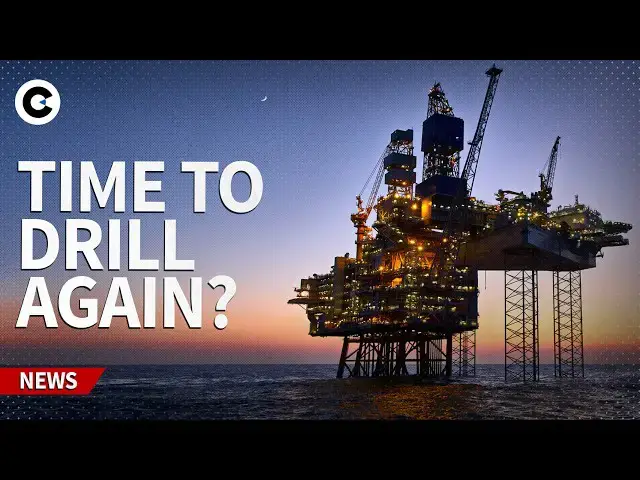
"There is clearly a role for North Sea gas" - Green energy boss on fossil fuel drilling
Mar 19, 2026

The Chief Executive of RenewableUK has urged the government to reconsider their approach to energy diversification.
Speaking to City AM's Editor in Chief, Christian May, Tara Singh expanded on her wish to take energy out of 'the culture wars' and for a more measured debate.
Get more of City AM 👇
🌐 http://www.cityam.com
X(formerly Twitter): http://twitter.com/CityAM
Facebook: http://www.facebook.com/cityam
Instagram: http://www.instagram.com/city_am
LinkedIn: http://www.linkedin.com/company/cityam
Show More Show Less View Video Transcript
0:00
Not for the first time, the UK faces the
0:02
very real prospects of a major energy
0:04
price shock, bringing the spotlight
0:05
firmly onto our wider energy policy and
0:08
the debate around net zero, renewables,
0:10
North Sea oil and gas, imports,
0:13
taxation, and subsidies. Well, now the
0:15
head of Renewable UK, the trade body for
0:17
wind and solar energy, has said that we
0:19
should restart drilling and extracting
0:21
off the UK's coast, even as we strive to
0:24
build a clean energy future. So, is the
0:26
tide turning in the North Sea? Well, I'm
0:28
joined by the chief executive of UK Tara
0:31
Singh. Thank you very much for coming
0:33
in.
0:33
>> Thanks, Christian. Nice to see you.
0:35
Well, very interested in the
0:36
intervention that you've made
0:38
uh given that the sort of current state
0:40
of of the energy policy debate in this
0:42
country. Um I think it was a quite a
0:45
bold ambition of yours to suggest that
0:47
we should take um the energy net zero
0:50
debate out of the culture wars, I think
0:52
was the phrase that you used. I'm
0:53
looking at some of the replies on social
0:55
media to your article. I'm not sure
0:57
you've been entirely successful, but um
1:00
what did you mean by that exactly just
1:01
to set the scene? Why do Why do you
1:03
think it has become part of the culture
1:05
war debate? And um why do you want to
1:06
take it out of it?
1:07
>> I think that there is um increasingly
1:09
polarization in how we talk about
1:10
energy. So,
1:12
>> [clears throat]
1:12
>> if you're on the right side of the
1:14
debate, uh you tend to be very pro oil
1:16
and gas and very anti-renewables. If
1:18
you're on the left hand side of the
1:19
debate, it tends to be the opposite. And
1:21
I think what's interesting is people in
1:23
industry and indeed trade bodies like
1:25
ourselves, NIA, OUK, we are actually all
1:29
very much in the world of we need all of
1:31
the above. And um I think we're just
1:33
trying to kind of bring a bit of that
1:35
realism into the conversation with
1:36
policy makers. Okay, so on the North Sea
1:38
specifically, um you recognize that um
1:41
for a variety of reasons that it's
1:43
basically better to continue to extract
1:46
what resources we have uh ourselves than
1:48
to import them. I think that comes down
1:51
to the the crux of your of your
1:52
argument. It's not about saying, as some
1:53
people do, correct me if I'm putting
1:55
words in your mouth, that uh it will be
1:57
immediately cheaper to use gas, for
1:59
example, ourselves from the North Sea,
2:00
but that there are other benefits for
2:02
doing so. Can you just expand a bit on
2:03
that?
2:04
>> Yeah, that's exactly right. And I think
2:05
I'll start by saying that um despite the
2:07
slightly crunchy headline, which we were
2:08
not involved in writing, um in the op-ed
2:11
itself, we're very clear we don't
2:12
represent the oil and gas industry. Um
2:14
we don't have a view on whether there
2:16
should be new licenses or there
2:17
shouldn't be new licenses. But what we
2:19
do think is there is clearly a role for
2:22
North Sea gas. Um I think in the best
2:25
case scenario, it's going to meet half
2:26
our net zero demand by 2050. So, it's
2:28
not going to be the answer to imports.
2:31
Um it's also not the answer to um
2:33
cutting bills because we are now part of
2:36
a global gas market thanks to LNG, and
2:38
that tends to set the price. But what it
2:40
does do is have jobs and revenue
2:43
attached to it, and it creates a really
2:45
important supply chain for the industry
2:46
of the future. So, actually a third of
2:48
the wind industry actually has contracts
2:50
with oil and gas as well. So, I think
2:52
we're just coming at from a kind of
2:53
realistic position of saying it's not
2:55
the answer to all of our concerns,
2:56
particularly about price. The only
2:58
answer is homegrown renewables, but it
3:01
is does have a role for jobs and for
3:02
security of supply. And I think all
3:04
sides of debate need to recognize what
3:07
that brings. And indeed in tax revenue.
3:09
Indeed in tax revenue, too.
3:11
>> So, the government's position, and they
3:12
they appear to be increasingly isolated
3:14
in this because people including
3:17
Renewable UK, but including
3:20
um the trade union movement, large parts
3:22
of the trade union movement, people
3:23
including Tony Blair's Policy Institute,
3:26
certainly the Conservatives, um and
3:28
indeed Reform UK, are all now saying
3:30
that we should continue to exploit the
3:32
resources that we have off our coast,
3:34
and some saying onshore as well. Perhaps
3:36
we can come on to that. It seems Labour
3:38
is increasingly isolated in this. Um
3:41
how much of that opposition do you think
3:43
is is uh not wanting to stray back into
3:46
the culture wars, but is a political
3:48
calculation?
3:50
Look, I I would defend Ed Miliband. I
3:51
think he has a really tough job as
3:53
energy secretary, and I think actually
3:55
the government does do a lot for the
3:56
North Sea as well. I think for me it's
3:58
more the kind of debate we're having at
4:00
the moment because of the understandable
4:02
concern about the energy price shock, we
4:04
are we are seeing increasing, I suppose,
4:06
pressure on where the space is for
4:08
policy debate. And that's what the point
4:10
of the op-ed was. We're we're trying to
4:12
take out some of that pressure by
4:14
saying, "Let's just recognize the role
4:16
that all of these have to play
4:17
together." So, I think that I think
4:18
that.
4:18
>> So, if you'd like Ed Miliband to
4:20
recognize the role that all these
4:21
different sources of energy have in the
4:23
mix, um
4:25
then you have to recognize that the
4:27
government's current position on a
4:30
moratorium on any further licenses, uh
4:32
and indeed on the tax rates imposed on
4:35
the industry,
4:36
are clear choices. You know, we send
4:38
signals with whether we subsidize, like
4:40
we do with renewables, or whether we tax
4:42
to the point uh where it's not viable.
4:44
And that's the that's the position the
4:45
government has taken on
4:47
uh oil and gas. So, if you're advocating
4:49
that we should continue to exploit the
4:50
resources that we have off our coast,
4:52
you must by definition also be saying
4:54
that we should A, extend new licenses,
4:56
and B, look again at the tax burden that
4:58
we impose on that sector. Look, I'm not
5:00
qualified. I don't have the uh the right
5:02
for my membership to comment on oil and
5:03
gas licenses. That's a matter for OUK,
5:05
but I think we're very supportive of the
5:07
North Sea, and we recognize the value it
5:08
brings. I think if I can just um take
5:11
you up on your point about renewable
5:12
subsidies. So, we have some legacy
5:14
subsidies, the renewables obligation
5:15
from previous first generation
5:17
renewables, but for all new um contracts
5:20
that are signed renewable generators,
5:22
they are cost competitive. We don't have
5:23
subsidy anymore. They are actually
5:24
reducing wholesale prices for consumers.
5:26
>> You were in uh government when Russia
5:29
first uh invaded Crimea. I think it was
5:31
2014. I think 20 I feel like 2013. I
5:33
can't quite remember. Yeah. Um so, you
5:35
were in number 10 as an advisor at that
5:37
point. Subsequently, uh you went to work
5:39
for Shell, um and that's where you were
5:42
when Russia's full invasion of Ukraine
5:44
uh kicked off. And so, both of those
5:47
events saw enormous consequences for the
5:49
energy market. How comparable is the
5:51
current uh Iran crisis to previous
5:55
shocks that we've gone through?
5:57
Yeah, look, I think it's an interesting
5:58
question. Again, I I I'm not a
6:00
geopolitical expert, but my honest view
6:02
is I think um on the power side, I'm
6:05
less well qualified to talk about oil
6:06
and refining. I think on the power side,
6:09
um
6:09
we're in a better position because we do
6:11
have so much more homegrown renewables,
6:12
which is great. I think also we have a
6:15
lot more capacity, particularly from
6:16
America now for LNG, and indeed even
6:19
more is going to come online soon. Um I
6:21
think in terms of where Britain is for
6:23
gas specifically, interestingly before
6:25
the crisis kicked off this time, um
6:28
Renewable UK commissioned RUSI to do a
6:30
war gaming exercise looking at um how
6:33
resilient the the energy system was in
6:35
the UK. And that concluded uh just a
6:37
month ago. And what they found was um
6:39
the the scenario they modeled was 20% of
6:42
um UK gas demand coming offline, what
6:44
would happen. And they found that the UK
6:47
is really physically resilient because
6:49
we've got so many pipelines to Europe.
6:51
We've got three LNG um terminals. We've
6:53
got the North Sea. That in almost any
6:55
scenario, we can always get gas. The
6:57
question is the price. So, I think we're
6:59
not going to see a shortage of um gas
7:02
because of the the events that we're
7:03
seeing. That's my understanding anyway.
7:05
I think the issue is what is the price
7:07
we will have to pay for that gas. So,
7:09
you know, that is a question we're all I
7:11
guess concerned about the longer this
7:12
continues. Just to go back to where we
7:14
started on the on the sort of political
7:16
and ideological debates around this
7:18
issue. It's a major major issue of
7:20
public policy. Um it does still touch on
7:23
huge questions of subsidy and taxation,
7:26
um and preferences, preferences of of
7:28
individuals, of voters, and indeed of
7:30
political parties for for wider um
7:33
energy policy. It's not reasonable
7:36
to isolate energy policy touching as it
7:39
does on all of those areas of um
7:42
our our economy, our politics, um
7:46
out of wider political debate any more
7:49
so than it is on immigration or
7:52
um the health service um or planning or
7:55
any other area. There's always going to
7:57
be and I would suggest there should be
7:59
great intellectual tussle over the
8:01
direction of travel, over the policy
8:03
mix. So, are you advocating for a
8:06
position of sort of you know, benign
8:08
experts kind of, you know, setting
8:11
setting the direction, or
8:12
or do you at least recognize that these
8:15
debates are really important, very
8:17
consequential, and contested? No, I
8:20
look, I 100% agree, and I think what I
8:23
would always say is I understand how
8:25
different political parties might have
8:26
different objectives from energy policy.
8:28
Very much so. I think where we're coming
8:31
from, Renewable UK, is recognizing the
8:33
role of renewables now as generally the
8:36
the cheapest cost energy you can have.
8:39
And therefore, whether you care about
8:41
net zero or whether you care about um
8:44
low energy costs or whether you care
8:45
about jobs, I think you have to
8:47
recognize the role of renewables. And I
8:48
always talk about Texas. So, the state
8:49
which has the most renewables in in the
8:51
US is Texas, which is obviously a state
8:54
which is very committed to gas as well.
8:55
So, I think what we're saying to policy
8:57
makers is don't automatically presume
8:59
that renewables sit in a certain bucket
9:02
of ideological debates because actually
9:04
we think they have a really broad role
9:05
to play. You've worked in the oil and
9:07
gas industry, um and you're now um very
9:10
heavily involved in in the renewable
9:11
industry. Perhaps that demonstrates the
9:12
point you just made, but there is a
9:14
relationship between these sectors.
9:16
Um
9:17
it's fair to say, isn't it, that um
9:20
the big the big oil majors, particularly
9:21
think of the likes of BP and Shell, they
9:23
they've done it with varying degrees of
9:24
success. They are in recent years kind
9:26
of just pulling back, moderating, you
9:28
might say. Um
9:30
But you probably could offer us slightly
9:32
um uh more emphatic analysis of the
9:34
extent to which they've pulled back from
9:37
a position that was kind of dominant 5,
9:39
6, 7 years ago in particular, which was
9:41
whether it was either whether that was
9:43
through pure branding and marketing uh
9:45
and communications, or indeed through
9:47
business decisions and operations, they
9:49
were very much all joining the rush
9:51
towards clean energy, net zero. And they
9:53
are those two companies I've just
9:55
mentioned as examples to various degrees
9:58
and with varying degrees of success
9:59
pulling back from that. Is that just
10:01
pragmatism reasserting itself or does
10:04
that tell us something wider about the
10:06
extent to which oil and gas in
10:08
particular are going to be central in
10:10
the years ahead?
10:11
Well, I think
10:13
there are two questions. One is
10:15
do you believe that renewables are going
10:17
to be a fundamental part of the economy
10:18
of the future? And I actually think that
10:21
you know, Shell, BP, I'm sure they would
10:22
still agree with that. The second
10:24
question is do they believe that their
10:26
business model would allow them to make
10:27
the kind of profits they used to in
10:29
those sectors?
10:30
And I think that is more of a question
10:32
because it's a very different way of
10:34
building and operating assets.
10:36
And I think they probably just took a
10:37
decision that it didn't fit their
10:38
business model. There are other
10:40
companies clearly like Equinor for
10:42
example, Total or Engie who who have
10:45
made a different decisions. So, I think
10:47
it just depends on whether you think
10:48
your business model is tooled up for the
10:49
future or not. As as I said, it touches
10:52
on so many areas of debate throughout
10:54
throughout the economy and indeed on
10:56
national resilience which we've talked
10:57
about as well. I do think most people
10:59
will will take it as fascinating that
11:02
renewables UK perhaps maybe it was in a
11:04
long-standing position people were
11:05
previously unaware of it until that
11:07
crunchy Telegraph headline as you put
11:09
it. But you have joined quite growing
11:12
chorus of voices who say look even if
11:15
even if your primary objective is to
11:17
move towards a totally renewable
11:20
energy-based economy, it doesn't make
11:22
sense to ignore what you've currently
11:24
got. And I think that's a really
11:25
interesting contribution. So,
11:27
I hope it's not the last time we discuss
11:29
it. But for now, as Harry Singh, thank
11:30
you very much for coming into City A.M.
11:31
Thanks very much, Christian.
#News