Up next in 10

Bloom & Wild CEO on sacrifice, living the dream and his secret WhatsApp group | Boardroom Uncovered
Oct 7, 2024

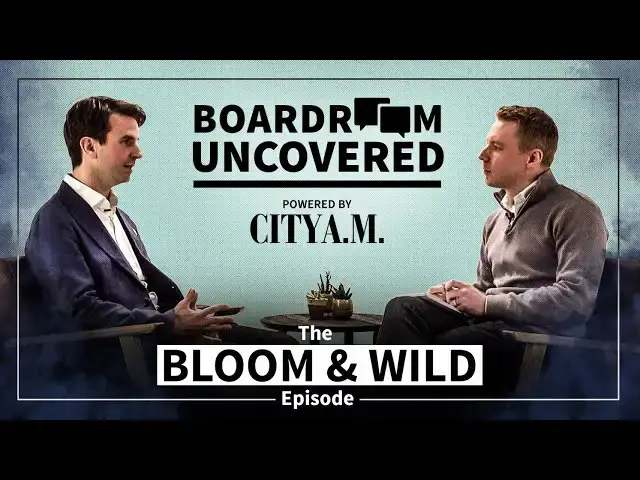
The chief executive of Bloom & Wild turned to a secret WhatsApp group with fellow founders to combat the "isolation" of being the sole head of his rapidly expanding flower delivery business.
In the latest episode of Boardroom Uncovered, City A.M.'s on-camera interview series, Aron Gelbard revealed what it's like to run Bloom & Wild without his co-founder Ben Stanway who stepped back to set up MoneyBox.
Click for more information about the History of the City 👇
https://www.cityam.com/bloom-and-wild-how-a-secret-ceo-whatsapp-group-helps-boss-deal-with-isolation-of-the-top-job/
🌐 www.cityam.com
X(formerly Twitter): http://twitter.com/CityAM
Facebook: www.facebook.com/cityam
Instagram: www.instagram.com/city_am
LinkedIn: www.linkedin.com/company/cityam
Produced by: Emmanuel Nwosu, Jon Robinson, THG Studios
#ceo #executive #interview #business #businessnews #ukbusiness #entrepreneur #entrepreneurship #businessowner #uknews #news #podcast
Show More Show Less View Video Transcript
0:00
What kind of a CEO, a leader, are you
0:03
Are you collaborative? Are you more of presidential style? You know, is it your way or the highway
0:09
What kind of a CEO are you? I don't think I'm presidential at all
0:13
I think I start from caring very deeply about our customers and what we do for them
0:23
And because of that, I obsess over the feedback we get from customers
0:29
over what they say is working and what they say isn't working
0:33
And I digest that every day. Because of that, I can be quite specific about what I think we should do differently
0:42
if things I see aren't working. And I do therefore get involved in maybe more details than other people
0:52
But it comes from a place of this deep care for customers
0:56
and this fundamental belief that will be. win by earning better feedback from customers and therefore we need to build a system that business
1:06
where we have a system for gathering that feedback and obsessing over it day and day out
1:11
Some people, you know, they start the business and it's really important to them to have the title of CEO, even if they're the only one, only employee and it's so much part of who
1:21
they think they should be and who they are. What does that title mean to you
1:26
means being at the bottom of an upside down pyramid. The overall amount of work you need to do as a founder
1:32
always remains very high. And you can always choose to do less
1:38
because it's not somebody else telling you to do the work. It's you telling yourself to do it
1:44
But I think the way that people who found businesses are wired is such that you don't want to do less
1:50
because there's always more that you can do to make the business better, to grow it
1:55
to give customers a better experience, to make it a better place to work for employees, et cetera
2:02
But you also have control as a founder, you don't have somebody saying you must go to a meeting
2:08
at this particular time, therefore you can't drop your children at school
2:12
or something like that. And so I've learned to make the most of that control
2:17
and it doesn't reduce the number of hours I work in a week. But I do have the choice of, by and large
2:24
over when I do them and I've made use of that to be present for my family and often work late
2:34
into the evening to catch up but that works for me. When you start the business obviously it's a fantastic idea that's done really well but at
2:40
the start you didn't know that. You must have had a confidence though to ditch your cushy nine to five with a personal
2:46
assistant in an office in order to throw it all in moving with your girlfriend whether she
2:51
wanted to or not and start the business. you must have had an incredible sense of confidence that it would work
3:01
I think I had confidence that it was worth a try. And whether it would work and also whether the it would remain exactly what I thought
3:10
it was going to be when I started or would evolve into being something different
3:15
as I learned from real customers. I wasn't sure. I got feedback from my boss at my old job shortly before deciding to leave
3:23
that I was too focused on getting things done and not focused enough on working out the right answer
3:30
Hello and welcome to the latest episode of Boardroom Uncovered, powered by City AM
3:35
My name's John Robinson, City AM's UK editor. And my guest for this episode is the chief executive
3:41
of Bloom and Wild, Aaron Gelbard. By co-founding the flower delivery business in 2013
3:47
with £30,000 of savings, Aaron traded in a cushy career for the uncertainty of start-up life
3:56
The business is now a household name and has expanded into Europe
4:00
But after a challenging few years, can Bloom and Wild continue its remarkable rise
4:06
Without any further delay, let's dive in. Aaron, thank you very much for coming on Border and Uncovered
4:11
It's a delight to have you here. Thank you. You obviously co-founded Bloom and Wild yourself
4:17
with a friend, with your own savings. You built it from nothing to a household
4:22
name and a true success. Are you living the dream right now
4:28
Depends what the dream is. Look, in some ways, we've been really fortunate. When I started 11
4:36
and a bit years ago, I didn't think that we'd build a business of the scale that we've
4:42
reached now in eight different countries in Europe and having made acquisitions and sending out
4:47
millions of BKs and other gifts every year. On the other hand
4:52
building a business is hard work and that doesn't stop at any point. So I make just as much
5:01
effort now as I did in the very early days and it hasn't become sort of plain sailing or easy
5:08
by any means. So it continues to be hard work. What is your dream for Bloom and Wild? It's a fantastic
5:15
success at this stage. It's just been over 10 years up and down as any sort of startup
5:22
business goes. But where would you, where would you want it to be? What is your dream for that
5:27
brand, you know, when you finally step back and go on that beach in Barbados? Where do you want
5:32
boom a while to be? I'm not a very beachy type. Our goal is to be the destination for making life
5:41
more thoughtful and beautiful. And so we're trying to build a leading, gifting business at the
5:48
moment in Europe, maybe one day beyond Europe. We've started with Fleming
5:52
hours. We've now got into other gifts. I would love for customers up and down the country in the
5:59
UK and in all of our other markets to default to thinking of blooming world whenever they need to
6:05
express their emotion to somebody that they care about. Did you ever think that you'd get the company
6:12
to the position it is today? Is this beyond your dream when you first started out? You know
6:17
going to Covent Garden at 6 o'clock in the morning to see the activity there and the company. And the
6:22
Did you ever think you'd get to this stage? Of course not
6:26
I'm a humble person and you know when I was packing flowers individually into boxes in
6:33
the very early days and I didn't think that we would be sending out millions of
6:39
bays every year. I think it would have been really sort of arrogant to assume that we'd get there
6:45
I hope that we would build an amazing company that would be better than the alternatives
6:51
out there would earn the trust of course of course. customers and therefore would reach meaningful scale, but it was always an ambition rather than an
6:58
expectation. Are you really proud about, you know, how it's become, what it has become
7:04
Because, you know, you created hundreds of jobs. You know, there's a responsibility, isn't there, that you have on your shoulders for people's livelihoods and people's futures
7:14
Do you feel that? 100%. So feel proud, but also responsible, as you say, for, well, two main groups and then a number
7:22
of other groups. So you mentioned our employees. We have hundreds of employees indeed. We also
7:27
have many thousands of people that we employ indirectly in our supply chain, including people
7:35
that work growing flowers and picking them at farms around the world. So very aware of building a
7:43
sustainable business that will be around for the long term and that will continue to create
7:49
employment provide growth and development opportunities for people and pay people fairly and give people the means to grow in their careers. I'm also proud of what we do for
8:01
our customers so we're serving millions of customers every year. Our customers want to
8:07
express emotion to people that they really care about, typically through the medium of flowers
8:12
And before blooming world started, there weren't brilliant options to do so. There were other
8:18
the flower companies out there, there still are, but industry satisfaction levels were very low
8:24
And we tried to obsess over customer experience and things like Net Promoter Score review scores from day one And with that I think we changed the experience of people that are expressing their emotions through the means of a flower gift from a so experience
8:44
an experience that people tend to be delighted with. Obviously, you're starting a business
8:50
is incredibly, must be all consuming. It must be all you think about, especially in the early
8:56
days. You must have given up quite a lot in your personal life in order to
9:00
devote so much time to growing bloom and wild. What did you have to sacrifice
9:06
And was the sacrifice worth it? So I had a well-paid job
9:11
I had an office. So I don't have an office. I probably never will
9:16
I had an assistant, things like that. So I worked hard, but I had quite a lot of supporting infrastructure around me for my old job
9:26
And I gave that up. I also gave up my flat and moved in with my then-girlfriend now, wife
9:35
Was she pleased about that? I think so. It was a good way of arranging the move in, so to speak
9:44
I proposed to her shortly after starting the business. With blooming wildflowers
9:52
With flowers that I sourced from New Covent Garden Market. Oh, did you
9:56
And I remember at the time thinking that this really has to work
10:02
And I'd actually, she and her parents are a bit traditional about this
10:07
So I asked her dad for permission before the traditional way. And I remember talking to him about Bloom and Wild
10:14
this business that I was just starting and looking him in the eye
10:19
and saying that I was going to make a success of it because I wanted him to say yes to my plans to propose to his daughter
10:26
but I felt the sense of responsibility here as well that I was going to give up a stable job
10:32
and a living doing this and my wife works as well but I didn't want to just live off her
10:41
and I wanted to contribute to our future family. Was that your most stressful sales pitch
10:46
regarding blooming wild? Probably, yeah. But it's paid off very well. I have a great relationship with my father-in-law in case he's watching
10:54
Has he congratulated you? Many times, yeah. Very tall with us. He's really pleased that I've done this and with how the business has progressed
11:03
I guess over time I've continued to work just as hard, but I've also found more balance in my life, in particular
11:11
parents now to two young daughters. And so working all of the time and not doing anything else isn't an option, nor is it what I want
11:22
I want to be a present dad and be a. around for my girls as they grow up. And so I've tried to find a bit more balance between
11:31
when I'm working and when I'm not working and more focused on family and doing things with
11:38
my daughters, cooking for the family and things like that. Is that quite difficult to find that
11:43
balance? You must have got it wrong sometimes. The overall amount of work you need to do as a founder
11:49
always remains very high. And you can always choose to do less because it's not somebody else telling
11:56
you to do the work. It's you telling yourself to do it. But I think the way that people who
12:02
found businesses are wired is such that you don't want to do less because there's always more
12:08
that you can do to make the business better, to grow it, to give customers a better experience
12:14
to make it a better place to work for employees, etc. But you also have control as a founder
12:21
You don't have somebody saying you must go to a meeting at this particular time
12:26
therefore you can't drop your children at school or something like that
12:29
And so I've learned to make the most of that control and it doesn't reduce the number of hours I work in a week
12:37
But I do have the choice of by and large over when I do them
12:42
And I've made use of that to be present for my family and often sort of work late into the evening to catch up
12:51
But that works for me. When you started the business, obviously it's a fantastic idea
12:56
that's done really well, but at the start, you didn't know that. You must have had a confidence
13:00
though, to ditch your cushy 9 to 5 with a personal assistant in an office, in order to throw it
13:06
all in, moving with your girlfriend, whether she wanted to or not, and start the business
13:12
You know, you must have had an incredible sense of confidence that it would work
13:18
I think I had confidence that it was worth the try, and whether it would work and also whether the
13:25
it would remain exactly what I thought it was going to be when, when I started or would
13:31
evolve into being something different as I learned from real customers. I wasn't sure
13:35
I got feedback from my boss at my old job shortly before deciding to leave, that I was too
13:42
focused on getting things done and not focused enough on working out the right answer
13:47
And I reflected on that and thought that he was absolutely right. And therefore, I was in the
13:53
wrong job because I used to be a management consultant where you have to be really focused on getting
13:58
the right answer. That's what your clients are paying for. As an entrepreneur, I think you have to
14:04
be focused on getting things done because you get things done. You put a product out into the market
14:10
You get feedback from customers. You listen to their feedback and act on it and try to improve
14:15
So it is how I'm wired. I have a strong bias to action and it made me feel that I should
14:22
try and do something where that was a strength rather than a weakness. I also come from a family of entrepreneurs and my dad's been an entrepreneur for 60 years
14:30
Three of my four grandparents were entrepreneurs. So it was always something that I hoped I'd do at some point and it was a question of when I felt I was ready
14:38
It's a long line of entrepreneurs that you come from, as you say, but your dad had a negative experience
14:45
Did that ever weigh on you before you made the jump yourself
14:50
Yes. So my dad was successful when I was a young boy
14:56
and then when I was a teenager, he fell onto harder times. And I wouldn't say weigh on me
15:02
but what it did was showed me both sides of it. So I think a lot of people who dream of starting their own business
15:10
but haven't grown up around other entrepreneurs, maybe only look at their prospects through rose-tinted spectacles
15:19
and assume that this might be a way of making lots of money quickly or things like that
15:26
And they don't realize either necessarily how hard work it is. My dad worked all the time when I was growing up
15:34
Nor do they realize that it can go wrong and what the impact is
15:40
They're told that that takes when you're not just financially, but also in terms of just how you feel about yourself
15:48
And so having grown up, seeing both sides of that coin, I guess it made me aware of the risks
15:57
And because of that, I didn't drop out of university to start a business, which is what my dad did
16:03
And instead, I went down a relatively traditional path until I was 30
16:07
I got two degrees. I worked as a consultant for eight years
16:10
And I did that because I wanted to have that experience and I wanted to have that safety net
16:17
and I knew that this was something that I wanted to do one day, but I wanted to be in a position of strength when doing it
16:24
I've also tried to run my business always with a balance between a very strong level of ambition
16:32
to build the leading company in our business, in our sector, on the one hand, but on the other hand
16:39
to not fly too close to the sun. And I think there are other entrepreneurs out there
16:46
who will just pursue growth at all costs and not worry about anything else
16:52
And their ambition would always be, how can I grow as much as possible, in order to raise another funding round, in order to grow as much as possible again
17:01
And that's the right approach for some people. It's also the right approach in some sectors
17:07
You asked me at the beginning about this sense of responsibility towards employees in our supply chain and customers and I feel that very strongly So I always sought to build a business that will be around for the long term and not fly too close to the sun
17:25
Okay. And what kind of a CEO, a leader, are you? Are you collaborative
17:31
Are you more presidential style? Is it your way or the highway? What kind of a CEO are you
17:37
I don't think I'm presidential at all. I think I start from caring very deeply about our customers and what we do for them
17:49
And because of that, I obsess over the feedback we get from customers over what they say is working and what they say isn't working
17:59
I digest that every day. because of that I can be quite specific about what I think we should do differently
18:08
if things I see aren't working and I do therefore get involved in maybe more details than
18:18
other people but it comes from a place of this deep care for customers and this fundamental
18:24
belief that will win by earning better feedback from customers and therefore we need to
18:30
build a system that's the business where we have a system for gathering that feedback and
18:36
obsessing over it day in day out. Okay. Some people, you know, they start of the business and it's
18:41
really important to them to have the title of CEO, even if they're the only one, any employee
18:47
and it's so much part of who they think they should be and who they are. What does that title
18:52
mean to you? It means being at the bottom of an upside down pyramid. No, seriously, I think
19:00
I'm not hierarchical, I don't like my view to trump that of others
19:06
I see our team as lots of people who have what I call frontline jobs
19:13
where they're individual contributors, and they're the people that do the vast majority of the work in our company
19:19
and whether they're making bouquets or crafting emails or doing our accounts or answering customer phone calls
19:27
many sorts of things. and they have managers to support them to help them prioritize
19:35
because we can't do everything at once and ultimately that sort of ladders down to me
19:42
and my job is to help set direction and help make prioritisation decisions
19:49
when we need to make trade-offs and ultimately be the last man
19:54
so if things don't work it's on me to make sure that we course correct and pick up the pieces where necessary
20:03
So ideally things don't trickle sort of down that upside down pyramid to me
20:07
and they rarely do because we have great people in the team. But I see it as carrying the team ultimately on my shoulders
20:16
and me taking ultimate responsibility for our customers, for our finances, for our team's livelihood
20:23
Of course, you co-founded the business. You've led it this whole time, and it's been, obviously, up to this point, a tremendous success
20:32
But some founders do decide to step back. They realise that they're not the right person to lead the company at that point, and they may return in the future
20:42
Have you ever doubted that you're the right person to lead the company
20:48
Once I've doubted that I'm the right person to lead the company up to now
20:52
I certainly don't want to tell you that I'm going to be the right person to lead the company forever
20:57
And it's something that I reevaluate regularly. I also seek feedback from my direct reports, from my wider team, from my board of directors on whether I think I'm doing a good job or not
21:11
And if that feedback starts to weaken, then for me that's a strong signal that maybe I'm not the right person anymore
21:22
aware that that may change in the future. Up to now, I've continued to feel a strong sense of energy for what we're doing and also feel that there's a lot more still to do. So I haven't wanted to step away and have continued to enjoy it. I mean, it's stressful at times and it's hard work all the time. But that's also what I'm used to in how I'm wired
21:44
You said at the start that, you know, when you eventually step away from Bloomingham Wild, the day to day of it, so you won't be on a beach in Barbade
21:52
What is your ideal retirement plan then? If it's not a beach on a tropical island, where it would be
22:00
So, I don't see myself leaving the UK. We live very comfortably
22:08
Our children go to school and I want to create that continuity and stability
22:13
For them, I moved around a bit growing up. My parents got divorced, etc
22:17
So that continuity of home life for my family is really important for me
22:21
for me. I also, if I was ever not doing this full-time, and that's not my plan, would want to get involved in the broader sort of startup scale-up ecosystem and also a charity ecosystem here in the UK. I think giving back as a founder who's had some success is really important. A few months ago, I joined my first charity board, which is a charity called FAPE
22:51
fair share, which distributes over 100 million meals every year of food that would otherwise
22:57
be wasted to people that need it. And I'm really keen to continue and hopefully over time
23:04
increase my involvement in the charity sector, if I'm ever not full-time, hard at work with my day job
23:12
Because even in the successful times, the easier years, relatively, it's still an incredibly difficult
23:21
job, even more so when things aren't going so well, you hit those setbacks. How difficult is it
23:28
to be the top person in a company when everything around you seems to be falling apart
23:36
It's difficult when things are going well or when things are going not well because there are
23:42
different pressures in those different situations. One thing I've done that I've really benefited from
23:48
is forming a close-knit group of other founder-CEOes living similar experiences. Who's in the group
23:59
I can't say their names. Oh, come on. We've been doing this every couple of months for seven years now
24:06
We all met through a program we did called Future 50 back in the day, which is a Tech Nation program
24:14
and it's been really valuable just having this group that meets up our WhatsApp group
24:21
which is sort of buzzing every day with people saying, you know, I'm doing this, that and the other
24:25
you know, has anyone else been in this situation? I'm in some other similar groups as well, but the longer you go with a group of people that get it
24:32
because they're living the same, not exactly the same, but a really comparable experience
24:39
the more that you trust each other, the more open you are with each other
24:44
other and the more honest you are you let your guard down you drop the sort of
24:48
bravado of telling everyone how brilliantly your business is going and you open up about what your challenges are and and that's become an incredibly
24:56
valuable support network especially because my co-founder doesn't run the business with me anymore and hasn't done for a number of years now and I think it
25:06
can therefore be lonely as a sole active founder and that network of other people that are in
25:13
your shoes is really valuable. Yeah, that's support. I suppose you can lean on them in the tough times
25:19
The WhatsApp group have a funny name, particular name. That's really boring. It's called CEO
25:24
Forum Group. Oh, that is boring. But I think I might rename it now. I suggest to rename
25:29
I'll do that on the train home. What do you do like when you meet up? Is it, is it coffees? Is it
25:34
beers? Is it drinks? It's a mix. So we, most of the time we do it after work and we bring takeaways
25:43
with us We rotate and hosting it in somebody office Sometimes we do it remotely now or hybrid A couple of people have left London in the group during COVID And so we tried to
25:53
sometimes they come back for it, but sometimes we do a mix. We just did our first trip away as a group
26:02
We went to Madrid for the weekend. Very nice. One of the guys has sold his company and moved over there
26:11
so he hosted us, which was lots of fun. So I'm going to try and do more of that
26:16
Oh, fantastic. Yeah, that sort of support network, especially because your co-founder is no longer with the business
26:22
must be so valuable to you. And being able to sort of express your worries and your fears
26:27
that maybe you can't do to your employees for obvious reasons. But obviously, you know, boom-in-wild has been a success for more than 10 years now
26:37
But do you ever worry that it could still fail? Because I suppose no business, very few businesses are too big to fail these days
26:46
Of course it could fail. Any business can fail. There are things that can happen unexpectedly
26:57
I guess the thing I've lived through, and luckily for us, we're very fortunate and this had the opposite impact
27:03
That was the most like that was the arrival of the pandemic
27:07
and you know, and you know, Blooming World was fortunate and people sent a lot more flowers
27:13
during the pandemic because they couldn't see their loved ones in person
27:17
Me included, to be honest, that's how I came across it. Thank you. I appreciate that. I hope we gave you a good experience
27:23
You know, but if I'd been running a business like say Airbnb, for example
27:27
or my wife is involved in running a business called Paperless Post
27:31
which does online invitations, mainly to children's birthday parties and weddings. Their business was extremely badly hit by COVID because nobody was having events anymore
27:44
So there can always be things that come along that you don't expect
27:49
that can have a very positive or very negative experience. I think it's crazy to say that a business is too big to fail
27:57
You just don't know. And you have to run your business with a reasonable level of buffer
28:04
don't run the business with zero cash left day and day out to meet our bills
28:11
We give ourselves the wiggle room for the unexpected, but you never know
28:17
That was a big lesson from COVID, wasn't it, to give that wiggle room, just in case you
28:21
never know what's coming around the corner, especially these days. I was interested
28:26
Obviously, every business has maybe, you know, a golden quarter in retail or, you know
28:30
Black Friday or something like that. But for Bloom and Wild, what's bigger? Christmas, Valentine's Day or Mother's Day
28:40
Mother's Day is by far the biggest. Yeah. So that's our busiest trading period
28:47
Fortunately for us, Mother's Day is at different times in our different countries we're in
28:52
So the load, both in terms of team focus, but also production capacity and things like that, is spread
29:01
Mother's Day in the UK, obviously, is in March. And then in most of continental Europe, it's in early May in France
29:07
It's in late May. So we spread Mother's Day over a few times
29:13
The other thing we've learned with Mother's Day, which we've become a bit known for at Bloom and Wild
29:18
and has now become quite widespread, is while by and large, it's the number one flower gift
29:26
buying occasion in the year, it's also not an occasion for everybody
29:30
So for some people, Mother's Day is a difficult time because they don't have a mum anymore because they've struggled to become a mum themselves, for example
29:39
And that's something that we've been very aware of. We in the early days got ad hoc queries from customers saying, can you actually love your flowers, but can you not tell me about Mother's Day
29:52
It's a difficult time for people, and we'd make manual adjustments. and we then went on to proactively offer people the ability to opt out of hearing from us
30:03
initially for Mother's Day and then for Valentine's Father's Day, various sensitive occasions
30:09
And there was incredible uptake of that. We then started a bit of a movement called the thoughtful marketing movement
30:15
and encouraged other companies to do the same thing. And that practice has now become quite widespread
30:21
You probably get lots of opt-out emails. and you know, Father's Day, for example, coming up
30:27
And now we've actually evolved our approach again because we've been hearing from customers
30:33
and sort of seeing out there that actually the opt-out emails themselves
30:37
have become even worse than the email saying, would you like to buy for Mother's Day
30:42
So we've just announced that we're going to sunset opt-out emails and are encouraging other businesses to do the same
30:48
And instead, we're providing a year-round preference centre where people can update occasions that they find sensitive and would rather not hear about
30:59
And we'll link people to that routinely, but not specifically around these peak occasions
31:07
And we hope that will be an even more thoughtful way of handling this
31:11
Yeah, I mean, that sounds really sensible. You do see it that goes the other way that people get way more emails saying
31:17
do you want to opt out than the marketing emails to start off with? If you could go back to maybe the first day that you went down to Covent Garden, 6 o'clock in the morning, go back to that point
31:34
What would you do differently if you had the opportunity again? I massively underestimated both the importance and difficulty of technology to our business in the early days and also thought I could sort of self-love
31:52
learn it and that I'd be a good product manager. I might even be able to figure out some of the
31:58
sort of coding myself because I'd sort of taught myself other things as I'd gone along and didn't
32:07
realize that it would be a constant investment, how significant an investment would be, how difficult
32:14
it would be to get right, and also how valuable it would be in terms of giving our customers a
32:20
a better experience, differentiating us from our peers and allowing us to drive our growth
32:27
And I think if I was to start again, I would put much greater weight on that
32:32
I would probably have brought on board a third co-founder as a CTO who really came from this
32:39
background and could have really driven this agenda from the beginning. And that was a blind spot where I assume something would just be easier than it turned out to be
32:50
And if there was a younger person watching this, thinking about starting a business
32:55
but they just don't have maybe the confidence to do so, what would your advice be to them
33:01
Have a go and start in a way that enables you to build up your confidence
33:07
So most people also need to start in parallel to working on something else
33:15
or need to, I guess like I did work for a number of years to build up savings
33:20
to be able to then give yourself a finite amount of time to get started and see where you go
33:26
So either of those approaches works, but a business is a series of experiments where you try things
33:35
and you get feedback. And the initial experiments don't necessarily need to be very sophisticated
33:40
You can try to make prototypes. You can write questionnaires and get feedback from customers on what they say they'd
33:50
do in particular situation. Sometimes what people say they'll do and what they actually do are two
33:54
different things. So you need to take that with the pinch of salt. But I think starting to
33:59
get some of those learnings early on is really valuable and it will either build your confidence
34:08
or it will save you from pouring years of your life into something that turns out nobody's
34:15
interested in buying from you anyway. That's good advice. Aaron, thank you very much
34:19
for coming on Border Room Uncover today. Thanks for having me. Thank you
#Business News
#Small Business