Up next in 10


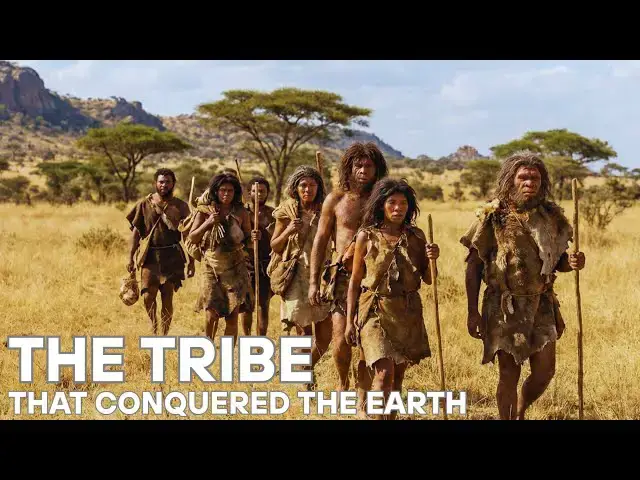
How 1,000 Ancestors Redrew the Human Story.
1. The African Cradle and the "Lag Paradox."
While the biological origin of Homo sapiens is deep, the expansion that populated the globe is surprisingly recent.
Anatomical Origins: Homo sapiens traits appear early at sites like Jebel Irhoud, Morocco (~300,000 BP) and Omo/Herto, Ethiopia (~190,000 BP).
The Paradox: There is a gap of over 200,000 years between looking human (anatomy) and acting like a global colonizer (behavior).
Failed Dispersals: Early exits (e.g., Skhul and Qafzeh, ~120,000 BP) were "ghost populations." They left fossil remains but contributed almost nothing to the modern gene pool, likely retreating or dying out due to climate shifts.
2. The Spark: Behavioral Modernity & The "Push" Factors
Around 70,000 years ago, a specific synergy of biology, culture, and climate forced a change.
The Cultural Tipping Point
Mitochondrial DNA (mtDNA): The rise of Haplogroup L3 (80-70k BP) signals a rapid population expansion within Africa.
Behavioral Evidence: Sites like Blombos Cave and Pinnacle Point show engraved ochre, shell beads, and heat-treated tools. This "symbolic thought" increased social cohesion and planning abilities.
The Climate "Push"
Aridity, not Abundance: Contrary to the idea of following lush corridors, humans were likely pushed out by extreme drought during Marine Isotope Stage 4 (75k–50k BP).
The Toba Catastrophe (~74k BP): The super-volcanic winter may have acted as an "evolutionary filter," stripping away less resilient groups and leaving only the most innovative populations to survive and expand.
3. The Journey: The Southern Coastal Route
The successful wave of migration (70k–50k BP) was logistical, not accidental.
Show More Show Less View Video Transcript
0:03
The narrative of human history is
0:04
fundamentally tied to Africa. The
0:06
earliest confirmed appearances of homo
0:08
sapiens traits are exemplified by the
0:10
finds at Jabel Erhood in Morocco dated
0:14
to approximately 300,000 years before
0:16
present. Subsequent finds such as those
0:19
at Omo and Herto in Ethiopia confirm the
0:21
widespread presence of early Homo
0:23
sapiens across different regions of
0:25
Africa by about 190,000 years before
0:28
present. However, the most profound
0:30
demographic event in our recent history,
0:33
the colonization of the entire globe by
0:35
modern humans, stems from an out of
0:37
Africa expansion that occurred much
0:39
later, roughly around 70,000 and 50,000
0:43
years before present. This single
0:46
successful demographic wave is the
0:48
source of virtually all non-African
0:50
ancestry today. This chronological gap
0:52
of over 200,000 years between the
0:54
emergence of anatomical features and
0:56
their successful global dispersal
0:58
presents a lag paradox. The key to
1:01
understanding this expansion lies in
1:03
recognizing the difference between early
1:05
tentative dispersals and the main event.
1:08
Early human dispersal attempts are
1:10
recorded possibly as early as 270,000
1:13
years before present. Fossil and
1:15
archaeological evidence confirms that
1:17
earlier groups of modern humans moved
1:19
out of Africa, notably into the Levant,
1:22
such as the remains at school in Kofs,
1:24
dating to 120 to 100,000 years ago and
1:28
possibly from Jebelia in Arabia around
1:31
120,000 years ago. While these early
1:33
groups demonstrated anatomical modernity
1:36
and the physical capacity to leave the
1:38
continent, genomic studies indicate that
1:40
they contributed negligibly to the
1:43
modern global gene pool. These early
1:45
waves are typically described as ghost
1:47
populations that either went extinct or
1:50
retreated back into Africa when climate
1:52
conditions changed. The fact that
1:54
anatomical modernity alone was not
1:56
sufficient for sustained global
1:58
colonization underscores a crucial
2:00
point. The successful expansion around
2:02
70,000 years ago was driven not merely
2:05
by anatomy, but by the acquisition of
2:07
unique behavioral, technological, and
2:10
demographic resilience that the earlier
2:12
lineages lacked. This later group
2:14
reached a critical demographic mass, an
2:17
ecological and cultural tipping point
2:20
necessary for planetary survival.
2:22
Mitochondrial DNA plays a central role
2:25
in understanding ancient human
2:26
population history because it is
2:28
inherited only from mothers and
2:30
therefore preserves a clear record of
2:32
maternal lineages through time.
2:34
Studies of mitochondrial DNA show that
2:37
early human populations within Africa
2:39
remained relatively stable between about
2:41
200,000 and 100,000 years ago with no
2:44
major booms or collapses even as
2:46
different groups lived in separate
2:48
ecological zones. A major demographic
2:51
change appears between roughly 80,000
2:53
and 70,000 years ago with the rise of
2:55
Haplo group L3, a maternal lineage that
2:58
underwent a rapid population expansion
3:01
within Africa. This expansion aligns
3:04
closely with archaeological evidence for
3:05
increasing cultural and behavioral
3:07
complexity among middlestone age
3:09
populations. At Blombo's cave, for
3:12
example, researchers uncovered engraved
3:14
ochre, shell beads, and finely made
3:17
bfacial points dated to around 100,000
3:19
to 70,000 years ago, suggesting symbolic
3:22
thought and advanced craftsmanship.
3:25
Pinnacle Point, another key site, shows
3:27
early use of coastal resources and heat
3:29
treatment of stone innovations
3:31
associated with improved survival
3:33
strategies. The Still Bay and Howison's
3:36
port industries known for finely crafted
3:38
blades, heat- treated silkcrete tools,
3:40
and symbolic artifacts further indicate
3:42
that African populations were becoming
3:44
more technologically sophisticated and
3:46
socially organized. These cultural
3:49
advances likely increased the carrying
3:51
capacity of environments and allowed
3:53
certain populations, including those
3:56
bearing L3 lineages, to grow more
3:58
quickly than before. The defining
4:00
genetic characteristic of the out of
4:02
Africa expansion is the continuous
4:04
directional loss of genetic variation
4:07
observed as one traces populations
4:09
eastward away from Africa. This pattern
4:12
is known as the serial founder effect.
4:15
As the initial founder population spread
4:17
across Eurasia, subgroups repeatedly
4:19
split off to colonize new territories.
4:21
Each split represented a small
4:23
demographic bottleneck, reducing the
4:25
genetic diversity inherited from the
4:27
previous population. Consequently,
4:30
genomes from contemporary African
4:32
populations retain an exceptional number
4:34
of unique variants and higher overall
4:36
diversity reflecting the long history of
4:38
the species within the continent. The
4:41
non-African populations derived from a
4:44
small subsample of the original African
4:46
diversity show a dramatic reduction in
4:49
this variation. This pattern is not just
4:51
visible in human genomes. It is also
4:54
supported by the genetics of human
4:55
parasites, morphology, and linguistics,
4:58
creating a unified model of the global
5:00
colonization event. The successful
5:04
colonization of the world between 70 and
5:06
40,000 years ago was orchestrated by a
5:08
synergy of environmental stresses that
5:10
provided the motive, technological
5:13
innovations that provided the means, and
5:15
significant demographic factors. The
5:18
prevailing assumption that human
5:19
migration is primarily a search for
5:21
better, more productive land is
5:23
challenged by the paleocclimatic
5:25
evidence surrounding the main out of
5:27
Africa event. The successful dispersal
5:30
occurred during marine isotope stage 4
5:32
and the transition into marine isotope
5:34
stage 3, roughly 75,000 to 50,000 years
5:38
ago. This was a global glacial period
5:41
characterized by cold and crucially
5:43
extremely dry conditions across
5:45
northeast Africa and the Arabian
5:47
Peninsula.
5:49
Rather than being lured out by lush
5:51
vegetated corridors, the data suggests
5:53
that a massive shift toward idity and
5:55
environmental deterioration acted as a
5:57
powerful push factor, compelling small
5:59
groups to seek resources outside the
6:01
shrinking habitable zones of Africa.
6:04
This stress force movement prioritizing
6:06
survival over stability. Adding
6:08
complexity to the climate narrative is
6:10
the youngest Toba eruption, a super
6:13
volcano event that occurred in Somatra,
6:15
Indonesia approximately 74,000 years
6:18
ago. The Toba catastrophe theory posits
6:21
that the eruption caused a severe
6:23
volcanic winter, plunging global
6:25
temperatures and leading to a bottleneck
6:27
that reduced the human population
6:28
worldwide to as few as 3,000 to 10,000
6:32
individuals.
6:34
While highly debated, the timing is
6:36
relevant. The primary genetic dispersal
6:38
out of Africa is dated shortly after
6:40
Toba, between 70 and 60,000 years ago.
6:44
Research in the Horn of Africa suggests
6:47
that middle stone age populations were
6:49
stressed by the resulting environmental
6:51
degradation such as shrinking water
6:53
holes, but they demonstrated exceptional
6:55
behavioral flexibility to survive. The
6:58
Toba eruption may not have blocked the
7:00
migration, but rather acted as an
7:02
evolutionary filter. The harsh
7:04
posttobaoa world could have accelerated
7:06
selection for the most resilient and
7:08
innovative populations, creating a
7:10
cohort ready for global expansion,
7:13
potentially having cleared competition
7:15
or forced the development of new
7:16
survival techniques such as the use of
7:18
the bow and arrow evident around this
7:21
time. The ability of these small founder
7:24
groups to survive the environmental
7:25
stresses and rapidly colonized diverse
7:28
landscapes stem from an expanded
7:29
ecological niche. Around 70,000 years
7:32
ago, the human niche began to diversify,
7:36
allowing populations to effectively
7:37
utilize habitats ranging from dense
7:39
forests to arid deserts. This
7:41
flexibility implies advanced planning,
7:44
social organization, and superior
7:46
technology. The true pole or enabling
7:48
factors. The archaeological record shows
7:51
that these migrating homo sapiens
7:52
possess sophisticated middle paleolithic
7:54
to early upper paleolithic toolkits. Key
7:58
among these were microlithic tools,
8:00
small deliberately shaped stones that
8:02
suggest the routine creation of complex
8:04
composite weapons such as hafted spears
8:07
and projectile points. This advanced
8:09
technology coupled with enhanced
8:11
cognitive capabilities like complex
8:13
language and developed social networks
8:15
provided the logistical advantage needed
8:17
to thrive in unfamiliar territories and
8:20
potentially compete successfully against
8:22
established archaic hominins.
8:24
Logistically, the successful wave
8:26
utilized the southern coastal route.
8:29
During periods of lowered sea level, the
8:31
Bob Elmande Strait at the mouth of the
8:33
Red Sea narrowed, allowing modern humans
8:35
to exit East Africa and rapidly migrate
8:38
along the coastlines of the Arabian
8:40
Peninsula and South Asia. This route
8:43
likely functioned as a coastal
8:44
superighway utilizing maritime
8:47
resources, fish and shellfish, which
8:49
provided a stable and predictable food
8:51
source, compensating for the instability
8:53
of dry inland resources. This logistical
8:57
efficiency allowed the migrants to move
8:58
with impressive speed, estimated at 0.7
9:02
km per year, enabling them to bypass
9:04
competitor hominins in the Levant and
9:06
spread quickly toward Australasia. The
9:08
most fascinating aspect of the out of
9:10
Africa expansion is the precision with
9:12
which population geneticists have
9:14
quantified the size of the founding
9:16
group. The popularized figure of 1,000
9:19
ancestors is not a physical count of
9:21
migrants, but an estimate of the
9:23
effective population size, a critical
9:25
concept in demographic modeling. The
9:28
population boom within African
9:30
populations contrasts with what the
9:31
ancestors of present- day non-affrican
9:33
populations were experiencing as they
9:35
show clear genetic signs of a severe
9:37
population bottleneck during the out of
9:39
Africa migration which occurred between
9:41
about 70,000 and 50,000 years ago. While
9:44
African populations at this time
9:46
retained deep genetic diversity and
9:48
continued to expand, the small group
9:51
that left Africa carried only a narrow
9:53
subset of this variation. Genetic
9:55
studies tracing this specific bottleneck
9:57
event consistently estimate the
9:58
effective founder size to be around 1,00
10:00
to 2,500 individuals.
10:03
This bottleneck, sometimes described as
10:05
a genetic funnel, drastically reduce
10:07
maternal lineages outside Africa. All
10:10
mitochondrial HLO groups found today in
10:12
Europe, Asia, Oceanania, and the
10:14
Americas trace back to a single L3
10:17
derived lineage. Meanwhile, within
10:20
Africa, many older hapla groups such as
10:22
L0, L1, and L2 survived and expanded,
10:27
preserving the continent's deep genetic
10:29
history. The contrast between African
10:31
expansion and the non-African bottleneck
10:34
explains why Africa today contains the
10:36
most ancient and diverse maternal
10:38
lineages, while the rest of the world
10:40
reflects a younger, drastically reduced
10:42
subset of that original diversity. To
10:45
quantify this event, geneticists use the
10:47
concept of effective population size,
10:50
which is defined as the size of an
10:51
idealized theoretical population that
10:54
would experience the same rate of loss
10:55
of genetic diversity or genetic drift as
10:58
the actual historical population is
11:01
invariably much smaller than the census
11:03
count. The actual number of people
11:05
physically present because it accounts
11:07
for real world factors like unequal
11:09
reproductive success, fluctuations in
11:11
population size, and unequal sex ratios.
11:14
These precise estimates are derived
11:16
primarily through the application of
11:17
coallescence theory. This theoretical
11:20
framework allows scientists to run time
11:22
backward tracing the ancestry of sample
11:24
genes from contemporary humans until
11:26
those lineages merge or coales into a
11:29
single common ancestor. The fundamental
11:32
principle governing this calculation is
11:34
that the rate of coalescence is
11:35
inversely proportional to the population
11:37
size. In a large stable population,
11:41
genetic lineages take a long time to
11:42
coalesce. Conversely, a severe reduction
11:45
in population size. A bottleneck causes
11:48
lineages to merge rapidly. By analyzing
11:51
the frequency and timing of coallescence
11:53
events across different genetic lossi in
11:55
non-affrican populations, researchers
11:58
can reconstruct the historical
11:59
population trajectory. The dramatic
12:02
spike in the coallescence rate that
12:04
occurred roughly 70,000 to 50,000 years
12:07
ago is a signature of the out of Africa
12:09
bottleneck allowing the effective size
12:12
of that constricted population to be
12:14
modeled and constrained. The convergence
12:16
of estimates derived from multiple
12:18
independent genetic markers provides
12:20
powerful validation for the out of
12:22
Africa bottlenecks scale and timing. For
12:25
instance, the time to the most recent
12:28
common ancestor for the non-affrican
12:30
population is independently estimated at
12:32
52 to 60,000 years ago using
12:34
mitochondrial DNA and 40 to 50,000 years
12:38
ago using Y chromosome sequences. This
12:41
consensus confirms that a single rapid
12:43
demographic event created the global
12:45
non-affrican population structure. If
12:48
the effective population size was 1,00
12:50
to 1,500, the actual census count of
12:53
physical individuals who left Africa
12:56
must have been higher. In stable
12:58
huntergatherer societies, the ratio of
13:00
effective population to physical
13:02
individuals for autotosomal DNA is
13:04
estimated to be approximately 6 to 7.
13:08
Applying this ratio to the derived
13:09
effective population size of 1,00 to
13:12
1,500 yields a demographic projection
13:15
for the census population ranging
13:16
between approximately 1,400 and 2,500
13:20
individuals.
13:21
This calculation indicates that the
13:23
expansion that defined modern global
13:25
humanity likely originated from a
13:27
population equivalent to 50 to 100 small
13:30
hunter gatherer bands. assuming an
13:33
average band size of 25 individuals.
13:35
This was an extraordinarily small and
13:37
vulnerable cohort and their small
13:39
effective size accelerated the impact of
13:41
genetic drift drastically reducing rare
13:44
variance and fixing certain traits
13:46
thereby establishing the limited genetic
13:48
pallet that subsequent global
13:50
populations inherited. The successful
13:52
expansion of homo sapiens defined a new
13:54
phase of global human history
13:57
characterized by rapid geographic
13:58
colonization and crucial interspecies
14:01
interactions. As the founder populations
14:04
migrated across Eurasia, they were not
14:06
entering an ecological vacuum. They
14:08
encountered established archaic
14:10
hominins, most notably Neanderthalss in
14:13
the west and denisovans in the east.
14:15
Genomic studies have definitively proven
14:17
that extensive interbreeding occurred
14:19
shortly after humans left Africa. This
14:22
genetic mixing was far from incidental.
14:24
It was central to the adaptive success
14:26
of the newcomers. Non-African
14:28
populations today carry approximately 1
14:31
to 4% of DNA inherited from
14:33
Neanderthalss and specific populations
14:36
such as those in Melanesia and East Asia
14:38
carry 4 to 6% Dennisovan DNA. Moving
14:42
into the high latitude, colder and
14:44
pathogenically novel environments of
14:46
Eurasia presented massive challenges.
14:48
The incorporation of archaic genes
14:50
provided a fasttrack mechanism for
14:52
adaptation, offering resistance to new
14:55
diseases and environmental fitness
14:57
traits that would have otherwise taken
14:59
thousands of years to evolve.
15:01
Certain genes related to immune response
15:03
were inherited from Neanderthalss and
15:05
Denisons, allowing the successful
15:07
colonization of challenging non-affrican
15:09
climates. This hybridization therefore
15:12
was not a side note but an essential
15:14
force enabling the global emergence of
15:17
modern humans. The expansion of homo
15:19
sapiens subsequently coincided with the
15:21
disappearance of these archaic lineages.
15:24
While the exact cause remains a subject
15:26
of ongoing debate. The superior resource
15:28
management, ecological flexibility, and
15:32
potentially competitive pressure from
15:33
the expanding modern human population
15:36
contributed to the eventual extinction
15:38
or demographic absorption of
15:40
Neanderthalss and Denisovans.
15:42
The genetic model suggesting a single
15:44
rapid dispersal along a southern route
15:46
is strongly corroborated by the
15:48
archaeological timeline. Early evidence
15:51
of the expansion is found across the
15:52
Arabian Peninsula, which was accessible
15:55
during periods of increased humidity.
15:57
Green Arabia. Sites in Saudi Arabia
16:00
yielding 88,000year-old human finger
16:02
bones confirm the use of this gateway.
16:05
Moving eastward, sites in South Asia,
16:07
such as Jualapuram in India, feature
16:10
stone tools dating back 74,000 years
16:12
that show morphological correspondence
16:14
with African tool assemblages of the
16:16
same period. This archaeological
16:19
continuity supports the trajectory of
16:21
the coastal migration wave. The speed
16:24
and logistical sophistication of this
16:25
migration are best demonstrated by the
16:27
ultimate milestone. The colonization of
16:30
Sahul, the combined landmass of
16:32
Australia and New Guinea. Evidence from
16:35
Lake [ __ ] in Australia, including the
16:36
ritually cremated remains of [ __ ] Lady
16:39
and the burial of [ __ ] man dates the
16:41
definitive settlement of the continent
16:43
to 40,000 to 42,000 years ago. Achieving
16:47
this colonization so rapidly after
16:49
leaving Africa with a dispersal rate
16:51
estimated at 0.7 km per year confirms
16:54
the exceptional adaptive capacity and
16:56
resource stability afforded by the
16:58
southern coastal route. The necessity of
17:00
maintaining constant forward momentum
17:02
over such vast distances required
17:04
reliable resource provisioning which
17:06
maritime exploitation successfully
17:08
provided. The out of Africa expansion of
17:11
homo sapiens between 70,000 and 40,000
17:14
years ago stands as the pivotal
17:15
demographic event in human history. This
17:18
successful colonization, which birthed
17:21
all non-African human populations, was a
17:23
highly complex phenomenon driven by the
17:25
severe push of climate deterioration,
17:28
the cold, dry conditions of marine
17:30
isotope stage 4/3, yet only enabled by
17:33
the pull of superior behavioral and
17:36
technological modernity, and expanding
17:38
ecological niche and composite tool use.
17:41
The quantification of this exodus is a
17:43
triumph of population genetics. The
17:46
estimate of 1,000 ancestors is not a
17:49
census count of physical individuals,
17:51
but the effective population size. A
17:54
precise measure of the genetic
17:55
bottleneck severity derived from
17:57
coallescence theory. This of 1,00 to
18:01
1,500 translates to a highly vulnerable
18:04
census population of roughly 1,400 to
18:08
2,500 individuals who managed to
18:10
survive, adapt, and colonize the vast
18:13
expanse of the planet. The legacy of
18:16
this small founding group is three-fold.
18:18
First, the establishment of the serial
18:20
founder effect, which determines the
18:22
limited genetic diversity of all
18:24
subsequent non-affrican populations.
18:27
Second, the logistical achievement of
18:29
rapidly traversing the globe enabled by
18:31
reliable coastal exploitation. And
18:34
third, the critical incorporation of
18:36
archaic hominin genes which provided
18:38
essential genetic raw material for
18:40
immune defense and environmental
18:42
adaptation outside the African homeland.
18:45
This small band of resilient migrants
18:47
numbering in the effective thousands
18:49
truly redrew the human story,
18:51
demonstrating a level of adaptive
18:52
capacity that ensured the species global
18:55
dominion.
18:58
[Music]