videocam_off
This livestream is currently offline
Check back later when the stream goes live
Up next in 10


Welcome to Aero Guide!
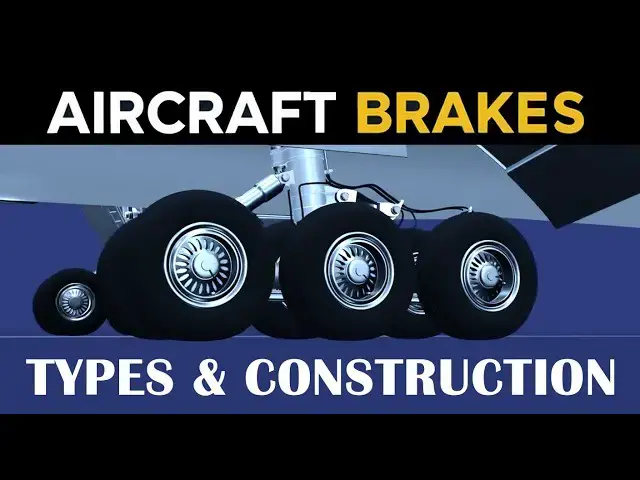
Aircraft braking systems are far more advanced than most people realize. From simple single-disc brakes on light aircraft to complex segmented carbon brakes on modern airliners, each system is engineered to safely absorb massive energy during landing.
In this video, we break down how aircraft brakes are built, how they work, and why different aircraft use different designs. You’ll learn about:
✈️ Single, dual, and multiple-disc brakes
✈️ Floating- and fixed-caliper systems
✈️ Segmented rotor-disc brakes
✈️ Carbon brake technology
✈️ Older systems like expander-tube brakes
✈️ Key components, heat management, and automatic adjusters
Whether you're a student, pilot, AME, or aviation enthusiast, this guide gives you a clear understanding of the types and construction of aircraft brake systems and why they’re essential for safe landings.
#aircraftsystems #aviationeducation #aerospaceengineering #pilottraining #flightschool #airframe
---------------------------------------------------------------------------------------------------------------
✈️ Aircraft Maintenance Study Resources
Download professionally prepared, fillable & printable PDF question papers designed for:
• Airframe Systems
• Powerplant Systems
• General Maintenance
Show More Show Less View Video Transcript
0:03
Modern aircraft rely on highly
0:05
engineered braking systems to safely
0:07
slow down, stop, and maneuver on the
0:10
ground. But the technology behind these
0:12
systems has evolved tremendously since
0:14
the earliest days of aviation. In this
0:17
video, we explore how aircraft brakes
0:20
develop from simple mechanical friction
0:22
methods to advanced multid-disc and
0:24
carbon systems used in today's
0:25
higherformance aircraft. By
0:27
understanding how each type of brake
0:29
works and why it is used, we gain a
0:31
clearer picture of the engineering that
0:33
makes safe aircraft operations possible.
0:36
Early aircraft were built without brake
0:38
systems and depended on low speeds, soft
0:41
airfields, and the friction of a tail
0:44
skid to slow down on the ground. As
0:46
aircraft became faster, heavier, and
0:49
increasingly operated from smooth paved
0:51
runways after World War I, these
0:53
primitive methods proved insufficient,
0:55
making effective braking systems
0:57
essential for safe ground operations.
1:00
Modern aircraft rely on brakes to slow
1:02
down and stop within safe distances,
1:05
maintain position during engine run-ups,
1:07
and in some cases assist with ground
1:09
steering. The main wheels typically
1:11
carry brake units while nose or tail
1:14
wheels usually do not. Reliable brake
1:16
operation is vital for safe and
1:18
controlled aircraft movement on the
1:20
ground. Most aircraft use disc brakes
1:24
where a rotating disc is attached to the
1:26
wheel and a stationary caliper applies
1:28
friction to slow rotation. Depending on
1:30
aircraft size, weight and landing
1:33
speeds, brake systems may include single
1:35
disc, dual disc, multiple disc,
1:38
segmented rotor, or carbon brakes. While
1:40
older aircraft may still use expander
1:43
tube brakes, carbon discs are
1:45
increasingly common due to their
1:47
superior thermal and weight
1:48
characteristics.
1:50
Single disc brakes are commonly used on
1:52
small, lightweight aircraft. A single
1:54
disc is bolted or keyed to each main
1:57
wheel, so it rotates with the wheel.
1:59
Braking occurs when a fixed caliper
2:01
mounted on the landing gear axle applies
2:03
friction to both sides of the rotating
2:05
disc. Hydraulic pressure moves pistons
2:08
within the caliper, pushing the brake
2:10
pads or linings against the disc to slow
2:12
the wheel. This pressure comes from the
2:14
master cylinders connected to the rudder
2:16
pedals, which activate the brakes when
2:18
the pilot presses the upper portion of
2:20
the pedals. Floating disc brakes use a
2:24
caliper that straddles the brake disc
2:26
with multiple hydraulic cylinders built
2:28
into the housing. Each cylinder contains
2:30
a piston, return spring, and automatic
2:33
adjusting pin. The brake linings are
2:35
divided into two groups. The movable
2:38
pucks attached to the pistons on the
2:39
outboard side and the stationary linings
2:42
mounted on the inboard side of the
2:43
caliper. Some brakes, such as the
2:46
illustrated example, use three movable
2:48
and three stationary pucks, but the
2:50
exact number can vary with the design.
2:53
The brake disc is keyed to the wheel and
2:56
can slide laterally in its key slots,
2:58
allowing it to float. When hydraulic
3:01
pressure is applied, the outboard
3:03
pistons push their pucks against the
3:05
disc. The disc then shifts slightly
3:07
until it makes contact with the inboard
3:09
stationary linings, creating balanced
3:11
friction on both sides and slowing the
3:14
wheel. When the brakes are released,
3:16
return springs retract the pistons to a
3:19
preset clearance. The automatic
3:21
adjusters maintain consistent piston
3:23
travel regardless of lining wear. The
3:25
adjusting pin also serves as a visual
3:28
wear indicator with the required minimum
3:30
protrusion specified by the
3:32
manufacturer. The caliper contains
3:34
internal passages for fluid flow and
3:36
includes a bleed port for removing air
3:39
from the system. Brake bleeding must be
3:41
performed according to the
3:42
manufacturer's maintenance procedures.
3:45
Fixed disc brakes ensure equal pressure
3:47
is applied to both sides of the disc
3:49
without allowing disc movement. Their
3:52
design focuses on precise caliper
3:54
alignment and piston operation to
3:56
maintain consistent friction, proper
3:58
wear characteristics, and reliable brake
4:00
release without dragging.
4:03
Dual disc brakes are used when a single
4:05
disc cannot provide sufficient braking
4:07
force. Two discs are keyed to the wheel
4:09
with a center carrier positioned between
4:11
them. Brake linings on either side of
4:13
the carrier contact both discs when
4:15
hydraulic pressure is applied and
4:18
extended caliper bolts secure the
4:19
assembly increasing the total friction
4:22
surface area. Multiple disc brakes are
4:24
used on large and heavy aircraft where
4:27
very high braking forces are required.
4:29
These brakes work with power brake
4:31
control valves or power boosted master
4:33
cylinders. The assembly uses an extended
4:36
bearing carrier mounted to the axle
4:38
flange which supports key components
4:40
such as the annular piston, a stack of
4:43
alternating steel sters and copper or
4:45
bronzeplated rotors, a back plate and a
4:48
retainer. The sters are keyed to the
4:50
carrier while the rotors rotate with the
4:52
wheel. When hydraulic pressure pushes
4:55
the piston forward, the entire disc
4:57
stack is compressed, creating
4:59
significant friction and heat to slow
5:01
the aircraft. When the pressure is
5:03
released, return springs pull the piston
5:05
back. An automatic adjuster retains a
5:08
preset amount of hydraulic fluid in the
5:10
brake, ensuring proper clearance between
5:12
the rotors and sters as they wear. Brake
5:15
wear is checked using an external wear
5:17
gauge. These brakes are commonly found
5:20
on older transport aircraft. Because the
5:22
discs are thin and do not dissipate heat
5:25
efficiently, they can warp more easily.
5:28
Segmented rotor disc brakes are advanced
5:30
multiple disc brakes designed for the
5:32
high heat loads of large and high
5:34
performance aircraft. Their segmented
5:36
rotor construction improves air flow,
5:38
heat dissipation, and resistance to
5:41
warping, making them the standard brake
5:43
type on modern air carrier and high
5:45
performance aircraft. The brake assembly
5:48
includes a carrier or torque tube
5:50
housing, actuating pistons, a pressure
5:52
plate, an auxiliary stator plate, rotor
5:55
segments, stator plates, automatic
5:57
adjusters, and a backing plate. The
5:59
carrier attaches to the landing gear,
6:01
and contains multiple hydraulic
6:03
cylinders. Many designs alternate
6:05
cylinders between two hydraulic sources,
6:08
so the brake remains functional if one
6:10
source fails. Hydraulic ports and a
6:13
bleed fitting are also part of the
6:14
housing. The pressure plate driven by
6:17
the actuating pistons compresses the
6:19
stack of alternating sters and rotor
6:22
segments. Insulating materials reduce
6:24
heat transfer from the discs. Staters
6:27
are keyed to the torque tube and carry
6:29
replaceable lining blocks that help
6:31
dissipate heat. Segmented steel rotors
6:34
keyed to the wheel include slots or
6:37
separated sections that improve cooling
6:39
and allow thermal expansion. When
6:41
hydraulic pressure is applied, the rotor
6:44
stator stack is squeezed against the
6:46
backing plate, producing the friction
6:48
needed to slow the wheel. Retraction
6:50
springs and auto clearance adjusters
6:52
pull components apart when pressure is
6:55
released, maintaining proper running
6:57
clearance, whereas monitored using
6:59
built-in indicators such as protruding
7:01
pins or other manufacturer specified
7:03
designs. Some brakes use an adjuster
7:06
pin, ball, and tube system to limit
7:08
piston return and automatically
7:10
compensate for lining wear. Carbon
7:13
brakes represent the latest evolution in
7:16
braking technology. Built from carbon
7:18
fiber materials, they are approximately
7:20
40% lighter than steel brakes,
7:23
significantly reducing overall aircraft
7:25
weight. They withstand much higher
7:27
temperatures, dissipate heat quickly,
7:30
maintain structural integrity under
7:32
extreme thermal conditions, and last 20
7:34
to 50% longer than steel brakes. The
7:37
primary limitation of carbon brakes is
7:40
their high manufacturing cost, though
7:42
this is decreasing as technology
7:44
advances.
7:46
Expander tube brakes, widely used from
7:48
the 1930s to the 1950s, use a fabric
7:51
reinforced neoprene tube placed inside a
7:54
brake drum. When hydraulic fluid enters
7:56
the tube, it expands outward and presses
7:59
brake blocks against the drum to create
8:01
friction. Springs retract the tube when
8:04
pressure is removed. And some models
8:06
allow clearance adjustment. Despite
8:09
their effectiveness, their tendency to
8:11
deform when cold, swell with heat, and
8:13
leak eventually led to their replacement
8:15
by disc brake systems. Aircraft braking
8:18
systems have advanced from simple
8:20
mechanisms to highly engineered designs
8:22
that manage extreme heat and force. From
8:25
single disc brakes on light aircraft to
8:28
segmented carbon brakes on modern
8:29
airliners, each system is built for
8:32
safety, reliability, and precise
8:34
control. Understanding these systems
8:37
highlights the sophistication behind
8:39
modern aviation engineering. Thanks for
8:42
watching.
#Jobs & Education