Up next in 10

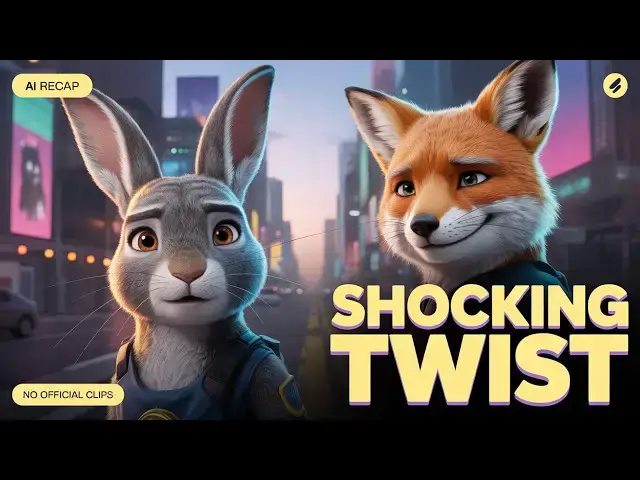
Zootopia 2 — The Shocking Twist EVERY Fan Missed (Full AI Recap | No Official Clips)
Nov 17, 2025

What if the sequel everyone’s been waiting for wasn’t just a family story, but a mirror for how cities and communities change? In this full AI-driven recap and emotional deep dive into Zootopia 2, we unpack the movie’s biggest twist, hidden symbolism, and the scenes that reframe everything you thought you knew about identity and trust.
Why you MUST watch:
Full spoiler-aware recap and scene-by-scene emotional read
The hidden twist explained: why the “behavioral modulation” twist matters for real-world tech and politics
Character breakdown: the rabbit cop’s moral arc and the fox’s surprising evolution
Visual analysis: what the color, framing, and sound design are trying to tell you
No official footage — all visuals AI-generated and original
What you’ll learn:
How Zootopia 2 uses allegory to ask hard civic questions
Why the final confrontation is about listening more than winning
The small moments that reveal the film’s true ethical thesis
Spoiler warning: This video contains full plot and ending analysis. Watch the film first if you prefer surprises.
If this breakdown gave you new insight, like the video and subscribe for weekly AI-driven movie deep dives. Tell us in the comments — which character choice surprised you the most?
Legal disclaimer: This is an interpretative AI recap & analysis inspired by a film concept. No copyrighted footage, actor likenesses, or official material used. All visuals are original or AI-generated for educational and analytical purposes.
Show More Show Less View Video Transcript
0:00
In a city that learned to braid teeth
0:02
and toothless smiles into a single
0:04
rhythm, something small and precise
0:07
begins to unspool the pattern. On its
0:10
surface, the metropolis sings in color.
0:13
Market stalls that smell like citrus and
0:16
varnish. Treml lines that glint like a
0:19
string of glass beads. Neighborhoods
0:21
stitched together by promises and polite
0:23
nods. Yet beneath the laughter and
0:26
painted banners, there is a subtle
0:28
shudder. A question about what happens
0:30
when convenience outpaces consent. When
0:33
systems meant to hold us close, instead
0:35
pull at the seams. At the heart of the
0:38
story are two unlikely partners. A
0:40
determined rabbit cop whose conviction
0:42
reads in the set of her shoulders and a
0:44
clever fox whose sarcasm is a shield for
0:47
a softer core. They are not mythic
0:49
heroes. They are citizens in a city
0:52
remaking itself, living proof that
0:54
belonging is a daily act. The central
0:57
question the film asks is this. When
1:00
trust, phrase, and technology offers
1:03
effortless calm at the cost of autonomy,
1:05
who decides the price? The city
1:08
reintroduces itself not as a static
1:10
postcard, but as a living mosaic.
1:12
Streets thrum with motion. Slow
1:14
packadarmms tending hanging terraces,
1:17
nimble birds negotiating a skyline of
1:19
railways, predators and prey ordering
1:21
food from the same vendor with different
1:23
rhythms of speech. The camera lingers on
1:26
small things. The twitch of a whisker
1:28
when a smile is forced. The careful
1:30
avoidance of eye contact in a crowded
1:32
elevator. Because the film knows that
1:35
empathy begins in those. Our
1:36
protagonists move through these
1:39
vignettes as both participants and
1:41
observers. The rabbit cop is no longer
1:44
raw with rookie idealism. She carries
1:46
the weathered patience of someone who
1:48
has learned the limits of badges and
1:50
ordinances. The fox. Once a solitary
1:53
survivor, now strolls the city with a
1:55
practiced ease that belongs to someone
1:56
who has chosen connection over cunning.
1:59
Their relationship is shorthand for the
2:00
film's moral economy. Trust, like
2:03
traffic, requires rules, but it also
2:06
requires mutual yielding. The
2:08
narrative's inciting unease arrives at a
2:11
public celebration, a colorful festival
2:14
meant to honor the city's d. It is the
2:16
sort of scene meant to reassure
2:19
performances, shared meals, laughter
2:22
that feels practiced. Yet amid the
2:24
confetti, a sequence of small oddities
2:27
accumulates. Herbivores who had always
2:29
been placid snap at fruit they once
2:32
sold. A normally reticent predator
2:34
hesitates to cross an intersection
2:36
despite a green light. A childlike
2:38
rodent freezes mid laughter and stares
2:40
at nothing. Individually, these
2:42
incidents could be dismissed as quirks.
2:44
Together they form a tremor when the
2:47
rabbit and the fox begin to piece these
2:50
moments together. The pattern points to
2:52
a cause that is at once clinical and
2:54
cultural. An engineered influence
2:56
altering behavior in a way that trenches
2:58
old instincts into newly anxious
3:00
behaviors. The discovery is not
3:02
immediate, but it flickers in labs and
3:04
alleys alike. A scent, a pulse, a
3:06
software patch, faint threads that when
3:09
woven show an intervention not simply on
3:11
the body, but on the social fabric. The
3:14
city's reaction is a chorus of fear and
3:17
reason. Officials murmur reassurances.
3:19
Neighborhood groups erect makeshift
3:22
defenses. Conspiracy-minded vendors sell
3:24
cleansing talismans with earnest smiles.
3:27
Our duo's investigation peels back
3:30
layers. A laboratory with sterilized
3:32
chrome where resetters tinkered with
3:34
behavior for safety measures. A startup
3:37
boardroom where efficiency and profit
3:39
blurred into an unexamined mandate. A
3:41
home where an elderly creature sits
3:43
isolated, repeating placid routines held
3:46
together by a device that promised fewer
3:48
accidents and more predictability. As
3:51
tension rises, the film leans into
3:53
contrasts. Scenes that opened with
3:55
comedic cadence become staccato and
3:58
brittle. A comedic street performance
4:00
turns awkward when participants misfire
4:02
their cues. A police training drill
4:04
collapses into chaos as implicit
4:07
assumptions about who will protect whom
4:08
faltered. Each incident is a reflection.
4:11
The city's talisman of progress cracks
4:14
under the weight of unintended
4:15
consequences. The investigation pushes
4:17
the protagonists into moral territory.
4:19
The rabbit, trained to uphold order,
4:22
confronts the limits of enforcement when
4:24
the problem is consent rather than
4:26
crime. Her instincts to arrest and
4:28
contain clash with a need to listen and
4:30
convene. The fox, accustomed to reading
4:33
people's edges, wrestles with guilt. He
4:36
had once sold shortcuts to safety, and
4:38
the old habit of self-preservation
4:39
returns as a coil of shame. Their
4:42
personal histories become narrative
4:44
ballast moments that illuminate why each
4:47
reacts as they do. The rabbit's memory
4:49
of being dismissed as inconsequential
4:51
because of size. The fox's recollection
4:53
of survival through trickery returns
4:56
with new urgency. Short analytical
4:58
commentary threads through the action.
5:01
The film suggests that regression, the
5:03
slipping into old fears, is often less a
5:05
moral failing than a structural symptom.
5:07
When systems promise to smooth the edges
5:10
of daily life without asking whose hands
5:12
they put the controls into, the price is
5:15
agency. Technology in this telling is
5:18
not a villain in itself, but a mirror
5:21
that magnifies the city's unresolved
5:23
anxieties. The conflict tightens when a
5:25
watchdog group uncovers the origin. a
5:28
tech consortium whose pitch began with
5:30
safety and ended in subtle behavioral
5:32
modulation. Their devices promised to
5:34
harmonize traffic to reduce conflict to
5:37
optimize communal rhythms. In private,
5:40
they ran experiments that tuned
5:41
responses across populations, amplifying
5:44
anxiety in some groups to test
5:46
corrective algorithms. The revelation is
5:49
not simply about corporate malfeasants.
5:52
It forces the city to reckon with its
5:54
appetite for quick fixes and the ease
5:56
with which convenience can be framed as
5:58
consent. The moral breaking point
6:00
arrives when the city fragments some
6:03
districts barricade themselves behind
6:05
vigilante protocols, convinced that
6:08
strict segregation is the only remedy.
6:10
Others demand the immediate removal of
6:12
every device and the prosecution of
6:14
every engineer. The film does not
6:17
descend into a reductive binary.
6:19
Instead, it shows the messy human cost.
6:23
Neighbors who stop speaking, markets
6:25
shuttered. Trust that once flowed
6:27
through shared rituals reduced to weary
6:28
glances. The final act turns from
6:31
spectacle to communion. Rather than
6:33
staging a climactic confrontation
6:35
between heroes and villains, the film
6:37
stages a public reckoning. The rabbit
6:39
and the fox choose a rhetoric over
6:41
retribution. They curate testimony.
6:45
Small stories of harm and everyday
6:47
bravery. Voices that were previously
6:49
overlooked, now amplified. An elderly
6:52
merchant speaks of nights where the
6:54
device made his hands tremble. A group
6:56
of students recounts losing the
6:58
spontaneity of play. A former skeptic
7:01
shares how the artificial commast deep
7:03
loneliness. These testimonies work not
7:05
as evidence in courtrooms, but as
7:07
stitches that reweave civic life. The
7:10
broadcast is imperfect and raw, yet the
7:12
honesty rehumanizes the city as in a
7:15
powerful scene. A predator who once
7:17
retreated into fear stands and
7:19
apologizes to a family of smaller
7:21
creatures for past avoidance. Not
7:24
because law obliges it, but because
7:26
recognition opens a path to repair. The
7:29
device makers are not vanquished by a
7:31
single legal strike. Their power
7:33
evaporates as communities reclaim
7:35
oversight and insist on transparency,
7:38
consent, and accountability. Resolution
7:41
is procedural and personal. New
7:43
protocols are drafted in open forums
7:46
requiring community representation and
7:48
clear optins. The rabbit cop learns a
7:50
crucial lesson. Her badge is not a
7:53
solution to communal sorrow. Her role is
7:55
to convene and protect the space where
7:58
voices can be heard. The fox discovers
8:00
that trust is not a one-time gamble, but
8:02
a slow reclamation through repeated
8:04
small acts. The emotional shift is
8:07
subtle. Posture softens. Sarcasm yields
8:11
to steadier humor. Small reconciliations
8:14
replace dramatic gestures. The film
8:16
closes on a note of pragmatic hope. Not
8:19
a tidy utopia, but a city that
8:20
understands it must tend to its
8:22
agreements, repair its mistakes, and
8:24
remain vigilant about the seductions of
8:26
effortless safety. Beneath its animated
8:29
paladin, comedic set pieces, the story
8:31
functions as a civic fable about
8:33
consent, technology, and the labor of
8:36
belonging. Color and motion are not
8:38
merely aesthetic choices. They signify
8:42
moral temperature. Saturated hues signal
8:45
communal vitality. Flattened tones mark
8:48
ethical blind spots. Faces tiny shifts
8:50
in expression. A flinch of soften at eye
8:53
become the most honest barometer of the
8:55
city's health. The film's insistence on
8:57
close-ups is also an ethical insistence
9:00
that empathy begins in looking and is
9:02
sustained by recognition. Symbolic Adi,
9:06
the engineered scent, the behavioral
9:08
device, and the corporation represent
9:11
different aspects of a single anxiety,
9:13
the desire to outsource the hard work of
9:15
cohabitation to algorithms, and the
9:18
willingness to trade autonomy for the
9:20
promise of safety. The narrative
9:21
reframes these technologies as
9:23
amplifiers of pre-existing tensions
9:26
rather than instigators of them. This is
9:28
crucial. The film resists simplifying
9:31
blame to an external villain. Instead,
9:33
it points a mirror at a community that
9:35
too readily exchanged participation for
9:37
convenience. The protagonists model the
9:40
film's moral prescription. Systems must
9:43
be governed by the governed. The
9:44
rabbit's move from enforcement to
9:46
facilitation, and the fox's move from
9:48
cynicism to steady engagement illustrate
9:51
that institutional change depends on
9:53
both design and relationships. The film
9:56
proposes repair not as a top-down
9:58
decree, but as a participatory chorus of
10:01
small gestures, listening circles,
10:03
restitution, and new practices that
10:06
prioritize consent. Tone-wise, the film
10:09
balances kinetic humor with moral
10:11
gravity. It speaks to children through
10:13
its vivid imagery and to adults through
10:15
its ethical concerns. It refuses to
10:17
flatten complexity into simple more.
10:19
Instead, it offers a process. identify
10:23
harm, make visible the hidden costs, and
10:25
then rebuild with accountability. In
10:27
doing so, it honors the messy ongoing
10:30
nature of civic life. This story is a
10:33
reminder that belonging is not a static
10:35
status, but an ongoing practice. Systems
10:38
and technologies will keep promising
10:39
easier lives, but the film insists that
10:42
ease must never replace agency. When
10:45
communities insist on being heard and
10:47
included in decision-making, the
10:49
seductive calm of automation gives way
10:51
to a more resilient, humane order. If
10:54
you enjoyed this cinematic breakdown,
10:56
subscribe for more. A we untangle the
10:58
meanings behind movement, color, and
11:01
quiet looks and bring them back to you
11:04
so your next viewing comes with a deeper
11:07
listening.
#Discrimination & Identity Relations
#Animated Films
#Family Films