Up next in 10

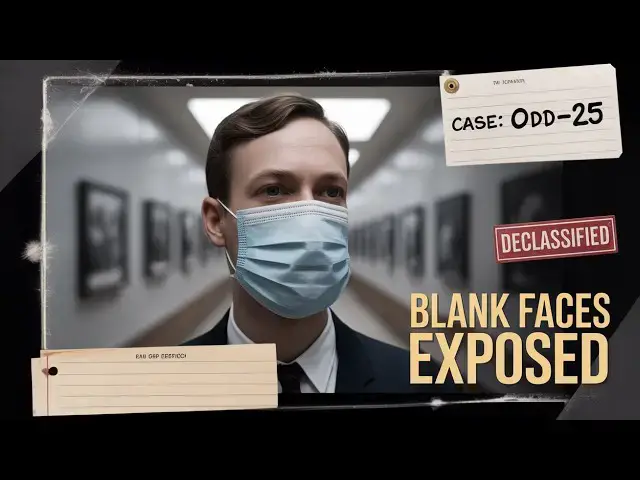
Oddity — The Disturbing Truth Behind Those Blank Faces (Full AI Recap | No Official Clips)
Nov 17, 2025

What does it mean when faces stop belonging to the people who wear them? In this full AI-driven recap and deep analysis of Oddity (2025), we peel back the film’s surgical lighting, neutral masks, and uncanny silence to uncover a moral puzzle about identity, care, and the cost of cosmetic repair.
Why watch this breakdown:
Full spoiler-aware recap and emotional interpretation
Symbolism decoded: masks, neutral faces, and the ethics of “fixing” the interior
Scene anatomy: how light, framing, and sound create a feeling of unreality
Character arcs explained: the sculptor, the curator, and the researcher — and what they represent
No official footage — visuals in the video are original AI-generated imagery
What you’ll learn:
Why the film treats technology and art as both remedy and sedation
How institutional incentives can turn care into containment
Why the film’s final scene is less a cure and more a radical call to listen
Spoiler warning: This video contains full plot and ending analysis. Watch the film first if you prefer surprises.
If this breakdown opened your eyes, hit Like and Subscribe for weekly AI-driven movie deep dives. Tell us in the comments — would you choose comfort or messy truth?
Legal disclaimer: This is an interpretative AI recap & analysis inspired by the film concept. It contains no copyrighted footage, no real actor likenesses, and no official material. All visuals in this video are original or AI-generated for educational and analytical purposes.
Show More Show Less View Video Transcript
0:00
Some rooms refuse to belong to anyone.
0:03
They sit at the edge of perception, lit
0:05
too brightly for comfort or clipped so
0:08
hard by fluorescent truth that skin
0:10
seems like paper. In this film, the
0:13
world feels slightly offkilter.
0:15
The moment you wake up, faces are
0:18
neutral. Expressions arrested like
0:20
museum busts. Light cuts like a scalpel.
0:24
Sound refuses to settle. The central
0:26
question whispers beneath every frame.
0:28
When the body and the soul are in
0:30
different rooms, who negotiates their
0:32
reunion and at what cost? We meet people
0:35
who move through this world as if they
0:37
are remembering how to live. A young
0:40
sculptor, precise and restless.
0:42
Fashions, shapes that look like people
0:45
without quite committing to their
0:46
humanity. A mid-career curator,
0:49
diplomatic, and tired, arranges
0:51
exhibitions that ask too much of viewers
0:53
who are trying to look away from their
0:55
own reflections. A clinical researcher,
0:57
methodical and curious, cataloges,
1:00
anomalies that do not fit any known
1:02
taxonomy of mind or muscle. None wear
1:05
names that anchor them. They are roles,
1:08
attitudes, specimens of modern unease.
1:11
Their interactions form a lattice
1:13
through which the film trace as a slow
1:15
in Basibbeon. The inciting oddity
1:18
arrives like a miscalibrated note. The
1:20
sculpture wakes one morning feeling a
1:22
voice under her skin, not words, but a
1:24
presence that shifts the world's
1:27
temperature by a fraction of a degree.
1:29
Her hands, trained to carve and to
1:31
measure negative space, begin to tremble
1:34
not from fatigue, but from a perception
1:36
slipping between physicality and ghost.
1:39
Faces in photographs that once seemed
1:41
neutral now look as if they are
1:42
listening, anticipating. People begin to
1:45
report misalignments. A pedestrian who
1:48
cannot feel the touch of a handshake. A
1:50
singer whose expression remains carved
1:52
while her voice breaks. A child who
1:54
holds a toy but speaks of an emptiness
1:56
inside it. These are not supernatural
1:59
intrusions. They are departures of the
2:01
ordinary into a phenomenon that resists
2:03
easy naming. The film elects for
2:05
observation over explanation. Camera
2:08
frames are still like held breaths.
2:10
Close enough to catch the tiny twitch of
2:12
an eyelid, but far enough to keep motive
2:14
ambiguous. Lighting is surgical. White
2:17
so bright it erases nuance or so harshly
2:19
angled that the smallest plane of a
2:21
cheek takes on the gravity of a cliff.
2:23
Sound is layered as an interior.
2:26
Metabolic rhythms amplified. The whur of
2:29
a projector. The faint hiss of a
2:31
respirator. This design makes dissonance
2:34
feel public. Internal stranges is given
2:37
a civic stage. As the anomalies
2:40
accumulate, the character's strategies
2:42
diverge.
2:43
The sculptor tries to translate the
2:45
unseen into form. She makes masks that
2:48
are neutral facades meant to reconcile
2:51
people to their own absence, a practical
2:53
art project that becomes a clinical
2:55
instrument. The curator sees the
2:57
potential for spectacle and wonders
2:59
whether giving the public a mirror might
3:01
also be a kind of therapy. The
3:03
researcher who collects data like bones
3:06
seeks patterns. Is there an
3:08
environmental catalyst, a contagion of
3:10
perception, or an emergent property of
3:13
modern isolation? Each response is an
3:16
attempt to repair the tear between flesh
3:18
and interiority. But all are shaped by
3:21
habit. Art seeks meaning. Institutions
3:24
seek audiences. Science seeks closure. A
3:28
short analytical aside, the film insists
3:31
that the body and soul's divergence is
3:33
less an accident than a symptom. The
3:35
neutral faces and the hard light reflect
3:38
a society that prefers clear surfaces to
3:41
the difficult work of interior
3:42
translation. In this reading, the
3:44
phenomenon is a mandate to look inward,
3:47
but the instrument of revelation is
3:49
blunt and often cruel. The first major
3:52
break in the narrative comes as an
3:54
ethical problem. Dressed in quotedian
3:56
clothes, the sculptor's masks work in
3:58
empirical ways that shock and thrill.
4:01
People who wear them report a temporary
4:03
reintegration.
4:04
Touch feels less foreign. Laughter is
4:07
less automatic. A peripheral warmth
4:10
returns. The curator proposes an
4:12
exhibition, a space where people can try
4:14
the masks, confront their voids, and
4:17
possibly reconcile. The researcher, both
4:20
wary and fascinated, agrees to monitor
4:22
outcomes for a moment. The enterprise
4:25
feels hopeful. A public clinic disguised
4:27
as art. But as more individuals submit,
4:30
data emerges that complicates hope. Some
4:33
who men become dependent. Others show a
4:35
widening gap where repairs seem to hold.
4:38
The masks, like any prosthetic, do not
4:41
cure the wound so much as help the mind
4:43
forget its shape while the body
4:44
continues to bear the scar. Tension
4:46
escalates when the film refuses to host
4:49
a tidy moral. A scene that appears at
4:51
first as success. A community gathering
4:54
in the gallery hushed and reverent
4:56
fractures into ethical dispute. A mother
4:59
says the mask made her son smile
5:01
unchanged for the first time in months.
5:03
A neighbor says the mask erased the
5:05
son's protestations that had been his
5:07
only means of warning the community
5:09
about something real. The researcher
5:11
reveals statistical anomalies. A subset
5:14
of wearers demonstrate dissociative
5:16
episodes afterward. Micro absences where
5:18
the person is present in form but not in
5:20
narrative. These absences are not
5:23
theatrical. They are lived. The film
5:26
uses this to force an uncomfortable
5:28
question. Are we willing to prioritize
5:30
the comfort of surface cohesion over the
5:32
mess of engaged embodied suffering?
5:35
Symbolic imagery punctuates the
5:37
conflict. In one key sequence, the
5:40
sculptor returns to the studio late at
5:42
night and carefully arranges the masks
5:45
like a choir with blank mouths. She sits
5:47
among them and tries a small
5:49
experimental piece on herself. The
5:51
mirror shows a face that is both hers
5:54
and not hers. The camera lingers on her
5:56
hands. The tools of making tremulus as
5:59
they consider whether craft can write
6:01
what is on. Elsewhere, the researcher
6:03
visits a hospital ward where patients
6:05
lie with neutral expressions. Machines
6:08
translating their vitals into single
6:10
line graphs. The graphs look neat. The
6:13
living beneath them do not. These images
6:16
build a psychological pressure that
6:17
feels ethical rather than sensational.
6:20
The narrative's major twist is not a
6:22
reveal of the otherworldly, but a
6:23
revelation about complicity. The masks
6:26
and procedures that promised reunion are
6:28
discovered to be an attractive form of
6:30
social sedation. Institutions pressured
6:32
by donors, by the desire for positive
6:35
headlines, by the soothing optics of
6:37
apparent repair begin to
6:39
institutionalize the practice. The film
6:41
shows how easy it is for good intentions
6:43
to calcify into norms that relieve
6:46
collective conscience at the cost of
6:48
individual interiority. A critical
6:51
meeting unfolds in a conference room
6:53
where the curator negotiates with a
6:55
hospital administrator, a program to
6:57
distribute prosthetic masks beyond the
6:59
gallery into long-term care.
7:03
Language slides from care to protocol.
7:05
The clinician's concern becomes a
7:07
checkbox. The sculptor watches this and
7:10
realizes that what she made as a tool
7:11
for connection is being repurposed as a
7:14
method of containment. Emotional
7:16
breaking point follows. A publicized
7:18
display where masks are distributed at
7:20
scale ends with a patient who fails to
7:22
return to narrative coherence. The
7:24
public reaction swings. Grateful
7:27
families, skeptical activists,
7:29
journalists who press the researcher for
7:31
more scandalized data. The sculptor who
7:34
wanted to deliver solace now must
7:36
confront an industry of remedy that
7:38
feels sterile and extractive. Her arts
7:40
becomes a spotlight on institutional
7:42
choices that prioritize order over the
7:45
more laborious uncertain work of
7:47
listening. The climax is intimate and
7:49
morally fierce. The sculptor must decide
7:52
whether to withdraw her work and let the
7:54
unknown continue to unfold or to refine
7:56
the masks into something that demands
7:58
reciprocity.
8:00
that is not simply to smooth over
8:02
absence but to require attention,
8:05
testimony, and time. She chooses the
8:08
harder path. In a sequence of small
8:11
powerful gestures, she modifies the
8:13
masks so they can record sound whispers,
8:16
unguarded confessions, but only for a
8:18
limited time. Then they the masks become
8:21
instruments that force conversation
8:24
rather than silence it. The gallery
8:26
becomes less a place of passive display
8:28
and more a space of ritualized
8:30
listening. Volunteers commit to sit with
8:33
wearers to repeat their stories back to
8:36
practice patience. Repair becomes
8:38
collaborative work instead of a
8:40
consumable product. Resolution is
8:43
neither triumphant nor terminal. The
8:45
community, bruised and changed, begins
8:48
to experiment with practices that slow
8:50
the rush to cosmetic closure. The
8:52
curator resists institutional mandates
8:54
for widespread distribution and instead
8:57
cultivates training programs that
8:59
encourage caretakers to learn the
9:01
language of interiority. The researcher
9:03
documents outcomes that show modest
9:05
gains where sustained attention is
9:07
present and a cautionary note where
9:10
quick fixes proliferate. The sculptor
9:12
returns to hands-on work, making masks
9:15
that are intentionally imperfect,
9:17
refusing to sanitize lived complexity.
9:19
The film closes on a scene of small
9:21
gatherings, a municipal center where
9:24
people practice telling their truncated
9:26
stories into a device that will not
9:28
publish them, but that will be listened
9:29
to. These gatherings are imperfect,
9:32
messy, and human. In its ending
9:35
analysis, the film asks us to consider
9:37
the aesthetics of reality. The neutral
9:40
faces and harsh light were not just
9:42
stylistic choices, but ethical
9:44
provocations. They ask whether our
9:46
cultural preference for tidy surfaces
9:48
has become a mechanism of eraser. The
9:50
masks symbolize technologies of comfort
9:53
that risk becoming tools of abdication.
9:57
The film does not condemn technology. It
9:59
interrogates the social economies that
10:02
turn instruments into panaceas. It
10:04
insists that healing is not always a
10:06
product to be marketed. Sometimes it is
10:08
a slow choreography of attention,
10:10
testimony, and mutual labor.
10:13
Emotionally, the story navigates guilt,
10:16
grief, hope, and the peculiar tenderness
10:19
of sustained care. Characters are held
10:21
accountable not by spectacle, but by the
10:23
ongoing, sometimes boring demand of
10:26
care. The sculptures moral arc, from
10:28
maker of facades to an advocate for
10:31
listening, ex the film's thesis, art,
10:33
and technology can facilitate
10:35
reconnection, but only if they are
10:37
coupled to practices that resist com.
10:39
The researchers humility and the
10:41
curator's shifting priorities suggest a
10:43
model where institutions can bend toward
10:46
ethics if pushed by persistent commonal
10:49
insistence.
10:51
Tone and direction are worth noting. The
10:54
film's visual severity invites
10:56
discomfort. The longer shots and
10:57
clinical lighting force the viewer into
10:59
unflinching proximity with the uncanny
11:02
sound design pools. The almost
11:05
imperceptible whisper in a gallery
11:07
becomes a moral instrument, coaxing the
11:10
audience into reflection rather than
11:11
reaction. The result is an artwork that
11:14
is both cerebral and tender, unnerving,
11:17
but ultimately invested in human
11:19
reconnection. The final image is small
11:21
but decisive. The sculptor in a public
11:24
room sits with a person who has been
11:26
neutral for months. There is no grand
11:29
reversal, no cinematic healing. Instead,
11:32
there is a moment of exchange,
11:35
a whispered story, a hand placed over
11:38
another hand, a pause long enough to
11:41
hold weight. The camera pulls back to a
11:43
cooler, wider frame where other people
11:45
sit and listen, not curing, but
11:48
witnessing. The film's last insistence
11:50
is that to live fully is to risk the
11:52
world of interiority, to allow faces to
11:55
be unstable and stories to take time.
11:57
This instability, the film suggests, is
12:01
the texture of a life worth tending. If
12:03
you found this analysis illuminating,
12:05
subscribe for more AIdriven recaps and
12:08
deep dives. We unpack the ways films ask
12:11
difficult questions about how we live
12:13
together. And sometimes the hardest work
12:16
is learning to
#Drama Films