Up next in 10


What if a city’s quiet corners were telling us a story we refused to listen to? In this full AI-driven recap and deep analysis of Weapons (2025), we peel back the film’s industrial sheen to expose the social logic underneath — crises disguised as routine, architecture that normalizes danger, and the human faces pushed to the edge.
Why you can’t miss this:
Complete, spoiler‑aware recap and psychological breakdown
Deep dive into the film’s social critique: systemic breakdown, neighborhood collapse, and collective responsibility
Visual and sound analysis: why industrial colors, fixed frames, and ambient noise become the film’s real characters
Character motivations decoded: how ordinary people turn choices into consequences
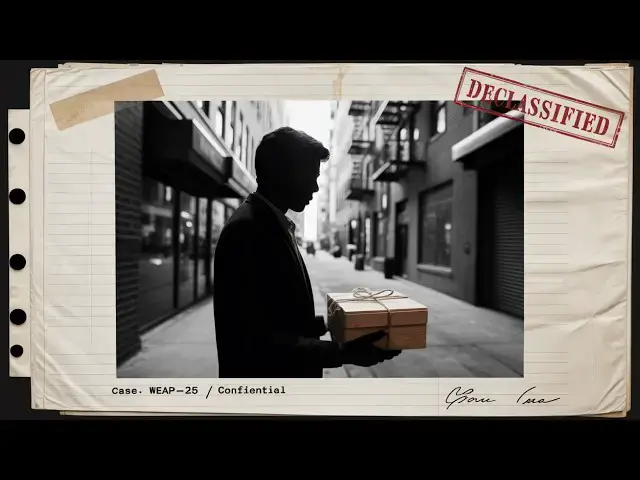
No official footage — all visuals AI-generated and original
What you’ll learn:
The hidden meaning behind the film’s most haunting images
How composition and color create a feeling of inevitability and moral weight
Why the film’s ending reframes blame as a communal problem, not an individual failing
Spoiler warning: This video contains full plot analysis and ending explanation. Watch the film first if you prefer surprises.
If this breakdown opened your eyes, hit Like and Subscribe for weekly AI-driven movie deep dives. Share your thoughts — what scene haunted you the most?
Legal note: This is an interpretative AI recap & analysis inspired by the film concept. No copyrighted footage, actor likenesses, or official material used. All visuals in our video are original or AI-generated for educational and analytical purposes.
Show More Show Less View Video Transcript
0:00
Some cities are made of glass and
0:02
asphalt. Others are made of sound. The
0:05
constant low-frequency hum of machines.
0:08
The distant thought of a construction
0:09
site. The overheard fragments of
0:11
conversation that stitch neighborhoods
0:13
together. In this film, the city is its
0:16
own organism. Industrial colors washing
0:18
across facades like bruises. Fixed
0:20
camera frames that hold each street like
0:23
an evidence photograph. The question at
0:25
the center of the story is not who fires
0:27
a gun, but how a culture of weapons
0:30
becomes a vocabulary for a community.
0:32
When instruments intended for defense
0:34
turned into the grammar of fear, and
0:36
when survival strategies calcify into
0:39
everyday logic, we meet the city through
0:42
people who carry its contradictions in
0:44
their bodies. A conflicted detective
0:46
moves through streets with the tired
0:48
cadence of someone who has seen too many
0:50
small tragedies add up to one enormous
0:53
pattern. A community organizer keeps
0:55
late hours in a church basement, mapping
0:57
resources with an obsessive tenderness
0:59
because she believes the map can be a
1:01
kind of care. A young man, restless and
1:05
clever, learns to read the city the way
1:07
others read books, where the lights
1:09
flicker, where the stoop is empty at
1:11
night, where the siren tends to pass. A
1:14
grieving mother sits at a kitchen table,
1:16
her hands wrapping and unwrapping a
1:18
photograph as if the motion might
1:20
reassemble what was taken. Each holds a
1:22
piece of the puzzle, and each is shaped
1:25
by the ways the city arms itself. The
1:27
inciting fisher is small and ordinary at
1:30
first, a confrontation in a doorway, the
1:32
exchange of a package in an alley. Arms
1:35
are not always visible, sometimes they
1:37
are symbols passed as glances. Sometimes
1:40
paperwork filed in a back room, a rumor
1:42
moves faster than law. A new flow of
1:45
small industrial weapons finds its way
1:47
into neighborhoods previously untouched
1:49
by that kind of commerce. They are
1:51
cheap, efficient, and designed to be
1:53
anonymous. The first destabilization is
1:56
benal. A quarrel that becomes a rumor. A
2:01
rumor becomes a threat. A threat becomes
2:03
a decision to arm. And when decisions to
2:06
arm coales, a new equilibrium is born.
2:09
The film refuses melodrama and instead
2:13
examines the arithmetic of escalation.
2:15
It lingers on grocery aisles and
2:17
laundromats, on stoops where men talk in
2:20
tones that do not quite reach their
2:22
eyes. Fixed frame shots hold these
2:24
scenes until the viewer is forced to sit
2:25
with the tension that accumulates in the
2:27
spaces between lines. The soundtrack is
2:30
not a drum beat of terror, but a
2:31
background hum, air vent whistles,
2:34
distant machinery, the steady throb of a
2:37
city that never fully sleeps. This sonic
2:40
landscape makes the ordinary feel
2:42
precarious. It insists that violence in
2:44
the film is not an eruption but a slow
2:46
structural shift policy, economy, and
2:49
emotion folding into one another. As
2:51
weapons proliferate, the characters
2:53
begin to alter themselves to fit the new
2:56
grammar. The detective, who once trusted
2:58
facts and procedure, discovers that
3:01
systems meant to protect are porous,
3:03
forms misplaced, tips ignored, a
3:06
complacency that looks like
3:08
inevitability. He begins a quiet
3:10
investigation, not because he loves his
3:12
work, but because he needs to understand
3:15
how supply becomes sanctioned. The
3:17
organizer tries to run an intervention,
3:19
convening meetings that try to turn fear
3:21
into strategy. But she meets an
3:23
exhaustion older than her own efforts.
3:25
Parents who have decided their children
3:27
must be armed to return from school.
3:29
Shopkeepers who build plexiglass
3:31
barriers, more from a posture of
3:33
resignation than defiance. Short
3:36
analytical aside, the film positions
3:38
weapons not merely as objects but as
3:41
institutions, nodes in an economy and
3:43
culture. They are signifiers that
3:45
someone has answered a question about
3:46
security with a transactional solution.
3:49
But behind every purchase, the narration
3:51
in tones lies a ledger of absence.
3:55
Absent investment, absent trust, absent
3:58
alternatives. The narrative tension
4:00
tightens when a seemingly isolated
4:02
incident yanks the city's fragile order.
4:04
A late night dispute ends in the echo of
4:07
gunfire. The immediate consequences are
4:09
human and small. A neighborhood
4:11
shuttered. A child who will not leave
4:13
the apartment without a hand squeezed. A
4:16
single block that will never look the
4:18
same. But the emotional currents ripple
4:21
outward. Each side tells itself a story
4:24
that justifies the next step. More
4:26
locks, more arms, more suspicion.
4:29
Authorities respond with visible
4:31
displays of deterrence, deploying metal
4:33
barriers and nighttime patrols, measures
4:36
that look decisive yet feel
4:38
performative. The film draws attention
4:40
to the choreography. Each new security
4:42
measure signals a deeper retreat from
4:44
civic trust. The confrontation reaches
4:46
psychological intensity rather than
4:48
spectacle. The detective discovers an
4:50
armament supply chain funneled through
4:52
legal loopholes and euphemistic
4:54
paperwork. The young man, once curious
4:58
and alert, finds himself at a
5:00
crossroads, join a circle that promises
5:03
protection through escalation or walk
5:05
away and risk being marked as soft. In a
5:08
culture that rewards preeemption, a
5:10
vendo who sells pots not to harm, but to
5:12
make ends meet, begins to see his hands
5:14
shaking as parcels multiply. The
5:17
organizer tries to broker a community
5:19
agreement, a pledge to disarm certain
5:21
blocks and invest in lighting and youth
5:23
programs. And for a heartbeat, it seems
5:26
possible. People gather in a gymnasium
5:28
with folding chairs. And for a night,
5:31
the city holds its breath. They exchange
5:34
stories, not statistics, but lived
5:37
accounts of what arming has cost them.
5:39
There are tears, nods, small acts of
5:42
shame and beauty. For one evening,
5:44
alternatives exist in conversation, but
5:47
the film refuses easy solutions. A major
5:50
twist arrives when the organizer s
5:52
efforts are undermined by structural
5:54
forces. A landlord who threatens
5:56
evictions if property is not secured. An
5:59
insurance company that raises premiums
6:01
in response to reported risk. A
6:03
political figure who uses fear as
6:05
leverage for votes. The moral breaking
6:07
point is not a single betrayal, but the
6:09
slow revelation that systemic incentives
6:11
are aligned against community repair.
6:13
The gymnasium's good intentions keep
6:15
bumping into material realities that
6:18
pull in the opposite direction. The
6:19
young man's resolve buckles when someone
6:21
he cares about is pushed into a
6:23
desperate choice. The detective sees
6:25
bureaucratic inertia convert into tacit
6:28
complicity. The film makes clear that
6:30
blame is not a simple moral arrow. It is
6:32
dispersed across markets, policies, and
6:35
histories. In the climax, the narrative
6:38
stages a confrontation that is less
6:40
about flames and more about decisions.
6:42
The community faces a moment where they
6:44
must choose an axis, double down on
6:47
armament, a path that promises a certain
6:49
corrosive safety, or invest scarce
6:52
resources into restorative
6:53
infrastructures that require time,
6:56
trust, and political will. The film
6:58
avoids Kakucha by showing how both
7:00
choices are understandable. Armament
7:02
promises immediate deterrence.
7:05
Investment promises delayed returns. The
7:08
characters must decide whether they can
7:10
bear a delay in the face of fear. The
7:12
resolution is deliberate and imperfect.
7:15
The community manages to enact some
7:17
local changes. Shared child care shifts
7:20
so parents can avoid nighttime work. A
7:22
community cooperative that pools funds
7:24
to retrofit storefronts with safer
7:27
lighting. an anonymous hotline that
7:29
allows citizens to report potential
7:31
threats without escalating them. The
7:33
detective, who has been trained to
7:35
accept institutional answers, resigns
7:37
his complacency and helps shield the
7:39
organizers new programs from corrupting
7:41
influences. The young man declines the
7:43
circle that offered him belonging
7:45
through arms and instead joins an
7:47
apprenticeship program that gives him a
7:49
steady wage and a reason to stay. The
7:51
vendor redirects his supply chain toward
7:53
legitimate work with support from the
7:55
cooperative.
7:56
None of this undoes the damage. The
7:58
neighborhoods still carries scars. But
8:01
there is a shift. Not a sweeping
8:03
victory, but a mechanism for hope.
8:05
Ending analysis. The film's true
8:08
interrogation is ethical rather than
8:10
forensic. Weapons function here as
8:13
metaphors for a broader social
8:14
condition. When citizens lack
8:17
investment, when systems withdraw,
8:19
people will weaponize whatever is at
8:21
hand to survive. Industrial colors and
8:23
fixed frames underscore how modern
8:26
architecture can naturalize. A blue gray
8:29
palette creates a mood where human
8:31
warmth struggles to register. The
8:33
constant background hum is the city's
8:35
conscience. And in its absence, the
8:37
narrative warns emptiness is filled by
8:40
something more dangerous. Emotionally,
8:42
the story reframes guilt and
8:45
responsibility. It asks, who bears the
8:48
moral weight of urban violence? The
8:51
answer the film offers is communal and
8:53
distributed. Responsibility is not
8:56
solely the hand that fires a weapon, but
8:57
the ledger of choices that made the gun
8:59
feel like the only solution. Sympathy is
9:02
extended to those who arm themselves out
9:04
of fear and to those who seek longer
9:06
arcs of repair. The film refuses to
9:08
render cruelty as simple evil. It
9:11
portrays it as tangled consequence.
9:13
Critically, the film's direction merits
9:15
attention by lingering on static frames.
9:18
It compels the viewer to observe detail.
9:21
A poster peeling at the corner. A street
9:24
light that sputters like a stuttering
9:25
heartbeat. A child's drawing tape to a
9:28
storefront window. These choices amplify
9:30
the film's thesis. Violence is not only
9:33
event. It is texture. Sound design. The
9:37
low industrial drone. The distant siren
9:39
that never quite resolves builds a
9:42
constancy that feels like moral
9:44
pressure. The narrative's refusal of
9:46
high spectacle and its investment in
9:48
slow structural storytelling make it a
9:51
social parable more than a thriller.
9:53
Ultimately, the film's moral is neither
9:56
naive nor pessimistic. It proposes that
9:59
small institutions, cooperatives,
10:01
hotlines, apprenticeship programs.
10:04
Honest policing transformed into
10:06
community partnership can begin to
10:08
reweave the social fabric. It recognizes
10:10
the costs. Investments are slow.
10:13
Skepticism is high and fear does not
10:15
retreat easily, but it also insists on a
10:18
stubborn ethical truth. Weapons solve
10:20
the immediate problem of fear, but
10:22
rarely address the causes that produce
10:24
that fear. The film invites viewers to
10:26
consider alternatives that are patient
10:28
and collective, asking us to imagine a
10:31
city where protection is not a private
10:32
calculus, but a shared responsibility.
10:35
If you listen closely, the film leaves a
10:37
final image that matters. A street at
10:39
dawn industrial grays softened by a thin
10:42
light to people unarmed and walking
10:43
together carrying a single bag of paint
10:45
and the slow work of repair. It is not
10:48
triumphant, but it see in the film's
10:51
architecture of restraint that humanity
10:53
becomes the most radical weapon of all.
10:57
If you appreciated this deep dive into
10:59
the film's meaning, subscribe for more
11:02
analyzes that untangle the stories
11:04
behind the screens. We explore how
11:06
cinema mirrors our social choices and
11:09
how sometimes watching closely can teach
11:12
us how to change
#Social Issues & Advocacy
#Drama Films