Up next in 10

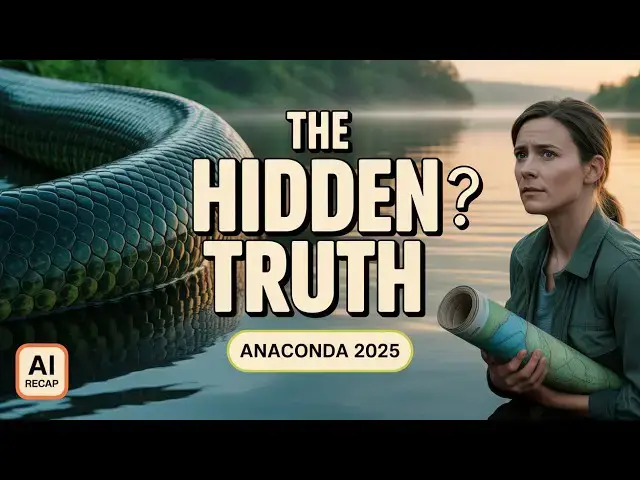
Anaconda (2025) — The Hidden Truth Lurking in the River (Full AI Recap & Meaning Explained)
Nov 16, 2025

What if the real danger wasn’t a monster hunting you, but a secret we built together? In this full AI-driven recap and analysis of Anaconda (2025), we uncover the film’s deeper meaning — an ecological fable about consequence, community, and the cost of quick fixes. No gore. No jump scares for shock’s sake. Just slow-burning tension, moral reckoning, and the quiet moments that change everything.
Why watch:
Complete, spoiler-aware recap and thematic breakdown
Symbolism explained: water, weather, and the quiet language of the wild
Emotional beats & the real-world lessons about conservation and accountability
All visuals AI-generated — no copyrighted footage or actor likenesses
What you’ll learn:
Why the river becomes the story’s moral compass
How fear is transformed into responsibility through collective action
The characters’ emotional arcs and what they teach us about stewardship
If this resonated, subscribe and turn on notifications for weekly AI-driven movie recaps and deep dives. Tell us in the comments: what theme surprised you most?
Legal note: This is an interpretative AI recap & analysis. No copyrighted footage, real actor likenesses, or official material used. All visuals are AI-generated for educational and analytical purposes only.
#Anaconda2025 #MovieAnalysis #EcoThriller #AIRecap #ConservationFilm
--------------------------------------------------------------
This video is an AI-based interpretative recap and analysis inspired by cinematic storytelling. It contains no copyrighted footage, no real actor likenesses, and no official material. All visuals are AI-generated and original, used solely for educational and analytical purposes.
Show More Show Less View Video Transcript
0:00
In the wet hush of a rainforest that
0:02
keeps its own hours, a rumor starts like
0:05
a ripple. A shadow that moves without
0:08
wind. A silence that falls too quickly
0:11
after laughter. The film opens on that
0:13
whisper. A question folded into mist.
0:16
What happens when a place defined by its
0:18
wildness begins to respond to human
0:20
trespass with a kind of deliberate
0:22
forgetting? It asks quietly and
0:25
insistently whether fear can become the
0:28
forest's voice and whether the line
0:30
between predator and protector can blur
0:32
when the stakes are only survival and
0:34
understanding. At the story center are
0:36
people who are small in the face of the
0:38
green cathedral but large in conviction.
0:41
A conservationist driven by data and a
0:43
hunger to repair harm. A local guide
0:46
whose knowledge of riverbends reads like
0:48
a living map. A retired ranger whose
0:50
patience is worn thin by years of
0:52
watching promises rot and a traveling
0:55
botnist, curious and a little naive
0:58
whose instruments cannot fully translate
1:00
the language of the wild. They are
1:02
archetypes, the steward, the
1:04
interpreter, the skeptic, the idealist.
1:08
And through their temperaments, the
1:10
forest's moods are refracted. The world
1:12
is established in texture rain that
1:15
feels like a thousand tiny discoveries.
1:18
Mud that takes footprints and keeps them
1:20
as questions and an anaconda at the edge
1:23
of myth. Enormous not merely in scale,
1:26
but as an emblem of a nature that is
1:28
patient, ancient, and indifferent to
1:31
human. The film uses weather and slow
1:34
motion to make tension palpable,
1:36
drizzles that turn into sheets, air
1:38
thick enough to carry sound only in
1:40
muffled beats, and a thunder that seems
1:42
to time its exhalations with the
1:44
character's breaths. The forest is not a
1:47
backdrop. It is a presence that watches
1:49
in green that remembers patterns of
1:51
lights on water and the cadence of
1:53
footsteps. The inciting unease is small
1:56
but telling. Boats begin to arrive with
1:58
empty nets. Traps are found disturbed
2:01
but not broken, and night calls that
2:03
once belonged to owls or frogs go
2:05
missing, replaced by a low rolling
2:08
sound, like the river drawing a long
2:10
breath. People speak differently around
2:12
the river. Jokes die in throats. Hands
2:15
avoid the places where they used to
2:17
reach. A fisherman reports. A line
2:19
pulled taught by no visible catch. A
2:22
child brings back a braided vine
2:24
threaded with unfamiliar beads. These
2:26
are not sensational events at first, but
2:28
they accumulate into a logic the
2:30
characters cannot ignore. The river is
2:32
changing its replies to human touch. As
2:35
the team convenes, the film shifts into
2:37
an investigative rhythm that favors
2:38
patience over spectacle. They survey the
2:41
banks, catalog footprints, and listen to
2:44
the water at night. In the hours between
2:46
rain and dawn, the forest seems to fold
2:49
time inward. The protagonists encounter
2:51
tresas that suggest intent. An unmarked
2:54
curve in the river's current, a pile of
2:56
crushed reads in a pattern reminiscent
2:59
of a question mark. A single long scale
3:02
half buried in the mud. Each clue
3:04
converts curiosity into unease. The
3:07
conservationist who trusts in
3:09
measurements and models finds that
3:11
instruments register anomalies the
3:13
equations did not predict. The local
3:15
guide senses patterns with his hands
3:17
before his mind can name them. The
3:19
retired ranger reads the scene as if the
3:22
forest were a ledger of dose and don'ts,
3:24
and the botonist collects samples whose
3:26
textures hum with something not yet
3:28
named. Tension escalates not through
3:30
sudden violence, but through the steady
3:32
shrinking of safe options. Trails once
3:35
considered shortcuts lengthen into
3:37
mazes. Places where radios picked up
3:39
signals now return only a flatness as if
3:42
the air itself resists being used for
3:44
human calls. The forest begins to assert
3:47
a boundary, a soft power that
3:50
inconveniences and withholds rather than
3:52
strikes outright. The emotional descent
3:55
comes from watching systems fail little
3:57
by little. A satellite that loses grip
4:00
on its feed. A GPS that loops in
4:02
circles. a well-intentioned detour
4:05
collapsing into a tangle of vines. The
4:07
characters are pressed to reconsider
4:09
their assumptions that knowledge equals
4:11
mastery that maps equal dominion.
4:14
Intermittent analytical aides underline
4:17
the thematic marrow. The film poses that
4:19
nature when neglected or exploited does
4:22
not simply rebel. It adapts in ways that
4:25
reflect our own fractures. But behind
4:28
every silence, the narration offers, "A
4:31
truth waits to be unearthed, not of
4:33
monsters, but of consequence." In this
4:36
telling, the anaconda is less a villain
4:38
and more a catalyst, a living mirror
4:41
reflecting cumulative human errors,
4:44
pollution seeping into tributaries,
4:46
ecosystems strained by extractive
4:48
practices, and the arrogance of assuming
4:50
the wild is a resource rather than a
4:52
neighbor. Complexities emerge when the
4:54
team uncovers the subtle human hands
4:56
that compounded the problem. Illegal
4:58
clearing along a tributary has altered
5:00
the flow. A nearby development has
5:03
redirected runoff. A clandestine
5:05
breeding program meant to bolster local
5:07
fisheries released specimens that
5:09
disturbed the food chain. The camera
5:11
lingers on small telling details. A
5:15
rusted crate stamped with a foreign
5:17
logo. A government report misfiled and
5:19
forgotten. A scientist notes where hope
5:22
for quick fixes outpaced ethical
5:24
precaution. This discovery reframes the
5:26
forest's response. It is not random
5:29
malice, but an ecological argument made
5:32
in scale and patience. The narrative's
5:34
psychological imagery builds like a slow
5:37
tightening coil. Scenes favor close,
5:40
intimate frames, the sheen of a scale
5:42
under torch light, the way a character's
5:45
hand hovers over water, as if sensing
5:48
currents beneath the surface. The minute
5:50
tremor in someone's jaw when memory and
5:52
fear collide, rain becomes narrative
5:55
punctuation. A soft hammer reminding the
5:58
characters of their smallalness and of
6:00
the need to listen. Sound design plays
6:03
across the script like a second voice.
6:05
The river's shush. Insects that form a
6:07
metallic cord in the night and the
6:10
distant almost inaudible rasp that
6:13
suggests something large moving in the
6:14
undergrowth. These sensory choices make
6:17
dread atmospheric rather than graphic. A
6:20
turning point comes when the team
6:21
realizes that the anaconda's movements
6:24
are not merely instinctual, but
6:26
opportunistic in response to a collapse
6:28
in prey distribution and habitat. The
6:30
creature follows corridors carved by
6:32
human neglect, and its presence is a
6:35
symptom of disrupted balance. The
6:37
emotional breaking point is embodied not
6:39
in a clear-cut battle, but in a failed
6:41
rescue attempt that leaves the
6:43
characters exposed and ashamed. Their
6:46
plans, rooted in control and
6:47
intervention, backfire because they
6:50
misread the forest's logic. The
6:52
botonist, who once believed in
6:53
sterilized intervention, witnesses the
6:56
fragile interdependence of species and
6:58
is shaken by the cost of hasten's
7:00
solutions. The retired ranger remembers
7:03
mistakes once made when law and
7:05
livelihood collided. He must confront
7:07
his own complicity in ignoring slow
7:09
warnings for the sake of immediate
7:11
gains. From that fracture, the story
7:13
pivots toward a different model of
7:15
resolution. The climax is crafted as a
7:18
collective choice rather than a
7:19
showdown. The community must learn to
7:22
coexist by redesigning its relationship
7:24
with the river and the forest. This
7:26
takes the form of careful, laborious
7:28
work, redirecting runoff to mimic the
7:30
pattern of lost wetlands, building
7:32
wildlife corridors that respect
7:34
migratory rhythms, and establishing
7:37
communal practices that limit night
7:39
lighting and sound pollution. The
7:41
protagonists no longer try to dominate
7:43
the environment with gadgets or traps.
7:46
They convene meetings under palms and in
7:48
riverfront huts, listening to elders
7:50
whose memory of the land predates
7:52
official records. The emotional
7:54
resolution rests in transformation
7:56
rather than triumph. The conservationist
7:58
abandons a plan for a one-sizefits-all
8:00
technological fix and instead drafts
8:03
protocols that require community
8:05
oversight and long-term stewardship. The
8:08
guide reclaims a role as teacher,
8:10
showing younger hands how to read the
8:12
river's moods. The botonist, humbled,
8:15
commits to methods that centered local
8:17
knowledge and ecological patience. The
8:19
retired ranger, who entered the story
8:21
hardened by cynicism, finds a new
8:24
purpose in mediating between opinionated
8:26
stakeholders and the quiet needs of the
8:28
forest. Symbolism wins through these
8:30
choices. Water becomes a ledger of
8:33
history, reflecting how upstream choices
8:36
inform downstream consequences. The
8:38
anaconda, majestic and implacable,
8:42
transitions in the narrative from a
8:44
feared omen to an emblem of ecological
8:46
truth, reminding humans that their
8:48
disruptions have echoes. The film argues
8:52
gently yet insistently that fear can be
8:55
transformed into responsibility when
8:57
communities opt for repair over
8:59
retribution. Thematically, the film
9:01
interrogates the seduction of quick
9:03
fixes and the ethical cost of treating
9:05
ecosystems as containers for human
9:08
convenience. It asks viewers to consider
9:10
realworld parallels, how development can
9:13
be measured in temporary gains and
9:15
lasting harm. How silence in the face of
9:18
small warnings compounds into crisis.
9:21
And how belonging to a place, to a
9:24
river, to a shared future is an active
9:26
practice rather than a passive
9:28
inheritance. But behind every silence,
9:31
the narration returns. A truth waits to
9:34
be unearthed. And often it asks for
9:36
patience more than power.
9:39
Tonally, the film balances the thrill of
9:42
suspense with the gravity of a moral
9:44
fable. It uses rain and shadow to build
9:47
unease, but it resists gratuitous shock.
9:50
The story's tension is psychological and
9:53
ecological.
9:54
The danger is real, but the deeper
9:57
conflict is ethical. This choice allows
9:59
the film to speak to multiple audiences,
10:02
to those who savor atmospheric horror,
10:04
and to those who appreciate stories
10:06
about stewardship and reconciliation. In
10:08
the quiet aftermath, the river's surface
10:11
begins to change in subtle ways. Where
10:14
once currents had been choked by runoff,
10:16
red beds return, and small fish find
10:19
refues in newly carved pools. The
10:21
anaconda remains a presence in the
10:23
green, no less formidable, but now
10:26
understood as part of a system being
10:28
carefully mended. The characters
10:30
transformations are modest and resonant.
10:34
Habits altered, meetings convened,
10:36
systems redesigned with consent. There
10:39
is no fil utopia. The film concludes
10:42
with pragmatic hope, an invitation to
10:45
ongoing work rather than a final
10:48
victorious triumph. The closing note is
10:51
intimate. A character sits by the river
10:53
at dusk, taking stock of the small
10:55
repairs. A new sapling, a repaired levy,
10:58
neighbors talking as they mend nets. The
11:01
camera, patient, compassionate, lingers
11:04
on faces that have learned to look and
11:06
to listen. The final line folds into the
11:09
film's central ethic. Belonging demands
11:11
attention, and attention is the kindest
11:14
and most durable form of care. If you
11:16
enjoyed this cinematic breakdown,
11:18
subscribe for more AIdriven recaps and
11:22
anal. We trace the hidden meanings in
11:24
movement whether and quiet.
11:28
So, your next viewing comes with a
11:30
deeper listening and a clearer sense of
11:32
what it means to live well with the