
Your Brain Thinks Future You Is a Stranger (Neuroscience)
Sep 26, 2026
Your brain treats future you like a stranger — and strangers don't get saved for. The fMRI evidence, the money experiments, and what actually closes the gap.
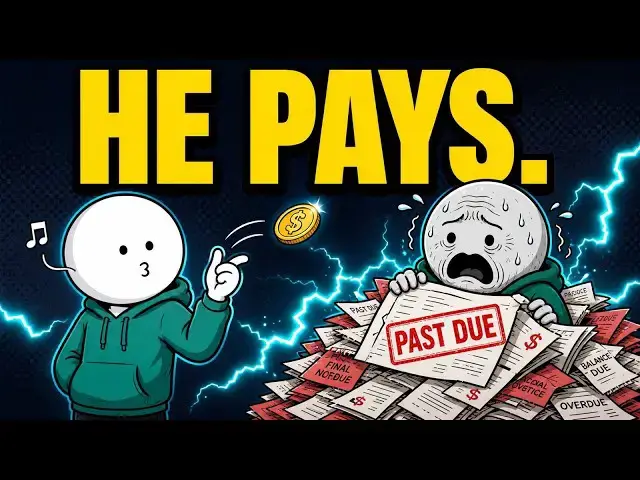
There is a person who will pay for every decision you make today. In 2009, inside an fMRI scanner, researchers watched what happens when people think about that person — themselves, ten years from now. The brain regions that light up for "me" went quiet. The pattern looked closer to thinking about a stranger than about yourself. This video follows the evidence trail from that scanning suite to the circles test, the aged-self VR lab, the payroll letters and the quiet defaults that can turn the stranger back into you.
In this video:
• Why the brain's "self" signal dims for future you — and what that does to money, health and time
• The overlapping-circles test that tracked real financial choices (and what it could NOT predict)
• What changed when people met a digitally aged version of themselves
• Why willpower talk fails, and what vividness, letters and defaults do instead
• The honest fine print: correlations, null results and replications — flagged as they come
CHAPTERS
0:00 The Stranger Who Pays for Your Life
1:21 Why Today-You Always Wins
2:29 The $0 Auction
3:50 Handing the Bill to a Stranger
5:06 The Brain Scan That Said "Not You"
6:28 The Circles Test
9:34 Selling Tomorrow at a Loss
10:23 Meeting Your Older Self
13:02 The Honest Fine Print
14:19 Making Future You Real
16:11 Defaults That Do the Saving
19:34 The Book, the Bot & the Evidence
20:54 The Coin Stands Back Up
SOURCES & FURTHER READING
• Ersner-Hershfield, Wimmer & Knutson (2009) — Saving for the future self, SCAN
• Ersner-Hershfield et al. (2009) — Perceived continuity of the self, Judgment & Decision Making
• Hershfield et al. (2011) — Age-progressed images & saving behavior, J. Marketing Research
• Mitchell et al. (2011) — Medial prefrontal response to future selves, J. Cognitive Neuroscience
• Bartels & Urminsky — Intertemporal selfishness & identity, J. Consumer Research
• Bryan & Hershfield (2012) — Payroll letter framing, J. Experimental Psychology: General
• van Gelder et al. — Future-self letters & avatars, Psychological Science / Criminology
• Thaler & Benartzi — Save More Tomorrow; Madrian & Shea — automatic enrollment
• Kausel (2024) — Real-money future-self choices; Frederick (2002) & 2025 JDM replication
• Hershfield (2023) — Your Future Self; Pataranutaporn et al. (2024) — "Future You" AI dialogue
The Default Theory — why we think, feel & behave the way we do. New videos weekly; subscribe if that's your kind of rabbit hole.
Educational content, not financial or medical advice.
#FutureSelf #Neuroscience #Psychology #BehavioralEconomics
Show More Show Less