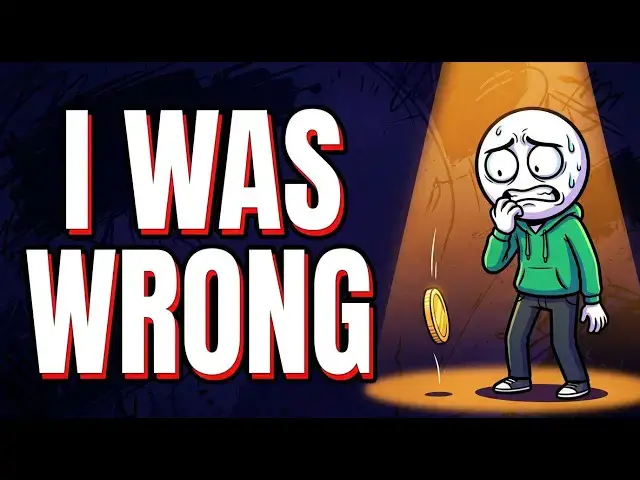

Why Admitting You're Wrong Feels Impossible (Psychology)
Aug 15, 2026
The most expensive three words in the English language aren't "I love you." They're "I was wrong."
Why does admitting you're wrong feel like paying a bill you never agreed to?
We correct our private beliefs all day, for free — but the moment a belief becomes public, changing it suddenly costs something. Reputation. Status. The version of ourselves that was right.
In this video, we go inside the hidden psychology behind that price tag — from Festinger's classic experiments on cognitive dissonance, to the doomsday cult whose failed prophecy made them believe harder, to the managers who keep throwing good money after bad, and the surprising research showing that admitting a mistake actually makes people trust you more.
What you'll learn:
Why beliefs become "assets" the moment we say them out loud
The $1 vs $20 experiment that revealed how the mind rewrites its own memory
Why public belief is harder to update than private belief
How escalation of commitment keeps us stuck in bad positions
The counterintuitive science of why admitting you're wrong builds trust
If you've ever doubled down when you knew you should walk back — this is the mechanism behind it.
🔔 If this changed how you see your own arguments, subscribe — we explore the hidden mechanisms behind everyday behavior.
Show More Show Less