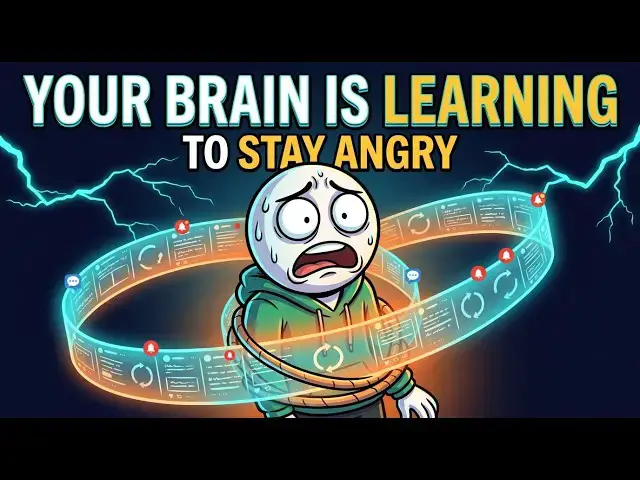

Why Your Brain Loves Outrage — The Social Media Trap
Sep 14, 2026
Why does outrage feel so powerful online?
Not because every angry reaction is fake. And not because outrage is automatically an addiction.
The deeper explanation is social learning: when moral anger receives attention, likes, shares, and approval, the behavior can become easier to repeat.
This documentary explores the psychology of moral outrage, social validation, out-group language, algorithmic incentives, and the moment when a useful warning signal turns into a performance of belonging.
In 2021, researchers William Brady, Killian McLoughlin, Tuan Doan, and Molly Crockett analyzed more than 12.7 million tweets from 7,331 users. Their research found that positive social feedback for outrage was associated with a greater likelihood of expressing outrage later.
This video also examines how social media platforms can reward emotionally charged content, why anger can feel like clarity, and how online outrage can turn into a cycle of reaction, validation, and repetition.
The practical question is simple:
How can you care about injustice without allowing the feed to write your response for you?
Moral outrage is not always harmful. It can expose injustice, support accountability, and motivate social change. The focus of this video is what happens when social rewards repeatedly favor escalation over evidence, proportion, and understanding.
This video is for education and discussion. It does not diagnose viewers or claim that every emotional reaction is an addiction.
What do you usually do after seeing an outrage-triggering post?
Do you verify the source, reply immediately, or keep scrolling?
#Psychology #SocialMedia #HumanBehavior
Show More Show Less