Up next in 10



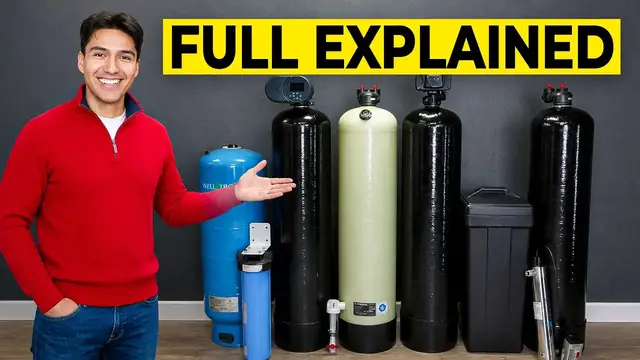
In this video, I go over everything you need to know about well water filtration.
Check out our recommendations here
Water Testing Strips - https://geni.us/mpcNU
Sediment Filter - https://geni.us/ih7AJ
Katalox Light - https://geni.us/4lNyF
Acid Neutralizer System - https://geni.us/SbwxzJK
Water Softener - https://geni.us/6W9Ry
Carbon Tank Filter - https://geni.us/nQjGyps
Reverse Osmosis System - https://geni.us/s3UpcUr
Want FREE Shipping With Amazon Prime? Get a 30-DAY FREE TRIAL by signing up here http://www.amazon.com/tryprimefree?tag=thechrisreview-20
DISCLAIMER: This video and description contains affiliate links, which means that if you click on one of the product links, I'll receive a small commission. This helps support the channel and allows us to continue to make videos like this. Thank you for the support!
TIMESTAMPS
0:31 The Differences Between Well Water And City Water
0:58 Common Well Water Contaminants
3:!4 Water Testing
4:19 The Right Order of Well Water Treatment
4:47 Stage 1: Sediment Filtration
5:20 Stage 2: Iron and Sulfur Removal
5:55 Stage 3: Acid Neutralization
6:48 Stage 4: Water Softening
7:19 Stage 5: Carbon Filtration
8:15 Stage 6: UV Disinfection
9:11 Bonus Stage: Under-Sink Reverse Osmosis System
Show More Show Less View Video Transcript
0:00
Even after spending thousands of dollars on a full filtration system, you could still be drinking unsafe water
0:05
And the water you drank this morning may have fallen as rain decades ago. Since then, it's been slowly underground, passing through soil, rock, septic systems, and whatever else is around your well
0:16
Meanwhile, most well-water treatment systems rely on a series of filtration steps
0:20
And if those steps aren't addressing what's in your water, then it doesn't matter how good the equipment is
0:25
It's all wasted. So today I'll be going over everything you need to know about your well water filtration
0:32
First let's talk about what makes well water different from city water. Because when you're on a municipal supply, someone else is doing the work for you
0:40
There's a treatment plant, there's regulations, and people whose full-time job is making sure the water that comes out of your tap meets a certain standard
0:47
But when you're on a private well, you're that person. So whatever's in that groundwater, you're welcome to pull it straight into your home
0:54
And some of them are things you absolutely don't want in your kitchen tap. But what exactly are we talking about and what kinds of things can end up in well water
1:04
Well the answer depends on where you live. But a handful of issues show up again and again in private wells across the country
1:10
And iron is probably the most recognizable one. If you've ever seen orange, rusty brown streaks running down the inside of a toilet bowl or a rust stain baked into a white shirt, that's iron
1:21
Sometimes it comes out of the tap perfectly clear, then turns orange after the water sits for a few minutes
1:27
And that's dissolved iron. Sometimes it comes out red or cloudy right away
1:31
But either way, once iron gets above 0.3 milligrams per liter, it can start staining almost everything it touches
1:37
It can also give your water that faint metallic taste like you just licked a penny
1:41
And right next to iron is hard water, which is just water carrying a lot of dissolved calcium and magnesium
1:47
And you know hard water by what it does to you. Soap that refuses to lather, a chalky white crust creeping up your faucets, and water heaters that wears out early because they're full of scale
1:57
Then there's sulfur. If your water smells like rotten eggs, sulfur components or sulfur bacteria are often to blame
2:03
And the odor tends to be especially noticeable when you're running hot water. But it won't poison you
2:08
It'll just make your water smell like a swamp and slowly corrode your pipes and fixtures from the inside
2:13
But not every problem is that obvious. Some contaminants don't change the smell, taste, or appearance of your water at all
2:20
And bacteria is one of them. In many cases what matters most isn the bacteria itself but what it suggests about the condition of the well For example coliform bacteria might not make you sick but it a warning that something is getting into your well
2:33
And if that something includes E. coli from human or animal waste, then you can get sick
2:37
very quickly. Another contaminant to be aware of is nitrate. And this is one I want you to take really seriously if there's a baby in your house
2:44
Because nitrate is invisible and tasteless and it comes from fertilizer, manure, or septic systems
2:50
adults, a bit of nitrate isn't a big deal. But for infants under 6 months, levels above 10
2:55
milligrams per liter can interfere with how their blood carries oxygen. We also have arsenic to
2:59
worry about. Over time, it can increase your risk of cancer and other serious issues. On top of that
3:05
some wells may carry lead or volatile organic compounds from fuel or industrial spills. It's
3:10
rare, but when it's there, it's dangerous. The cheapest way to test your water is with a dipstick
3:18
that you can get for most hardware stores. You dip the stick, it changes color, and you read the
3:22
results off a tiny chart. Now they're fine if you just want a quick sense of hardness or pH
3:27
but for serious issues like bacteria, nitrate, arsenic, lead, they're not really reliable
3:32
And that's why I wouldn't rely on them for making big decisions. What I'd recommend instead is a
3:37
certified lab mail-in kit. You fill a few small bottles straight from your tap, send them in
3:41
and the lab sends you a report with actual numbers. It tells you exactly which problems you have
3:46
and just as importantly, which ones you don't. So you aren't bolting a giant arsenic filter onto a well that never had arsenic in the first place
3:54
A basic kit that checks the two must-haves, bacteria and nitrate, is about 75 bucks
3:58
And if you want a full picture, you can add metals and basic water chemistry, which normally comes somewhere between $50 and $200, depending on how detailed you go
4:07
And don't forget the public health route. Many county or state health departments will test your well for free or for a small fee
4:13
And it's worth calling them first because they might know the common issues in your area and can point you to the right type of test
4:21
Now once you know what's in your water, you can build a setup that targets exactly that
4:26
As I mentioned before, well water treatment isn't one filter doing everything
4:30
It's a chain of stages, and each stage has one job, like one for iron, one for hardness
4:35
one for bacteria, and so on and so forth. And this means you only add the stages your test results call for, and they have to go
4:41
in a specific order like an assembly line, each worker finishing their job before passing
4:46
the water down Sediment filtration is like the bouncer at the door It catches sand grit and visible dirt before they can reach the rest of your equipment Now it doesn clean your water all the way but it protects everything downstream
4:59
from getting clogged, scratched, or worn out by physical debris. So this isn't the stage you ever want to skip
5:05
And what you're buying here is pretty simple. A filter housing that bolts onto your main water line with a cartridge inside that does
5:11
the trapping. It costs somewhere between $50 to $300 and in most homes, the cartridge only needs to
5:16
be replaced every 6 to 8 months. If your test shows iron, manganese, or sulfur, you need a dedicated iron filter at this stage
5:26
The way it works is through oxidation. The filter converts dissolved iron into solid particles, then captures those particles in
5:33
the media bed. Then every few days, the system automatically backwashes to flush out the buildup
5:38
No chemicals, no cartridges to swap. And a quality iron filter with a good media, like Catalox Lite, can lock up to 30 ppm of
5:45
iron, 15 ppm of manganese and 10 ppm of sulfur in a single tank. And the media typically lasts
5:51
between 6 to 8 years before needing replacement. Now if your test shows a low pH, especially below
5:59
6.5, that isn't something to ignore. Acidic water can eat away at copper pipes from the inside and
6:04
make it easier for metals like lead and copper to leach into your water. The fix is an acid
6:09
neutralizer and most systems use calcite which is a natural calcium carbonate. As the water moves
6:14
through the tank, the calcite slowly dissolves and brings the pH up into a less corrosive range
6:19
And for many homes, a non-backwashing system is enough. Now it doesn't need power, it has no moving
6:24
parts, and maintenance is usually just topping off the calcite every couple of years. The equipment
6:29
itself runs somewhere between $800 to $2,000 with installation extra if you bring in a pro
6:35
Now there's one thing to understand here though. Raising your pH with calcite adds hardness to the
6:39
water because you're essentially adding a calcium compound. So if you install an
6:43
acid neutralizer, you almost always want a water softener right after. Through a process called ion exchange, a salt-based softener swaps the calcium and
6:54
magnesium for sodium so the water stops leaving scale behind. And for a typical
6:58
family, a 48 to 64,000 grain softener is common. And yes, a salt-based softener can
7:04
add a little sodium to your water. So if someone in your house is on a strict low sodium diet, you can always use potassium chloride instead or keep a separate reverse
7:12
osmosis line for drinking water. And if you want a clear breakdown I cover this in this other video Activated carbon has a huge hidden surface area packed with microscopic pores and as your water flows through chemicals and odors latch onto the surface and stay behind Now high quality
7:29
media like Centaur Catalytic Carbon does it especially well. Here's the thing though, because
7:34
well water has no chlorine, carbon isn't a default for every home. You want this stage if your water
7:39
still carries a faint sulfur smell or if you're near farmland or industry where volatile organic
7:44
compounds can leak into a well. You also want it if PFAs is a concern in your area
7:49
And those are PER and polyfluoroalkyl substances known as forever chemicals because they barely
7:54
break down and they trace back to non-stick coatings, waterproofing and firefighting foam
7:59
which is common near military bases and airports. At more cost, you can expect about $600 to $2,000 for the carbon tank itself
8:07
And the good news is that the media inside can last about 4 to 5 years before replacement
8:11
So it's one of the lowest maintenance stages in the system. Now this is the final stage and you'll need it when your test comes back positive for
8:20
coliform bacteria or E. coli. Some people also add it as an extra protection, especially if the well is shallow, older or
8:27
has problems after heavy rain or flooding. Your water flows past the lamp sealed inside a clear quartz sleeve and that lamp gives off
8:34
ultraviolet light at 254 nanometers. That exact wavelength scrambles the DNA of any microorganisms so they can't reproduce
8:41
or cause infection, but UV only works on clear water. Leftover iron or particles will coat the quartz sleeve and cast a little shadow for bacteria
8:49
to hide in. And that's why this stage always comes last. Now, cost is friendly here too
8:54
A typical system runs about $500 to $1500, depending on the size and plumbing
8:58
And maintenance is pretty simple, but you can't ignore it. Replace the lamp once a year, even if it's still glowing, because the disinfecting power
9:05
fades over time. You also need to clean the quartz sleeve regularly and replace it every year or two
9:11
At the kitchen tap, you can also add an under-sink reverse osmosis system
9:16
Now this isn't a whole house stage. It's mostly for the water you drink and cook with
9:21
Reverse osmosis uses pressure to push water through a very tight membrane. That membrane can reduce dissolved contaminants that many earlier stages may not catch
9:29
Just make sure the system is certified for the contaminant you're trying to reduce. Reverse osmosis is powerful, but not every unit is tested for the same things
9:36
And that's the full picture. It might look complicated, but the rule is simple
9:40
Find out what's in your water, then treat exactly that and nothing more
#Computers & Electronics