Up next in 10



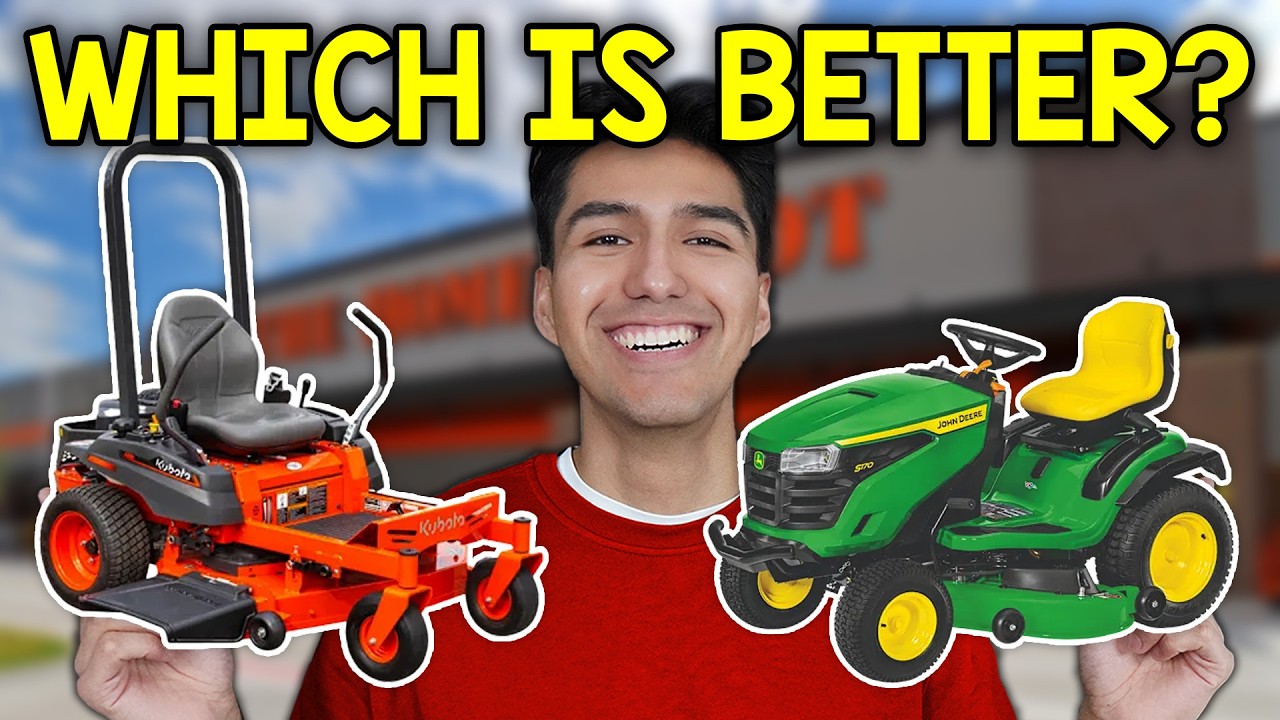
In this video, I go over the differences between zero-turn and riding mowers. And here are other videos you might like: 8 Best Zero Turn Lawn Mowers In 2026 According To Consumer Reports https://youtu.be/SJ9BqXx_Mdk 5 Best Lawn Tractor Riding Mowers In 2026 According To Consumer Reports https://youtu.be/YCmsxoaBoSk 11 Best Lawn Mowers For 2026 According To Consumer Reports https://youtu.be/tP9rERMTk2w Want FREE Shipping With Amazon Prime? Get a 30-DAY FREE TRIAL by signing up here http://www.amazon.com/tryprimefree?tag=thechrisreview-20 DISCLAIMER: This video and description contains affiliate links, which means that if you click on one of the product links, I’ll receive a small commission. This helps support the channel and allows us to continue to make videos like this. Thank you for the support! TIMESTAMPS 0:30 Mowing Speed 1:51 Turning & Maneuverability 2:52 Ease of Use 4:20 Towing 5:29 Hills and Slopes 6:14 Storage and Access 6:47 Price, Maintenance, and Repairs 7:47 Which One Should You buy?
Show More Show Less View Video Transcript
0:00
Zero turn and riding lawn mowers are a huge investment
0:03
So before you spend thousands of dollars on either one of them, make sure you get the one you won't regret buying
0:09
Because they look similar, they do the same job, but they are not the same machine
0:13
And the one that's right for you depends on a few factors. That's why in this video, I'll be going over the differences you should know about each
0:20
and which one is right for you. And if you want a deeper look at each kind
0:24
I've linked other videos and recommendations in the description below. Let's get this out of the way
0:32
A Zero-Turn almost always runs faster than the riding mower, even when the deck size looks
0:37
the same on paper. A big reason for that is how the drive system works
0:41
A Zero-Turn uses two independent hydrostatic motors, one for each rear wheel, and that
0:46
setup is just mechanically more efficient at transferring power into forward motion
0:51
A riding mower uses a more traditional transmission, which loses a bit more energy in the process
0:56
So even with a smaller engine, the zero turn converts more of that power into actual ground speed
1:02
That's why you'll typically see around 7 mph on a zero turn versus closer to 5 or 5.5
1:08
on a riding mower. But mowing time depends on more than straight line speed
1:13
A lot of time is lost at the end of each row. With a riding mower, you usually need a wider turn and then you have to straighten the mower
1:19
before starting the next pass. A zero turn can pivot much tighter so it gets back into the next row faster
1:26
And that advantage is really going to show up on open yards. Wide longs with long straight sections where a zero turn can just keep mowing with fewer
1:33
stops and less wasted movement. And on a 1 or 2 acre property, that can shave like 20 to 30% off your total mowing time
1:40
But for a smaller yard with tight corners, narrow areas, or a lot of obstacles, you're
1:45
not going to feel that speed advantage nearly as much. In those cases, a riding mower will do just fine
1:53
This is another category where zero turns have the leg up. They can rotate in place which helps a lot when you're mowing around trees, flower beds
2:00
fence corners, pathways, or curved landscaping. Instead of making a wide loop or backing up several times, you just steer around it and
2:07
keep going. If you can mow closer around trees and along curved edges you may spend less time cleaning things up with a string trimmer For some yards that matters almost as much as the mowing speed itself A yard with 10 or 15 trees is very different from a flat rectangle of grass
2:23
The more obstacles you have, the more useful a zero turn becomes
2:26
A riding lawnmower can still handle turns, but it doesn't turn in the same way
2:30
And many riding mowers have a decent turning radius, but some are better than others
2:35
But you're still using a steering wheel and a more traditional tractor style layout
2:38
Around trees or landscaping, that means wider turns, more repositioning, and sometimes more backing up
2:44
If your yard is simple, that isn't a big deal, but if your yard has a lot to mow around
2:49
it can become annoying over time. Finally, the riding mower wins here, and that's because most people are familiar with the controls
2:58
You have a steering wheel, a forward pedal, a reverse pedal, and the layout that looks
3:02
almost like a small tractor. Most people can sit down and figure it out right away with no learning curve
3:08
If you don't want to spend time getting used to something new, that's gonna be a real point in favor of the riding mower
3:13
And a zero turn takes a little bit more practice. Instead of a steering wheel, you've got two lap bars
3:19
Push both bars forward, and the mower moves forward. Push both back, and it reverses
3:23
Push one side more than the other, and the mower turns. And once you get used to it, the controls are very sharp, but the first few mowing sessions can take some adjustments
3:32
And just so you know, some newer zero turn models actually have moved away from lap bars and gone with a steering wheel instead
3:38
which makes them a lot easier to get into from day one. So if the lat bar thing puts you off, it's worth checking out what controls setup a specific model
3:45
uses before you buy. But even on a traditional lat bar zero turn, it isn't that hard to drive
3:51
once you get the hang of it. It's just going to ask for more precision from you. And if you turn
3:55
too aggressively, especially on soft or damp grass, you can leave marks or small ruts. That's why your
4:00
first moat probably won't look as clean as you expected. And one small thing that helps is the
4:05
the fact that zero turns usually give you a better view of the deck and what's in
4:08
front of you since the engine isn't sitting literally in front of you blocking your sight line like the riding mower does. And this will make
4:15
navigating around things a lot easier once you're comfortable with the controls. And here's another win for riding lawn mowers. Many homeowners do more than
4:25
just cut grass They pull a small cart move mulch haul firewood carry tools spread fertilizer tow a lawn sweeper and more And if that sounds like your yard then you should probably consider a riding mower more And this comes down to how
4:40
each machine is built. Riding mowers were specifically designed with utility in mind
4:45
from the start. So the steering wheel layout makes pulling something behind you feel natural
4:49
and that weight is distributed in a way that stays stable under a load. And they also work
4:54
with a lot of attachments overall like baggers, snowblowers, tillers, spreaders, as that versatility
5:00
is always part of the package. And a zero turn can tow light attachments depending on the model
5:05
but it's less comfortable doing it. The weight sits heavily toward the rear wheels to drive the
5:09
system, so once you add a load behind that, the front end gets light and the steering is going to
5:14
start feeling off. And that tight pivot that worked so well for mowing is actually going to become a
5:19
when something's hitched to the back. One aggressive pivot and you've got a
5:23
cart swinging out sideways. It's manageable but it isn't what the machine
5:27
was built for. I also consider hills and slopes another important factor when
5:33
choosing a mower. On flat lawns slopes aren't a concern but ditches, uneven
5:38
ground or wet sections require extra attention. Zero returns perform well on
5:43
level areas but on steeper slopes they can lose traction. Most manufacturers
5:48
recommend not using them on anything steeper than 10 to 15 degrees because on
5:52
a machine weighing 500 to 700 pounds losing grip is a serious safety risk
5:57
Riding mowers are more stable however on slopes and that's because the better
6:01
weight distribution and steering feedback and they also sit more securely on uneven ground. That said no riding mower is safe on every hill either so
6:09
you still need to check the slope limits for whatever model you're looking at. Before buying any mower, check your garage, your shed, and your gates. A 42 inch deck doesn't mean
6:21
the entire mower is only 42 inches wide. You have to consider the tires, the frame, the discharge
6:27
chute, and the body. This can all add some extra inches. And riding mowers often have a more compact
6:32
and traditional shape, so they're easier to store in smaller sheds, while zero turns tend to be wider
6:37
around the controls and rear wheels, depending on the model. Neither type is inherently simpler to store
6:43
so measure first and don trust the deck size alone Now mower prices vary widely and that difference can also help you decide Zero turn mowers often cost a few thousand more than comparable riding mowers and that extra money goes towards the
6:58
independent wheel drive system, a reinforced frame, and the precision steering. Higher end models also
7:05
can add some suspension, padded seating, and towing capacity up to around 500 pounds. So if you've
7:10
got a lot of ground to cover, you'll feel that value every time you mow. But if you don't
7:15
it's hard to look at the price gap and feel good about it. It's also worth thinking about repairs. Both machines need pretty simple basic maintenance like
7:23
oil changes, blade sharpening, and belts over time. But zero turns have a
7:27
hydrostatic transmission that's reliable when it works and more specialized when it needs repair. Parts can be harder to source and labor costs tend to run higher
7:37
Riding mowers however are mechanically simpler. Most local small engine shops know them well, so repairs are faster and the bills are usually smaller. So now the
7:48
big question, which one should you buy? I'd recommend a zero turn mower when your
7:52
yard is mostly flat and at least half an acre. You'll notice the difference
7:56
around trees, flower beds, and those tricky corners. And once you get the hang
8:00
of it, you're gonna enjoy using this. It feels good to drive and you'll be done
8:04
faster every single time. Riding mowers have their strengths too. They keep the
8:08
controls simple with a steering wheel and pedals that anyone can handle. They also handle smaller yards and gentle slopes more smoothly, so you can focus on
8:15
getting the job done instead of thinking about tricky turns. And sure, these machines won't
8:20
spin in place or dart around like a zero turn, but you trade that for confidence, comfort
8:25
and straightforward operation you can rely on. Of course, neither type is perfect for everyone
8:30
A zero turn doesn't become the better choice just because it looks professional
8:34
and a riding mower is still a solid option even if it's not the fastest machine out there
8:39
The right choice is really about your yard, your storage space, your budget, and how you want to use it
8:43
But if your yard is under a quarter acre, I'd say save your money on both
8:47
In that case, an electric or gas-powered push motor will do the job just as well
8:51
by costing way less and being easier to deal with in a tight space than anything we've talked about today
8:57
And that's all for today. I hope this helped you decide on which mower is right for you
9:01
And if you want to see the best options available for both types of mowers, don't forget to check the description out
9:06
Thanks for watching
Computers & Electronics