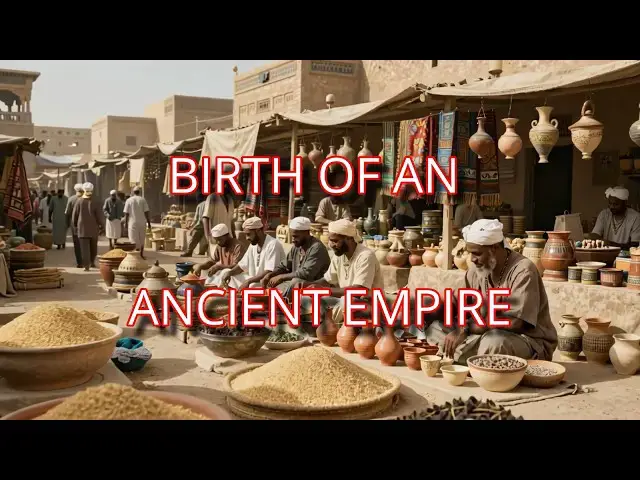
Up next in 10


How a single river gave rise to an entire civilization creating a powerful empire.
Show More Show Less View Video Transcript
0:12
From harsh desert sands sprung a
0:14
miracle, the Nile River. This eternal
0:16
waterway wasn't just water, it was the
0:18
very pulse, the lifeblood that nurtured
0:21
and sustained one of history's most
0:22
enduring civilizations.
0:24
Thousands of years ago, before [music]
0:26
pharaohs and pyramids, humble
0:28
communities gathered along these fertile
0:30
banks. They learned the river's rhythms,
0:33
laying foundations [music] for a society
0:35
that would defy time.
0:36
Each year the Nile would swell,
0:38
overflowing its [music] banks, not as a
0:40
destructive force, but as a benevolent
0:42
giver. This annual inundation brought
0:44
rich black silt, renewing the land's
0:46
fertility.
0:47
>> [music]
0:48
>> This fertile soil was Egypt's treasure.
0:50
It allowed bountiful harvests of wheat,
0:52
[music]
0:52
barley, and flax, sustaining a growing
0:55
population and laying the groundwork for
0:57
complex social structures and
0:59
prosperity.
1:00
But managing the floods required
1:02
ingenuity. Ancient Egyptians developed
1:04
sophisticated irrigation [music]
1:05
systems, creating canals and basins to
1:08
channel and store the precious,
1:10
life-giving water.
1:12
Beyond food, the Nile offered another
1:13
invaluable gift, [music] papyrus. From
1:16
its reeds came paper, boats, sandals,
1:18
and countless other necessities, [music]
1:20
fueling both daily life and intellectual
1:22
pursuits.
1:23
The Nile wasn't just a source of life,
1:25
[music] it was a highway.
1:27
Boats laden with goods, from granite to
1:29
grain, plied its waters, [music]
1:30
connecting distant settlements and
1:32
fostering a robust internal economy.
1:35
As communities [music] grew, so did the
1:36
need for organization.
1:38
Local chiefs, then regional kings,
1:40
[music] rose to manage resources,
1:41
mobilize labor, and protect their
1:43
people, laying the groundwork for
1:45
unification.
1:46
Eventually, [music] powerful rulers like
1:48
Menes emerged, uniting Upper and Lower
1:50
Egypt into a single formidable kingdom.
1:53
>> [music]
1:53
>> This marked the dawn of the pharaonic
1:55
era and an unprecedented age of
1:57
grandeur.
1:58
The pharaoh was more than a king.
1:59
>> [music]
2:00
>> He was a living god, a divine
2:01
intermediary between humans and deities.
2:04
His rule ensured cosmic order, known as
2:06
Ma'at, and the prosperity of the land.
2:09
To manage this [music] vast kingdom, a
2:10
sophisticated administration was
2:12
essential. Viziers, scribes, and
2:14
officials [music] maintained law and
2:16
order, collected taxes, and organized
2:18
the colossal public works.
2:20
Scribes were the backbone of this
2:22
administration. Their literacy gave them
2:24
immense power, recording history,
2:26
managing trade, and documenting every
2:29
aspect of the empire's complex
2:30
machinery.
2:32
With stability and resources came the
2:34
rise of magnificent cities.
2:35
>> [music]
2:36
>> Memphis, Thebes, and others became
2:38
centers of power, religion, and culture,
2:40
bustling with life and monumental
2:42
architecture.
2:43
The pyramids and temples, iconic symbols
2:46
of Egypt, were not just buildings. They
2:48
were statements of power, devotion, and
2:50
a profound belief in the eternal [music]
2:52
continuity of life and kingship.
2:55
Building these colossal structures
2:56
required unimaginable labor.
2:58
>> [music]
2:59
>> Tens of thousands of skilled craftsmen
3:01
and ordinary citizens worked tirelessly,
3:03
a testament to the pharaoh's absolute
3:05
authority.
3:07
Religion permeated every aspect of
3:08
Egyptian life. A complex pantheon of
3:11
gods and goddesses governed the natural
3:13
world, human fate, and the vital journey
3:15
into the afterlife.
3:17
The belief [music] in an eternal
3:18
afterlife was central. Elaborate
3:20
funerary practices, from mummification
3:23
to intricate tomb decorations, ensured a
3:25
prosperous journey and existence [music]
3:27
beyond death.
3:28
Egyptian art was not merely aesthetic.
3:30
It was deeply symbolic, conveying
3:32
religious narratives, historical events,
3:34
and the cosmic order. Every color, every
3:36
pose, held meaning. [music]
3:39
Hieroglyphs, the sacred carvings, were a
3:41
complex system of writing. They adorned
3:43
temples, tombs, and papyri, preserving
3:46
the wisdom, [music] history, and beliefs
3:47
of this ancient civilization.
3:50
Beyond the grand monuments, daily life
3:51
[music] pulsed with energy. Bustling
3:54
markets were hubs of activity, where
3:56
merchants haggled and villagers
3:57
exchanged goods and gossip. Most
4:00
Egyptians were farmers,
4:01
>> [music]
4:01
>> their lives inextricably linked to the
4:03
Nile's cycles. But, there were also
4:05
artisans, priests, soldiers, and
4:07
laborers, each contributing to the
4:09
fabric of society.
4:11
Family was the cornerstone of Egyptian
4:13
society.
4:14
Multi-generational households provided
4:16
support, passed down traditions, and
4:18
celebrated life's milestones along the
4:20
river's steady flow.
4:22
Education was highly valued, [music]
4:24
especially for scribes and priests.
4:26
Children learned mathematics,
4:28
literature, and religious texts,
4:30
ensuring the continuation of Egyptian
4:32
knowledge and tradition. [music]
4:34
Life wasn't all toil. Egyptians loved
4:36
celebrations and feasts, [music]
4:37
enjoying music, dance, and abundant
4:39
food. These vibrant gatherings reflected
4:42
a deep appreciation for life's joys.
4:45
From intricate jewelry to sturdy
4:46
furniture, Egyptian artisans displayed
4:49
remarkable skill. Their craftsmanship
4:51
speaks volumes about their dedication
4:53
and the value [music] placed on beauty
4:55
and utility.
4:56
To protect its wealth and borders, Egypt
4:58
maintained a powerful army.
5:00
>> [music]
5:00
>> Chariots, archers, and infantry ensured
5:03
the pharaoh's authority and expanded the
5:05
empire's influence.
5:07
Successful military campaigns brought
5:09
new [music] territories, tribute, and
5:10
resources, solidifying Egypt's position
5:13
as a dominant regional power and
5:15
extending its reach far beyond the Nile
5:17
Valley.
5:18
Beyond conquest, [music] diplomacy was
5:20
key. Pharaohs engaged in intricate
5:22
negotiations, forging alliances and
5:24
sending emissaries to distant lands, a
5:26
complex web of political relationships.
5:29
>> [music]
5:29
>> Ancient Egyptians were pioneers in
5:31
medicine. Their knowledge of anatomy,
5:33
surgery, [music] and herbal remedies was
5:35
advanced for their time, influenced by
5:37
practical experience and religious
5:39
beliefs.
5:40
Their observation of the stars and
5:42
planets was crucial for calendar
5:44
keeping, navigation, [music] and
5:45
religious festivals.
5:47
Ancient Egyptians possessed remarkable
5:49
astronomical knowledge.
5:51
From pyramid construction [music]
5:53
to flood forecasting, mathematics was
5:55
fundamental. Egyptians developed
5:57
sophisticated geometry and arithmetic,
5:59
>> [music]
5:59
>> marvels that astound us even today.
6:02
Though pharaohs often dominated, [music]
6:04
powerful queens like Hatshepsut and
6:06
Nefertiti played pivotal roles,
6:08
governing with authority and leaving
6:10
indelible marks on history.
6:12
Egypt was not [music] isolated. Through
6:14
trade and conquest, it in engaged in
6:16
rich cultural exchange with Nubia, the
6:18
Levant, and the Aegean, [music]
6:20
influencing and being influenced by its
6:22
neighbors.
6:23
Even a mighty empire faced challenges.
6:25
Internal strife, poor harvests, and
6:27
foreign invasions occasionally plunged
6:29
Egypt into periods of instability and
6:32
decline.
6:33
One such period saw the invasion of the
6:35
Hyksos, foreign rulers who introduced
6:37
[music] new technologies like the
6:39
horse-drawn chariot and composite bow,
6:41
forever changing Egyptian warfare.
6:44
But Egypt always rose again. The New
6:46
Kingdom, with pharaohs like Thutmose III
6:48
and Ramesses II, [music] marked a
6:50
pinnacle of power, wealth, and imperial
6:52
expansion.
6:53
Ramesses [music] the Great, a formidable
6:55
military leader and prolific builder,
6:57
left an unmatched legacy of temples,
6:59
[music] monuments, and an empire
7:01
stretching from Syria to Nubia.
7:03
Over centuries, the power of the
7:05
priesthood grew significantly, sometimes
7:07
rivaling even the pharaoh's authority,
7:09
particularly that of the priests of Amun
7:12
at Thebes.
7:13
Later periods saw Egypt fall under the
7:15
dominion of foreign powers, Persians,
7:18
Greeks under Alexander the Great, and
7:20
finally [music]
7:20
the Romans, whose control marked the end
7:23
of pharaonic rule.
7:24
Cleopatra VII, the last true pharaoh,
7:27
fought fiercely to reclaim Egypt's
7:29
independence. Her story, intertwined
7:31
with Roman politics, captures the
7:33
twilight of an ancient era.
7:35
Under Greek and Roman [music] rule,
7:36
elements of Egyptian culture blended
7:38
with foreign influences. New cities like
7:41
Alexandria became centers of learning,
7:43
attracting scholars from across the
7:45
ancient [music] world.
7:46
The Library of Alexandria was a beacon
7:48
of knowledge. It housed vast collections
7:51
of scrolls, preserving ancient wisdom
7:53
[music] and fostering intellectual
7:55
advancements for centuries.
7:57
Gradually, [music] the ancient Egyptian
7:59
language and hieroglyphs faded from
8:01
common use, replaced by Greek and later
8:03
Coptic. Much of their knowledge became
8:05
lost to the sands [music] of time.
8:08
Centuries later, the discovery of the
8:09
Rosetta Stone provided the key to
8:11
unlocking these lost secrets, allowing
8:14
scholars to decipher hieroglyphs and
8:16
read the language of the pharaohs once
8:18
[music] more.
8:19
Today, archaeologists continue to
8:21
uncover incredible treasures.
8:23
>> [music]
8:23
>> Each new discovery sheds more light on
8:25
the daily lives, beliefs, and
8:27
achievements of ancient Egyptians.
8:29
>> [music]
8:29
>> The unearthing of royal tombs, like that
8:31
of Tutankhamun, revealed astonishing
8:34
riches and provided unprecedented
8:36
insights into [music] the wealth and
8:37
funeral customs of the pharaonic age.
8:40
Through millennia of change, conquest,
8:42
and rediscovery, the Nile has remained
8:44
constant.
8:45
>> [music]
8:45
>> Its waters continue to flow, sustaining
8:47
life, just as it did for the pharaohs.
8:50
The legacy of ancient Egypt isn't
8:52
confined to museums.
8:53
Its influence can be seen in art,
8:55
architecture, and even some of our
8:57
modern concepts of law and governance.
9:00
The pyramids, the Sphinx, the temples of
9:02
Luxor and Karnak, these monumental
9:04
achievements continue to draw millions,
9:06
inspiring awe and fascination across the
9:09
globe.
9:10
The rich tapestry of Egyptian mythology,
9:12
with its divine dramas and heroic tales,
9:14
continues to captivate imaginations,
9:17
appearing in literature, film, and
9:19
popular culture.
9:20
The grand scale and intricate details of
9:22
Egyptian architecture continue to
9:24
inspire. From obelisks in world capitals
9:27
to modern buildings echoing ancient
9:28
forms, their influence is vast.
9:31
Their advancements in medicine,
9:33
astronomy, [music] and mathematics laid
9:35
critical foundations for future
9:37
civilizations, contributing profoundly
9:39
to the development of human knowledge.
9:42
Ancient Egypt's story is a global
9:43
heritage. Its artifacts reside in
9:45
museums worldwide, inviting us to delve
9:48
into [music] a past that shaped the very
9:49
course of human history. Today,
9:52
preserving these irreplaceable
9:53
historical sites and artifacts is a
9:55
monumental task. Conservationists work
9:58
tirelessly to protect this ancient
10:00
heritage for future generations.
10:02
However, the very river that birthed
10:04
[music] this civilization now faces
10:06
modern challenges. Climate change,
10:08
population growth, and pollution
10:10
threaten the Nile's vitality and Egypt's
10:12
agricultural [music] future.
10:14
The Aswan High Dam, built in the 20th
10:16
century, brought [music] unprecedented
10:18
control over the Nile's floods, creating
10:21
a reservoir for modern agriculture and
10:23
hydroelectric power.
10:25
Yet, this control [music] also altered
10:27
the natural cycle, impacting the
10:29
traditional fertility of the land and
10:30
[music] requiring artificial
10:32
fertilizers. Progress often comes with
10:34
complex trade-offs.
10:36
Just as ancient Egyptians adapted to the
10:38
Nile's rhythms, modern Egyptians
10:40
continue to face new environmental and
10:42
social challenges [music]
10:43
with resilience and innovation.
10:46
The Nile remains the mother of Egypt,
10:48
its unwavering [music] presence a
10:49
powerful symbol of identity and
10:51
continuity, reminding us of the profound
10:54
connection [music] between humanity and
10:55
nature.
10:56
The story of ancient Egypt is far from
10:58
over.
10:59
>> [music]
10:59
>> Each year, new discoveries add chapters
11:01
to this magnificent saga, revealing more
11:04
about a civilization built [music] on
11:05
the gifts of a river.
11:07
What other secrets lie hidden beneath
11:09
the sands waiting for us to uncover
11:11
them?
11:12
Share your thoughts in the comments, and
11:13
don't forget to like and subscribe for
11:15
more journeys into history.
Arts & Entertainment