Up next in 10


Long before humans sailed the oceans, a real-life sea serpent ruled the waves.
So massive, it made the great white shark look like bait.
Show More Show Less View Video Transcript
0:00
Imagine a world ruled by sea monsters. A
0:04
planet where the oceans belonged to
0:06
titans. This wasn't a movie script. It
0:10
was our Earth 82 million years ago. And
0:14
the king of this underwater realm, the
0:17
Moasosaurus.
0:19
Let's dive deep into the story of the
0:21
real life sea king. A creature far more
0:25
fascinating than any film could capture.
0:28
Our story begins not in the deep ocean,
0:32
but in a chro quarry near the city of
0:35
Mr. in the Netherlands. Around the year
0:38
1764,
0:40
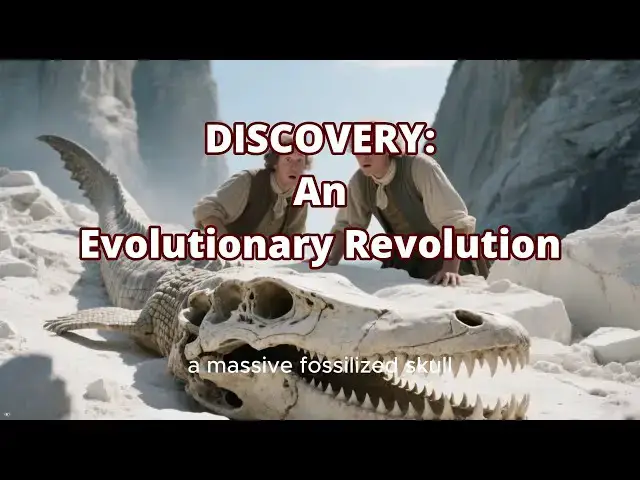
workers carving out stone stumbled upon
0:44
something extraordinary, a massive
0:47
fossilized skull armed with a terrifying
0:50
set of teeth. They had no idea what they
0:54
had found. Was it a whale? a giant
0:57
crocodile. The local army surgeon, a man
1:01
named Jean Leonard Hoffman, acquired the
1:04
skull, believing it was a relic from the
1:07
great biblical flood. He was an avid
1:10
fossil collector, and this was the prize
1:13
of his collection. But this incredible
1:16
discovery soon became the center of a
1:18
dramatic dispute. The owner of the land
1:21
where the skull was found, a cannon
1:24
named Gording, sued Hoffman to get it
1:27
back and won. Gording then proudly
1:31
displayed the magnificent skull in his
1:33
home, but its fame had spread when
1:37
French revolutionary forces besieged
1:40
Mustri in 1794.
1:43
The French were so determined to capture
1:45
this scientific treasure that a reward
1:48
of 600 bottles of wine was offered for
1:52
its safe delivery. The skull was
1:54
eventually found hidden in God's cellar
1:58
and seized. It was taken to Paris as war
2:02
booty where it remains to this day. It
2:06
was in Paris that the skull finally met
2:08
the man who would unlock its secrets.
2:11
The great naturalist George's Cuvia, he
2:15
studied the jaws and teeth, comparing
2:18
them to modern animals. In 1808, Cuia
2:22
concluded it was not a fish, whale, or
2:26
crocodile. It was a giant extinct marine
2:30
lizard, a new kind of animal science had
2:33
never seen before. He named it the
2:36
fossil animal from MRI. Later in 1822,
2:42
it was given its official name,
2:44
Moscasaurus Hoffman, meaning lizard of
2:47
the Muse River, in honor of Hoffman, who
2:50
first recognized its importance. This
2:53
discovery was revolutionary. It provided
2:57
concrete proof of extinction, the idea
3:00
that entire species could vanish from
3:03
the earth, which was a radical concept
3:06
at the time. The Mosasaurus wasn't just
3:09
a monster. It was a bombshell that
3:12
changed our understanding of life's
3:15
history. So, who was this creature that
3:18
caused such a stir? The Mosasaurus
3:22
wasn't a dinosaur. It was part of a
3:24
group of marine reptiles called
3:27
Mosasaurs, which were actually closely
3:30
related to modern-day monitor lizards
3:33
and snakes. Think of a Komodo dragon,
3:37
but super sized with flippers instead of
3:40
legs and a powerful tail fin. They
3:44
evolved from land dwelling lizards that
3:47
returned to the sea, undergoing a
3:50
remarkable transformation over millions
3:53
of years. Their legs became paddles,
3:56
their bodies became streamlined, and
3:59
they developed a second row of teeth on
4:02
the roof of their mouths called tergoid
4:06
teeth, which helped them grip struggling
4:09
prey and pull it down their throats. By
4:12
the late Cretaceous period, from about
4:15
82 to 66 million years ago, the
4:20
Mosasaurus had achieved something
4:22
incredible. global domination. They were
4:26
the undisputed apex predators of the
4:29
world's oceans. Their fossils have been
4:32
discovered on every single continent
4:35
from the plains of North America to the
4:38
frozen wastess of Antarctica. This tells
4:42
us they were incredibly adaptable,
4:44
thriving in a wide range of marine
4:47
environments, from warm, shallow seas to
4:51
cooler, deeper waters. Now, let's talk
4:55
about size. The movies love to depict
4:58
the mosasaurus as a leviathan capable of
5:02
swallowing a great white shark hole and
5:06
leaping out of the water to snatch
5:08
dinosaurs from the shore. While that
5:11
makes for great cinema, the reality is a
5:14
little different but no less impressive.
5:18
The largest known species, Mosasaurus
5:21
Hoffman, one from Mosri reached lengths
5:25
of about 56 ft, all around 17 to 18 m.
5:31
To put that in perspective, that's
5:34
longer than a school bus and
5:36
significantly longer than a
5:38
Tyrannosaurus Rex. It was one of the
5:40
largest marine predators of all time, a
5:44
true giant of the deep. But it wasn't
5:47
the only one. The Mosasaur family was
5:50
incredibly diverse with over 40
5:53
different genre ranging from smaller 3-
5:56
foot long species to the colossal
5:59
Mosasaurus itself. What did a 56- ft
6:03
long sea lizard eat? The short answer is
6:07
pretty much anything it wanted.
6:09
Mosasaurus was a versatile and
6:12
opportunistic hunter. Fossil evidence,
6:16
including stomach contents and bite
6:19
marks on other fossils, gives us a clear
6:22
picture of their diet. They devoured
6:25
large fish, sharks, and giant sea
6:29
turtles, whose shells they could crush
6:32
with their powerful jaws. They also
6:35
prayed on ammonites, the large coiled
6:38
shell relatives of modern squids. And
6:42
yes, they were cannibals. We have found
6:45
fossils of smaller mosasaurs with bite
6:48
marks that perfectly match the teeth of
6:51
larger mosasaurus individuals. In their
6:55
world, it was eat or be eaten. Their
6:58
hunting technique was likely one of
7:00
ambush and brute force. They weren't
7:04
necessarily the fastest swimmers over
7:07
long distances, but they could generate
7:10
incredible bursts of speed. Using their
7:13
powerful fruit-like tail, they would
7:17
launch themselves at prey with
7:19
devastating force. Their skulls were
7:22
also uniquely designed. Unlike most
7:26
reptiles, they had a flexible
7:29
doublehinged jaw, much like a snakes,
7:32
which allowed them to open their mouths
7:35
incredibly wide and swallow very large
7:38
prey hole. They were the ultimate
7:41
oceanic terror. For a long time, we
7:45
thought of mosasaurs as purely marine
7:48
animals confined to the world's oceans
7:51
and saltwater seas. But science is
7:55
always full of surprises. In a
7:58
groundbreaking study published in
8:00
January 2026,
8:03
researchers announced a stunning
8:05
discovery. They found evidence that
8:08
Samosasaur species had actually adapted
8:11
to live in freshwater environments.
8:15
Fossils found in ancient river systems
8:18
showed that these particular mosasaurs
8:21
were thriving in rivers and estuaries
8:24
hunting alongside giant freshwater
8:28
crocodiles and other riverini predators.
8:31
This completely changed our view of
8:34
their ecology. It showed they were even
8:37
more adaptable than we ever imagined.
8:40
capable of conquering not just the seas
8:43
but the rivers too. They truly were
8:46
masters of the aquatic world. So if they
8:50
were so successful, so dominant, so
8:54
widespread, where did they all go? The
8:57
reign of the sea kings ended not with a
9:00
whimper, but with a bang, a
9:03
catastrophic,
9:04
world altering bang. 66 million years
9:08
ago, a massive asteroid estimated to be
9:12
6 mi wide slammed into the planet in
9:16
what is now the Yucatan Peninsula in
9:19
Mexico. The impact was cataclysmic. It
9:23
triggered global earthquakes, volcanic
9:26
eruptions, and mega tsunamis that swept
9:30
across the continents. A thick cloud of
9:33
dust and soot was thrown into the
9:36
atmosphere, blocking out the sun for
9:39
months, maybe even years. This event,
9:43
known as the Cretaceous Spale gene
9:46
extinction event, is famous for wiping
9:49
out the non-avian dinosaurs. But its
9:52
effect on the oceans was just as
9:55
devastating. The lack of sunlight caused
9:58
a total collapse of marine ecosystems.
10:02
The phytoer plankton, the tiny organisms
10:05
at the very base of the food chain, died
10:08
off. This meant the small animals that
10:12
fed on them like ammonites and small
10:15
fish also starved and disappeared. For a
10:19
massive apex predator like Mosasaurus,
10:23
this was a death sentence. Their entire
10:26
food source vanished from beneath them.
10:29
You can't be a 56- ft long carnivore if
10:32
there's nothing to eat. Within a
10:34
geologic blink of an eye, the mighty
10:37
Mosasaurs, who had ruled the oceans for
10:41
millions of years, were gone. They
10:44
vanished from the fossil record, never
10:47
to return. The age of the great marine
10:50
reptiles was over, paving the way for
10:54
the rise of a new group of oceanic
10:56
rulers, the mammals, which would
10:59
eventually evolve into the whales and
11:02
dolphins we know today. And what of the
11:06
fossil that started it all? That famous
11:09
skull, the one bought for 600 bottles of
11:13
wine, remains a masterpiece of
11:16
paleontological history. You can see it
11:19
today at the National Museum of Natural
11:22
History in Paris, a testament to a lost
11:26
world. From its humble discovery in a
11:29
Dutch quarry to its dramatic journey to
11:32
Paris and its central role in changing
11:35
science, the story of the Mosasaurus is
11:38
a powerful reminder. It teaches us that
11:41
our planet as history is filled with
11:44
creatures more inspiring than any myth
11:48
or legend. The most terrifying and most
11:51
magnificent monsters aren't born from
11:54
human imagination. They are born of
11:57
time, tide, and the incredible,
12:01
everchanging story of life on Earth.
12:04
Thanks for joining us on this journey
12:06
back in time. If you enjoyed this deep
12:09
dive into the world of the Mercasaurus,
12:13
don't forget to like, subscribe, and hit
12:16
that notification bell so you don't miss
12:19
our next adventure into the prehistoric
12:22
world. See you next time.
Science