Up next in 10


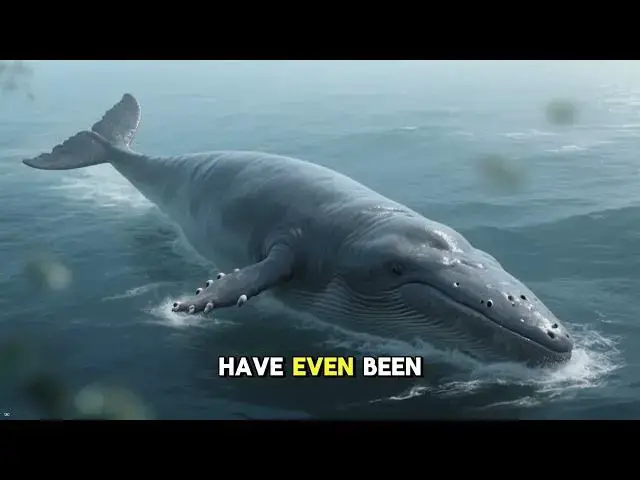
Whales' ancestors were terrestrial, four-legged mammals, possibly related to modern-day hippos, pigs, and deer. Their bodies gradually transformed, developing flippers, blowholes, and powerful tails for swimming.
Show More Show Less View Video Transcript
0:00
Have you ever looked at a whale and
0:02
thought, "How did this massive, graceful
0:04
creature come to be?" You might think
0:06
they've always ruled the oceans, but
0:08
their story is far more incredible. It's
0:10
a tale that start not in the water, but
0:12
on dry land, millions of years before
0:15
the first dinosaurs even appeared. Let's
0:18
rewind the clock way back, long before
0:20
Tyrannosaurus Rex, our planet was
0:23
recovering from a massive extinction
0:25
event. Life was finding new ways to
0:27
flourish. During this time, a group of
0:30
animals called synapsids emerged. They
0:33
weren't quite reptiles, not quite
0:35
mammals, but they were the ancestors of
0:37
all mammals to come, including you, me,
0:40
and yes, whales. Fast forward a few
0:42
hundred million years to around 50
0:44
million years ago. The age of dinosaurs
0:47
is over, and mammals are taking over the
0:50
world. Picture a landscape that looks a
0:52
bit like modernday India or Pakistan.
0:56
It's warm, lush, and full of life. And
0:59
trotting around near the water's edge is
1:01
a small deer-like creature with hooves.
1:04
It's about the size of a wolf or a large
1:07
dog. This animal is called Indohyas. It
1:10
might not look like much, but this
1:12
little guy is one of the earliest known
1:13
relatives of whales. Indohyas was a land
1:16
animal, but it spent a lot of time in
1:18
the water, probably to find food or hide
1:20
from predators. Scientists figured this
1:22
out by looking at its bones, which were
1:24
thicker and heavier than those of other
1:26
land animals its size. This is a feature
1:28
we see in animals like hippos today,
1:31
helping them stay submerged. Its ears
1:34
also had a unique structure, a bony wall
1:37
that's a signature trait of all whales,
1:39
ancient and modern. Indohyas was dipping
1:42
its toes into an aquatic lifestyle, the
1:45
very first step on an epic journey. From
1:48
Indohyas, the family tree branches out.
1:51
Meet Picisodus, another early whale
1:53
ancestor. Pisus looked more like a furry
1:56
evolve with long legs and a long tail.
1:59
It lived along the shores of an ancient
2:01
sea called Batus. For a long time, we
2:05
only had its skull, which clearly had
2:07
that special whale earbone. But when a
2:09
full skeleton was found, it confirmed
2:11
Pisus was a land dweller. It was a
2:14
predator, likely hunting for fish in
2:16
shallow streams and rivers, much like a
2:18
modern grizzly bear. It had strong legs
2:21
for walking on land, but its eyes were
2:23
positioned high on its head, perfect for
2:26
peeking above the water's surface while
2:28
staying mostly hidden. The transition
2:30
from land to water was gradual, but the
2:33
next step was a big one. Enter
2:35
Ambulitus, whose name literally means
2:38
walking whale. This creature was a true
2:40
amphibian in its lifestyle. Imagine
2:43
something like a furry 10-ft long
2:45
crocodile. It had powerful but short
2:49
hind legs with huge feet, probably
2:51
webbed, which it used to paddle through
2:53
the water. Its legs could still support
2:56
its weight on land, but it likely moved
2:58
awkwardly, dragging its body like a sea
3:01
lion. In the water, however, it was a
3:05
fearsome predator. It would lie and wait
3:07
in freshwater eststerase ambushing prey
3:10
that came to drink much like a crocodile
3:12
does today. Ambulacetus was a gamecher.
3:16
It showed that these early whales were
3:18
becoming more and more adapted to life
3:20
in the water. As generations passed,
3:23
these walking whales spent less time on
3:25
land and more time in the sea. Their
3:28
bodies started to change more
3:29
dramatically. Legs that were once
3:32
crucial for walking became less
3:33
important. Look at Coochis. another
3:36
descendant. It was smaller than
3:38
Ambuletus and had even shorter legs. It
3:41
probably couldn't support its weight on
3:43
land very well at all. Its body was
3:46
becoming more streamlined and it likely
3:48
swam by undulating its spine up and down
3:51
the same way modern whales and dolphins
3:54
do. This brings us to the next major
3:56
phase in whale evolution, a group of
3:58
animals called the remingtons.
4:01
They had long, narrow snouts, almost
4:03
like a gariel with small eyes. This
4:06
suggests they relied more on their
4:08
hearing and sense of touch to find prey
4:10
in murky coastal waters. Their body plan
4:12
was still somewhat otterlike, but their
4:15
connection to the land was becoming
4:16
weaker and weaker. Then around 40
4:19
million years ago, we meet the
4:21
protoedits like Rodhosidus.
4:23
This is where things get really
4:25
interesting. Rahasida still had distinct
4:28
hind legs, but they were small and
4:30
probably not used for walking. Its
4:32
pelvis wasn't even fused to its spine,
4:34
meaning it couldn't have supported its
4:36
own weight on land. But these legs were
4:39
not useless. They were likely used as
4:41
rudders for steering. Most importantly,
4:44
its nostrils had started to migrate.
4:46
Instead of being at the tip of the snout
4:48
like a dog, they were halfway up, a
4:51
clear stepping stone towards the
4:53
blowhole of modern whales. Radhosis was
4:56
a true sea dweller, likely giving birth
4:58
in the water and venturing far from the
5:00
coast. The journey continues with the
5:03
Basilosaurids. Now, don't let the name
5:05
fool you. Basilosaurus means king lizard
5:09
because when its fossils were first
5:11
found, people thought it was a giant sea
5:13
serpent, but it was a whale. And what a
5:15
whale it was. This creature was
5:17
enormous, stretching up to 60 ft long
5:20
with a sleek eel-like body. It was a top
5:23
predator of the ancient oceans.
5:26
Basilosaurus had a fully formed fluke or
5:28
tail fin for powerful swimming. And what
5:32
about its legs? If you look closely at a
5:34
Basilosaurus skeleton, you'll find them.
5:36
Two tiny, useless looking hind legs,
5:39
complete with knees and toes just
5:41
dangling from its body. They were so
5:43
small they wouldn't have even been
5:45
visible outside its body wall. These
5:48
were vestigial structures, leftovers
5:50
from its land dwelling past. A perfect
5:52
piece of evidence for its evolutionary
5:55
journey. Living alongside Basilosaurus
5:58
was its smaller cousin, Dorudin. Doridan
6:01
looked much more like a modern dolphin.
6:03
It was about 16 ft long, fully aquatic,
6:06
and lived in social pods. We know this
6:09
because fossil sites have been found
6:11
with adults and juveniles together. Like
6:14
Basilosaurus, it had those tiny internal
6:16
hind legs, but its body was compact and
6:19
powerful. Doridan's nostrils were even
6:21
farther back on its head. These animals
6:23
were the direct ancestors of the two
6:25
major groups of whales we see today.
6:28
From these ancient ancestors, the whale
6:31
family tree split into two main branches
6:34
around 34 million years ago. On one
6:37
side, we have the odantaceti or the
6:39
tooth whales. This group includes
6:42
everything from the clever dolphin and
6:43
the deep diving sperm whale to the
6:46
narwhal with its unicornlike tusk and
6:48
the killer whale or orca. They evolved
6:51
to become active hunters using their
6:53
teeth to catch fish, squid, and other
6:56
marine animals. Many of them also
6:59
developed an incredible new skill,
7:01
ecolocation. By emitting highfrequency
7:04
clicks and listening for the echoes,
7:06
they could see with sound, navigating
7:09
and hunting in complete darkness. On the
7:12
other side of the split are the misti,
7:14
the boline whales. These are the giants
7:17
of the ocean, the blue whale, the
7:19
humpback, the fin whale, and the grey
7:22
whale. Instead of teeth, they evolve
7:24
bine, which are large plates of a
7:26
material similar to our fingernails that
7:28
hang from their upper jaw. They swim
7:31
through the water with their mouths
7:32
open, taking in enormous gulps of water
7:35
filled with tiny creatures like krill
7:38
and small fish. Then they use their
7:41
massive tongue to push the water out
7:43
through the ble, which acts like a giant
7:46
sive, trapping the food inside. This
7:48
feeding strategy allowed them to become
7:51
the largest animals that have ever lived
7:53
on Earth. The blue whale can grow up to
7:56
100 ft long and weigh as much as 200
7:58
tons. Its heart is the size of a small
8:01
car. So from a small deer-like animal
8:05
waiting in a stream to a crocodileike
8:07
ambush predator to a serpentine sea king
8:10
and finally to the intelligent and
8:12
majestic giants of today. The story of
8:15
the whale is one of the most complete
8:17
and fascinating examples of evolution we
8:20
have. It's a powerful reminder that life
8:22
is always changing, always adapting.
8:25
Every time a whale breaches the surface
8:27
and takes a breath through its blow
8:29
hole, a relocated nose, it's carrying
8:32
the legacy of its landalking ancestors.
8:36
It's a journey of 50 million years
8:38
written in their very bones. Thank you
8:41
for watching. If you found this journey
8:43
as amazing as I do, please like this
8:45
video and subscribe for more stories
8:47
from our incredible natural
Jobs & Education