Up next in 10


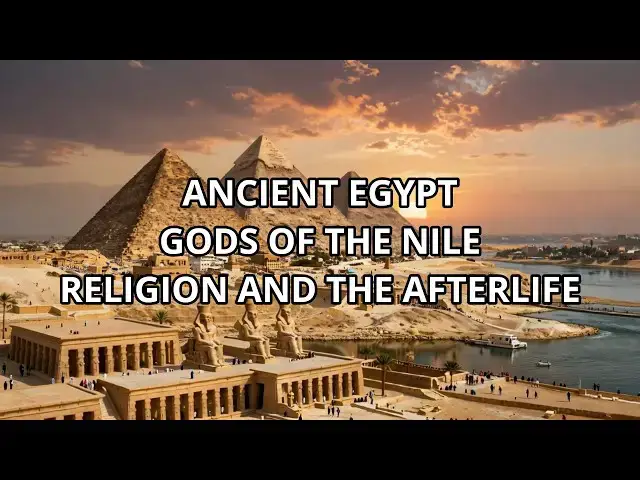
Life in ancient Egypt, their devotion to religion and how they viewed life after death.
Show More Show Less View Video Transcript
0:08
From the fertile banks of the Nile arose
0:10
a civilization unparalleled in its
0:12
devotion to the divine. Ancient Egypt,
0:15
land of pharaohs and pyramids, was
0:17
profoundly shaped by its intricate
0:19
religious beliefs and the promise of an
0:21
eternal afterlife.
0:23
At the heart of Egyptian life was a vast
0:25
pantheon of gods and goddesses
0:27
interwoven with every aspect of
0:29
existence. These deities embodied
0:31
natural forces, human virtues, and the
0:33
very fabric of the cosmos, dictating
0:36
fate and fortune. Foremost among them
0:38
was Rah, the sun god, creator of the
0:40
universe and source of all life. His
0:43
daily journey across the sky symbolized
0:45
the cycle of creation, death, and
0:47
rebirth, a constant reassurance of
0:49
renewal. Osiris, the lord of the
0:52
underworld and judge of the dead,
0:54
offered hope for eternal life. His myth
0:56
of death and resurrection became central
0:58
toerary practices, guiding souls through
1:01
the perils of the afterlife. Isis,
1:04
Osiris's devoted wife and sister,
1:06
represented magic, motherhood, and
1:08
healing. Her unwavering love and power
1:10
were believed to protect both the living
1:12
and the dead, a beacon of strength.
1:15
Horus, the falcon-headed god, avenged
1:17
his father, Osiris, and became the
1:19
patron god of pharaohs. He personified
1:21
kingship and divine order. His watchful
1:24
eyes symbolizing protection and
1:25
vigilance. Anubis, the jackal-headed
1:28
god, presided over mummification and
1:31
guided souls through the underworld. His
1:33
presence ensured a proper burial and
1:35
safe passage to the fields of Aru, the
1:37
afterlife paradise. The pharaoh was not
1:40
merely a ruler but a living god, the
1:42
terrestrial embodiment of Horus. This
1:45
divine status linked the human and
1:47
cosmic realms, ensuring stability and
1:49
prosperity for Egypt.
1:51
Massive temples like Carnack and Luxor
1:54
were not just places of worship, but
1:56
complex cosmic maps. Their intricate
1:58
designs and astronomical alignments
2:00
reflected the Egyptians understanding of
2:02
the universe. Daily rituals, prayers,
2:05
and offerings were performed by priests
2:08
to appease the gods and maintain ma, the
2:10
cosmic order. These ceremonies were
2:12
vital for the well-being of the entire
2:14
civilization.
2:16
Priests served as intermediaries between
2:18
humanity and the divine, meticulously
2:21
maintaining the gods cults. Their
2:23
knowledge of sacred texts and rituals
2:25
granted them immense power and
2:27
influence.
2:29
Religious festivals punctuated the year,
2:31
celebrating specific deities or
2:33
significant events like the Niles
2:35
inundation. These vibrant gatherings
2:37
brought communities together in joyous
2:39
worship and feasting.
2:42
Hymns, prayers, and magical spells were
2:44
inscribed on temple walls and papyri.
2:47
These sacred verses sought favor from
2:49
the gods, protection from evil, and
2:51
guidance for the journey into the
2:52
afterlife. Mahat the concept of truth,
2:56
justice, and cosmic balance permeated
2:58
Egyptian ethics. Living in accordance
3:00
with Mahat was crucial for personal
3:02
virtue and harmonious existence both in
3:04
life and the afterlife.
3:07
For ancient Egyptians, death was not an
3:09
end, but a transition to a new phase of
3:11
existence. The journey to the afterlife
3:14
was fraught with challenges requiring
3:16
careful preparation and divine
3:18
assistance. Mummification was a
3:20
meticulous process designed to preserve
3:22
the body, the vital vessel for the
3:24
deceased soul to inhabit in eternity. It
3:27
was a sacred right, not merely a
3:29
physical act of preservation.
3:32
During mummification, internal organs
3:34
were carefully removed and placed in
3:36
canopic jars, each protected by one of
3:38
the four sons of Horus. These jars
3:41
ensured the completeness of the
3:42
deceased's being. The mummified body was
3:45
then placed within multiple layers of
3:47
sarcophagi and coffins exquisitely
3:49
decorated with protective spells and
3:52
images of deities. These served as
3:54
elaborately crafted homes for eternity.
3:57
The monumental pyramids stood as eternal
3:59
tombs for pharaohs, ensuring their
4:01
ascent to the gods and their continued
4:04
watch over Egypt. They were engineering
4:06
marvels and potent symbols of divine
4:08
power. Later, pharaohs chose hidden
4:11
tombs in the valley of the kings,
4:13
adorned with elaborate paintings and
4:15
treasures to accompany them into the
4:16
next world, hoping for undisturbed
4:19
eternal rest. A laborateerary
4:22
processions conveyed the deceased to
4:24
their final resting place. Mourners,
4:26
priests, and offerings moved solemnly,
4:28
ensuring the soul's successful
4:30
transition to the afterlife. The Book of
4:33
the Dead was a collection of spells and
4:35
prayers, not a single book, intended to
4:37
guide the deceased through the dangers
4:39
of the underworld and assist them in
4:41
passing the final judgment. The most
4:44
critical moment in the afterlife was the
4:46
weighing of the heart, where the
4:48
deceased's heart was balanced against
4:49
the feather of M. A heavy heart burdened
4:52
by sin meant eternal oblivion. If deemed
4:56
worthy, Osiris welcomed the soul into
4:58
the field of reeds, a lush paradise
5:00
mirroring earthly life, but in
5:02
perfection. This blissful eternal
5:04
existence was the ultimate goal for all
5:06
Egyptians.
5:08
The Egyptians believed in various
5:09
components of the soul. The ka, a life
5:12
force, and the ba, the personality. Both
5:15
needed to be nourished and sustained for
5:16
the deceased to thrive in the afterlife.
5:19
Ushapi dolls, small figurines placed in
5:22
tombs, were believed to come to life in
5:24
the afterlife and perform labor for the
5:26
deceased. These magical servants ensured
5:28
an eternity of leisure. Amulets worn by
5:31
the living and buried with the dead
5:33
provided magical protection and invoked
5:35
divine favor. Scarabs, anks, and the eye
5:38
of Horus were powerful symbols of
5:40
eternity and well-being. Magic Heeka was
5:44
an integral part of Egyptian religion
5:46
used for healing, protection, and
5:47
influencing destiny. Priests and skilled
5:50
practitioners frequently employed spells
5:52
and charms. The sun cult centered around
5:55
raw permeated daily life. Morning
5:57
prayers greeted the sun and solar
5:59
symbols appeared everywhere from royal
6:01
regalia to domestic shrines honoring
6:03
life's source. Many animals were revered
6:06
as sacred embodiment of specific deities
6:09
like the cat of Bastet or the Ibis of
6:11
Thoth. These sacred animals were cared
6:13
for and sometimes mummified. The Nile
6:16
River itself was considered divine, a
6:18
gift from the gods that brought life and
6:20
sustenance to Egypt. Its annual
6:22
inundation was a miraculous event
6:24
celebrated with profound religious
6:26
significance.
6:28
Dreams were considered messages from the
6:30
gods, often interpreted by priests for
6:32
guidance or prophecy. Oracles too
6:35
offered divine insights into personal
6:36
fortunes and national affairs shaping
6:39
decisions. A profound shift occurred
6:41
during Pharaoh Akenatan's reign who
6:43
attempted to establish a monotheistic
6:46
worship of the aten the sundisk
6:48
challenging centuries of polytheistic
6:50
tradition. However, after Akenatan's
6:53
death, Egypt quickly reverted to its
6:55
traditional polytheistic beliefs. The
6:57
old gods were reinstated and the cult
7:00
faded into historical memory. a brief
7:02
radical departure. Egyptian mythology
7:05
was not merely stories but foundational
7:07
narratives that explained the world's
7:09
creation, the cycle of life and death,
7:11
and humanity's place within the cosmic
7:14
order. Beyond rituals, Egyptian religion
7:17
instilled a strong moral code.
7:19
Principles like honesty, compassion, and
7:21
justice were paramount, believed to
7:23
determine one's fate in the afterlife.
7:26
Scribes revered for their literacy
7:28
played a crucial role in preserving
7:29
religious texts, myths, and moral
7:32
teachings. Their diligent work ensured
7:34
the continuity of Egyptian spiritual
7:36
knowledge. Family continuity was
7:39
paramount. Ancestors were honored and
7:41
remembered. Their spirits believed to
7:43
watch over the living, connecting
7:45
generations across the veil of
7:46
existence. The ankh, the symbol of life,
7:50
represented the breath of life and
7:51
eternal existence. It was frequently
7:53
held by deities signifying their power
7:56
to bestow or sustain life. Every symbol
7:58
in Egyptian art carried deep religious
8:01
meaning from the colors used to the
8:03
posture of figures. Art was a language
8:05
of the sacred communicating profound
8:07
truths. The gods were believed to
8:10
constantly battle forces of chaos is to
8:13
maintain cosmic order. Mat Egyptians saw
8:16
their rituals as vital contributions to
8:17
this eternal struggle. Egyptians
8:20
routinely sought divine intervention for
8:22
everything from prosperity to healing.
8:24
They believed gods had direct influence
8:27
on daily events and could be swayed
8:29
through piety. Dreams were a significant
8:31
channel for divine communication.
8:34
Egyptians carefully analyzed them for
8:36
omens, guidance, and warnings. Believing
8:38
the gods spoke through the veil of
8:40
slumber, aspiring priests underwent
8:43
rigorous training, mastering
8:44
hieroglyphs, astronomy, medicine, and
8:47
complex ritual procedures. Their
8:49
education was comprehensive, spanning
8:51
years of dedicated study. Each night,
8:54
Rah was believed to journey through the
8:56
underworld in his solar bark, battling
8:58
evil forces to be reborn with the dawn.
9:00
This cosmic struggle mirrored humanity's
9:03
hopes for triumph over darkness. The
9:05
said festival celebrated by pharaohs
9:07
after 30 years on the throne was a
9:09
jubilee meant to renew the king's
9:11
vitality and reaffirm his divine right
9:13
to rule reinforcing the ties to the
9:16
gods. Beyond the grand temple cults,
9:18
Egyptians also worshiped household
9:20
deities like Toweret, hippopotamus
9:23
goddess of childbirth and bez dwarf god
9:25
of protection who safeguarded family and
9:27
home. Hoppy, the god of the Niles
9:30
inundation, was revered for bringing
9:32
fertility and abundance. His annual
9:35
arrival was celebrated with fervent
9:36
prayers and offerings, ensuring the
9:38
land's prosperity. A person's name held
9:41
immense power and spiritual
9:43
significance. To speak someone's name
9:45
was to make them live, even after death,
9:47
connecting them eternally to existence.
9:50
The elaborate preparations for the
9:51
afterlife underscored a deep belief in
9:53
continuity. Egyptians desired to enjoy
9:56
in eternity what they cherished in life,
9:58
family, food, and familiar surroundings.
10:01
Maintaining the temples was a sacred
10:03
duty, ensuring the god's continued
10:05
favor. Priests and craftsmen
10:07
painstakingly repaired and expanded
10:09
these holy sites over millennia, a
10:12
testament to enduring faith. Food and
10:14
drink offerings were regularly placed in
10:16
tombs or at offering tables for the ca
10:18
of the deceased. These were essential to
10:21
sustain the soul's life force in the
10:23
afterlife. The great sphinx, a mythical
10:26
creature with a lion's body and a human
10:28
head, stood as a guardian of the Giza
10:30
Plateau, embodying wisdom and strength,
10:32
protecting the sacred necropolis.
10:35
Ritual purity was vital for priests and
10:37
worshippers approaching sacred spaces.
10:39
Contagion, both physical and spiritual,
10:42
was a serious concern, necessitating
10:44
strict purification rights. The gods and
10:47
afterlife beliefs of ancient Egypt left
10:49
an indelible mark on Western
10:51
civilization. Their concepts of
10:53
judgment, resurrection, and eternal life
10:55
resonated through subsequent cultures
10:57
and faiths. Every aspect of an ancient
11:00
Egyptians life from birth to death was a
11:03
journey intertwined with their deities
11:05
and the promise of eternity. Their
11:07
devotion shaped magnificent monuments
11:09
and a rich spiritual heritage. Even
11:12
today, the mysteries of ancient Egyptian
11:14
religion inspire wonder. Their
11:16
sophisticated spiritual worldview
11:18
continues to captivate archaeologists,
11:20
historians, and seekers of ancient
11:22
wisdom. The pyramids still stand as
11:25
silent sentinels, enduring monuments to
11:27
a faith that saw life as a prelude to
11:29
eternity, and death as merely a doorway
11:31
to a new divine existence. Each
11:34
discovery, from forgotten tombs to
11:36
deciphered texts, slowly unears more
11:39
about their complex beliefs, allowing us
11:41
a glimpse into the minds of those who
11:43
built a civilization for the gods. The
11:46
gods of the Nile and the fervent belief
11:48
in an afterlife forged a civilization
11:50
that defied time, leaving a legacy that
11:52
whispers of eternity through its art,
11:54
architecture, and enduring spiritual
11:56
quest. What aspect of ancient Egyptian
11:59
religion fascinates you most? Share your
12:02
thoughts and continue exploring the
12:04
profound wisdom of our ancient past by
12:07
liking this video and subscribing for
12:09
more journeys through history.
Arts & Entertainment