Up next in 10


Early builders of an ancient civilization. Egypt had builders, who were creating structures that defy modern civilization. They had knowledge of advanced mathematics and construction ingenuity that todays scientists are trying to figure out how the were able to achieve such.
Show More Show Less View Video Transcript
0:05
In the arid heart of North Africa, a
0:07
civilization rose from sands, leaving
0:08
behind monuments that defy time. These
0:11
colossal structures, born of ingenuity
0:13
and unwavering faith, whisper tales of
0:16
an empire's eternal quest. From humble
0:17
beginnings along the fertile Nile, small
0:20
communities coalesed, driven by a shared
0:22
vision. These early dynasts laid the
0:25
groundwork for a unified kingdom where
0:27
the divine ruler became the living
0:28
embodiment of the sun god. The genesis
0:31
of monumental stone architecture began
0:33
with Pharaoh Joser. His vazier Imhoteep
0:36
envisioned a revolutionary stepped
0:38
structure breaking from traditional
0:40
mustaba tombs forever changing the
0:42
architectural landscape of Egypt.
0:45
Imoteep more than an architect was a
0:47
polymath, physician, priest and scholar.
0:50
His genius transformed mortuary
0:52
complexes, creating the first true stone
0:54
building, a testament to his
0:56
unparalleled intellect and foresight.
0:58
For the Egyptians, the pharaoh was a god
1:00
king, a mediator between mortals and the
1:03
divine. His passage to the afterlife was
1:05
paramount, ensuring cosmic order and the
1:07
prosperity of Egypt for generations to
1:10
come. After Joser, Pharaohs experimented
1:12
with various pyramid designs. The bent
1:15
pyramid of Nefaru stands as a striking
1:17
example of these early trials. A
1:19
magnificent testament to evolving
1:21
architectural mastery and ambition.
1:24
Snferu's final triumph, the Red Pyramid,
1:26
achieved the true pyramidal form. Its
1:29
smooth sides and perfect geometry marked
1:31
a pivotal moment, setting the stage for
1:33
the iconic structures at Giza, later
1:35
built by his successors. Then came Kufu,
1:38
a pharaoh whose ambition knew no bounds.
1:41
He commissioned the greatest
1:42
architectural marvel ever conceived. A
1:44
tomb destined to proclaim his eternal
1:46
power and guide his soul to the heavens.
1:49
Building the great pyramid required
1:51
meticulous planning and unparalleled
1:54
engineering. Architects and overseers
1:56
meticulously calculated angles, sourced
1:58
materials, and organized an army of
2:01
laborers to achieve the impossible.
2:03
Limestone for the pyramids was extracted
2:05
from nearby quaries, but premium granite
2:08
for specific chambers came from Azwan.
2:10
hundreds of miles away. This required
2:13
incredible logistical feats, moving
2:15
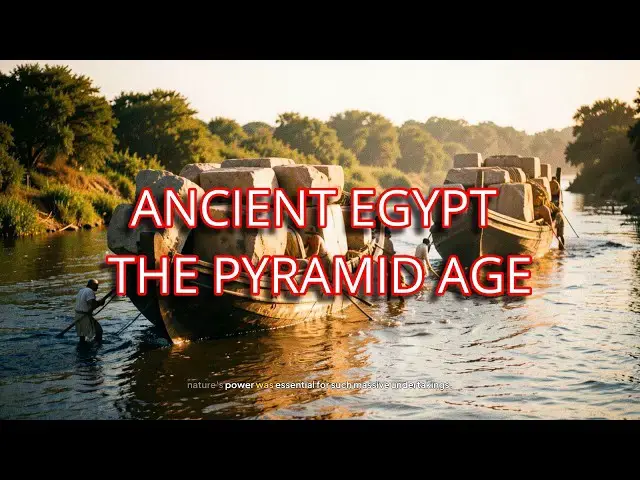
massive stone blocks. During the annual
2:18
Nile inundation, floodwaters would bring
2:20
boats laden with colossal stone blocks
2:22
directly to the pyramid construction
2:24
site. This ingenious use of nature's
2:27
power was essential for such massive
2:29
undertakings. The sheer scale of moving
2:32
millions of stone blocks up the
2:33
pyramid's rising structure remains a
2:35
marvel. Systems of ramps lubricated
2:38
possibly with water allowed armies of
2:40
workers to pull and push these behemoths
2:42
into place. Each stone block weighing
2:45
tons had to be placed with extraordinary
2:48
precision. The seamless joints and
2:50
intricate angles speak volumes about the
2:52
skilled craftsmanship and advanced
2:54
understanding of geometry these builders
2:56
possessed. For decades, the Great
2:59
Pyramid of Kufu grew stone by stone,
3:01
shaping the Giza Plateau. It dominated
3:03
the horizon, a man-made mountain
3:05
reaching for the celestial gods, a
3:07
beacon of human ambition and devotion.
3:10
Life for the pyramid builders was
3:11
arduous but organized. They were not
3:14
enslaved, rather skilled craftsmen and
3:16
seasonal farmers housed in purpose-built
3:18
villages fed and cared for by the state
3:21
during the offse. Feeding tens of
3:24
thousands of workers required an
3:25
enormous logistical network. Bakers,
3:28
brewers, and butchers ensured a constant
3:30
supply of food and provisions,
3:32
sustaining the monumental effort day
3:34
after day. The builder's dedication
3:36
stemmed from deep spiritual beliefs.
3:39
They understood their work as a sacred
3:40
duty, contributing to the pharaoh's
3:42
eternal journey and by extension, the
3:45
well-being of all Egypt. Kufu's
3:48
successor, Cafre, built the second
3:50
largest pyramid at Giza and commissioned
3:52
the enigmatic Great Sphinx. This
3:54
colossal feline guardian with the head
3:56
of a king watches over his eternal
3:58
resting place. Carved from a single
4:00
outcrop of rock, the sphinx's purpose
4:02
and precise symbolism remain debated. Is
4:05
it a guardian, a portrait, or a
4:07
representation of the divine power
4:09
embodied by the pharaoh himself? The
4:11
last of the Giza colossal pyramids
4:13
belongs to Menare. Smaller in stature,
4:16
it was originally encased in red
4:18
granite, a costly and challenging
4:20
endeavor reflecting refined tastes and
4:22
continuing royal ambition. Beyond the
4:25
external grandeur, the pyramids conceal
4:27
intricate internal passageways, burial
4:30
chambers, and false tunnels designed to
4:32
protect the royal sarcophagus and its
4:34
precious contents from ancient tomb
4:36
raiders. At the heart of the pyramid lay
4:38
the pharaoh's burial chamber, carefully
4:40
constructed to house his sarcophagus and
4:43
treasures. This sacred space was his
4:45
ultimate gateway to the afterlife,
4:47
protected by tons of stone. Adjacent to
4:50
each pyramid lay a mortuary temple, a
4:53
vibrant center for the cult of the
4:54
deceased king. Priests performed daily
4:57
rituals and offerings, ensuring the
4:59
continued sustenance and journey of the
5:01
pharaoh's ca and ba. The pyramids were
5:04
more than tombs. They were cosmic
5:06
machines. Their alignment with celestial
5:08
bodies symbolized the pharaoh's ascent
5:10
to the stars, joining the gods and
5:12
ensuring the cycle of rebirth and
5:14
eternity. After man, the era of colossal
5:18
pyramid building gradually waned. Later
5:20
pharaohs opted for smaller, less
5:22
laborintensive structures or concealed
5:24
rock cut tombs in the valley of the
5:26
kings, preserving their legacies
5:28
differently. Inside some later pyramids,
5:31
intricate pyramid texts were carved into
5:33
the walls. These ancient spells and
5:35
incantations served as a literal guide
5:38
for the deceased king, helping him
5:40
navigate the perilous journey to the
5:41
afterlife. For centuries, the meaning of
5:44
these enigmatic texts remained lost. The
5:47
later decipherment of hieroglyphs,
5:49
particularly through the Rosetta Stone,
5:51
unlocked the spiritual world of the
5:52
ancient Egyptians, revealing their
5:54
profound beliefs.
5:57
Modern archaeology continues to unveil
5:59
secrets hidden beneath the sands.
6:01
Excavations around the pyramids have
6:03
revealed workers cemeteries,
6:05
sophisticated tools, and even the
6:07
remains of the vast infrastructure that
6:09
supported their creation. The pyramids
6:12
of Giza stand today as monumental
6:14
testaments to human ambition,
6:15
engineering prowess, and enduring faith.
6:18
They symbolize a civilization's profound
6:20
connection to the divine and its pursuit
6:22
of immortality. These ancient wonders
6:25
continue to captivate and inspire. They
6:28
challenge our perceptions of ancient
6:29
capabilities and remind us of the
6:31
incredible feats humanity can achieve
6:33
when united by purpose and vision. The
6:36
Nile River, the lifeblood of Egypt,
6:39
provided not only sustenance but also a
6:41
vital artery for transportation,
6:43
carrying stone and supplies from distant
6:45
quaries to the grand construction sites.
6:48
The precise astronomical alignments of
6:50
the pyramids, particularly with the
6:52
constellation Orion, suggest an advanced
6:55
understanding of celestial mechanics and
6:57
a spiritual connection between Earth and
6:59
sky. The builders employed simple yet
7:02
effective tools, copper chisels, doite
7:05
pounding stones, wooden sledges, and
7:07
rope. Their ingenuity lay in applying
7:09
these basic instruments to monumental
7:11
tasks, demonstrating extraordinary
7:13
skill. The capstone or pyramidian often
7:16
made of electrum or gilded stone adorned
7:19
the apex of each pyramid. It symbolized
7:21
the benden stone, the primordial mound
7:23
of creation, catching the first rays of
7:26
the sun. Behind the physical creation
7:28
lay sophisticated mathematics. The
7:30
golden ratio pi and precise angles were
7:33
subtly incorporated indicating a
7:35
profound understanding of geometry and
7:37
numerology. Even without modern
7:39
calculations, the pyramids embody the
7:42
collective will of a unified people
7:44
working towards a singular sacred goal.
7:46
This societal cohesion guided by a
7:48
belief system allowed for feats
7:50
unmatched in the ancient world. A man of
7:52
few words stares at the stones.
7:55
The Sphinx was carved directly from the
7:57
bedrock and the extracted from its
7:59
creation was then used to build its
8:01
associated mortuary temple. This
8:04
efficient use of resources showcases
8:06
ancient engineering pragmatism.
8:08
Connecting the Nile to the mortuary
8:10
temples were long causeways leading to
8:12
valley temples. These served as
8:15
purification sites for the pharaoh's
8:17
body before its final journey to the
8:19
pyramid's heart. The walls of temples
8:21
and tombs were adorned with hieroglyphs,
8:24
a pictorial script that not only
8:26
recorded history, but also conveyed
8:28
sacred prayers and rituals, guiding the
8:30
deceased and honoring the gods. Elite
8:33
scribes meticulously recorded every
8:35
aspect of economic life, religious
8:37
rituals, and construction progress.
8:39
Their precise recordeping was crucial
8:41
for managing such a vast and complex
8:43
society. Once the Giza pyramids shone
8:47
with brilliant white casing stones,
8:49
finely polished tur limestone. Over
8:51
millennia, these precious outer layers
8:53
were stripped away, repurposed for other
8:56
buildings, or fell during earthquakes.
8:58
Kufu's solar bark, painstakingly
9:00
reassembled, was meant to carry the
9:02
pharaoh's soul with the sun god Ra
9:04
across the heavens, ensuring his daily
9:06
rebirth and continued existence in the
9:08
afterlife. Beyond the brute force of
9:11
construction, highly skilled artisans
9:13
were crucial in decorating the inner
9:15
chambers and craftingerary goods. Their
9:18
intricate work provided beauty and
9:20
spiritual protection for the deceased.
9:23
Standing beside these pyramids, one
9:25
feels the immense weight of history. the
9:27
echoes of generations of builders,
9:29
pharaohs, and priests who dedicated
9:32
their lives to shaping the land and
9:34
securing eternity. From Greek historians
9:36
to modern tourists, Egypt's pyramids
9:39
have always exerted a powerful
9:41
fascination. They are not merely ruins,
9:43
but living testaments to an
9:45
extraordinary civilization's
9:46
intellectual and spiritual heights.
9:49
Today, preserving these ancient wonders
9:51
from environmental erosion, human
9:53
impact, and the relentless march of time
9:55
poses significant challenges.
9:58
International efforts are crucial to
10:00
protect this shared heritage. Even
10:02
today, new technologies like GPR and
10:04
muon tomography reveal previously
10:06
undetected voids and passages within the
10:09
pyramids. The age of discoveries is far
10:11
from over, hinting at more untold
10:13
stories. Popular legend speaks of curses
10:16
protecting the tombs, a captivating
10:18
notion that adds to the mystique, though
10:20
archaeologists attribute misfortunes to
10:23
mundane factors or coincidence rather
10:25
than supernatural retribution. Composed
10:28
of over 2.3 million stone blocks, each
10:31
weighing several tons, the sheer scale
10:33
of the Great Pyramid is almost
10:35
incomprehensible.
10:36
It remained the tallest man-made
10:38
structure for over 3,800 years. The Giza
10:42
Plateau was not just a collection of
10:44
pyramids. It was a vast necropolis, a
10:46
sacred city for the dead, complete with
10:48
smaller satellite pyramids, mastabas,
10:51
and tombs for nobles and royal family
10:53
members. The pyramids facilitated the
10:56
pharaoh's journey to the afterlife,
10:58
ensuring his transformation into an ak,
11:00
an effective and blessed spirit capable
11:03
of influencing the mortal realm and
11:05
maintaining cosmic balance.
11:07
Centuries of storytelling have shrouded
11:09
the pyramids in myths, alien builders,
11:11
advanced lost technologies, and enslaved
11:14
populations. While compelling, the truth
11:16
reveals equally impressive human
11:18
ingenuity and dedication. The pyramid
11:21
age represents the zenith of the old
11:23
kingdom, a period of remarkable
11:25
political stability, economic
11:27
prosperity, and artistic flourishing.
11:29
These structures are the enduring
11:31
symbols of that golden era. The
11:33
engineering principles and
11:35
organizational skills demonstrated by
11:37
the pyramid builders were fundamental to
11:39
later architectural achievements, not
11:41
only in Egypt, but echoed throughout the
11:43
ancient world, inspiring wonder. For
11:47
thousands of years, the desert wind has
11:49
scoured their surfaces. The sun has
11:51
baked their stones, yet they endure.
11:53
Silent witnesses to the rise and fall of
11:55
empires, still guarding their ancient
11:57
secrets. Recent discoveries of the
12:00
pyramid builder cemetery near Giza
12:02
provide invaluable insights into their
12:04
diet, health, and social organization,
12:07
confirming they were free citizens, not
12:09
slaves, working for a greater purpose.
12:12
The pyramids testify to a universal
12:14
human drive to transcend mortality, to
12:16
leave an indelible mark, and to
12:18
construct monuments that defy the
12:20
ravages of time, connecting us to our
12:22
distant past. Under the cloak of night,
12:24
the pyramids transform. The ancient
12:27
stones absorb the moonlight and the
12:29
constellations above echo the celestial
12:31
beliefs that were so central to their
12:33
very existence and grand design. These
12:36
colossal structures built by a
12:38
sophisticated civilization thousands of
12:40
years ago continue to resonate,
12:42
reminding us of the enduring power of
12:44
faith, innovation, and the human
12:46
spirit's quest for eternity. The
12:49
builders of eternity etched their legacy
12:51
in stone, creating wonders that
12:52
transcend generations. Their pyramids
12:55
stand not merely as tombs, but as
12:57
enduring monuments to human potential
12:59
and a civilization's grand vision. What
13:02
are your thoughts on the incredible
13:04
intelligence and dedication of the
13:06
ancient Egyptians? Share your insights
13:09
and subscribe for more journeys into the
13:11
captivating mysteries of our ancient
13:13
world.
Arts & Entertainment