Up next in 10


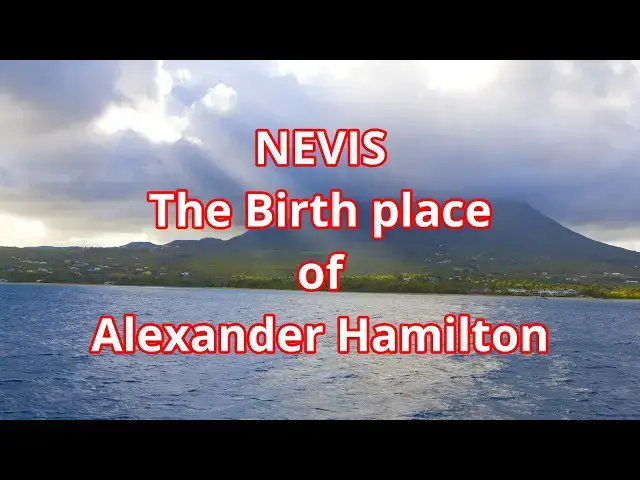
This is the story of Alexander Hamilton before America.
The story of a boy born in the Caribbean…who would rise to change a nation.
Visit and learn more about St. Kitts and Nevis and the Caribbean:
Travel free or at discount. Work from home as a Travel Agent: https://gr3f.co/c/61445/er6g5
Show More Show Less View Video Transcript
0:09
Alexander Hamilton, child of the
0:11
Caribbean. Long before the debates of
0:14
the American Revolution, before the
0:16
creation of the United States Treasury,
0:19
before the duels, the politics, the
0:22
legend, there was a small boy growing up
0:24
in the Caribbean. He would later become
0:27
one of the most influential architects
0:29
of the United States. But his story did
0:32
not begin in Boston or Philadelphia or
0:36
New York. It began on a volcanic island
0:39
in the Eastern Caribbean, Nevis. And the
0:42
boy's name was Alexander Hamilton.
0:46
Hamilton was born in the mid-18th
0:48
century. Most historians now believe on
0:52
January 11th, 1755
0:55
in Charlestown, the capital of Nevis. At
0:58
the time, Nevis was one of the richest
1:01
islands in the British Caribbean. Sugar
1:04
made it so. The Caribbean sugar economy
1:07
was brutal and enormously profitable.
1:11
Plantation owners shipped sugar and
1:13
molasses across the Atlantic. Historian
1:16
Eric Williams once summarized the system
1:19
bluntly. Sugar plantations were
1:21
factories in the field and those
1:24
factories depended on slavery.
1:27
Across the island, enslaved Africans
1:30
labored from dawn to nightfall under the
1:32
tropical sun,
1:34
cutting cane, boiling syrup, feeding the
1:37
relentless demand for sugar in Europe.
1:40
In this world of wealth and violence,
1:43
Alexander Hamilton was born into a very
1:45
different form of vulnerability. He was
1:48
illegitimate. Hamilton's mother was
1:51
Rachel Faucette. She was intelligent,
1:54
independent, and controversial. Born on
1:57
Nevis to a French Huguenot family,
2:00
Rachel had once been married to a Danish
2:02
merchant named Johan Michael Lavien. The
2:05
marriage collapsed. Rachel fled the
2:08
relationship, a scandalous act in the
2:10
18th century. Lavien had her jailed
2:13
briefly for adultery. Eventually, she
2:16
escaped the marriage entirely. She then
2:19
met a Scottish trader named James
2:22
Hamilton. They formed a relationship but
2:25
never legally married. And because
2:27
Rachel's previous husband refused to
2:29
grant a formal divorce, any children she
2:32
had afterward would be legally
2:34
illegitimate. Alexander Hamilton entered
2:37
the world under that shadow. By the
2:39
early 1760s, the family moved to St.
2:42
Croix, part of the Danish West Indies.
2:45
Today, the island is part of the United
2:48
States Virgin Islands. But, in the 18th
2:51
century, it was a booming sugar colony.
2:54
Christiansted, the town where Hamilton
2:56
grew up, was a bustling commercial port.
2:59
Ships from Britain, North America,
3:02
Africa, and Europe filled its harbor.
3:06
The docks were stacked with barrels of
3:08
sugar. Rum distilleries filled the air
3:11
with the sweet smell of molasses. And
3:13
enslaved people were bought and sold in
3:16
public markets. Young Hamilton saw all
3:19
of it. Hamilton's father struggled
3:22
financially. Eventually, James Hamilton
3:25
abandoned the family entirely. Rachel
3:28
was left to support Alexander and his
3:31
older brother alone. She opened a small
3:34
shop in Christiansted. She also educated
3:37
her sons at home. Because of their
3:40
illegitimate status, they were barred
3:42
from attending the local church school.
3:45
Yet, Rachel owned books, and Alexander
3:48
devoured them. He read history,
3:51
literature, and trade manuals. Later in
3:54
life, Hamilton would write, "I was
3:57
compelled to labor for my bread and to
4:00
depend chiefly on my own exertions."
4:03
Those exertions began early. Around age
4:06
11, Hamilton began working for the
4:09
trading firm Beekman and Cruger. The
4:12
office overlooked the busy harbor of
4:14
Christiansted. Here, the young boy
4:17
learned the mechanics of Atlantic
4:19
commerce. He calculated shipping costs.
4:23
He tracked cargo manifests. He wrote
4:25
letters to merchants across the ocean.
4:28
In many ways, the Caribbean functioned
4:31
as the beating heart of the Atlantic
4:33
economy. Sugar moved to Europe.
4:36
Manufactured goods returned. Ships
4:40
carried enslaved Africans through the
4:42
Middle Passage.
4:44
The trade routes connected continents.
4:47
Hamilton's job required understanding
4:50
them all.
4:51
Hamilton grew up in a slave society. On
4:54
St. Croix, enslaved Africans vastly
4:58
outnumbered Europeans. Plantations
5:00
dominated the island's economy.
5:03
The work was relentless. Cutting
5:05
sugarcane required sharp machetes and
5:08
long hours. During harvest season, known
5:12
as crop time, enslaved workers often
5:15
labored nearly around the clock.
5:17
Punishments were severe. Contemporary
5:20
plantation records describe whippings,
5:23
shackles, and executions for resistance.
5:26
Hamilton witnessed this system
5:28
firsthand. As a clerk, he sometimes
5:31
recorded transactions involving enslaved
5:34
people. Historians debate the degree to
5:37
which Hamilton personally participated
5:39
in the trade, but there is no doubt he
5:41
saw its brutality. Later in life,
5:44
Hamilton would oppose slavery
5:46
politically. He joined the New York
5:49
Manumission Society, which sought the
5:52
gradual abolition of slavery in New
5:54
York. His Caribbean childhood likely
5:57
shaped those views. In 1768, tragedy
6:00
struck. Rachel Faucette contracted a
6:03
tropical fever and died. Alexander
6:06
Hamilton was around 13 years old. Her
6:09
death left him and his brother
6:11
effectively orphaned. Local probate
6:14
records listed Rachel's possessions, a
6:17
few household goods, some books, and
6:20
modest property, but because Alexander
6:23
and his brother were illegitimate, they
6:25
were legally barred from inheriting most
6:27
of it. Hamilton's world collapsed, yet
6:31
he continued working in the merchant
6:33
office. The boy had no other choice.
6:36
Hamilton's talent soon became clear.
6:39
When one of the company's partners left
6:41
the island, the teenage clerk was
6:43
entrusted with running daily operations.
6:46
He supervised shipments. He negotiated
6:49
prices. He corresponded with ship
6:52
captains and merchants. In one surviving
6:55
letter, he confidently discussed
6:57
exchange rates and commercial risks. For
7:00
a teenager, barely in his mid-teens, it
7:03
was extraordinary responsibility.
7:06
Then came the storm that would change
7:08
everything. On August 31st, 1772,
7:12
a devastating hurricane struck St.
7:15
Croix. Buildings collapsed. Ships were
7:18
smashed in the harbor. Plantations were
7:20
flattened. Hamilton wrote a vivid
7:23
account of the disaster that was
7:24
published in the Royal Danish American
7:27
Gazette. His description was dramatic
7:30
and literary. The roaring of the sea and
7:32
wind
7:34
filled the mind with awful gloom.
7:37
He continued, "It seemed as if a total
7:39
dissolution of nature was taking place.
7:43
The essay stunned readers. The island's
7:46
leading citizens recognized his
7:48
remarkable talent. A subscription fund
7:51
was raised. The goal, send Alexander
7:54
Hamilton to the North American colonies
7:57
for education. In 1773, Hamilton boarded
8:00
a ship bound for New York City. He was
8:03
about 17 years old. He left behind the
8:06
Caribbean islands that had shaped his
8:09
entire life. Nevis, St. Croix, the
8:12
harbor of Christiansted. He would never
8:15
again live in the West Indies, but the
8:17
experiences he carried from those
8:19
islands would shape the future of a
8:21
nation. The Caribbean of Hamilton's
8:24
youth was a world built on trade,
8:27
credit, and risk. Merchants operated on
8:30
borrowed money. Ships were insured
8:33
against storms. Plantations depended on
8:36
global markets.
8:38
Hamilton saw the importance of finance
8:41
long before he entered politics.
8:43
Years later, as the first US Secretary
8:46
of the Treasury, he would design
8:49
America's financial system. National
8:52
credit, a central bank, federal
8:55
assumption of state debts. Those ideas
8:59
had roots in the commercial culture of
9:01
the Caribbean.
9:03
Hamilton understood something many
9:05
colonial politicians did not. A nation's
9:09
strength depended on its financial
9:11
credibility. Hamilton rarely spoke
9:14
publicly about his Caribbean childhood,
9:18
but he never forgot it. In later
9:20
correspondence, he wrote, "My birth is
9:24
the subject of the most humiliating
9:26
circumstances." Those circumstances,
9:29
illegitimacy, poverty, orphanhood,
9:32
shaped his relentless ambition.
9:35
From a clerk in a Caribbean counting
9:37
house, he would rise to become a
9:39
revolutionary soldier, a constitutional
9:42
thinker,
9:44
and the chief architect of America's
9:46
financial system. Today, visitors can
9:49
walk through the streets of Charlestown
9:51
on Nevis. There stands a modest stone
9:54
building known as the Alexander Hamilton
9:57
Birthplace Museum. Nearby, the sea still
10:01
rolls against the harbor. The same winds
10:04
that once filled the sails of merchant
10:06
ships still blow across the island.
10:09
Those winds carried a young boy away in
10:12
1773,
10:15
but they also carried something else.
10:18
The ideas, ambitions, and hard lessons
10:21
of the Caribbean. Lessons that would
10:24
help shape the United States itself.
10:27
Before he helped build a nation,
10:29
Alexander Hamilton was a child of the
10:32
islands. Forged by trade, hardened by
10:36
loss, and carried forward by a
10:39
hurricane.
News