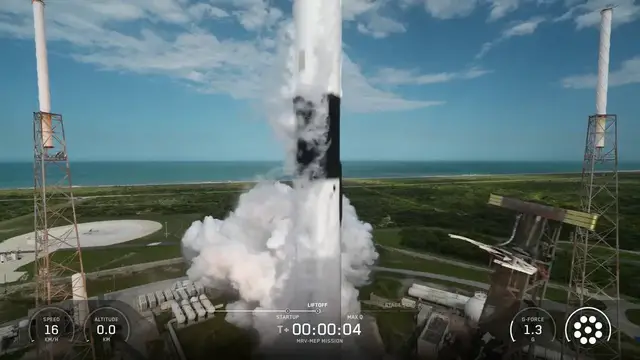

US: SpaceX Launches Robotic Satellite Repair Mission Into Earth Orbit.
Jul 24, 2026
Cape Canaveral, United States - July 21, 2026 SpaceX launched its MRV-MEP mission on July 21 as a Falcon 9 rocket lifted off from Cape Canaveral Space Force Station at 5:15 p.m. EDT (2115 GMT), carrying a Mission Robotic Vehicle and three Mission Extension Pods into orbit. The spacecraft, operated by SpaceLogistics, a subsidiary of Northrop Grumman, is headed to geostationary orbit, 22,236 miles (35,786 kilometers) above Earth. The mission is designed to extend the operational lives of multiple satellites. The Mission Robotic Vehicle is equipped with two 10-foot (3-meter) robotic arms developed by DARPA with assistance from the Naval Research Laboratory. Using those arms, it will attach the first three Mission Extension Pods ever launched to three separate satellites in geostationary orbit. Optus reserved one pod, while Intelsat booked the other two. According to Northrop Grumman, each Mission Extension Pod uses electric propulsion to provide orbit control and momentum unloading and can extend the life of a typical 2,000-kilogram satellite in geostationary orbit by up to eight years. After deploying the third pod, the robotic vehicle will remain in geostationary orbit and can relocate, inspect, repair, and upgrade spacecraft. It also carries a Passive Refueling Module, the first refueling interface standard approved by the U.S. Space Force, allowing the vehicle to be refueled in orbit. The Falcon 9 upper stage deployed the Mission Robotic Vehicle 35.5 minutes after liftoff, followed by the three Mission Extension Pods at 10-minute intervals. Unlike most Falcon 9 missions, there was no first-stage landing because additional performance was required for the mission. The booster completed its 32nd and final flight. The launch was SpaceX's second mission of the day, following the deployment of 24 Starlink satellites from California.
Show More Show Less #news