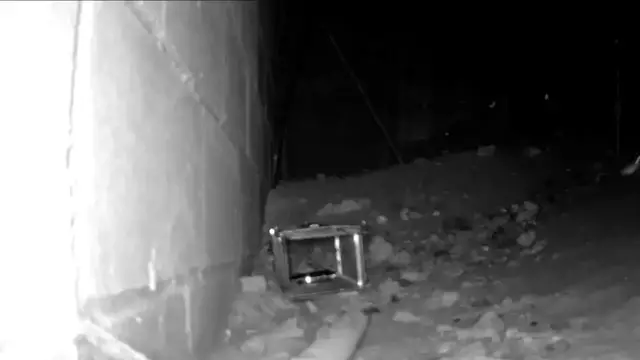

US: Caught On Video: Rat Snatches Bait Without Triggering Trap.
Jun 19, 2026
United States - June 17, 2026 A video shows a rat taking bait from a trap without being caught, illustrating the type of behavior Rutgers researchers Changlu Wang and Jin-Jia Yu are examining as they investigate why some urban rodent populations are becoming increasingly difficult to control. Researchers at Rutgers University found that 84% of house mice sampled from urban areas in the Northeast carried at least one genetic mutation associated with resistance to rodenticides. The findings suggest that many mouse populations may be developing the ability to survive poisons commonly used for rodent control. The study analyzed DNA from 147 house mice and 143 Norway rats collected in urban areas of New York, New Jersey, Pennsylvania, and Washington, D.C. Scientists focused on the Vkorc1 gene, where certain mutations have been linked to resistance to anticoagulant rodenticides, the most widely used rodent-control chemicals in the United States. Among the mice studied, nearly 70% carried mutations already known to help them survive exposure to common rodenticides. About 35% of the Norway rats also carried mutations in the same gene. Researchers also identified several previously unreported genetic variants in house mice and Norway rats. It is not yet known whether those newly discovered mutations contribute to resistance. The findings emerged after years of reports from pest-management professionals who observed persistent rodent problems despite repeated treatments. Researchers said the results point to a long-running evolutionary struggle between humans and rodents, with mice appearing to adapt more rapidly than rats. The study highlighted the potential public health implications of reduced rodenticide effectiveness, as rodents can contaminate food, damage buildings and infrastructure, and spread diseases and parasites.
Show More Show Less #news