
Pakistan: Chinese AI tool enhances disaster early warning in Pakistan.
Jul 17, 2026
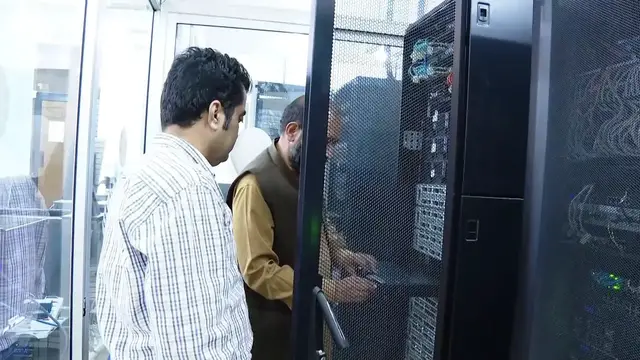
Shotlist Islamabad, Pakistan - Recent 1. Various of exterior of Pakistan Meteorological Department; sign outside office 2. Various of meteorologists working at computers, using MAZU AI-powered weather forecast system 3. SOUNDBITE (English) Dr. Sohail Babar Cheema, meteorologist, Research and Development Division, Pakistan Meteorological Department: "[We can] monitor the cyclone track and timely [in a timely manner] issue the alert for heatwave, timely issue the alert for cold, or snow covering area or snowfall. So it will [be] very helpful in this regard." 4. Various of meteorologists operating computer in server rack 5. Various of sign of cloud-based early warning supporting system on server rack 6. SOUNDBITE (English) Dr. Sohail Babar Cheema, meteorologist, Research and Development Division, Pakistan Meteorological Department: "This system has a unique feature. That feature is that there is an AI-based forecast generator. To AI, we just give the station name and it can generate the ensemble based forecast of all the model. So that would be very helpful." 7. Various of Pakistan Meteorological Department, clouds Storyline A China-aided AI-powered cloud-based early warning system known as MAZU is helping improve weather forecasting and disaster preparedness in Pakistan, which stands as a new achievement in scientific and technological cooperation between the two neighboring countries. MAZU, an acronym for Multi-hazard, Alert, Zero-gap and Universal, is China's cloud-based AI early-warning solution. It aims to provide timely and convenient weather and climate services while supporting multi-hazard risk reduction across regions. In 2025, the MAZU AI cloud-based early warning system, jointly developed by the World Meteorological Organization and the China Meteorological Administration, was officially deployed in Pakistan. Currently, it is being used by meteorological departments in more than 40 other countries and regions. July marks the height of the South Asian monsoon season in Islamabad. Inside the Research and Development Division of the Pakistan Meteorological Department (PMD), large screens display real-time lightning activity, satellite imagery, rainfall and wind-field data from across the country. Unlike in the past, all of this information is now integrated into a single AI-powered platform. For a country that experienced catastrophic floods in both 2010 and 2022, the system represents a major advance in disaster prevention and mitigation. "[We can] monitor the cyclone track and timely [in a timely manner] issue the alert for heatwave, timely issue the alert for cold, or snow covering area or snowfall. So it will [be] very helpful in this regard," said Dr. Sohail Babar Cheema, a meteorologist of the Research and Development Division under the Pakistan Meteorological Department. As one of the key members assigned to the project, Dr. Sohail Babar Cheema began traveling to China in March 2024 to participate in the system's development. He said that while meteorologists previously relied on multiple platforms to access different types of data, today a single platform provides real-time monitoring, weather forecasting and disaster early warning. "This system has a unique feature. That feature is that there is an AI-based forecast generator. To AI, we just give the station name and it can generate the ensemble based forecast of all the model. So that would be very helpful," he said. According to Dr. Cheema, real-time lightning data collected from 26 lightning detection stations, established earlier with support from the Chinese government, have now been fully integrated into the MAZU system, enabling nationwide real-time lightning monitoring. He said the AI-powered platform has not only improved forecasting efficiency, but has also made weather forecasting smarter by enabling the timely sharing of forecasts and early warnings. The system serves Pakistan while also contributing to regional and global meteorological monitoring, playing an important role in disaster prevention and mitigation. Meanwhile, the PMD research team has already begun preparing for the next stage of cooperation. Dr. Furrukh Bashir, head of the Research and Development Division, will attend events under the 2026 World AI Conference which kicked off on Friday in Shanghai, and exchange views with Chinese counterparts on the latest AI applications in disaster early warning. He said China-Pakistan cooperation is evolving from system deployment to joint research and development. In recent years, Chinese artificial intelligence has expanded its global reach, driving international cooperation in healthcare, agriculture, transportation, meteorology and many other sectors. [Restrictions: No access Chinese mainland]
Show More Show Less #news