
Italy: FAO official warns of El Nino threat to food security.
Jun 28, 2026
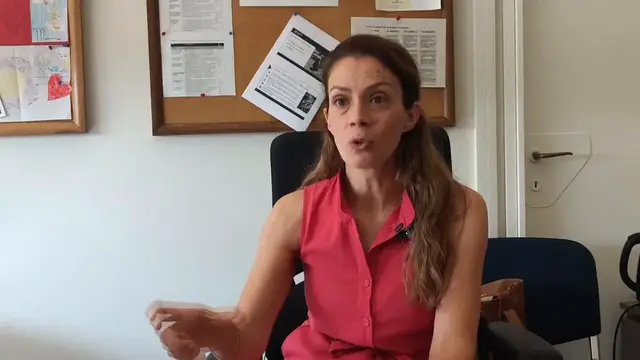
Shotlist FILE: Rome, Italy - April 30, 2026 (CCTV - No access Chinese mainland) 1. Various of headquarters of Food and Agriculture Organization (FAO), flags Rome, Italy - June 23, 2026 (CCTV - No access Chinese mainland) 2. SOUNDBITE (English) Dunja Dujanovic, senior emergency and rehabilitation officer, FAO (partially overlaid with shot 3): "Let's say it's a natural phenomenon that, however, generates climate extremes that then have big implications, and particularly for agriculture and food security, which are weather-dependent. And so we are very concerned that this will generate food crises which are of significant scale towards the end of this year, but also into early 2027, which is sort of the natural cycle of the El Nino phenomenon." ++SHOT OVERLAYING SOUNDBITE++ Maharashtra, India - June 2026 (CCTV - No access Chinese mainland) 3. Various of crops in field ++SHOT OVERLAYING SOUNDBITE++ FILE: Rome, Italy - April 30, 2026 (CCTV - No access Chinese mainland) 4. FAO headquarters Rome, Italy - June 23, 2026 (CCTV - No access Chinese mainland) 5. SOUNDBITE (English) Dunja Dujanovic, senior emergency and rehabilitation officer, FAO (partially overlaid with shots 6-7): "Because El Nino, although it's very concerning, is also a phenomenon that makes climate factors more predictable, because we know, according to all the historical patterns, what will happen in what area of the world. So, for example, in the case of drought, we have a series of measures that we can undertake. We can work on staple crops, for instance, distributing crop varieties which are more resilient to dry conditions. We can rehabilitate irrigation. We can ensure that livestock are supported with water, with feed, with veterinary care, so that when drought happens, these herds are not dying. In the case of floods, we can repair riverbanks, we can work on evacuation of people and their animals from areas that are going to be affected." ++SHOTS OVERLAYING SOUNDBITE++ Maharashtra, India - June 2026 (CCTV - No access Chinese mainland) 6. Dried up land FILE: Rome, Italy - April 30, 2026 (CCTV - No access Chinese mainland) 7. FAO headquarters ++SHOTS OVERLAYING SOUNDBITE++ FILE: Rio Grande do Sul, Brazil - May 17, 2024 (CCTV - No access Chinese mainland) 8. Aerial shot of flooded houses FILE: Babahoyo, Ecuador - March 13-14, 2024 (CCTV - No access Chinese mainland) 9. Aerial shots of floodwater, houses Storyline A senior official with the UN Food and Agriculture Organization (FAO) has called for early action to protect farmers and rural communities from the impact of El Nino, warning that the weather phenomenon could heighten pressure on already fragile food systems. Dunja Dujanovic, senior emergency and rehabilitation officer at the FAO, told China Central Television (CCTV) in an interview that agriculture-dependent communities are among the most exposed as changing weather patterns disrupt production and livelihoods. "Let's say it's a natural phenomenon that, however, generates climate extremes that then have big implications, and particularly for agriculture and food security, which are weather-dependent. And so we are very concerned that this will generate food crises which are of significant scale towards the end of this year, but also into early 2027, which is sort of the natural cycle of the El Nino phenomenon," said Dujanovic. She said the recurring nature of El Nino gives governments and aid agencies a window to prepare before the worst effects are felt. "Because El Nino, although it's very concerning, is also a phenomenon that makes climate factors more predictable, because we know, according to all the historical patterns, what will happen in what area of the world. So, for example, in the case of drought, we have a series of measures that we can undertake. We can work on staple crops, for instance, distributing crop varieties which are more resilient to dry conditions. We can rehabilitate irrigation. We can ensure that livestock are supported with water, with feed, with veterinary care, so that when drought happens, these herds are not dying. In the case of floods, we can repair riverbanks, we can work on evacuation of people and their animals from areas that are going to be affected," said Dujanovic. El Nino, a recurring warming of surface waters in the central and eastern Pacific Ocean, can disrupt weather patterns around the world and is closely watched for its impact on crops, water supplies and food prices.
Show More Show Less