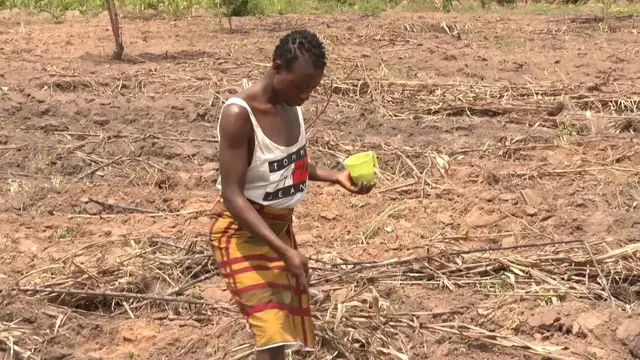

Kenya: Climate change strains food supply in Kenya.
Oct 3, 2026
Shotlist Nairobi, Kenya - Oct 1, 2026 1. Various of consumers buying vegetables, vegetables for sale 2. SOUNDBITE (Swahili, dubbed in English) Jackline Aywa, local resident: "The cost of food has really gone up, starting with flour, maize and vegetables. Everything is really expensive." 3. Various of consumer buying vegetables, vegetables for sale 4. SOUNDBITE (Swahili, dubbed in English) Jackline Aywa, local resident (starting with shot 3): "If you take black tea in the morning, it's enough. You skip lunch and come back to have your supper. That's all." 5. Various of David, food vendor, making pancake 6. SOUNDBITE (Swahili, dubbed in English) David, food vendor: "We are persevering and if we get a little money, we are grateful, but things are really hard right now." 7. Pedestrian FILE: Kenya - Date Unknown 8. Various of woman working in farmland 9. Plant in heavy rain 10. Motorcycle moving in flood 11. Cracked farmland Kenya - Sept 7, 2026 12. Various of workers feeding cows, milking FILE: Kenya - Date Unknown 13. Crops in farmland Nairobi, Kenya - Oct 1, 2026 14. SOUNDBITE (English) Jackson Koimburi, a climate change analyst (partially overlaid with shot 15):: "Most of our agriculture is rain-fed. That means that it depends on the mercies of nature and rainfall, and that's where we need to move away from, compared to the global north. That means that when the weather patterns change and it becomes drought, there's no water, it means that the agricultural produce will be affected." SHOT OVERLAYING SOUNDBITE FILE: Kenya - Date Unknown 15. Crops in farmland SHOT OVERLAYING SOUNDBITE Nairobi, Kenya - Oct 1, 2026 16. Various of consumers, vendors at farmers' market Storyline Kenyans are feeling the pinch of food supply shortages due to climate change, with many tightening their purses and even cutting down to one meal a day. In Nairobi and across many parts of the country, rising food prices are forcing families to make tough choices at the supermarket. Shifting weather patterns and rising distribution costs due to various global events are both contributing to the problem, which is expected to grow even worse with the arrival of El Nino. At a bustling shopping centre in Nairobi, consumers gather daily to select the best of the produce. Lately, Jackline Aywa, a mother of three, has been leaving with far fewer items than she used to. "The cost of food has really gone up, starting with flour, maize and vegetables. Everything is really expensive," said Aywa. With food prices climbing steadily, her household has cut out some groceries and reduced the number of meals they eat every day just to get by. "If you take black tea in the morning, it's enough. You skip lunch and come back to have your supper. That's all," she said. Across the country, households are undertaking similar budget balancing acts as the cost of basic food items continues to rise. Meanwhile, the shortages have impacted the incomes of those selling the food. "We are persevering and if we get a little money, we are grateful, but things are really hard right now," said David, a food vendor. While market vendors point to transport costs and hiccups in the supply chain, climate scientists single out a broader underlying issue: shifting weather patterns. Weather scientists have predicted that the country will experience heavy rains due to the El Nino weather phenomenon, expected to begin this month. The dry spell before these rains has impacted agricultural yields in some farming regions. Livestock have been affected, with a milk shortage attributed to a decrease in pasture. Reduced farm harvests also mean lower food supplies and higher food prices for consumers. "Most of our agriculture is rain-fed. That means that it depends on the mercies of nature and rainfall, and that's where we need to move away from, compared to the global north. That means that when the weather patterns change and it becomes drought, there's no water, it means that the agricultural produce will be affected," said Jackson Koimburi, a climate change analyst. As climate unpredictability continues to impact food security, families are hoping the rains will stabilize prices, even as they fear that heavier-than-usual downpours could destroy the produce, driving food prices even higher. With an election in Kenya next year, voters will likely want to know which candidates have the best plan to mitigate the impact of the shortages. [Restrictions: No access Chinese mainland]
Show More Show Less