0:00
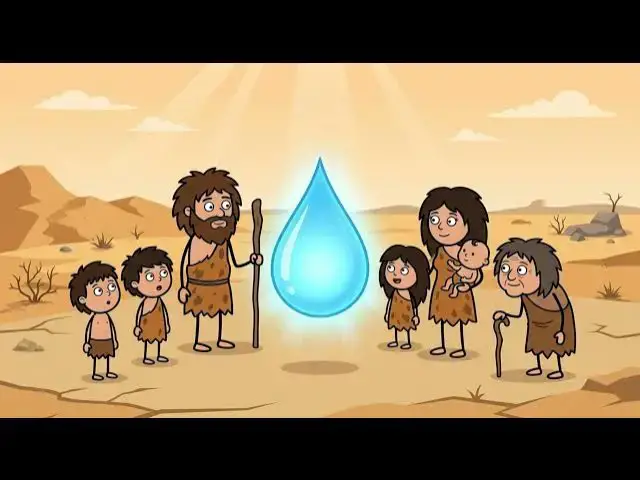
Imagine standing in the middle of a
0:01
desert where the sun burns hotter than
0:03
an oven. The ground cracks beneath your
0:05
feet and there isn't a single river or
0:07
lake for hundreds of miles. You have no
0:10
map, no compass, no bottles of water,
0:12
and no modern survival gear. According
0:15
to everything we know today, you
0:16
shouldn't last more than a few days. And
0:19
yet, tens of thousands of years ago,
0:21
ancient humans didn't just cross deserts
0:23
like these, they lived in them.
0:25
Archaeologists have uncovered stone
0:27
tools, ancient campsites, and forgotten
0:29
footprints in places that seem almost
0:31
impossible for human survival. Deep
0:33
inside the Sahara, one of the driest
0:35
places on Earth, researchers found
0:37
evidence that people returned again and
0:39
again. In the Arabian Peninsula,
0:41
prehistoric hunters traveled across
0:43
landscapes that receive almost no
0:45
rainfall today. Even Australia's vast
0:48
interior holds traces of people who
0:50
somehow survived where most modern
0:52
travelers would quickly perish. At
0:54
first, scientists thought the
0:55
explanation was simple. Maybe these
0:57
deserts weren't really deserts back
0:59
then. But there was a problem. Many of
1:01
these discoveries came from periods when
1:03
the land was already becoming brutally
1:11
Animals were disappearing.
1:14
Every year, finding fresh water became
1:16
harder than the last.
1:18
So why didn't these people disappear,
1:22
The answer isn't hidden in some lost
1:24
machine or forgotten civilization. It's
1:26
hidden in something even more
1:28
surprising. A way of seeing the
1:30
landscape that most of us have
1:34
Ancient humans didn't survive deserts
1:36
because they were stronger than we are.
1:38
They survived because they could read
1:40
the land in ways that seem almost
1:42
impossible today. And once scientists
1:45
began piecing together the clues, they
1:47
realized our ancestors may have known
1:49
water was nearby long before they ever
1:52
saw a single drop. That raises an even
1:55
bigger question. How do you find water
1:57
in a place where there appears to be
1:59
none? For modern people, the answer
2:01
usually involves technology, satellite
2:04
images, GPS wells drilled hundreds of
2:07
feet underground. Without them, a desert
2:09
looks almost empty. But to ancient
2:12
humans, it wasn't empty at all. Every
2:14
hill, every cluster of plants, every
2:16
animal track, and even the shape of the
2:18
ground carried information. Missing one
2:21
clue could mean death. Reading it
2:23
correctly could keep an entire family
2:25
alive. The stakes couldn't have been
2:27
higher. A hunting trip that lasted one
2:29
day too long could end in dehydration. A
2:32
wrong turn during a seasonal migration
2:34
could leave children and elders stranded
2:36
under relentless heat. Water wasn't just
2:38
something people needed. It controlled
2:40
where they walked, where they hunted,
2:42
where they slept, and whether the next
2:44
generation would survive. So, the first
2:46
challenge wasn't finding food. It was
2:48
finding water before thirst took over.
2:51
The obvious answer would be to follow
2:53
rivers. But that explanation quickly
2:55
falls apart. Many prehistoric camps were
2:57
built far from permanent rivers. Some
3:00
existed in regions where streams flowed
3:02
only a few weeks each year. Others sat
3:04
beside dry valleys that look completely
3:06
lifeless today. The evidence didn't fit.
3:09
If there were no flowing rivers, then
3:11
where were these people drinking? For
3:13
years, archaeologists searched for
3:15
hidden springs and forgotten lakes,
3:17
believing they had simply vanished over
3:19
time. Sometimes they found them, but
3:21
many campsites remained a mystery. Then
3:24
scientists noticed something unexpected.
3:26
Again and again, ancient camps appeared
3:29
near winding channels carved into the
3:31
desert floor. Most of the year, these
3:33
channels look completely dry. To an
3:36
untrained eye, they were nothing more
3:37
than stretches of cracked earth. But
3:39
after rare storms, even storms many
3:42
miles away, water could rush through
3:44
these channels for only a few hours
3:46
before disappearing beneath the sand. To
3:49
most people, the water was gone. To
3:51
ancient humans, that was exactly where
3:53
the search was just beginning. What
3:55
looked like dry ground on the surface
3:57
often hid something remarkable
4:00
When flash floods swept through these
4:02
desert channels, much of the water
4:04
didn't simply evaporate. It soaked deep
4:06
into the loose sand where the blazing
4:09
sun couldn't reach it as easily. Within
4:11
hours, the surface looked lifeless
4:13
again. But just below, moisture could
4:15
remain trapped for days, sometimes even
4:19
week. Ancient humans didn't need to see
4:21
flowing water. They only needed to know
4:23
where it had gone. But this created a
4:26
new mystery. How could anyone know where
4:28
to dig if every stretch of desert looked
4:31
the same? The answer seemed obvious. It
4:33
wasn't. Researchers studying traditional
4:36
desert cultures noticed that experienced
4:38
trackers rarely searched at random.
4:40
Instead, they looked for tiny changes in
4:42
the landscape. Details so subtle that
4:45
most modern hikers would walk right past
4:48
them. A bend in a dry riverbed, a patch
4:50
of unusually soft sand, a cluster of
4:53
smooth stones left behind by ancient
4:55
floods. Even a slight depression in the
4:57
ground could reveal where underground
4:59
water was collecting. These weren't
5:01
lucky guesses. They were survival clues
5:04
passed from one generation to the next.
5:06
Imagine growing up in a world where your
5:08
parents taught you that a certain tree
5:10
never grew unless its roots could reach
5:12
hidden moisture. That a particular bird
5:15
appeared only near reliable water. that
5:18
fresh animal. Tracks leading downhill
5:20
were worth following. While tracks
5:22
moving uphill often meant nothing, every
5:24
lesson increased your chances of
5:26
surviving another season. Forget one of
5:28
them and the desert could become a death
5:30
trap. But there was another problem.
5:32
Plants can survive on very little water.
5:35
Animals move constantly. Storms change
5:37
the landscape overnight. None of these
5:40
clues were guaranteed. Ancient humans
5:42
needed something even more dependable.
5:44
And that's where things get strange.
5:47
Every footprint, every bird in the sky,
5:49
every lonely tree, every crack in the
5:51
rock could mean the difference between
5:53
life and death. Long before maps,
5:55
satellites, or wells, our ancestors
5:57
carried an entire world of survival
6:00
inside their minds. And without that
6:02
forgotten knowledge, humanity might
6:04
never have crossed the desert that
6:07
connected continents, spread across the
6:09
planet, or become the species we are
6:11
today. The next time you look across a
6:13
barren landscape and think there's
6:15
nothing there, remember this. For
6:17
ancient humans, the desert was never
6:19
empty. It was speaking to those who knew