Up next in 10

The Good and The Beautiful Level 3 Unboxing & Initial Review | Homeschool Curriculum Choices 2026
Sep 16, 2026
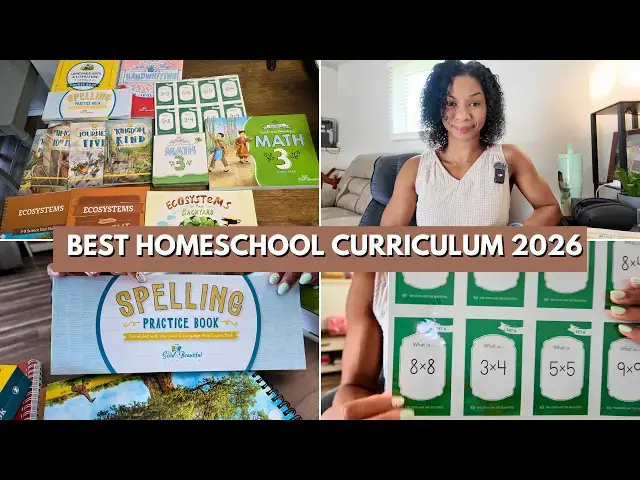
Today I’m unboxing The Good and the Beautiful Level 3 homeschool curriculum and sharing my initial thoughts as we get ready for our 2026 homeschool year! 📚🤎
After homeschooling for several years, I’ve learned that choosing curriculum is about finding what works well for your family—not simply choosing what everyone else is using. In this video, I’m walking you through what comes in Level 3, taking a first look at the lessons and materials, and sharing why I chose The Good and the Beautiful Level 3 for our homeschool.
In this video:
• The Good and the Beautiful Level 3 unboxing
• First look at the curriculum and materials
• What’s included in the Level 3 set
• My initial thoughts and impressions
• Why I chose this curriculum
• Our homeschool curriculum choices for 2026
• What I’m hoping this curriculum will bring to our homeschool year
If you’re planning your homeschool year, considering The Good and the Beautiful, or simply love seeing realistic homeschool curriculum choices, I hope this video gives you a helpful first look!
☕ Grab a cup of coffee and homeschool plan with me!
SUBSCRIBE for more homeschool, homemaking, motherhood, decluttering, slow living, and faith-filled mom content.
🤎 MORE HOMESCHOOL + HOMEMAKING
Subscribe and join me as we create a peaceful, simple, faith-filled home and homeschool one day at a time.
Subscribe to the newsletter for free resources, downloadable content and to connect more! https://motherhoodandhomemaking.beehiiv.com/
Subscribe to our Family Disney Channel if you love travel tips and budgeting! https://www.youtube.com/@OurWorldOfDisney
Let’s Connect on Social Media!
Instagram: https://www.instagram.com/motherhoodandhomemaking/
Access the Motherhood Library: www.motherhoodandhomemaking.com
Access the Homeschool Library: www.themomresource.com
#TheGoodAndBeautiful #HomeschoolCurriculum #Homeschool2026 #Level3Homeschool #HomeschoolMom #HomeschoolUnboxing #HomeschoolCurriculumChoices #Homeschooling #ChristianHomeschool #HomeschoolWithMe
Show More Show Less View Video Transcript
0:00
We have just gotten our Good and the
0:02
Beautiful level three curriculum in the
0:04
mail and I'm super excited to dive in
0:07
with my now 7-year-old son. But before
0:09
we do that, we're going to do a full
0:11
unboxing like we always do. The Good and
0:13
the Beautiful is a perfect curriculum
0:16
for any beginner homeschooled families.
0:18
Even seasoned homeschool families as
0:20
well have loved this curriculum. I've
0:22
been using the Good and the Beautiful
0:24
for 4 years now and I don't see us
0:27
switching anytime soon. If you are on
0:30
the fence about whether or not you
0:32
should try The Good and the Beautiful,
0:33
if you are a beginner homeschool family,
0:36
it's perfect. But also, if you are
0:38
making the switch from a different
0:39
curriculum as well, then I think that
0:42
this would be a pretty good video to
0:44
pretty much just get an overview. If you
0:46
are going into level three with your
0:49
child or maybe you're not sure if your
0:50
child is in level two or level three,
0:52
I'm going to tell you pretty much what
0:54
everything what is covered in this level
0:58
three curriculum, the different
0:59
subjects, the like level of what you can
1:02
expect going into it as well. And if you
1:05
are interested in any full curriculum
1:08
reviews from all the prior years, so
1:10
preschool, pre kindergarten,
1:11
kindergarten, first and second grade,
1:14
levels one and two, then I have full
1:17
curriculum reviews for those on my
1:19
channel. I'll have them linked down
1:20
below for you guys where I do an initial
1:23
unboxing review like I'm doing today.
1:25
And then at the middle of the semester
1:28
and the end of the semester, I do a full
1:30
curriculum review of what we love, what
1:33
we didn't love, and how it went for us
1:36
from everything like the learning and
1:38
everything, the materials, the
1:39
supplementals, as well as the actual
1:42
design of the curriculum like spiral
1:44
method versus the other method of
1:47
learning where you master one subject
1:48
and then move on to the next one. and
1:50
even the actual physical design like of
1:52
the workbooks which have changed over
1:54
the years. They've changed a few
1:55
different things. So, if you are a
1:57
homeschool family, I also have other
1:59
homeschool videos here as well such as
2:01
we were using the Horizon's curriculum a
2:04
few times. We did that preschool for
2:06
threes when my son was 2 and a half. We
2:08
also dibbled and dabbled in for
2:09
kindergarten and maybe first grade as
2:12
well. However, having compared the two,
2:14
I think that the good and the beautiful
2:15
is perfect as an all in one curriculum.
2:19
I feel that it is perfect in that it
2:23
gives you everything you need. There's
2:25
not a lot of prep that goes into it. I
2:28
always like to just read through the
2:30
lessons that we have coming up for that
2:32
week just so that I know in case there's
2:34
something that I feel we could use to
2:37
maybe help the lesson be a little bit
2:39
easier. But aside from that, the actual
2:41
list of supplies that you need to go
2:43
along with this curriculum, it's a very,
2:46
very short. I have seen all of the back
2:48
to school um homeschool hauls and things
2:52
and with the good and the beautiful I
2:54
don't think it's necessary to spend a
2:56
ton of a lot money aside from the
2:57
curriculum itself which is actually
2:59
extremely affordable and if you print it
3:02
yourself it's completely free and so
3:05
aside from the curriculum itself I don't
3:08
see a large amount of money that you
3:10
would end up spending in excess to just
3:12
get supplies you pretty much just need
3:14
to have the basics on hand I was able to
3:17
shop the supplies needed for this
3:19
curriculum under $20 and probably could
3:22
have gotten it for even less than that.
3:26
So, let's dive into the language arts.
3:29
We're going to be going over language
3:30
arts, math, handwriting, the ecosystems
3:34
science unit. We've got some spelling
3:36
and some reading books, as well as some
3:38
math multiplication flashcards, which
3:41
also comes with a math app. And then
3:43
we're also going to be exploring the new
3:44
typing course this year as well. Here is
3:48
your language arts and literature book.
3:50
They have a blue and yellow design for
3:52
level three. Every level has a different
3:55
color course book and everything that's
3:58
covered in this curriculum. It's
4:01
phonics, writing, reading, grammar and
4:03
punctuation, spelling, literature,
4:05
geography, and art. This also comes with
4:09
your spelling practice book as well as
4:12
four [snorts] chapter books and so we'll
4:14
come back to those. It also has an
4:18
answer key that you can download for
4:21
free or you can purchase the physical
4:24
copy if you would prefer that. This
4:27
curriculum does have some teacher read
4:29
aloud, some poetry memorization and some
4:32
unit reviews and assessments. So, in the
4:35
beginning, it tells you everything that
4:36
you need and also gives you some
4:38
information about the course itself on
4:40
these two pages. So, as you can tell
4:43
already just from looking, it's really
4:44
not a ton. There are four units for a
4:48
total of, I believe, 118 lessons. And
4:50
then lesson 119 is your final assessment
4:55
of all the units. And then that some of
4:58
the things doesn't need to be mastered
5:00
that were introduced in the curriculum.
5:02
There are just things that they
5:03
introduce for the upcoming level. So,
5:06
level four, which I love about this
5:08
curriculum. You always feel like you're
5:10
going to the next level pretty much
5:12
prepared. So, again, it comes with the
5:13
four phonics and read together books.
5:16
The read together books. Again, we'll go
5:17
back to that are basically chapter books
5:19
that you and your child read together.
5:21
And then it comes with a spelling
5:22
practice book and the course book
5:24
itself. Then it also includes apps that
5:28
are included with the curriculum. their
5:31
required apps. So, the good and the
5:33
beautiful letter tiles app and the good
5:35
and the beautiful homeschool app. So, we
5:37
have a little learning tablet. We only
5:40
use this tablet for homeschool and then
5:42
sometimes if we're traveling like on the
5:44
plane definitely has come in handy
5:46
because you do need the be the good and
5:48
the beautiful homeschool app which
5:50
normally has like videos which help
5:52
explain certain topics inside the
5:55
curriculum that might be a little bit
5:56
more difficult for a parent to initially
5:58
describe. And then it also has the
6:01
letter tiles app which is great practice
6:03
for spelling. But aside from that, there
6:05
are also fun little learning games in
6:07
there and things like that. It has
6:08
videos for their art and geography
6:11
lessons in there. Different things like
6:13
that. And then in addition, if you want
6:14
to purchase the typing app, you could do
6:19
that separately. I think it's like $35
6:20
for the entire year. tells you basically
6:22
it just includes video lessons which are
6:24
usually optional and can be used in
6:26
place of the lesson or after the lesson
6:27
for more reinforcements and it also
6:30
includes required audio narrations that
6:33
are parts of some of the actual
6:34
independent work sections inside of the
6:37
book. You do not have to use the
6:39
spelling app which is the letter tiles
6:41
app to complete your work. In place of
6:43
the spelling app, you can simply dictate
6:45
like say say out loud the word so the
6:47
child can have them write the words down
6:49
or if you have wooden letter pieces you
6:52
can use those as your letter towels as
6:53
well. We actually have the wooden letter
6:55
pieces. So sometimes if the tablet is
6:58
not charged and it's then we just use
7:00
like wooden letter pieces. I think you
7:02
can get a set for like $5 on Amazon
7:05
maybe. I'll link the one that we have
7:06
below. And it also comes with like three
7:09
boxes, like different levels of spelling
7:11
games where it's a card and it'll leave
7:13
some of the boxes blank and your child
7:15
needs to fill in the spaces to spell out
7:17
the word. They'll give the actual
7:18
spelling on the back of the card and
7:19
there's just a picture. For instance,
7:21
it'll be a picture of a bed, three
7:23
boxes, and it may only have a E in the
7:25
middle or a D at the end. You need to
7:27
add the other letters. Like you can use
7:29
anything, okay? You don't have to use
7:31
the app. When it comes to spelling, it's
7:33
only required for like the audio
7:35
narrations for some of the actual
7:38
lessons inside of the course. Unit one
7:40
goes up to page 88. It has 27
7:45
lessons in unit one. And the things that
7:48
are needed for unit one are just your
7:50
basics. So, pencils, scissors, glue
7:53
stick, tape, and a timing device. Could
7:56
be your smartphone. These are the things
7:58
that you need all across the curriculum.
8:00
pencil, scissors, glue, stick, tape, and
8:02
a timing device. Four things that you
8:06
would have to buy. Um, so you can spend
8:08
$5 and get the things that you need. If
8:11
you go to Walmart during the time that
8:12
they have the sale where it's like 97
8:14
cents or under a dollar to get these
8:16
things, but also said that you should
8:18
have thin tipped markers, any kind, but
8:21
many colors. So, we did get some markers
8:24
as well. For unit one, it also says
8:27
optional you could have mango flavored
8:29
snacks. that tells you exactly what
8:31
lesson that's going to be coming up in
8:32
in case you want to put that on your
8:34
calendar so that you wait until you get
8:38
to that lesson. It's lesson number 19
8:40
where you're going to use mango flavored
8:43
snacks and that's completely optional.
8:46
Okay, unit two, you have an option to
8:49
have rolls, which is interesting. I
8:52
don't know what type of rows. I guess
8:53
we'll scroll through there in the back
8:56
and see what they mean. So that's going
8:57
to be page 187. And then for unit three,
9:00
optional oat cake supplies and toppings.
9:03
So it looks like you're going to be
9:04
doing some baking in this curriculum.
9:07
And then unit four, optional, one sheet
9:09
of colored construction paper, one sheet
9:12
of white card stock. Glad it says that
9:14
because I don't think that I have card
9:16
stock at our Florida apartment where we
9:18
will be doing a bulk of our
9:20
homeschooling. But I have some here. So
9:22
now I know to pack it. So it tells you
9:23
in the beginning everything that you are
9:25
going to need. Now again, this
9:26
curriculum is completely free. You can
9:28
just go on their website, put your email
9:29
in, download it, and print it out. You
9:32
can print it out unit by unit. So you
9:33
can print the first 27 pages out and
9:36
just do that if you want. And you don't
9:38
have to bind it if you don't want to.
9:39
You could literally just get a binder
9:41
itself and just put them inside the
9:44
binder. Instead of having one huge
9:45
binder, you could get four small binders
9:48
and se separated by unit. That's what I
9:50
did. I binded my books into two. Two
9:52
units each at the post office. It was
9:55
$20. I think you could download
9:57
everything. You could do the reading
9:58
books on your learning tablet if you
10:00
want to. Um, and your Kindle app,
10:03
however you want to go about that. So,
10:05
again, unit one has 88 pages and 27
10:11
lessons. So, that will give you an idea
10:13
of how many pages there are per lesson.
10:16
And then, unit 2 goes up from page 31.
10:22
So, at the end of each unit, there's
10:24
going to be a small assessment review.
10:27
Unit two goes up to lesson 59, ends at
10:30
page 195, and then unit 3 goes up to
10:35
lesson 89. So, yeah, there's about 30
10:40
lessons per unit. At the beginning of
10:43
every unit, it gives you an overview all
10:47
the spelling words you're going to be
10:48
practiced as well as the spelling
10:50
patterns or sounds, some of these
10:53
spelling rules, and then it also tells
10:55
you some review words that you are going
10:58
to be reviewing from the prior unit as
11:01
well. So, you could write this stuff on
11:04
your whiteboard. You could put it inside
11:07
your homeschool planner. If there are
11:09
things that you think you maybe want to
11:12
buy supplementals for, things like that,
11:15
you'll have the chance to do that. Let's
11:17
talk about everything that's actually in
11:19
unit one. Okay. So, the subject of a
11:22
sentence, spelling rule C, K or CK
11:27
together, action and being verbs,
11:29
syllable types, lines in art, double
11:32
consonants to closed syllables. A
11:35
sentence needs three things. Spelling
11:37
rule using ch or tch literature study.
11:40
Past, present, and future tenses. Common
11:42
and proper nouns. Prefixes and suffixes.
11:46
Essay workshop. Synonyms and shades of
11:49
meaning. Sentence diagramming. More
11:51
syllable types. What makes a book worth
11:53
reading? Spelling rules.
11:56
Dge or g. Adjectives and adverbs.
11:59
Heteronyms. Poetry. Dictionary. Moral
12:01
literature study essay. Using complete
12:04
sentence. idioms, poetry. So, good stuff
12:07
in unit one. Unit two has commas and a
12:09
series, writing, summary, spelling
12:12
rules, animal poetry, commas and dates,
12:15
capitalization rules, heteron
12:19
plot, revising, word work, earth's
12:23
physical systems, and some more things
12:26
that were in unit one. Unit three has
12:29
irregular past tense. More things from
12:32
the prior units. Pronouns and
12:36
writing poetry forming words with shun.
12:39
So t i o n word work abstract nouns
12:44
more literature studies. So weather
12:47
poetry irregular plural nouns spelling
12:49
rules s or z things that were actually
12:54
in not only the prior units but also the
12:57
prior level. So, a lot of this stuff was
13:00
in level
13:02
two. Some of them was even in level one.
13:04
So, still reviewing some of that stuff
13:06
and mastering them. So, you don't have
13:07
to be worried if you did good and
13:09
beautiful level one, level two, and some
13:11
things your child didn't quite master
13:13
because they'll have more practice in it
13:15
here. There are a few things that
13:16
they'll tell you like your child should
13:18
have mastered these things before
13:19
starting this level, but a lot of it
13:22
it's still being reviewed in here. Pay
13:24
attention to those things that they must
13:26
have mastered already and don't worry
13:28
about the things that they fully have.
13:31
If it tells you that you you don't need
13:33
to have it mastered because that just
13:35
means that they're going to continue
13:36
going over in the you know next
13:38
curriculum level discussions of a book
13:41
report. That's good. Christ calms the
13:45
storm. Yeah. Unit four is typically um
13:48
more review of units 1, 2, and three.
13:51
That is pretty much suggested the types
13:53
of things you're going to see inside of
13:55
the unit. So, aside from the chapter
13:56
books, inside of the actual book, there
13:59
are like reading
14:01
sections in there as well that will
14:04
coincide with some of the lessons. Let's
14:06
look at the actual curriculum itself,
14:08
which is super beautiful. My son is
14:10
taking a liking to these little
14:12
geography journals here where you read
14:14
about an animal, answer the questions,
14:16
write about it for a different part of
14:18
the world. So, I'm just showing you guys
14:21
what some of the stuff pretty much looks
14:23
like. More paragraph writing. The
14:26
curriculum itself is very, very
14:29
beautiful. Sentence diagramming. We did
14:32
some of that on level two,
14:35
unit reviews or assessments.
14:42
Very good. Very good stuff. So, this is
14:44
lesson 64. We got one, two pages. 65 is
14:49
one,
14:51
two. Normally the lessons are about two
14:53
or three pages. Three,
14:57
four. One, two, one, two, three, four.
15:02
Some of them are one page front and back
15:05
or two pages. And then some of them are
15:07
two pages front and back or four pages.
15:10
So anywhere between two to four pages
15:13
per lesson. But it doesn't take a ton of
15:15
time to finish these curriculums. So,
15:17
we'll do a full review of this
15:19
eventually, but I want to show you guys
15:21
really quick the spelling practice book.
15:24
It is definitely an odd shape. I'm not a
15:28
huge fan of the shape of this book
15:31
itself already. It's just I don't like
15:34
how tiny it is. I would prefer a full
15:37
book. However, the curriculum is very
15:40
affordable, not super expensive. I think
15:43
it was $150 for the full and third grade
15:46
curriculum, not including the
15:48
ecosystems.
15:50
So, the language arts, the spelling, the
15:54
four chapter books, the handwriting, the
15:56
math along with the math box, all was
15:59
$147
16:01
in total. And then we added on a few
16:03
extra things and it brought our total to
16:06
about $200. Um, still pretty
16:09
inexpensive. So, this is your spelling
16:12
practice book.
16:14
And
16:16
honestly, I'm wondering if this is
16:18
something that I can print and get it
16:20
fulls size unless my son takes a liking.
16:24
We shall see. I didn't like when I used
16:27
to do that with the handwriting book,
16:29
which is now full size. This is the
16:30
handwriting book. It's full size now,
16:33
which introduces cursive. So you have
16:37
regular print handwriting, but they're
16:39
also now introducing cursive in level
16:42
three. This is the first time that they
16:44
will be starting cursive writing. You
16:46
have picture practice,
16:49
some coloring, and they dive right into
16:52
the cursive. You guys, you got more
16:54
practice writing numbers, putting
16:56
sentences together. Sometimes it's a
16:58
paragraph, little fun pictures and
17:00
things. I'm glad that the handwriting
17:03
it's bigger lines. Do you see what I'm
17:04
saying? They used to have it half the
17:07
size, the handwriting books, but they
17:09
switched when you got to level two to
17:12
full booklets. I prefer that the
17:14
spelling book would be this size as
17:16
well. However, it's not. So, here is
17:20
your quick flip through what the
17:25
handwriting looks like. It looks just
17:26
like a ton of cursive practice is what
17:30
the level three handwriting is pretty
17:34
much focusing on. And then here are the
17:38
four chapter books. We have The Kingdom
17:41
of Kind by Jenny Phillips as well as The
17:45
Journey of Five by Jenny Phillips. We
17:48
have Timothy of the 10th floor. And we
17:51
also have Heather and the Highland Pony
17:54
by Maggie Taylor Inger. So the books are
17:58
very beautiful. They are in full
18:01
color.
18:03
Pages are pretty easy to turn. It tells
18:05
you the vocabulary. And for instance,
18:08
this one has 23 chapters inside of it.
18:12
Tells you some of the principles you're
18:14
going to be practicing and letter
18:15
sounds. And it is one of those books
18:18
that you read together. For instance,
18:19
it'll tell you here is where the student
18:21
is reading and then this orange part is
18:24
where you will read and then your
18:25
student will read. So, this is something
18:27
you guys could read together or replace
18:30
with read alouds. Up to you, but it's
18:32
very, very beautiful. My son loves when
18:37
we do this together, when we read these
18:39
together. So, four chapter books. This
18:41
one has 25 chapters.
18:45
This one has 25 chapters as well.
18:49
So, yep, they all have
18:52
23 to 25 chapters. So, two have 23
18:55
chapters and then two have 25 chapters.
18:59
So, there's that you guys. So, I really
19:01
want to dive into math now with you guys
19:05
because again, this is only supposed to
19:06
be an unboxing out of four review.
19:08
Sometimes I get carried away. So, here
19:10
is our actual math box. Math three. It
19:15
has measuring tape, an array mat, a
19:18
standard dice, a 10-sided dice, two
19:21
volume dice, two game pawns, a set of
19:24
tang and pattern block pieces.
19:27
All right, that's everything that's
19:31
inside of here. Again, if you don't like
19:34
the size of it, you can definitely get
19:36
your own to supplement with. Last year,
19:39
they had like a wooden clock in here.
19:41
wasn't a fan of the size of it. So, we
19:44
used our own wooden clock. Here are
19:46
those little peg people.
19:48
And then your tang shape pieces, your
19:52
dice,
19:56
and your measuring tape. This has like a
19:58
little monthly calendar on there as
20:01
well. Um,
20:03
so that's what's in the math box. We're
20:05
going to throw this away. I have a
20:06
2-year-old and we need to dispose of
20:08
that immediately. And here is the math
20:11
book. The size is pretty much the same
20:14
as the like the thickness same as the
20:17
language arts curriculum. It's just
20:19
horizontal. These are the multiplication
20:21
cards. On the back of them, it tells you
20:24
the answer.
20:27
You can put them inside of a box. So,
20:29
you could purchase like a clear case
20:30
from the dollar store or Walmart, like
20:32
one of those crayon cases for like under
20:35
a dollar is what I paid for mine. or you
20:37
could hole punch them and put them on a
20:39
binder ring. You could go that route,
20:42
whatever is best for you. The curriculum
20:44
itself, very beautiful.
20:47
Um, let's see. It has all your
20:49
references in the beginning. So, it has
20:51
metric conversions. It has formulas for
20:54
area, perimeter, and volume. It has your
20:57
temperatures, time conversions, order of
21:00
operations,
21:02
which they still I'm happy to hear
21:03
they're still using. Please excuse my
21:05
dear aunt Sally. US customary
21:08
conversions. It also has 2D shapes, 3D
21:11
shapes, skip counting, all of that here.
21:14
Geometry definitions, point line, ray,
21:17
line, segment, all of that stuff
21:19
referenced here. And then it also has
21:22
four units as well. Each unit, just like
21:26
the prior ones, will have about
21:30
30 lessons each. It goes through numbers
21:34
through the 10,000s.
21:37
Addition with regrouping, review
21:39
rounding to the nearest 10 or 100.
21:41
Multiplications part one, two, and
21:42
three. Subtraction with regrouping.
21:45
Story problems with addition and
21:47
subtraction. Two-step story problems.
21:49
Multiplication telling time to the
21:51
nearest minute. Measuring and estimating
21:53
using inches and centimeters. Measuring
21:55
length in inches, feet, yards, and
21:57
miles. Multiplying by 100, 10,000.
22:00
Introduction to metric units. Time half
22:03
and quarter hour intervals. Estimating
22:06
distance in miles or kilometers.
22:07
Measuring to the half inch. Elapsed
22:09
time. Writing numbers to the 100,000
22:11
gallons. Quartz pints and cups. Rounding
22:14
to the nearest dollar. Fractions.
22:17
Gallons. Reading a pictoraph and tally
22:19
chart. Liters and milliliters. Adding
22:21
and subtracting rounded amounts of
22:24
money. Creating bar graphs. Reflectional
22:27
symmetry. tables and bar graphs using a
22:29
thermometer, vin diagrams, counting and
22:32
adding money and time. Five and 10
22:35
minutes intervals, comparing and
22:37
ordering fractions, ounces, pounds, and
22:40
tons. Mixed numbers, perimeter, perfect
22:43
squares, tablespoons, and teaspoons,
22:46
threedigit and fourdigit multiplication
22:49
numbers by one digit without regrouping.
22:52
Common denominators.
22:54
Oh, a ton of things in here. You guys
22:57
write acute and obtuse angles, types of
23:00
lines rounding to any place value, order
23:03
of operations and multiplying money,
23:05
congruence and similar shapes,
23:06
converting units, geometric solids,
23:10
coordinate plane, Roman numerals, area
23:13
and perimeter, multiplication, division,
23:16
fact family. All right, you guys, that's
23:18
everything units 1 through 4 covered
23:21
inside of here. The lessons have 15
23:27
has one, two pages. 16 has one, two,
23:32
three, four pages. So, just like
23:35
language art, it's going to be anywhere
23:36
from two to four pages. One thing I can
23:39
say, they really put a lot of like stuff
23:43
in one lesson. And I'm not exactly sure
23:45
that I love that they have a ton of
23:48
stuff like on one page like this. I'm
23:50
not a fan of the actual layout of the
23:53
page. Like how it has three columns for
23:56
instance here, two columns there. I'm
23:59
not a fan of that. There are yard art
24:01
sticks in the back of the book here that
24:04
you can punch out. There are timetelling
24:06
clocks in the back that you can punch
24:08
out. Area tiles. They go with the actual
24:11
lessons, I'm believing. So, they do have
24:13
extra supplementals that you're going to
24:15
need in the back. different activities,
24:18
things like that that you can use for
24:19
some of the lessons. Not this was not a
24:22
thing in the prior math that we did,
24:26
level one or two. So, that's good. I
24:28
haven't really seen anything like this
24:29
since we were doing like kindergarten,
24:31
preschool, but the math curriculum
24:34
itself is beautiful as always. It looks
24:37
very much like level two and level one.
24:42
Also, we have the ecosystem unit study.
24:45
So before we had the little hands for
24:47
hearts and home which was grades 1
24:49
through three science unit study. Now we
24:52
are moving on to the 3 through eight
24:54
level science unit study. Um so you get
24:58
your actual course book here and then
25:01
you get the student journal as well. You
25:04
have to purchase them separate. You'll
25:06
either get the grades 3 through six
25:08
student journal or the 7 through 8
25:10
student journal. And then addition to
25:12
that we also purchased these two books
25:14
together. The two books does come in a
25:15
set. So you get ecosystems in our
25:17
backyard. Elf owl and his ecosystem. So
25:20
two readaloud books or like little study
25:22
books. So for instance, this this book
25:24
is super cute. I think my son is going
25:26
to love this one. Unit systems, I mean
25:30
ecosystem in our backyard. He's going to
25:32
love it. I think the elf owl one
25:38
is a more
25:43
of like a southwestern
25:46
desert area things like that. Let's look
25:49
through the table of contents for the
25:51
ecosystems book. There are nine lessons
25:56
so you could complete multiple science
25:59
units within one school year. They do
26:02
give you plenty of options to choose
26:04
from. So that's really really great. Or
26:06
you can do these summer only. It's
26:08
completely up to you. They recommend
26:10
that you do four per year. Introduction
26:12
to ecology, biotic and abiotic factors,
26:16
levels of organization, the
26:17
interconnection of producers and
26:19
consumers, energy pyramids and tropic
26:22
levels, interactions of living things,
26:25
terrestrial biomes, aquatic biomes,
26:28
ecological succession.
26:30
tells you the supplies you're going to
26:31
need. You're going to need an eighth
26:34
teaspoon, measuring spoon, a small
26:36
amount of honey for lesson number one.
26:38
For lesson two, you're going to need
26:39
household items to display like a sun
26:41
hat, a scarf, sunglasses, garden gloves,
26:43
mittens, and umbrella. Green grapes are
26:45
optional. Small pretzel sticks. So,
26:48
these unit studies are definitely a
26:50
little bit more hands-on. Uh, let's see.
26:53
Silverware, cookie sheet, uncooked rice,
26:57
crayons, and colored pencils. So, you
26:59
definitely want to check the lesson
27:01
before you begin to see what you would
27:03
actually be needing. It's looking like
27:05
the things that you would need isn't
27:07
terrible, except lesson eight, grass
27:09
seed is something that we would have
27:11
here up north in our Michigan home, but
27:14
down south, we won't just have grass
27:16
seed laying around. Luckily, that's
27:18
optional. Different things that you
27:19
need. Their unit studies are definitely
27:21
beautiful. We have their safety unit
27:23
study as well, and this one looks
27:25
similar to it. You have your vocabulary
27:26
words that you can pin to a bulletin
27:28
board.
27:43
The lessons themselves are pretty short
27:46
and fun. They do make for lots of
27:49
discussion, lots of questions, so be
27:51
prepared for that. But they are also
27:54
very very beautiful. I remember we were
27:56
doing a unit study in my whenever we do
27:58
unit studies my son has a ton of
28:00
question has biblical creation cards in
28:02
here and God said let the waters bring
28:04
forth abundantly the moving creature
28:06
that hath life and foul that may fly
28:09
above the earth in the open firmament of
28:11
heaven and God created great wells and
28:13
every living creature that moveth. He
28:15
blessed him saying be fruitful and
28:16
multiply and fill the waters in the
28:18
season. Let fowl multiply in the earth.
28:20
So it definitely talks about creation,
28:23
how the world was created, giving about
28:24
biblical reference and I love that
28:28
because lots of science unit only talks
28:31
about scientific creation and things
28:33
like so. Yeah, just a little flip
28:35
through. My son's going to love this.
28:37
And then this is the student journal
28:39
that goes with it.
28:49
also very very beautiful you guys.
28:51
Honestly, for the prices of these,
28:54
they're really great. I think the unit
28:56
studies are like $15$20 or so. They have
28:59
ecosystems in your backyard book. I love
29:03
how beautiful this book is as well. Look
29:06
at that. It's absolutely gorgeous.
29:11
So, so pretty.
29:13
And then we have Elf Owl and his
29:17
ecosystem.
29:20
So pretty.
29:27
Yeah. So, we're going to have lots of
29:29
lots of lots of fun with that. So, we're
29:32
going to have a lot of fun with that,
29:34
you guys. Now, in a separate video, I'm
29:35
going to be, if you are interested,
29:36
sharing the learning plan that I put
29:39
together for my 2-year-old as well. And
29:42
again, I'm going to be doing a full
29:43
curriculum review for the Level Two Good
29:45
and the Beautiful. I have them linked
29:46
down below in the description box for
29:48
you guys if you are interested in seeing
29:50
about that as well. Um then we'll do
29:53
like a homeschool plan. Maybe show you
29:55
guys some of the actual like things that
29:57
we're setting up as we get into
29:59
homeschool like his supplies and you
30:01
know other little stuff like that.
30:03
However, this is going to conclude our
30:05
initial just unboxing. Again, it's not
30:08
meant to be a thorough review of the
30:10
curriculum itself. We're going to dive
30:11
in before we give that. just gives you
30:13
an unboxing look, a quick look at what
30:16
we have here. So, I hope that this video
30:18
was helpful for you guys. If you're a
30:20
homeschool family, give this video a
30:22
thumbs up and subscribe and stick
30:23
around. I would love for you to do that.
30:25
Otherwise, that's going to be all for
30:27
today's video and I will see you guys in
30:28
the next one. Happy homeschooling.
#People & Society