Up next in 10


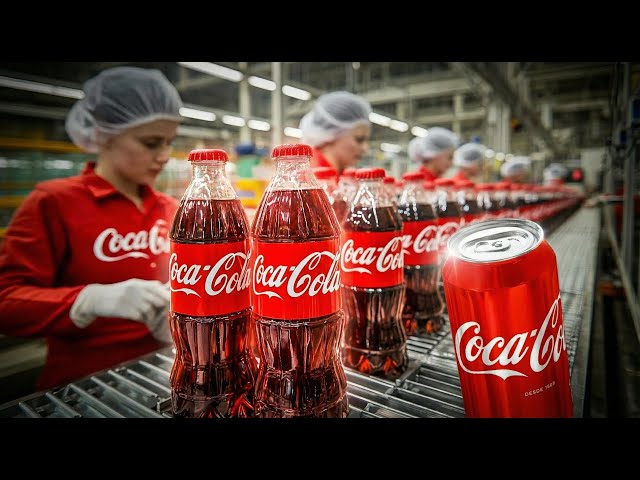
Ever wondered how your favorite fizzy drink is made? 🥤 Join us as we take a behind-the-scenes look at how Coca-Cola is produced in a state-of-the-art factory!
In this fascinating video, you'll discover:
- The step-by-step process of Coca-Cola manufacturing, from the raw ingredients to the final bottling.
- Insights into the technology and machinery that ensure every can and bottle is perfectly crafted.
- Quality control measures that keep the iconic taste consistent worldwide.
We will guide you through the entire production line, including the blending of ingredients, carbonation process, and how Coca-Cola maintains its refreshing flavor. Get ready for a bubbly journey through one of the world's most popular beverages!
Motivation by Sakura Girl | https://soundcloud.com/sakuragirl_official
Music promoted by https://www.chosic.com/free-music/all/
Creative Commons CC BY 3.0
https://creativecommons.org/licenses/by/3.0/
Timestamps:
0:00 Introduction
1:20 Ingredient Sourcing
2:30 Mixing and Blending
4:00 Carbonation Process
5:15 Filling and Packaging
Show More Show Less View Video Transcript
0:00
Have you ever wondered what goes into
0:01
making your favorite drink? Today, we're
0:04
peeling back the curtain on the
0:06
incredible journey of Coca-Cola
0:07
production. But before we step inside
0:09
the factory, a quick thanks to today's
0:11
sponsor. Just like Coca-Cola relies on a
0:15
network of skilled people and precise
0:17
processes to bring its product to life.
0:20
Rolodell is a freelance marketplace that
0:22
helps businesses find the right talent
0:24
to bring their own projects to reality.
0:27
From designers and developers to writers
0:29
and marketers, Rolodell connects skilled
0:32
professionals with companies that need
0:34
their expertise. Think of it as your own
0:36
production line of talent, ready to help
0:39
you build, create, and grow. Check them
0:42
out at roade.com
0:44
and start turning your next big idea
0:46
into something real. Now, let's get back
0:49
to Coca-Cola and see how this global
0:52
icon is made inside the factory. This
0:54
isn't just about any beverage. It's
0:56
about a global icon that quenches the
0:59
thirst of over 1.9 billion people every
1:02
single day. The journey begins with its
1:05
secret recipe created in 1886 when
1:09
Atlanta pharmacist John Peton concocted
1:12
a unique headache remedy elixir. Just
1:16
two years later, in 1888, Peton sold his
1:19
secret recipe to entrepreneur Asa
1:21
Candler for just $2,300,
1:25
who then turned Coca-Cola into the
1:27
global phenomenon we know today. This
1:30
recipe is now the most guarded trade
1:32
secret in American commerce, known by
1:35
only two anonymous people within the
1:37
company, and kept in a high security
1:39
vault at the World of Coca-Cola Museum
1:41
in Atlanta. And you can go see it.
1:44
Although visitors are only able to view
1:46
the exterior of a vault and not the
1:48
actual formula for entertainment, the
1:50
vault is equipped with high-tech
1:52
security features like a palm scanner,
1:54
numerical code pad, and a large steel
1:57
door, sparking imaginations and
2:00
perpetuating the mystique of this
2:02
beloved beverage. Today, this prized
2:05
formula is called beverage concentrate
2:07
and remains in strict secrecy with the
2:10
exact location of its production kept
2:12
hidden from the public.
2:14
Now, you're probably wondering how this
2:16
formula can be such a closely guarded
2:18
secret when the ingredients are printed
2:20
on every bottle and can. That's because
2:23
while the ingredients are mostly
2:25
transparent, the inclusion of natural
2:27
flavors remains unclear. Coca-Cola
2:30
maintains that these flavors are derived
2:32
from a variety of sources, including
2:35
botanicals and vegetables. This
2:37
mysterious blend is what gives Coca-Cola
2:40
its signature taste. Keeping the exact
2:43
formula a tantalizing secret. However,
2:46
water is approximately 90% of the
2:49
formula at the plant. Water is sourced
2:52
from onsite wells, thoroughly sanitized,
2:55
and put through a nanoiltration process
2:57
to ensure absolute purity, providing the
3:00
perfect base for the beverage. This
3:03
meticulous water treatment guarantees
3:05
that every bottle of Coke delivers the
3:07
same crisp, refreshing taste. Now, with
3:10
the secret formula in hand, let's
3:12
journey inside the factory to see how
3:14
every bottle of Coca-Cola is brought to
3:16
life. It all starts with Coca-Cola's
3:19
secret syrup. Surprisingly, it's not
3:21
guarded by security, but arrives simply
3:24
on a forklift in plastic jugs. This
3:27
syrup is the essence of Coke, and when
3:29
diluted with water in a mixing unit, it
3:32
creates the base we all love, but it's
3:34
not only mixed with water. After the
3:37
syrup is diluted, precise amounts of
3:39
natural or artificial sweeteners are
3:42
added depending on the product. For
3:44
instance, high fructose corn syrup is
3:46
used for the classic Coca-Cola, while
3:49
aspartame is chosen for Diet Coke and
3:51
Coke Zero. This mixture of syrup, water,
3:54
and sweetener is then blended and pumped
3:57
through an intricate system of pipes
3:59
into a succession of batch tanks in an
4:02
adjoining room. Next, the mixture flows
4:05
to the voter at the mixing station where
4:07
it meets its fizzy partner, CO2. This
4:11
carbonator does the crucial job of
4:13
infusing the mix with carbon dioxide,
4:15
giving it that hiss sound when you open
4:18
the drink. Before the bottles can be
4:20
filled, they must be spotless. They
4:23
arrive fresh from the factory, but still
4:25
get a thorough rinse. The rinsing
4:27
machine flips them upside down, flushes
4:30
them with filtered water, then returns
4:32
them upright, ready for the next step.
4:35
Now the bottles are labeled before any
4:37
Coke touches them. This ensures every
4:40
bottle is branded perfectly with the
4:42
iconic red and white logo. This Hotmelt
4:45
modular labeling machine works with
4:47
precision, swiftly affixing each label
4:50
with precise alignment and accuracy on a
4:52
large scale. But the quality checks
4:55
don't stop there. High-tech inspection
4:58
machines scans every cleaned bottle for
5:00
defects like cracks or improper seals.
5:03
Any bottle that doesn't pass inspection
5:06
is removed from the line. Then comes the
5:08
filling. The syrup mixture kept at a
5:11
precise 41 to 43° flows into the
5:15
bottles. This careful temperature
5:17
control means every bottle is filled
5:19
perfectly, ensuring stability and
5:22
preventing foaming. Once filled, the
5:24
bottles head to the fillers. Reservoir
5:27
air is removed and each bottle is filled
5:29
with a specific amount of Coca-Cola.
5:32
Then the caps come flying down a chute
5:34
propelled by compressed air and are
5:37
twisted onto the bottles. The capping
5:39
machine ensures that each cap is sealed
5:42
tightly, locking in the carbonation. But
5:45
it's not over yet. The glass bottles get
5:47
an aluminum crown that's crimped on
5:49
securely by the crown capping machine.
5:52
Then the bottles travel through a warmer
5:54
where they're brought to room
5:55
temperature to prevent them from
5:57
sweating during packaging. Finally, they
6:00
undergo one last inspection to catch any
6:02
impurities before being hoisted into
6:05
cases. Cans follow a similar journey.
6:08
First, they're prepared and cleaned by
6:10
the can cleaning system, ensuring
6:13
they're in perfect condition. The syrup
6:15
is mixed with water and sweeteners, then
6:18
pumped into the filling lines. Cans are
6:20
filled with a carefully balanced
6:22
mixture, just like the bottles. Capping
6:25
the cans is just as precise. A dedicated
6:28
worker oversees the consumer, making
6:31
sure it never runs out of caps. Each can
6:34
is tightly sealed, ensuring the
6:36
carbonation stays intact. After capping,
6:39
the cans are washed and inspected by
6:41
advanced machines. High-speed cameras
6:44
and sensors check for misaligned seams
6:46
or accidental spills, ensuring only the
6:49
best cans move forward. Now, it's time
6:52
for packaging. Once the bottles are
6:55
filled and capped, they're wrapped in
6:56
cardboard for protection. The cardboard
6:59
is unwound from a reel cut to the
7:01
correct length and shaped to fit around
7:03
the bottles. This wrap around packaging
7:06
is then secured with pre-folded clips,
7:08
ensuring the bottles stay in place
7:10
during transit. It's like tucking them
7:13
in for a safe journey after being
7:14
wrapped in cardboard. The bottles are
7:16
shrink wrapped for added protection. The
7:19
shrink wrap is applied tightly,
7:21
providing a secure, tamper-proof seal
7:24
that keeps the bottles safe and intact
7:26
throughout their journey. The cans are
7:28
carefully packed into sturdy boxes.
7:31
Machines ensure that these boxes are
7:33
precisely the right size to hold the
7:36
cans securely, minimizing movement
7:38
during transit. Think of it as a perfect
7:41
puzzle where every piece fits just
7:44
right. Once the cans are packed, they
7:47
are shrink wrapped to secure them for
7:49
shipping. This process involves wrapping
7:52
a plastic film around the boxes and
7:54
heating it to shrink the film tightly
7:56
around the cans. Shrink wrapping ensures
7:59
that the cans stay firmly in place. The
8:01
bottle cases are then sorted and stacked
8:04
by automated systems. This step ensures
8:06
everything is organized and ready for
8:08
loading onto pallets. Efficient sorting
8:11
means quicker, smoother deliveries to
8:13
stores, keeping shelves stocked and
8:15
ready for you. Just like the bottles,
8:18
the canned cases are sorted and stacked
8:21
with precision. This careful
8:23
organization helps in the smooth
8:25
handling and shipping of large
8:26
quantities. The sorted cases are shrink
8:29
wrapped to keep them stable during
8:31
transport. This final wrap ensures
8:34
everything stays put, reducing the risk
8:36
of shifting during shipping. Robots then
8:39
take over to organize the pallets. These
8:42
machines stack the cases with precision,
8:44
optimizing space and ensuring everything
8:47
is secure. The robotic pallet organizers
8:50
work efficiently to maximize stability
8:53
and ensure that each pallet is perfectly
8:55
balanced and ready for transport.
8:58
Finally, the pallets are loaded onto
9:01
trucks. Careful monitoring ensures
9:03
everything is secure and the trucks are
9:05
packed efficiently. Once loaded, they're
9:08
off to distribution centers, bringing
9:10
Coca-Cola to picnics and parties near
9:12
you. And just like that, your favorite
9:14
fizzy drink is on its way. If you found
9:17
this intriguing, we'd love you to hit
9:18
that like button and subscribe to
9:20
Rolodell Business. And while you're
9:22
here, take a moment to explore our other
9:25
amazing videos and uncover the secrets
9:27
behind how more of your favorite things
9:29
are made. You won't want to miss
#Manufacturing
#Soft Drinks
#Food
#Jobs & Education