Up next in 10



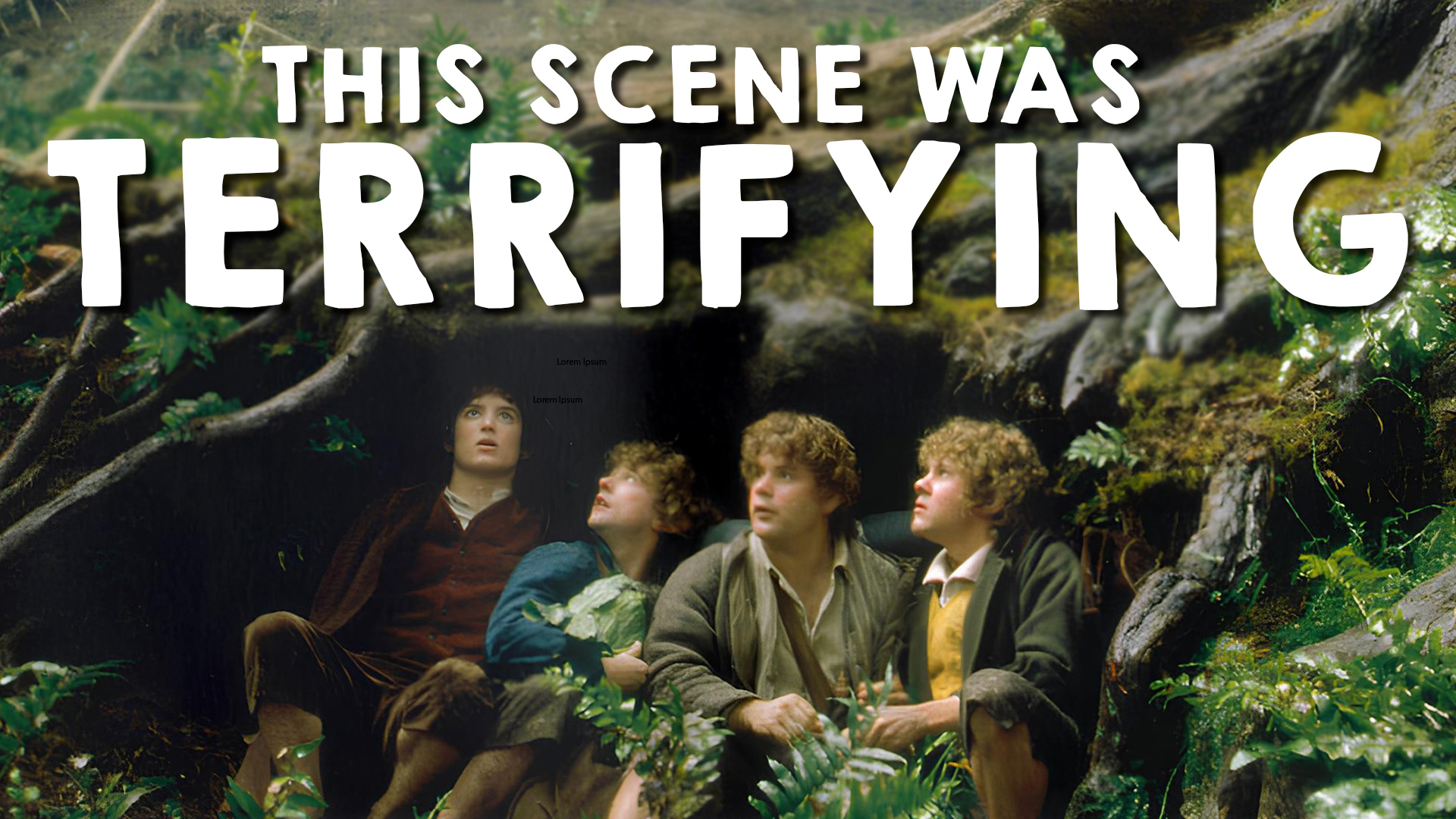
Peter Jackson's Lord of the Rings trilogy is full of big moments, interesting characters, and a story that stands the test of time. A big reason for Peter Jackson's success with Lord of the Rings is his ability to bring moments from the book and expand them into some of the most memorable scenes in the trilogy. The Ringwraith Scene in The Fellowship of the Ring might be the most terrifying scene in the entire LOTR franchise. Frodo and the other Hobbits showcase incredible performances, and Peter Jackson's team created a scene of pure terror and anxiety that holds up nearly 25 years later.
Show More Show Less View Video Transcript
0:00
This is the most impactful and terrifying scene in The Fellowship of the Ring
0:08
It might not be the most action-packed or the most visually stunning, but there's a reason this early Ringwraith scene is still burned into the minds of audiences over 20 years later
0:18
You might want to point to Peter Jackson as being that reason, but he can't claim all the credit
0:23
In fact, the 2001 live-action film wasn't even the first time Tolkien fans had seen this exact scene on screen
0:30
I think we should get off the road. Tolkien's ringwraiths, or Nazgûl's, are a memorably creepy part of The Lord of the Rings, both on and off the page
0:38
In the book, these nine undead kings of men are introduced in a scene that's very similar to the one we would eventually get in Peter Jackson's adaptation
0:46
While walking through the woody end, as Tolkien puts it in chapter three
0:50
Frodo fights a compulsion to put on the ring while the writer sniffs the air before
1:02
eventually disappearing into the trees. While effective, this moment in the book feels lower stakes than it does in the movie
1:09
At that point in the story, our hobbits have no idea how truly dangerous their adventure
1:13
is going to be or how much of a threat the Ringwraiths are. We're stuck in their perspective
1:18
and for them, the journey's been a pretty pleasant one so far. I don't know why he's so upset. It's only a couple of carrots
1:24
I have some cavities. And those three bags of potatoes that were left here last week
1:28
Jackson's adaptation leans into the action and drama of the situation. In this case
1:33
Jackson's propensity for theatrics does the Ringwraiths a major service while still remaining
1:38
true to the source material. But before we even get to the scene in question, there's a significant
1:43
amount to set up. In the theatrical cut of Fellowship, the first time we see the Ringwraiths
1:47
is when they're riding out of Minas Morgul toward the Shire. At that point, they're not much more than shadows on horseback
1:53
but we hear the building dread of the music Next comes a single black rider who approaches Farmer Maggot homestead We see Maggot frightened face before getting cut of the Ringwraith sinister gauntlets its steeds bloody hooves and finally its dark hood as it hisses out two words
2:12
And the low light helps to keep all the frightening details partially obscured
2:18
as does the fog in the next scene when the Ringwraiths behead a man on the road to Hobbiton
2:22
In a brilliant move, Jackson and his team decide to intercut the impending arrival of the Ringwraiths
2:27
with Gandalf's frantic search for information on the Ring, and his eventual return to the Shire
2:32
Is it secret? Is it safe? This choice creates a sense of urgency that wasn't present or necessary in the text
2:39
but it works wonders for the big screen. Now, the audience is fully aware of the threat the Ringwraiths pose
2:45
even if Frodo and his friends aren't. So the journey starts out as a high-intensity affair
2:50
that only calms down after several minutes of scenic shots of the New Zealand countryside
2:54
But even once we think we're safe, Jackson reminds the audience of the impending doom
2:59
with a shot of one of the ringwraith's horses. To drive the point home even further
3:04
we then get a conversation between Gandalf and Saruman, in which the White Wizard informs his former friend
3:09
that the Nine are on their way to Frodo. Gandalf displays a level of sheer terror
3:13
that had previously been reserved for the One Ring itself. They will find the ring and kill the one who carries it
3:22
It's only after this buildup of fear and anticipation of the ringwraiths
3:26
that we're finally ready for our hobbits to meet one head-on. We begin with a quaint scene of the hobbits fighting over mushrooms in the woody end
3:33
Frodo finds himself drawn to something in the distance, and as a breeze rolls through, we get a Hitchcock-inspired dolly zoom into the middle of the road
3:41
and an otherworldly shriek that tells us something is very, very wrong
3:46
Frodo tells his friends to, get off the road! And the four hobbits pile into a hollow
3:50
under some exposed tree roots. There no music until a great black horse comes into frame The camera pans upward and we get a shot of a ringwraith in broad daylight Just like the book Frodo catches glimpses of the black rider and its horse
4:04
and feels compelled to don the ring while the rider sniffs the air. Unlike the book, the ringwraith dismounts and hovers over the shelter of the hollow
4:11
while spiders and centipedes crawl around on the hobbits. As Frodo takes the ring from his pocket, it looks like they're about to get caught
4:18
But Sam's intervention and Mary's quick thinking shake Frodo from his stupor
4:22
and lure the ringwraith away respectively. Just like that, the scene is over
4:26
and we transition into an extended nighttime chase sequence as the hobbits try to avoid the ringwraiths on their way to Bree
4:33
This too is a scary scene, but it doesn't reach the chilling heights of the one that came before it
4:37
When meeting a ringwraith in the middle of the day on an otherwise unassuming road
4:41
we're shown that danger can come from anywhere, and seeing the massive figure of the ringwraith loom over the hobbits
4:47
reminds us of just how small they really are in comparison. Jackson combined nail-biting tension and helplessness with haunting imagery to create
4:55
something uniquely horrifying. Except, it turns out that it isn't all that unique
5:00
Nine for mortal men, seven for the dwarf lords, three for the tall elf kings
5:07
This is Ralph Bakshi's 1978 animated Lord of the Rings movie. Even if you've never seen it before, it probably looks pretty familiar
5:14
From the way Frodo says, I think we should get off the road. To the low angle shot of the ringwraith on its horse
5:20
to Frodo's shakily struggling with the ring while the ringwraith sniffs around
5:24
the similarities between Bakshi's and Jackson's ringwraith scenes are staggeringly obvious. Of course, some of this comes down to the nature of adaptation. When being faithful to a text
5:34
there are only so many ways you can interpret pivotal scenes. But the similarities aren't all
5:38
based on Tolkien's words. In the book, Frodo crouches in a patch of long grass while hiding
5:43
from the ringwraith. But first, in Bakshi's and then in Jackson's adaptations, he and the other
5:48
Hobbits hide beneath some tree roots. The writer never dismounts in the book either And yet in both Bakshi and Jackson versions it gets off its horse and stands over the hobbit hiding place So how did this happen Well as Peter Jackson tells us
6:01
himself in the director's commentary for The Fellowship of the Ring, My first introduction to The Lord of the Rings was when I saw the Ralph Bakshi
6:07
cartoon film in 1978. He goes on to speak about how Bakshi and his films are very different
6:13
but that he felt his homage to Bakshi came in the form of a single shot where they directly
6:17
copy the angle of Proudfoot putting his feet up at Bilbo's birthday party
6:20
There is one shot which I regard as my homage to the cartoon, because it did inspire me to want to read the book, and that's the shot of Proudfoot shouting Proudfeet, where I deliberately copied the angle that Ralph Bakshi used, which I thought was brilliant
6:35
But as we've proved here today, there's a lot more of Bakshi in the live-action film than that one simple shot
6:40
No matter whether Jackson admits to being inspired by the 1978 film, he still makes it his own
6:45
The style is so obviously different, with Bakshi's rotoscoped wraiths skulking around like a half-crazed creature
6:52
and Jackson's live-action actor giving a much more grounded, daunting performance. Both lend a certain menace to their respective mediums, but Jackson's version ultimately wins out when it comes to overall effectiveness
7:03
It was Jackson's choice to disconcert us with that classic Hitchcock shot at the beginning
7:07
It was also his idea to draw out the insects from the earth. He wanted to show how the natural world is literally repelled by the ring rates
7:14
and add to the unsettling feel of the whole scene. Still, Bakshi deserves his flowers
7:19
In a 2004 interview with IGN, he spoke about his mixed feelings toward Jackson and his movies
7:24
According to him, Peter Jackson did say that the first film inspired him to go on and do the series
7:29
But that happened after I was b****** and moaning to a lot of interviewers that he had said at the beginning that he never saw the movie
7:35
I thought that was kind of f****** up. While the 1978 film has some issues
7:39
I am a servant of the secret fire. You cannot pass. It was a labor of love that pushed the boundaries of animation at the time
7:47
Without Bakshi's rings, we wouldn't have Peter Jackson's, and we certainly wouldn't have the beautifully terrifying ringwraith scene we have today