Up next in 10



History is filled with stories of barbaric warriors who cause wanton destruction. They have been titled by ancient historians as "savages," "uncivilized," and even "the Scourge of God." But what makes them the most terrifying warriors in history? What sets apart the supposedly well-trained soldier of the Roman Empire from the bestial Goths? Or the noble samurai from the ruthless Mongol? Some could argue they were terrifying only because they weren't the ones writing the history - they were the outsiders. But they would be giving only a partial answer.
Show More Show Less View Video Transcript
0:00
History is filled with terrifyingly fierce warriors who not only knew they were scary
0:05
but used that knowledge to their advantage. Striking fear into the hearts of those they faced in battle
0:11
the brutal tactics of these fighting forces could almost win battles on their reputation alone
0:17
Today, we're going to talk about some of the most feared warriors throughout history
0:22
Okay, time to cry havoc, and let's slip the dogs of war
0:26
It is no secret that Genghis Khan, ruler of the Mongol Empire, was one of history's most brutal dictators
0:36
Together with his army, he was responsible for the mass extermination of over 40 million people
0:42
That's roughly the population of Canada. But a murderous dictator is only as effective as the army he commands
0:48
And boy, oh boy, were the Mongols effective. The Mongols were master bowmen, diplomats, and spies
0:55
They could adapt to any situation, incorporate foreign technology, and didn't flinch away from
1:00
brutality when the situation called for it. At their peak, they controlled a section of territory
1:05
roughly the size of Africa. Rumors of their cruelty, such as drinking their horses' blood
1:10
when they got thirsty, would spread faster than their ill-fated horses could ride. Italian bishop
1:16
Master Roger, who had miraculously survived a Mongol invasion of Hungary, wrote that upon hearing
1:22
the approaching army, his hair stood up on end, body shivered with fear, and tongue stuttered
1:28
miserably, and that his body exuded the cold sweat of death. They were so hardcore that the
1:34
mere sound of their approach gave the bishop a panic attack. With a ruthless and efficient
1:43
military known for its impressive chariot, bow, and lance skills, Assyria quickly expanded into
1:48
the world's very first empire. Assyrians were incredible engineers, inventing movable siege
1:53
towers equipped with ramps and battering rams, kind of like a roller coaster that is guaranteed
1:58
to maim someone. Using their superior battlefield skills, the Assyrians conquered cities and used
2:03
the captured population to grow their armies, eliminating anyone who resisted. Eventually
2:08
they grew into a well-trained professional army at a time when that was unusual
2:13
and it did wonders for their reputation. In addition to the ferocity of their army
2:17
neighboring city-states were also treated to tales of their brutality. One Assyrian king recorded his own victory and brags about his conquest of the city
2:25
the thousands of men he'd offed, the wide array of limbs he'd removed
2:29
and his habit of using severed heads as conversation pieces. Another king who conquered the city of Suru had memorialized the event by building a flaying
2:38
pillar, which is exactly what it sounds like. While there were many reasons for the fall of the Roman Empire
2:47
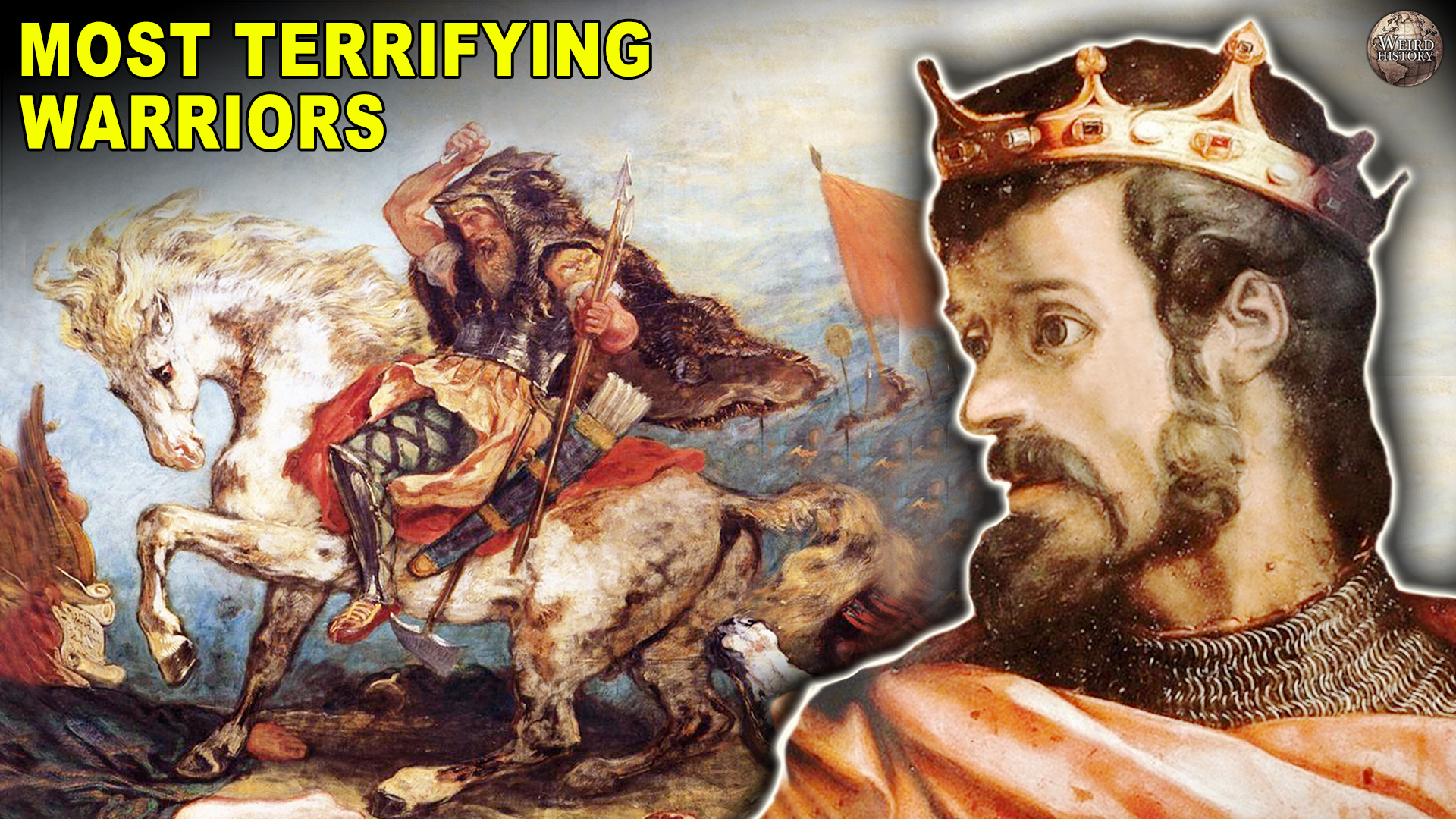
One of the biggest thorns in Rome's side were the Huns. Ancient writers like Ammianus Marcellinus
2:53
painted the Huns as savages and thought the mass migrations they caused contributed to the eventual fall of the Roman Empire The Huns enjoyed striking swiftly and without warning laying siege to
3:05
cities and sparing no man, woman, nor child in the process. Marcellinus wrote that these terrible
3:11
warriors fought at a distance using missile weapons, with sharpened bones fastened to them
3:16
They were reported to fight without regard to their own bodies, and used tactics such as catching
3:21
enemies in nets to limit the use of their limbs. Attila, the leader of the Huns, was only defeated
3:27
by his own vices, perishing on his wedding night due either to alcohol poisoning or a hemorrhage
3:32
that caused him to choke on his own blood. Either way, that sounds like one hell of a party
3:41
Befitting their reputation as ruthless raiders, the Vikings weren't shy about looting and
3:46
destroying monasteries to gain their riches and upset the status quo. When you practice a
3:51
scorched earth philosophy of stealing everything that isn't nailed down, you're not exactly going
3:55
to clutch your pearls over robbing a church. One monk who had the misfortune of confronting the
4:01
wrath of the Vikings firsthand had written his thoughts on the subject. According to him
4:05
they attacked in an endless stream, burning, plundering, and otherwise mowing down everything
4:10
in their path. Viking attacks were described as an evil that grows in the whole region
4:16
casting them more as a force of nature than a band of warriors. Some Vikings even had a
4:21
word named after their particular flavor of fury. If you've ever heard the word berserk
4:25
it comes from the legend that some Vikings, called berserkers, rampaged so hard they often believed
4:31
they would turn into wolves with superhuman powers on the battlefield. There's no evidence that any actual shapeshifting ever
4:38
occurred, but honestly, it's pretty cool to believe it did. In addition to their battlefield prowess
4:44
the Vikings were also known for their incredible craftsmanship, particularly their shipbuilding
4:49
They were such skilled sailors that Leif Erikson is even credited with being the first European to set foot in America, beating old Christopher Columbus by about 500 years
5:03
Since the Aztecs operated in a constant state of warfare where collecting prisoners for sacrifice was the end goal, children as young as five were drafted into the warrior ranks
5:12
But they could only really earn the name warrior after they captured their first sacrificial victim, like the world's worst game of hide-and-seek
5:21
Warriors would use clubs, bows, spears, or darts to disable their captives, who would then be subjected to some pretty intense sacrificing
5:28
So intense, we can't really give you any details. Suffice it to say that limb, organ, and skin removal were pretty standard
5:36
To gain technology and resources, Aztecs commonly prepared for attacks by sending in spies dressed
5:41
as local merchants to gather and tell before striking. A Spanish conquistador wrote that
5:46
anyone facing them for the first time can be terrified by their screams and their ferocity
5:55
The Gauls were a warrior crew made up of a diverse group of people who gathered together to destroy the Romans Rome spent several centuries making a whole lot of enemies so a supergroup like the Gauls
6:06
was inevitable. As far as warriors go, the Gauls were loose cannons
6:11
They terrorized their adversaries with loud horns and war cries. They rode into battle drunk and naked, laughing and gesturing lewdly as they advanced into
6:19
the fray. So like a bunch of Red Sox fans. One Roman historian described them as madly fond of war, high-spirited, and quick to battle
6:28
They were said to be ready to battle at the drop of a hat, even if they were armed with nothing more than their own strength and courage
6:34
As proof of their victories, the Gauls would keep the heads of their most notable enemies
6:38
refusing to return them even for vast amounts of gold. The Germanic Goths were not a single tribe, but rather a migratory people with proximate
6:50
cultures who banded together to protect their Gothic settlements. Although they once held an
6:55
alliance with the Romans, they were no stranger to surprise, treachery, and siege warfare
6:59
and weren't afraid to betray anyone who crossed them. The Goths played their own part in ensuring
7:05
the fall of the Roman Empire. At the Battle of Adrianople, the Goths waited until the Romans
7:10
were tired, thirsty, and vulnerable before attacking, taking out two-thirds of the Roman
7:14
forces in the process. Striking during snack time? That is diabolical. Medieval historian
7:20
And Herwig Wilfram wrote that the Goths were barbarians dominated by a horrible death wish
7:26
The men and women are possessed by demons and resemble animals more than humans
7:31
In other words, the Goths scared the absolute shit out of their enemies
7:35
and they did a lot of work to earn their reputation. Spanish explorer Francisco Vázquez de Coronado described the Apache as proud
7:47
fierce, and independent, but gentle if left alone. But if the 50 years long Apache War is any
7:53
indication, they weren't left alone too often. The Apache people are said to have been peaceful
7:58
before the Spanish arrived in what is now North America. They kept their ranks by training at an
8:03
early age and grew by taking captive members of other tribes. The need for Apache raids began to
8:09
increase during the westward expansion of the United States, as native lands were swallowed up
8:14
by a growing nation. Native American people were fighting for their lifestyle, traditions, and homelands
8:19
adding to the already high stakes of life and death. Their knowledge of the land frequently
8:24
gave them the upper hand in battle. Sergeant Albert J. Fountain wrote
8:28
of the Battle of Apache Pass in 1862 that, the surprise was complete
8:33
Not an enemy was to be seen, as a torrent of arrows rained down on the infantry from all sides
8:38
The Comanche people lived in the American Southwest since as early as the 1500s
8:47
They were believed to be the first of the Plains Indians to tame and ride horses
8:52
But the Comanche didn't just ride horses into battle. They perfected mounted combat Mexican General Manuel de Mier Eteran wrote about his admiration of their war techniques Their speed and battle prowess allowed them to take as many as 20 captives as slaves
9:08
If your horse or men were taken by the Comanche, your best bet was to buy them back rather than
9:12
try to win them back by force. You did not want to make an enemy of the Comanche. In one raid
9:18
a band of Comanche warriors plundered a warehouse in Texas and paraded through the streets wearing
9:22
the hats and clothing they'd looted, while simultaneously slaughtering all the nearby livestock
9:27
Parades are always more fun in theory than in practice, especially if you're livestock
9:36
Ancient Romans, Greeks, and Persians described the Scythian warriors as a deceitful lot
9:42
which is really just another way of saying they were superior strategists
9:46
Scythians were fond of using so-called cheap tactics to ambush their enemies
9:50
One practice, called fainting, saw the Scythians retreating from their front lines
9:55
allowing their enemies just enough time to relax before an even bigger company returned to finish
9:59
them off. They were called invisible menaces who starved their enemies by preemptively scorching
10:05
their lands and then attacking during mealtime and sleeping hours. It's hard enough to clock
10:10
into a shift at Panera on zero sleep and an empty stomach, so winning a battle under those conditions
10:15
has to be impossible. The Scythians didn't care about land or riches. All that would do is bog
10:21
them down. They valued their ability to roam and kept as few belongings as possible to allow swift
10:27
getaways and little reward for any attacking enemies. Ancient historian Herodotus pointed
10:32
out that the Scythians' inability to be destroyed was directly tied to the fact that they essentially
10:37
had nothing to be conquered. Warriors with nothing to lose are the most dangerous of all
10:45
When you're naming your warriors, it always helps to pick a cool, flashy name
10:51
The Persian Immortals, known as the 10,000 Immortals, got two cool names
10:56
And for good reason. They're the army that wiped out Leonidas and the Spartans in the movie 300
11:01
Although the film is a, let's say, highly fictionalized version of the true life events
11:06
To outsiders, it appeared the Persian warriors truly were immortal. For instance, their numbers never fell below 10,000
11:14
But it wasn't because of some supernatural Lazarus pit. Rigorous training and preparation ensured that when one soldier fell, another would be ready to take his place
11:23
Ancient historian Herodotus wrote that the immortals were taught only one thing from the age of five to the age of 20
11:30
To ride, to use the bow, and to speak the truth. Although that actually seems like three things that they were taught
11:36
I guess when you're immortal, you don't have to worry about math. And by speaking the truth, Herodotus was referring to religion
11:43
and not that the immortals were training in podcasting. Oof, thank goodness
11:48
The reward for such determination was armor made of solid gold. And at the height of their power
11:53
they even had war elephants from North Africa and India. Gold threads and your very own elephant
11:58
are some pretty appealing signing bonuses