Up next in 10



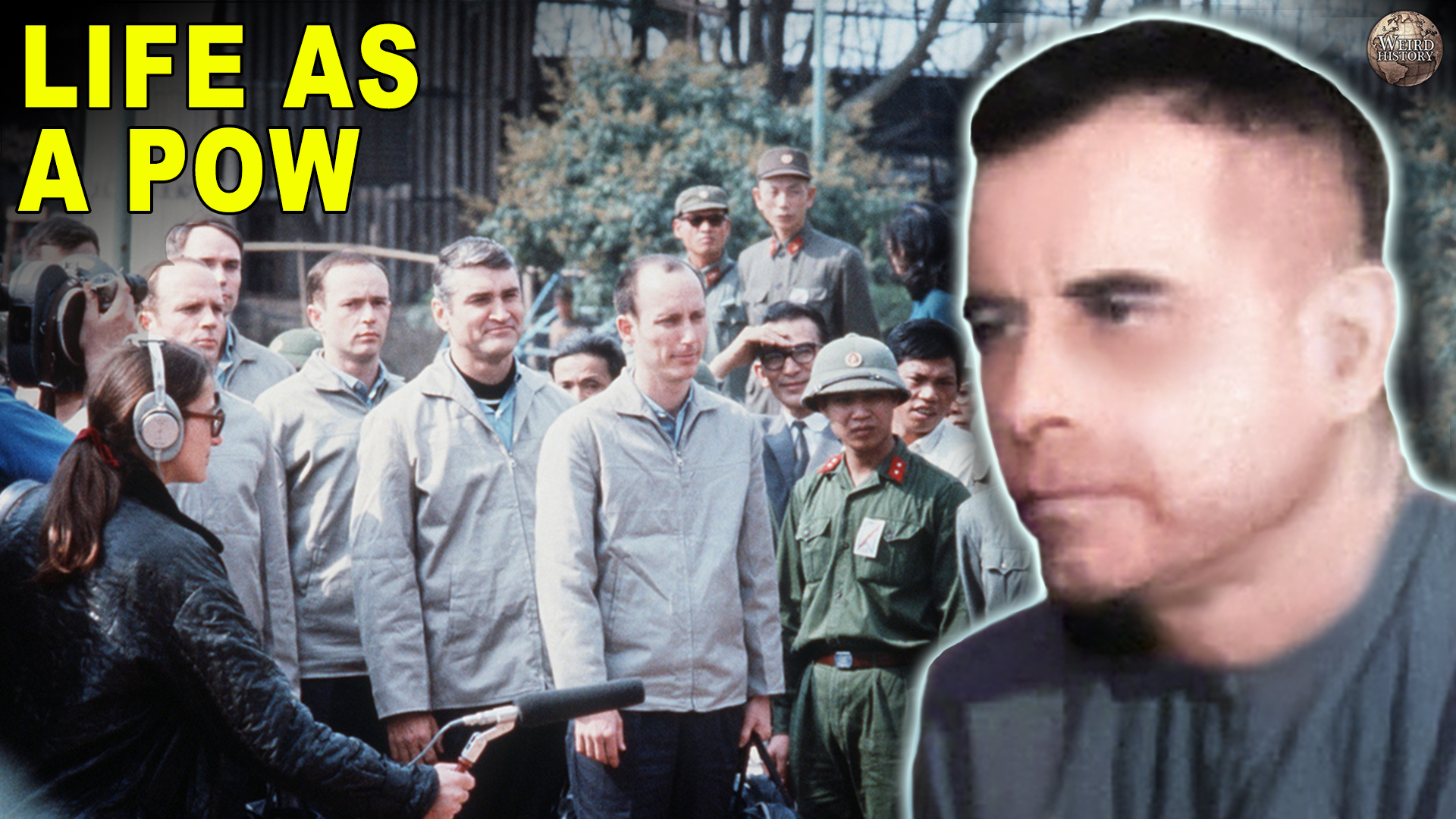
Although the Vietnam conflict lasted for 20 years - from 1955 to the Fall of Saigon in 1975 - the United States government never officially declared war. Over 3 million people perished in the conflict, and hundreds of American and Vietnamese citizens were held in prison camps as unofficial POWs. The North Vietnamese captured American troops and the South Vietnamese held hundreds of North Vietnamese soldiers. These POWs were treated in different but perhaps equally awful ways. Americans suffered terrible treatment and years-long solitary confinement, while the South Vietnamese left their captives in miserable health conditions that ended many lives.
Show More Show Less View Video Transcript
0:00
After withdrawal of US forces from the Vietnam War in 1973
0:04
per the Paris Peace Accords, the United States military found it impossible to search the battlefields
0:09
for dead and missing soldiers. Many of those men wound up being held as prisoners of war
0:14
by the North Vietnamese, and it was no day at the beach. So today, we're going to take a look
0:20
at what life was like for a POW in Vietnam. OK, someone call John Rambo and Colonel James Braddock
0:27
because we're going after some POWs. Fought from 1954 through 1975, the Vietnam War
0:36
saw the communist government of North Vietnam and its Viet Cong allies in the South
0:40
square off against the government of South Vietnam, who was aided by the United States
0:45
The North Vietnamese, who had driven out the French colonial government, wished
0:49
to unite the entire country under the principles of communism. But the South Vietnamese wished to pursue closer relations
0:55
with Western countries like the US. The human cost of the conflict would
0:59
prove extremely high. The war claimed the lives of 1 million North Vietnamese
1:03
and Viet Cong soldiers, 200,000 to 250,000 South Vietnamese soldiers, over 58,000 American soldiers
1:10
and over 2 million civilians. And of course, there were prisoners of war, too
1:16
Many of the camps used to hold American POWs were located in or around Hanoi, where
1:20
prisoners were forced to survive in nearly uninhabitable cells. The POWs gave their prisons colorful and memorable names
1:27
like zoo, dirty bird, skid row, and rock pile. But the prison known as Alcatraz, located in north central Hanoi
1:35
might have been the worst of all of them. The facility, famous for its tiny dungeon-like cells
1:41
was used to house troublemaking prisoners the North Vietnamese wanted to isolate
1:46
such as naval pilot Jeremiah Denton, who famously confirmed the dire mistreatment of POWs
1:51
when he blinked out the word torture in Morse code while being featured in a propaganda film
1:56
But while Alcatraz was the harshest, the most famous of the camps was the Huala Prison
2:02
ironically known as the Hanoi Hilton. Built by the French, Huala was the site of some of the most brutal treatment of the American prisoners
2:10
Among those inmates was Lieutenant Colonel Robert Sturm, who would eventually be immortalized
2:14
in the burst of joy photograph upon his release, as well as future United States Senator and
2:19
presidential candidate John McCain. The vast majority of American POWs, over 80%
2:27
were air crew personnel from the Air Force, Navy, and Marines. Jeremiah Denton, for example, was captured
2:33
while leading a fleet of 28 aircrafts in a bombing mission over North Vietnam on July 18 1965 Denton plane was damaged and he bailed out near the city of Phan Huan
2:45
He was subsequently captured and spent the next eight years as a prisoner of war
2:49
Similarly, on October 26, 1967, John McCain was flying a bombing mission over Hanoi when
2:55
his A-4E Skyhawk was hit by a missile. McCain ejected from the aircraft, but broke both of
3:01
his arms and a leg in the process. As if breaking 75% of his limbs wasn't bad enough
3:06
his parachute dropped him right into a lake, where he nearly drowned
3:10
He was pulled ashore by some North Vietnamese soldiers who shipped him off to the Hanoi Hilton
3:14
where he would remain for the next 5 and 1 half years. Robert Sturm was shot down over Hanoi
3:18
just one day after McCain, also while leading a bombing mission. Like McCain, he would spend over five years in captivity
3:28
From the outset of the conflict, the North Vietnamese maintain that because the US had never officially declared war, their American prisoners were
3:35
criminals and therefore not entitled to the protections granted to POWs under the Geneva
3:39
Convention. Consequently, the International Red Cross was generally refused the opportunity to
3:45
perform inspections or monitor how the prisoners were being treated. Living conditions could vary
3:50
widely depending on where a POW was imprisoned, with conditions for those held in the South
3:54
generally being cruder. For example, the camps in the South, which were typically located in swamps
4:00
or triple canopy forests, didn't have housing. Prisoners were kept in bamboo cages
4:05
that were often too small to allow the prisoner to even stand up. There were also no beds, and prisoners
4:10
had to sleep on the floor of their cage, which was usually bamboo or dirt
4:14
Given these camps were open to the elements, malaria was common, and prisoners routinely
4:19
had to deal with wildlife like snakes, scorpions, leeches, centipedes, and ants
4:25
And if that wasn't bad enough, during monsoon season, the camps generally turned into giant mud pits. Prisoners in the north, on the other hand
4:33
usually lived in cells. There were small two-man cells, larger cells that held anywhere from 8 to
4:39
40 men at once, and isolation cells for senior officers and those who were more prone to
4:44
resistance. Robert Sturm was kept in such an isolation cell for a whole year, and that time
4:49
is difficult to pass when you don't even have a baseball like Steve McQueen. The cells could all
4:54
reached temperatures as high as 120 degrees or more in the summer, with poor ventilation and as
4:59
low as 40 degrees in the winter. And they were loaded with mice, cockroaches, mosquitoes, and
5:04
very large rats. So while it may have been better than the camps in the south, the Hanoi Hilton
5:10
wasn exactly a timeshare For prisoners held in the south the menu was limited to two or three cups of rice a day And since the camps often had to be moved the rice had to be shipped in and stored This meant it was typically rotten and infested with bugs and rat feces by the time it was served
5:29
Some POWs also report eating meat from rats, elephants, apes, dogs, and snakes
5:35
They were also occasionally allowed to forage for greens to add to their meals
5:39
But since they had no shoes, foraging was dangerous and presented a risk of injury and infection
5:45
As for prisoners in the north, early on, some of them could expect three meals a day consisting
5:49
of sliced bread, meat, and vegetables. But the meat was often just poor, chicken heads and rotten fish
5:56
And the vegetables typically hadn't been washed of the human excrement used to fertilize the fields
6:01
And some days a meal was just a handful of rice and a bowl of warm water. So whether you were held in the north or south
6:07
the eating wasn't too hot. POW's returning home in 1973 estimated that 95% of them had been abused at some time
6:17
with methods that varied widely in degree and duration. For example, leg irons or ankle stocks were common
6:24
Prisoners could remain locked up for as long as five days with no food or water, and no bathroom breaks
6:30
if you get our meaning. One POW even reported spending 85 days in such a state
6:36
And before you ask, how did they sleep, sleep deprivation was another common abuse
6:41
The prisoners would be made to sit on an uncomfortable stool or block about eight inches high
6:46
They would then be struck or screamed at roughly every half hour to keep them awake, and the punishment
6:50
could last for days on end. Complete isolation was also on the table
6:55
Prisoners would be locked in a completely dark room with no airflow, often for weeks on end
7:00
These cells were typically filthy and swarming with rats and spiders, and prisoners
7:04
were routinely stripped naked, which is another form of sleep deprivation. Nobody sleeps much in the nude spider dungeon
7:12
Beatings were also common. Prisoners could expect the guards to break their ribs, teeth, and noses with clubs
7:19
rifle butts, or rifle cleaning rods. And they endured regular floggings with bamboo or rubber whips cut from old tires
7:26
John McCain was beaten every two to three hours by guards looking to extract a confession for war crimes
7:32
POW Jeremiah Denton backed this all up, adding, They really got serious when they gave you something called the rope trick
7:39
What was the rope trick, you ask? Well, sparing the more gruesome details
7:43
it was a technique with a variety of unpleasant variations in which a prisoner would be essentially hogtied
7:49
and hung from the ceiling in a way that fractured arms and dislocated shoulders
7:53
That not a very fun trick Though the symptoms have been described by veterans of wars going back hundreds of years or more post stress disorder or PTSD
8:05
wasn't officially recognized as a mental health condition until 1980. The symptoms include having flashbacks, upsetting memories
8:13
and bouts of anxiety after experiencing a traumatic event. And the Vietnam War certainly qualified
8:19
Though over five decades have passed since the war ended, many surviving veterans still live with the PTSD
8:24
they brought home with them from Vietnam. In fact, the National Center for PTSD estimates
8:29
that about 30% of Vietnam veterans have had PTSD in their lifetime
8:33
But life still went on for the POWs. After being released from captivity on February 12, 1973
8:41
Jeremiah Denton was awarded the Naval Cross. In 1976, Denton wrote a book about his experiences
8:46
titled When Hell Was in Session. The book was made into a 1979 TV movie
8:51
starring Hal Holbrook as Denton. Then in 1980, Denton was elected to the U.S. Senate
8:56
representing the state of Alabama, where he would serve for six years. He passed away at the age of 89 on March 28, 2014
9:04
Robert Sturm was released from captivity in March of 1973. With several other American POWs, he returned home to California's Travis Air Force Base
9:13
As he met his family on the tarmac, the moment was captured on film by Associated Press photographer Slava Sal Vader
9:20
in an iconic photograph that would come to be known as Burst of Joy
9:25
Though the photo would win a Pulitzer Prize, it never brought any joy to Sturm himself
9:30
Three days before his return to California, Sturm's wife ended their marriage
9:35
In their subsequent divorce, she was awarded custody of two of their four children, the family home
9:40
and nearly half of Sturm's pension. By all accounts, that's a bummer of a homecoming
9:45
But Sturm persevered. After retiring from the Air Force in 1975, he found work as a corporate pilot and eventually joined Ferry Steelworks in San Francisco
9:54
a company his grandfather started. Sturm was ultimately awarded a Silver Star for his military
10:00
service. Along with 108 other prisoners of war, John McCain was released on March 14, 1973
10:07
The injuries he had incurred during the war left him permanently unable to raise his arms above his
10:12
head, and despite eventually earning the reinstatement of his flight status, he retired
10:16
from the Navy as a captain in April of 1981. McCain ran for and was elected to the U.S
10:22
House of Representatives in 1983. In 1987, he was elected to the U.S. Senate by a landslide
10:29
and in 2008, he ran for President of the United States. Although he would lose that election
10:34
he continued to serve in the Senate until he passed away on August 25, 2018