Up next in 10



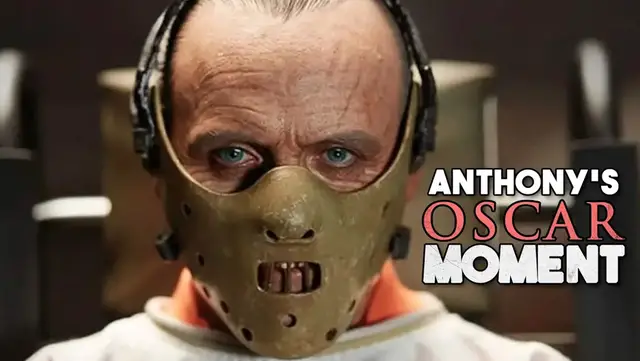
Silence of the Lambs is still well known as one of the most disturbing horror movies ever made. The film was so widely regarded, Silence of the Lambs took home several Academy Awards, including Best Actor. Sir Anthony Hopkins portrayal of Hannibal Lecter will forever be one of the most iconic villains in film history. But how exactly did Sir Anthony bring Hannibal Lecter to life for Silence of the Lambs?
Show More Show Less View Video Transcript
0:00
We begin by coveting what we see every day
0:02
Don't you feel eyes moving of your body, Clarice? And don't your eyes seek out the things you want
0:10
There's a tool often used in writing called Chekhov's gun. Posited by famous modernist author and playwright Anton Chekhov
0:17
Chekhov said, if you have a gun mounted on the wall in the first act
0:21
it must go off at some point in the story. I f***ing knew it
0:29
For one movie, the mere introduction of that loaded gun mounted onto the wall became one of the film's most impactful scenes
0:36
Released in 1991, Silence of the Lambs was based on a 1988 novel of the same name written by Thomas Harris
0:43
The film would eventually find a writer in Ted Talley whose screenplay immediately hooked director Jonathan Demme
0:49
On paper, Demme doesn't sound like the natural fit for such a taut thriller
0:53
having cut his teeth with iconic B-movie producer Roger Corman, with producing and writing credits on the women in prison film Caged Heat
1:00
and the Rashomon via biker's film Angels Hard As They Come, he was eventually pursued by production company Orion Pictures
1:07
and it turned out to be a perfect choice with Demi's sense of balance. He wanted to respect the genre while never reveling in its gore or violence
1:15
and maintaining the emotional core of the story. Part of that core was casting Sir Anthony Hopkins
1:20
then just two years shy of knighthood. Hopkins said in an interview with Vanity Fair
1:24
that after his agent told him about the screenplay, he asked if it was a children's story
1:29
He goes on to say after reading the first 10 pages of the screenplay that it was the best role he had ever read
1:34
And while Lecter doesn't himself appear until later, we can only guess how powerful those first few pages were
1:40
And Lecter is genuinely one of the film's most iconic monsters. What did you see, Clarice
1:46
What did you see? Lambs. The movie follows FBI agent trainee Clarice Starling
1:54
played by the recent Oscar award-winning actor Jodie Foster in pursuit of a serial killer known as Buffalo Bill
2:00
In order to try and get a fix on who this killer is Starling teacher Jack Crawford wants Starling to interview the imprisoned psychiatric doctor and cannibalistic serial killer Dr Hannibal Lecter While the bringing in a killer to find a killer
2:13
isn't necessarily a new idea, it's the execution that keeps us talking over 30 years later
2:19
It begins with Starling being led into the hallway where Lecter's cell lies by the way of two locking doors
2:25
Demi has the sound cranked as the door creaks and swings shut with an emphasized locking noise
2:32
It's so intense we see Starling do her best to keep her composure before the next door slides
2:37
along its tracking. It's our first example of the everything matters mentality down to the sound
2:42
design. The camera focuses on the first prisoner, a man smiling menacingly to the trainee as he rests
2:48
against the cell door. Demi eventually turns the camera towards the long hallway and it bobs with
2:52
uncertainty and nerves as it tries to focus on the folding chair facing the unseen cell. Starling is
2:59
alone here. The cells she passes are mostly dark, filled with what our minds drift to when we
3:04
consider a high security ward. The prisoners seem off-kilter as they glare and shout at Starling
3:10
but ahead of her, one chair is illuminated by an unseen light driving home that this is the only
3:16
way. While the hallway and previous cells were dark and dilapidated, Lecter's cell appears to
3:21
be a mix of modern architecture and an art exhibit. Lecter stands, arms to his side with a small
3:27
intrigued grin, like a party host greeting guests to his New Year's bash. We mentioned earlier that
3:33
Hopkins called the role of Lecter the best he had ever read, but he has also stated that he
3:38
immediately knew how to play this character, even down to the voice, which he told Empire
3:43
immediately resonated as a cross between Katharine Hepburn, Truman Capote, and Hal from 2001 A Space
3:50
Odyssey. That sort of attention to detail and character also applied to the character's wants
3:54
A character like Starling may want information about Buffalo Bill, but what she needs is the
4:00
people, specifically the men around her to understand she can do this. Our protagonists
4:05
needs and wants must be counterproductive to the antagonists As we watch Starling and Lecter interact he immediately tries to establish dominance and power by giving the student orders He tells her to step closer and closer to the cell
4:18
in order to read her credentials, and then asks her to sit, and we realize he just wants to prove
4:24
he's in charge. He's not entirely wrong in this either. He knows they need something from him
4:29
and that plays directly into Lecter's wants and needs. While he may come across as wanting of
4:34
nothing. He needs people's respect, their adoration, their understanding that he is the
4:39
smartest person in the room. As Lecter and Starling continue their conversation, Starling tries to
4:44
get to the business at hand. Lecter immediately acts on his needs by stating how well she's been
4:49
doing up to this point. He recounts every by-the-book interactional point she's made
4:53
You had been curious and receptive to courtesy. You had established trust
4:58
After stating how awkward her segue was, Starling makes a move he doesn't expect
5:03
I'm only asking you to look at this, Doctor. Either you will or you won't. It's a turn in the conversation that Lecter not only respects
5:10
but also directly plays into his need of being all-knowing. When Starling tells Lecter she believes Buffalo Bill skins his victims for the excitement or as a trophy
5:19
Lecter responds that he didn't. Starling deftly and quickly adds, Oh, you ate yours
5:25
Brian Fuller would later go on to create the Hannibal series, which went into greater depth on the idea of why cannibalism
5:31
But this hurried exchange establishes an abbreviated answer. When Lecter asks Starling to pass the paper through the cell's box
5:39
he admits that the only difference between his and Buffalo Bill's trophies
5:42
were that Lecter's were edible. We had already been told that Lecter was a cannibal
5:46
that he was intelligent and slightly charming. It's when Lecter takes the questionnaire from Starling
5:51
and flips through the pages like a teacher you're sure would rather fail you
5:55
than actually engage in education, we begin to realize Lecter's full terror
5:59
his indifference to humanity. You know what you look like to me with your good bag and your cheap shoes
6:05
You look like a rube. It's a common trope in villains, an alienation or sense of superiority
6:11
an idea that their goals usurp basic human decency or kindness While we as people celebrate confidence and a self attitude we abhor arrogance It a writer shorthand to tell the audience this person is deserving of your contempt But
6:25
that's not all Hopkins, Demi, and Tally deliver here. They demand the question, if we can use
6:30
monsters to hunt their own kind, is it worth it? Part of that answer lies in the character being
6:35
used. And thanks to Hopkins, the answer is yes. We mentioned earlier how drawn to the role he was
6:41
how fully realized Lecter was in his mind. Lecter had been brought to life once before
6:46
by Brian Cox in Michael Mann's Manhunter, released five years earlier in 1986
6:51
While nobody could argue that Cox isn't an incredible actor, his Lecter felt lacking
6:56
Part of that is because it said Cox based his role on Scottish serial killer Peter Manuel
7:01
And of course, that is scary, but it's also not as grandiose as Hopkins' decision
7:06
to form an alien yet recognizable accent. Hopkins makes so many wonderful choices
7:11
throughout his scene, the small bit where he mocks Foster's southern accent was improvised
7:15
You think you can dissect me with this blunt little tool? With Demi smartly keeping her earnest reaction in the film, it's a small moment
7:23
one that shows how vicious he can be with his emotional attacks as well
7:26
When Lecter becomes irritated by the simplicity of Starling's questionnaire, he dresses her down, pulling from her small tells to rightfully identify her as someone
7:35
from a small town who desperately wants to be so much more. Good nutrition has given you some length of bone, but you're not more than one generation from poor white trash
7:44
When Starling is assaulted by a prisoner as she leaves, Lecter calls her back to give a piece of information she needs
7:50
Not because he wants to help her, but because he needs to help himself
7:54
Lecter's needs are never in direct contrast to Starling because, despite being one of cinema's most terrifying and influential villains, he's not necessarily Starling's villain
8:03
At the top of this video, we call Lecter a loaded gun. Thanks to one scene that used every shot and every second to convey the most vital, moving information
8:13
Hannibal Lecter became a pop culture icon without being the film's main villain
8:17
Something that grabs us by the throat and refuses to let go until we understand fear in just a few breathtaking minutes
#Film & TV Industry
#Movies
#Horror Films