Up next in 10



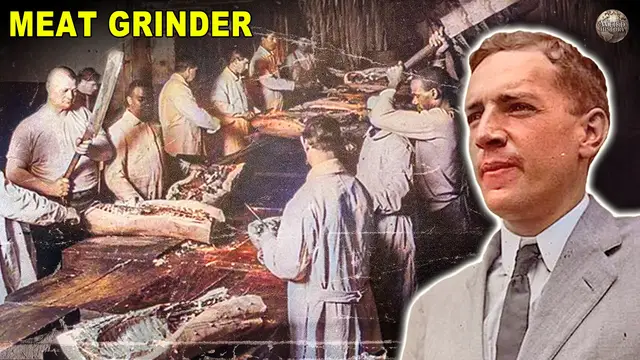
In 1906, Upton Sinclair's novel The Jungle, about conditions in industrial meat packing plants, was published. It was a fictionalized account of what it was like in the meat packing industry, and how horrible working conditions were in meat packing plants. Sadly enough, much of what happened in this novel was absolutely true, and was taken from real experiences. This novel served as a wake up call that led to a series of improvements in the industry to make our food safer and to provide better conditions for factory workers.
Show More Show Less View Video Transcript
0:00
Conditions in meatpacking plants during the Industrial Revolution were unsafe, unhygienic, and full of literal death
0:07
And not just the kind you'd expect. Although much of this has changed today, it's still worth acknowledging that these unspeakable practices were totally legal a little over a century ago
0:17
So, today, we're inspecting the nightmarish conditions in industrial meatpacking plants. Okay, like an old Wendy's commercial, it's time to ask, where's the beef
0:30
In 1906, Upton Sinclair's novel The Jungle was published to equal parts acclaim and horror
0:39
It was a fictionalized account of how awful working conditions were in the meatpacking industry
0:43
taken primarily from real experiences. The book was a wake-up call in the business of food
0:49
and in the business of high school English classes looking for more required reading
0:54
So how bad was it? Well, it wasn't for the squeamish, and incidentally, neither is this episode
1:00
You've been warned. Machines and packing plants made work faster and more streamlined
1:05
But at what cost? Most of the machines had sharp parts for cutting and pressing
1:09
and all it took was a hand or finger to get into the works for it to be crushed or severed
1:14
Nobody show any of these to the producers of Saw. But the dangers weren't always as obvious as you might expect
1:20
Sinclair wrote the jungle based on real accounts, overheard while he was undercover in some of the plants
1:25
In one passage, he describes a particularly bizarre but no less debilitating hazard, writing
1:31
Let a man so much as scrape his finger pushing a truck in the pickle rooms
1:35
and he might have a sore that would put him out of the world. All the joints in his fingers might be eaten by the acid one by one
1:42
Man, what are you putting in that brine? Sinclair continues, as freshman English students everywhere cringe
1:48
Of the butchers and floorsmen, the beef s and trimmers, Of all those who used knives, you could scarcely find a person who had the use of his thumb
1:57
Time and time again, the base of it had been slashed, till it was a mere lump of flesh against which the man pressed the knife to hold it
2:04
The hands of these men would be crisscrossed with cuts until you could no longer pretend to count them or trace them
2:10
While cuts are a reasonable occupational hazard for a butcher, the speed of the machines forced factory workers to move so fast
2:17
they were slashing their hands into lumps of scar tissue. In Stephen Sondheim's musical Sweeney Todd, The Demon Barber of Fleet Street
2:29
the titular madman and his accomplice Mrs. Lovett turned the town people of London into meat pies
2:35
transforming their customers into inadvertent cannibals. Luckily a macabre story like that could never happen in real life right Well in these industrial meatpacking plants hair skin blood and even amputated limbs would sometimes get into the canned meat especially sausage and lard
2:53
and would get shipped out without being checked. That's one happy meal surprise nobody wants
2:58
In the jungle, Sinclair also talks about workers falling into lard vats
3:02
where they lay undiscovered for hours or even days. Lard is made by dissolving fat, so any human body submerged in that vat would simply become
3:10
a part of the product. And every single one of you just put down what you were eating
3:17
As Sinclair writes, As for the other men, who worked in tank rooms full of steam
3:21
and in some of which there were open vats near the level of the floor
3:25
their peculiar trouble was that they fell into the vats, and when they were fished out, there was never enough of them left to be worth exhibiting
3:33
Sometimes they would be overlooked for days till all but the bones of them had gone out to the world
3:37
as Durham's pure leaf lard. Again, Sinclair's book was fiction, but it was all based on what he had learned from factory workers
3:45
and what he'd witnessed himself. And it's not hard to believe that a 19th century corporation
3:49
would weigh the cost of dumping an entire vat of product versus simply pretending nobody'd ever fallen into it
3:55
and go for the latter. Heck, there's a few modern companies that would probably make that call
4:02
Here's the understatement of the century. The conditions at these factories were pretty unhygienic
4:11
No hand washing, no gloves, and in some places, no bathrooms for workers to use
4:16
like a McDonald's on a road with no street signs. On top of all this, since much of the plant involved processing meat
4:23
blood and guts got everywhere. Workers had to stand all day covered in gore, dirt, contaminated water, and excess chemicals
4:30
In addition to being terrible for the skin, these conditions attracted rats, which regularly made it into the finished canned meat
4:37
Sorry, just need to faint for a quick second. What? Sorry. Now that that's out of the way, you probably won't be surprised to hear that these factory workers weren't doing so well health-wise
4:50
In those days, bovine tuberculosis was particularly common, and it could be passed to humans through milk or contaminated meat
4:58
But once a worker caught it, they had to keep working for fear of losing their job and possibly even their home
5:03
So workers sick with TB would spit blood onto the floor, coughing on the other workers and on the meat spreading the disease around
5:11
On the plus side, free snacks in the break room. Workers spent 12 or more hours a day in these plants without seeing the sky
5:17
And there wasn't any fresh air either. In order to keep out rats flies and other vermin most factories were kept almost entirely closed off providing zero ventilation It was also mostly ineffective because as we already told you rats would frequently make their way into the canned meat In summer
5:34
the factories would get unbearably hot, which meant the place reeked of bad meat, bile
5:38
and body odor. Mmm. But in the winter, the factories weren't heated, so workers were cold
5:44
making their hands clumsy and their work all the more risky. As for the autumn, we hope they got
5:48
some pumpkin spice lattes for their trouble. This lack of ventilation wasn't just annoying
5:53
and depressing for workers, it also negatively impacted their health. Without fresh air
5:58
bacteria, mold, and rot would fester, getting breathed in and ingested by workers
6:03
often with deadly consequences. And some of those workers weren't even old enough to grab a beer
6:07
when they punched out. Meatpacking plants regularly employed children to do even the most
6:12
foul and dangerous jobs. Sorry, kids. The children in these plants had to be at least 14 years of age
6:18
but that restriction wasn't exactly well enforced. Children as young as eight could be found in some of the larger factories
6:25
and for obvious reasons, these kids were often most at risk for injuries
6:29
Even Willy Wonka would have said this is unsafe, and he didn't even have a guardrail around that chocolate river
6:35
Chicago's meatpacking industry was especially bad at this, with many departments preferring to employ children because they didn't need as much pay
6:42
and they had smaller hands and bodies better suited to some of the work. Alongside their fully adult co-workers, many of these children were permanently maimed or killed as a result of the inhumane work conditions
6:59
If the machines weren't hurting people, worry not. The factory had other ways of harming its workers
7:04
Hooray for ingenuity! Toxic chemicals were used in just about every part of the canning-butchering process
7:10
and hygiene conditions were so poor that it was impossible to avoid getting these chemicals on or even inside your body
7:17
There was no hand washing and most workers didn't use gloves, so these chemicals were also transferred into the meat
7:23
Probably accidentally created a lot of jokers that way. Upton Sinclair touched on the presence of these chemicals in the jungle
7:29
in a description of some of the products pushed out by meat processing plants
7:33
Quote, They were regular alchemists at Durham's. They advertised a mushroom ketsup, and the men who made it did not know what a mushroom looked like
7:41
And then there was potted game and potted grouse, potted ham and deviled ham
7:45
Deviled, as the men called it. Deviled ham was made out of the waste ends of smoked beef that were too small to be sliced by the machines
7:53
And also tripe, dyed with chemicals so that it would not show white
7:57
and ts of hams and corned beef, and potatoes, skins and all
8:01
And finally, the hard cartilaginous gullets of beef after the tongues had been cut out
8:05
All this ingenious mixture was ground up and flavored with spices to make it taste like something He basically describing how hot dogs are made but these conditions were harmful to consumers as well and that a quality In 1889 the Spanish
8:18
American War was at its peak and American troops in Cuba needed rations. They received canned meat
8:24
from armor and co, but the batch of meat was so rotten, soldiers became too ill to fight
8:29
with some even perishing as a result. Imagine being one of those guys. Please make up something
8:35
cool for my tombstone. If you worked in meatpacking plants and factories in the early 1900s, you were required to toil
8:48
for six days a week, ten hours per day. And some of these workers never even got that seventh day off each week, meaning the work
8:55
week was literally endless. But surely the pay made it worthwhile, right
8:59
To quote the Joker, The majority of workers only received a few cents per hour for their pains
9:05
around $1.50 per hour today. Obviously, that's nowhere near enough to live on
9:10
which only made all these problems worse. These factories were all about finding the least expensive workers
9:16
which led many to hiring immigrants. These workers would get off boats and trains from places like Poland
9:21
Slovakia, Lithuania, China, and Japan, all desperate to find a place to live and work
9:26
Thus, they didn't ask for much money, And they didn't complain about the dangerous conditions for fear of being fired
9:32
And this population-wide exploitation was twofold. Real estate agents took advantage of immigrant families by creating slums near the factories
9:40
They'd initially charge low rates, but once a family moved in, they would quickly raise the rent until it was completely impossible to afford
9:47
Then the families were kicked out, the place was given a fresh coat of paint, and the landlords pulled the same con on the next family who got hired
9:54
It was efficient, just like a factory. When Upton Sinclair wrote The Jungle
10:03
he was hoping to spark a conversation about working conditions in the plants and perhaps change the situation for the better
10:09
Well, he certainly got the public's attention and the descriptions of the conditions made people horrified
10:15
but less about the working conditions in the factories and more about all the tainted meat they'd been eating
10:20
The outrage over Sinclair's book spawned the Meat Inspection Act of 1906
10:24
which meant that the government could inspect plants at any time. During one inspection, a commissioner mentioned he'd seen a big carcass dropped onto the ground by the men's toilet
10:34
and he watched horrified as the carcass was put back on the assembly line for consumption
10:38
Hey, relax, buddy. It's the five-second rule. Sinclair was glad for these changes, but felt that his book hadn't exactly achieved what he'd intended
10:46
In his own words, I aimed at the public's heart, and by accident, I hit it in the stomach
10:52
Well, they do say that's the quickest way to a person's heart. Better luck next time, Upton