0:00
There are a lot of foods that people once ate with enthusiasm, then collectively decided
0:04
actually, never mind. Some of these vanished because they were dangerous, some of them
0:09
vanished because they were weird, and some simply because history moved on and left them behind
0:13
like an old Tupperware in the back of the fridge. Hi, I'm Cara, and welcome to Mental Floss
0:18
Grab a snack, preferably one that still exists, and let's explore some historical foods that
0:23
people don't eat anymore. If you've ever looked at a charcuterie board and thought
0:26
but this could use more rodent. Congratulations, you would have fit right in at an ancient
0:31
Roman banquet. Dormice weren't just eaten, they were status symbols. Wealthy Romans raised
0:36
them in special jars called gleraria, where the mice were fattened on nuts and honey until
0:41
they reached what was apparently ideal snacking size. They were often stuffed with pork and
0:46
spices, roasted, and served as appetizers. Think of them as the Hot Pockets of the Roman
0:51
Empire, if Hot Pockets stared back at you. So why don't we eat them now? Well, dormice
0:56
This became protected species in many parts of Europe. Also, many modern diners prefer their hors d'oeuvres not to look like adorable woodland creatures
1:04
Sticking with the Romans for a moment, because they were culinary adventurers, let's talk
1:08
about garum, a fermented fish sauce that was basically the ketchup of the ancient world
1:13
To make garum, you'd take fish guts, salt them heavily, and leave them in the sun for
1:17
months, and wait until they turn into an amber-colored, pungent sauce. Then you'd strain it, bottle it, and pour it on just about everything
1:26
factories were so pungent that they were often built outside the city limits. Imagine living
1:31
downwind of a months-long fish gut smoothie. So why did garum disappear? The fall of the Roman
1:36
Empire disrupted production, and other cultures came up with their own fermented sauces. Today
1:41
Southeast Asian fish sauces are the closest we've got, but garum itself is long gone. Well
1:46
except for the archaeologists who keep finding jars of it and opening them for science. Brave
1:51
souls. In the 1800s, Victorians believed in the healing power of beef tea, a thin, watery
1:57
broth made by simmering beef for hours, until it surrendered the faintest whisper of flavor
2:03
Doctors prescribed it for everything Colds fevers exhaustion female troubles even moral weakness If you were sick someone was bringing you beef tea If you were very sick someone was bringing you even more beef tea And hospitals served it the way that modern hospitals serve jello
2:20
So why don't we drink it now? Well, because it doesn't actually do anything
2:24
It's basically meat-flavored water. Once modern nutrition science arrived, beef tea quietly retired from its medical career
2:31
This one sounds like a Flintstones gag, but it's absolutely real. Early humans ate mammoth meat
2:36
And not just early humans. In the 19th century, Arctic explorers reported finding mammoth carcasses
2:42
so well preserved that their sled dogs fed on them. One explorer even claimed he tried a bite
2:48
himself. He did not recommend it. There was even a rumor that a 1950s fancy food club in New York
2:54
City served mammoth at a banquet. But later ysis suggested it was actually turtle
3:00
So why don't we eat mammoth today? Because they're extinct. And because the phrase
3:04
Pleistocene freezer burn doesn't exactly whet the appetite. In medieval and early modern Britain
3:10
people ate rook pie. Yes, rook as in the bird, as in the one that looks like a goth crow. Rooks
3:15
were plentiful, easy to catch, and considered a perfectly respectable dinner option. But there
3:20
was a catch. Only the young rooks were edible. Older rooks tasted like someone roasted a leather
3:25
boot. Families would gather during rook shooting season, harvest the young birds, and bake them
3:30
into pies with bacon and spices. It was a whole event. So why did rook pie disappear? Changes in
3:36
hunting laws, urbanization, and the rise of industrial farming made it unnecessary, and
3:42
people realized they could just eat chicken. Amber grease is a waxy substance found in the
3:47
digestive system of sperm whales. It smells sweet and musky, and for centuries it was used in
3:52
perfumes, medicines, and yes, food. Medieval and Renaissance cooks apparently grated it into
3:59
puddings, chocolates, and all kinds of desserts. And even omelets. Louis XIV supposedly loved
4:04
it. So why don't we eat it now? Because it's extremely rare, extremely expensive, and harvesting
4:10
it often involves endangered species. Today, most countries ban its use in food. Modern
4:15
chefs have replaced it with synthetic flavorings that don't involve whale intestines. For
4:20
centuries turtle soup was the height of luxury In the 1700s and 1800s wealthy Europeans and Americans served it at any fancy event Banquets weddings political dinners you name it
4:32
It was so popular that ships transported live turtles across the ocean just to keep the meat fresh
4:37
Turtle soup was so iconic that when turtles became scarce, companies started creating mock turtle soup
4:43
which often use calf's head to imitate the texture. This is why the mock turtle in Alice in Wonderland
4:49
has the body of a turtle and the head of a calf. It's a joke about the recipe
4:53
So why don't we eat turtle soup now? Because lots of turtle species became endangered
4:57
and conservation laws restricted hunting. Also, the idea of boiling a giant turtle alive
5:02
fell out of favor for obvious reasons. Millennia ago in ancient Rome
5:07
fruitcake was basically a power bar with its original ingredients, including a combination of barley, pomegranate seeds
5:14
nuts, and raisins. Its long shelf made it a staple all the way up to the Victorian era
5:19
And since fruit was a commodity at that time, it made it a special occasion dessert
5:24
What happened? It's not clear how fruitcake became besmirched in the United States, but it remains popular elsewhere
5:31
It's a traditional wedding cake in some places and a popular Bengali culinary fixture
5:36
But for Americans, hating fruitcake, even if you've never tried it, is a holiday tradition
5:41
Cherry's Jubilee was once the showstopper dessert. It was invented by a French chef
5:46
for Queen Victoria's Golden Jubilee. Picture this. Cherries simmered in syrup, doused in brandy
5:52
and set on fire, tableside. It was culinary theater. By the early 20th century
5:58
it was a staple of fancy restaurants. If your dessert didn't involve open flames
6:02
were you even celebrating? Why don't we eat it now? Tableside flambe fell out of fashion
6:07
A lot of restaurants aren't super into the open flames near the customers thing
6:11
and home cooks aren't eager to ignite their kitchens for a dessert
6:15
Harry's Jubilee does still exist, but it's more nostalgia than menu item
6:19
Blanc Mange started as a medieval dish, made from chicken, rice, almonds, and sugar
6:25
Sort of a sweet, pale porridge. Over centuries, it evolved into a molded, gelatinous dessert
6:31
flavored with milk and almonds Think of it as the ancestor of panna cotta if panna cotta had a Victorian cousin who was always a little too wobbly It was wildly popular in Europe for centuries though appearing in everything from royal banquets to the Canterbury Tales Where did it go
6:47
Blanc Mange was eventually overshadowed by more refined puddings, custards, and gelatinous desserts
6:53
By the mid-20th century, it was considered old-fashioned, and boxed pudding mixes took
6:58
over. Today, it serves mostly as a British cultural reference and a punchline in Monty Python sketches
7:04
Ambrosia salad, a mix of canned fruit, coconut, marshmallows, and whipped cream
7:09
was once the height of mid-century American indulgence. It appeared at potlucks, church
7:15
socials, and holiday dinners. If you grew up in the South, you've probably seen it next to the ham
7:19
It was marketed as exotic and luxurious because ingredients like pineapple and coconut were
7:25
expensive and difficult to find before global shipping. Why don't we eat it now? Tastes have
7:30
changed. Fresh fruit became widely available, and the idea of mixing marshmallows with Cool Whip or
7:36
mayonnaise became divisive. Ambrosia still has its loyal fans, but it is no longer the star of the
7:42
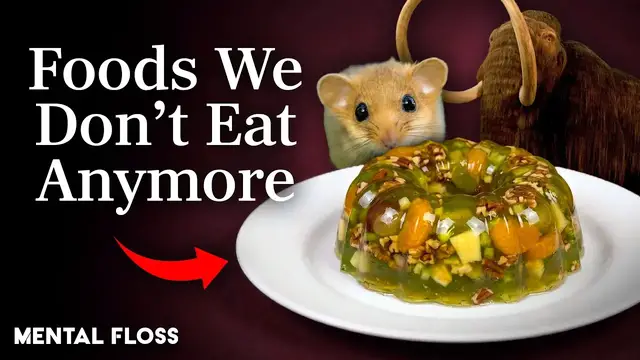
buffet table. From the 1930s to the 1970s, gelatin salads were everywhere. Lime Jell-O with cottage
7:49
cheese. Shrimp suspended in lemon gelatin. If you could chop it, you could put it into a quivering
7:55
dome. These dishes were considered modern, hygienic, and scientific. The future of food
8:01
molded into a shape that looked like it came from a chemistry lab. Why don't we eat them now
8:05
Because we came to our senses. And because the combination of savory ingredients with dessert
8:10
gelatin is, for many people, challenging. As food trends shifted toward fresh, unfussy foods
8:17
gelatin salads quickly retired to vintage cookbooks. So there you have it. Historical foods that once
8:23
graced banquet halls, dinner tables, and questionable medical treatments. And then vanished from
8:28
our diets. Some disappeared because they were impractical, some unethical, and some because
8:34
humanity realized maybe we don't need to eat everything that moves, or jiggles. If you've
8:39
enjoyed this dive into culinary history, let me know which historical foods surprised you most
8:44
and whether you'd try any of them if they magically reappeared. Thanks for watching
8:48
and I'll see you next time on Mental Floss