Up next in 10



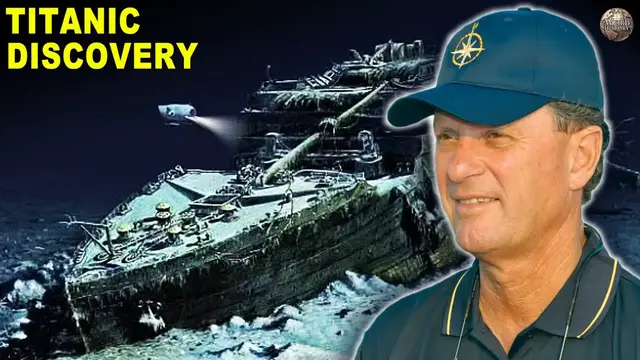
Early in the morning of April 15, 1912, the world's largest ocean liner slipped beneath the icy waves of the North Atlantic, carrying 1,500 people to their graves. For decades, the shipwreck remained hidden - but how did they find the Titanic?
Show More Show Less View Video Transcript
0:00
We all know the story of the doomed ship Titanic
0:03
and we've all seen footage of the wreck of the Titanic in the famous movie, um, Titanic
0:09
But did you know that the Titanic's final resting place was a mystery until fairly recently
0:14
and that the race to find it was nothing less than a 20th century treasure hunt
0:19
Well, today we're looking back on how the Titanic was discovered during a secret Cold War mission
0:25
Okay, final check for icebergs, and let's get underway. Oh, no, there's one right there
0:36
The RMS Titanic was the largest ocean liner in operation when it slipped beneath the waves in the early morning hours of April 15, 1912
0:45
after colliding with a North Atlantic iceberg. Eventually, the mighty ship snapped in two pieces
0:50
and sank to a depth of about 12,500 feet, while the front of the ship, or the bow if you're a pirate
0:57
is still recognizable, the rear, or stern, has been completely demolished. The area is also surrounded by a large debris field
1:05
containing hundreds of thousands of items that fell out of the ship as it went down
1:09
and at one point, a lot of human remains. Although time and the denizens of the deep have since reclaimed most of that evidence
1:17
Despite being such a large shipwreck, actually pinpointing the precise spot on the seafloor proved a monumentally challenging task
1:24
Specifics about the ship's location were simply unavailable in the disaster's immediate aftermath
1:30
The Titanic broadcast a fixed position for the last time around four hours before it sank
1:34
As it went down, the crew did issue a distress call, but they gave rescuers an inexact position
1:40
Kind of like a drunk Uber request. Which outback steakhouse? Ashley with two H's
1:45
Ocean currents made the Titanic situation even more challenging. Lighter pieces of the shipwreck could be carried away and distributed across the vast area
1:53
This made false alarms a real possibility and significantly expanded the potential search area
1:59
Plus, early 20th century diving technology wasn't up to the task of reaching this part of the seafloor
2:04
where pressures climbed to 6,000 pounds per square inch. While that may be nothing but a few reps for Aquaman, king of Atlantis, it tends to squish human beings
2:14
So even though a strong interest in locating and salvaging the vessel was expressed by the families of the Titanic's wealthiest victims
2:20
including the Guggenheims, the Astors, and the Wideners, the project was deemed too impractical
2:26
Because it was. One alternate proposal even involved dropping dynamite into the ocean
2:30
in the hopes that explosions would dislodge dead bodies and send them to the surface
2:35
which does kind of sound like an idea pitched by a child billionaire Not coincidentally it was never actually attempted In the 1960s an English garment worker
2:46
appropriately named Douglas Woolley, proposed taking a deep-sea submersible to find the Titanic
2:51
and then attaching inflatable nylon balloons to the hull to pull it up to the surface
2:56
Woolley dreamed of bringing the Titanic to Liverpool, England and creating a floating museum
3:01
even establishing the Titanic Salvage Company to manage the project. Ultimately, Woolley was forced to abandon the idea
3:08
as he couldn't figure out how he would get the nylon balloons inflated on the seafloor
3:11
with so much pressure bearing down on them. By some estimates, it would take 10 years to generate enough gas for the balloons to fully inflate
3:19
By our estimate, it sounded like a Nathan-for-you scheme from the start. By the 1970s, the Walt Disney Company and National Geographic
3:26
also considered a potential expedition to locate the Titanic, using the aluminum submersible Aluminaut
3:32
But the costly plans were abandoned. In author Clive Cussler's 1976 novel Raise the Titanic
3:38
future McConaughey character Dirk Pitt fixes the holes in the Titanic's hull underwater
3:43
then pumps the wreck full of compressed air and surfaces it like a submarine
3:47
Of course, we now know this wouldn't be possible because the Titanic broke into multiple pieces
3:52
But you can't blame Cussler for that. He named his hero Dirk Pitt. It was in this era that oceanographer Robert Ballard first became interested in the Titanic
4:00
Throughout the 70s, Ballard gained some notoriety for his work as a marine geologist
4:05
mapping the Gulf of Maine and exploring the Mid-Atlantic Ridge in his submersible Elvin
4:11
Simon and Theodore were tragically lost at sea. In 1977, Ballard and Elvin spotted deep-sea hydrothermal vents east of the Galapagos Islands
4:20
for the first time on record, along with surrounding biological communities formed by chemosynthesis
4:25
At that moment, a bioluminescent light bulb went off over Ballard's head, and he realized he could use the same techniques to locate the Titanic
4:41
Ballard ultimately found an unconventional partner for his Titanic project, the U.S. Navy
4:47
The military wasn't particularly interested in the Titanic itself, but envisioned another possible use for Ballard's technology, recovering lost submarines
4:57
Two nuclear-powered subs, the USS Scorpion and the USS Thresher, went down in the North Atlantic in the 1960s
5:04
Both crafts had state-of-the-art technology and weapons systems on board. But by the 1980s, the military was mostly concerned about radioactive material and its possible environmental impact
5:15
They also hoped to learn what had caused the two submarines to sink and whether or not it was the work of the Ruskies Still they did not want to publicize the search for two lost nuclear subs what with the whole Cold War thing going on
5:28
And Ballard's proposed expedition to search for the wreckage of the Titanic, which he pitched to the Navy in 1982, proved an ideal cover story
5:36
The operation was kept top secret, and Ballard was even put on active duty as a naval officer for the duration of the mission
5:43
You gotta think he would have loved to brag about it to his friends. But sorry, Ballard, can't do that with the whole top secret thing
5:49
The work started in the summer of 1984, with Ballard and his team locating and photographing the wreck of the Thresher
5:55
utilizing his robotic submersible, the Argo. The following year, he returned to the North Atlantic
6:00
and located the Scorpion off the coast of the Azores, a Portuguese archipelago in the North Atlantic
6:06
Ballard's work for the Navy kept him preoccupied, allowing little time to actually search for the Titanic
6:12
So he enlisted some help from French research vessel Le Surroi. In July 1985, Le Surroi sailed into an area where it was believed the Titanic might
6:20
be located and started using sonar to perform a technique known as mowing the lawn. This consisted
6:27
of sweeping the sonar system back and forth across the search zone, scanning for any signs of metal
6:32
objects. After five weeks, Le Surroi came up empty-handed, leaving the entire job to Ballard
6:38
and his team. Hopefully, the nice old lady who lives in the ocean gave them a nickel for the lawnmow, though
6:49
After completing his missions with the Thresher and Scorpion, Ballard just had 12 days left to look for the Titanic
6:56
Fortunately, while photographing the military submarines, Ballard noticed that the ocean current carried small pieces
7:03
of wreckage as they fell to the seafloor, creating a visible chain of debris
7:07
kind of like a trail of breadcrumbs leading to the ship's final resting place. While Titanic's search and salvage operations had always focused on finding the largest and most distinctive chunks of the ship, like the hull, Ballard used the robotic Argo to seek out these long debris trails instead
7:23
Rather than inefficiently mowing the lawn from the surface, he was able to drag the Argo across the seafloor and watch a live video feed from its onboard cameras on his research vessel, the NOR
7:33
And sure enough, just with one funded day remaining on the expedition
7:38
the team spotted a boiler that had once been installed on the Titanic. The wreck was located around 2 a.m. on September 1, 1985
7:46
just in time to catch Back to the Future in theaters. Ballard's team was the first to discover that the Titanic had broken into two pieces while sinking
7:55
Well, after that guy who bounced off the propeller on the way down. They found the stern laying around 400 meters away from the bow more than 12 feet below the surface of the water Their time on the Knorr however had drawn to a close and other teams were waiting for the vessel to do research of their own
8:11
So Ballard's crew had little time to actually search around the wreckage and make further discoveries
8:15
They did manage to take some still photographs of the Titanic's hull and mask, including
8:20
the crow's nest from which the iceberg was first spotted. Both the Navy and Ballard had reasons to try to keep their discovery quiet
8:27
Ballard considered the site of the wreckage as a kind of cemetery, and had even considered keeping its specific location a secret
8:34
to prevent the site from being overrun by treasure hunters. For their part, the Navy feared that too much attention on Ballard's expedition
8:40
might expose the real reasons they had funded him in the first place, and spread the word to America's enemies that the nuclear subs had been located
8:48
The discovery of the Titanic was ultimately revealed to the general public
8:52
but the U.S. government did manage to keep a lid on the true story behind Ballard's expedition
8:57
A September 8, 1985, New York Times article claimed that the real goal had been a test of the Argo system
9:03
and that the search for the Titanic was purely incidental. The Times actually suggested that the Navy
9:09
hoped to use the technology one day in the future to potentially locate lost submarines
9:13
with no acknowledgment that it had already done so successfully. Twice. Ba-da-boom, ba-da-bing
9:19
Members of both Ballard's team and the U.S. Navy continued to deny the true story behind the expedition
9:24
for many years. always suggesting that it was purely designed to test the Argo system for future use
9:30
a cover story that held up for over a decade. Ballard returned to the site of the wreckage once more the following year
9:41
on board the Atlantis II. He also brought his old submersible Elvin along for this trip
9:46
accompanied by a small remotely operated vehicle called the Jason Jr. It could squeeze into tight spots that Elvin couldn't reach
9:53
Jason Sr. must have been so proud. This trip produced a far more detailed photographic record of the Titanic
10:00
which Ballard published in the 1988 book Discovery of the Titanic, exploring the greatest of all lost ships
10:07
In keeping with his overall personal philosophy, Ballard never personally removed any artifacts from the area
10:13
So take that, old lady Rose. Wait, I guess she did throw it back in the end
10:17
As for other efforts to raise the Titanic, The company RMS Titanic Inc. has brought a number of notable artifacts up to the surface
10:25
including luggage, dinnerware, documents preserved in steamer trunks, and even a chunk of the hull
10:31
For a stoop, maybe. Lawsuits and other bureaucratic snags have prevented the group from selling any of its findings
10:37
But many have been put on public display at a gallery at the Luxor Hotel in Las Vegas
10:42
From one palace of excess wealth to another, rest in peace, Titanic