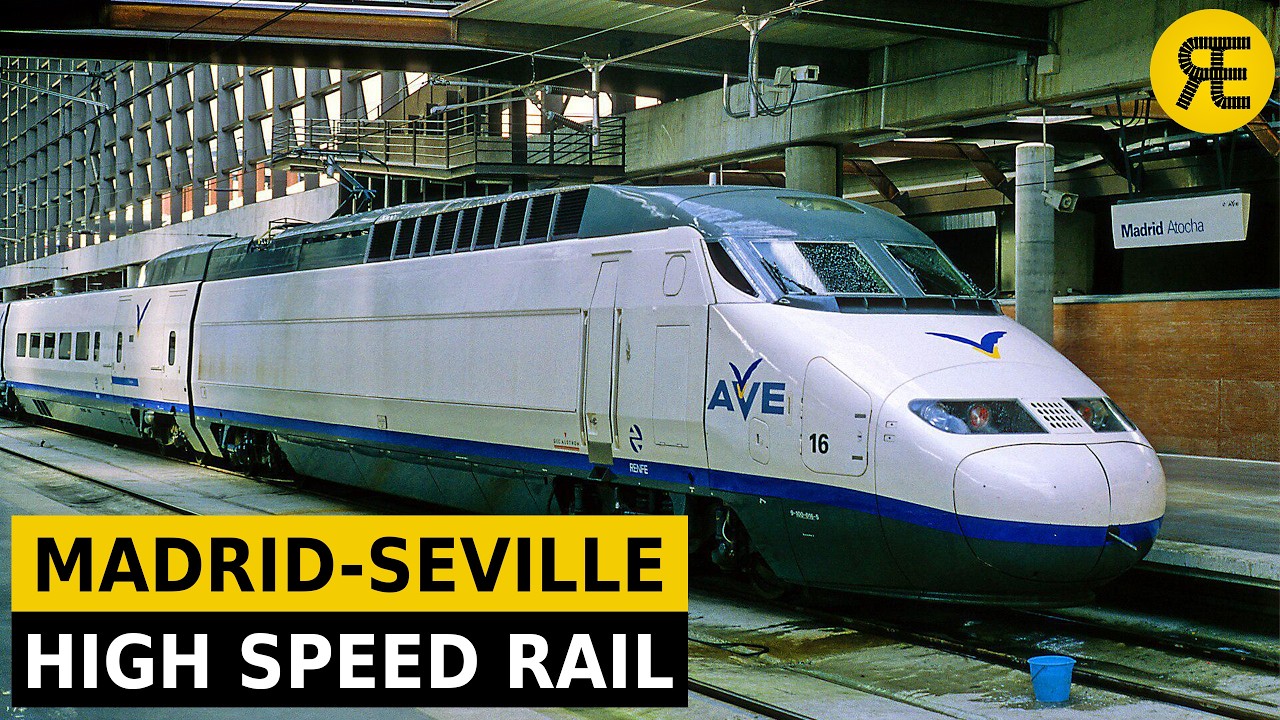

How Spain Built Its First High-Speed Railway | Madrid–Seville AVE
Apr 18, 2026

Check out Spanish High Speed Railways video: https://youtu.be/1L2Mi8q97nU Get Our E-Book! We’re thrilled to announce the upcoming release of our first-ever e-book: a curated compilation of 100 Railways Explained scripts, filled with insights, facts, and rail stories from across the globe. If you love our videos, you’ll definitely enjoy reading it. https://payhip.com/b/mTDPX Support Us & Get Exclusive Benefits: Become a member on Patreon for exclusive content, behind-the-scenes access, and more: https://www.patreon.com/railways_explained Join our YouTube membership to support the channel and get special perks: https://www.youtube.com/channel/UCGq3OyOoLPYj4Oyk1DWnKxQ/join Donate via PayPal: PayPal.Me/railwaysexplained Check out our official merch and show your love for all things railway: https://railways-explained.creator-spring.com In the late 1980s, Spain’s railway system was facing a serious capacity problem. Demand for transport was rapidly increasing, not only within Spain but across Europe, and the railways were struggling to keep up. This was particularly evident on the connection between Andalusia and the rest of the country, which relied on a single-track railway passing through the Despeñaperros mountain range. This section was not only severely capacity-constrained but also technically outdated, with tight curve radii between 300 and 600 meters and maximum speeds limited to just 70 to 100 kilometers per hour. It represented the single biggest bottleneck in the entire Spanish railway network. At the same time, rail transport was losing competitiveness. Spain was clearly lagging behind countries like France and Germany, while Japan had already established itself as the global leader in high-speed rail. In 1987, a decision was made that would redefine the future of rail transport in Spain. Instead of attempting to upgrade the existing line, which would have required massive investment and would still face severe geographical constraints, engineers proposed a completely new railway corridor. The idea was to bypass Despeñaperros entirely and create a new access route to Andalusia through Sierra Morena. Subscribe for more in-depth railway stories and analyses from around the world. Big thanks to our Patrons: Walid, Mind K, An Oni Moose, Julian Baumann, Hendrik Hinrichs, Robert P. Walsh, Xosé F. Estrada, Mårten Hammarstrand, Lucas Richter, Korawich Kavee, Alex Zaslavsky, Ben M, Nathan Walls, Bill, Tim McKeoun, August Bigelow, Brendan McKeon, Linda Vainomae-Hoffmann, Linda Vainomae-Hoffmann, Reinforcedconcrete, Alex McDonald, Martin Pelles, Alice Conalbi, Declan Crowley, Martin Hinge, William Rohe Follow us on Social Networks: Facebook: https://www.facebook.com/RailwaysExplained/ Instagram: https://www.instagram.com/railways_explained/ Linkedin: https://www.linkedin.com/company/70132922/admin/feed/posts/ #spain #railways #megaprojects #highspeedrail
Show More Show Less #education