Up next in 10



https://www.proshaper.com
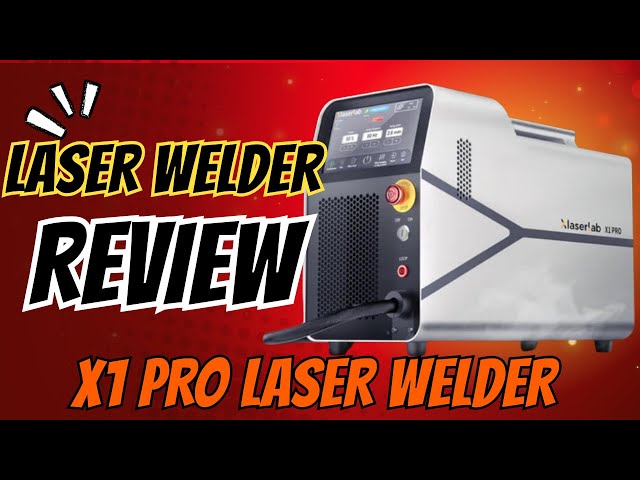
X1 Pro Laser Welder, Cutter and Cleaner
https://geni.us/XLaserLabsWelder
I Tested the X1 Pro Laser Welder - Here's What Happened
Tired of spending 20 minutes setting up your TIG welder just to make one quick tack? The X1 Pro Laser Welder might change how you work in the shop.
I put this thing through its paces, welding, cleaning, and cutting. And honestly? The cleaning function alone had me rethinking my entire prep workflow. No grinding. No wire brushing. Just point and go.
In this video, I'm testing all three modes the X1 Pro offers:
✅ Welding and especially welding Aluminum and Stainless!!
✅ The cleaning function (you have to see this)
✅ Cutting capabilities
Is it fast enough to replace traditional methods? Does it actually deliver clean welds? Is the hype real?
Watch and decide for yourself.
Email: [email protected]
Website: https://www.proshaper.com
Facebook: https://www.facebook.com/ProShaper/
Instagram: https://www.instagram.com/proshaper/
Show More Show Less View Video Transcript
0:00
Hi, it's Ray from ProShaper Workshop.
0:02
Yes, I haven't been doing too many
0:03
videos lately. A lot of stuff has
0:05
changed. Tonight, I'm going to do a
0:07
video on this X Laser Labs X1 Pro laser
0:12
welder. It's a 700 watt machine. I now
0:16
have about I wanted to before I made a
0:18
video about it, I wanted to have some
0:19
experience. I've got about a half an
0:21
hour of experience. That's it. the I
0:24
have used one laser machine before this
0:27
about two or three years ago uh probably
0:31
two years ago. It was um um IPG welder
0:36
and that's actually made like one town
0:38
over from where I where we shop in
0:41
Charleston is that's in Oxford uh
0:44
Massachusetts and that machine sells for
0:48
like 35,000 or $45,000.
0:52
This machine is only right now on
0:56
special for $34.99. It's just amazing.
1:00
So, you know, at that price, you go,
1:02
well, it can't really do too much. You
1:04
don't have high expectations. And I went
1:06
into this with very low expectations of
1:09
what it could do. After a half an hour,
1:12
I'm amazed at how well this machine
1:14
works. Now, my specialty is welding thin
1:17
sheet metal. So, when you weld thin
1:20
sheet metal, you have a lot of options.
1:21
You can use gas, acetylene, oxygen, and
1:25
a lot of people that weld that and have
1:26
done it for 30 years, they swear by
1:28
that, and they'll never change in a
1:30
million years. You're never going to get
1:31
those guys to change their their
1:33
viewpoint. And there's a lot of
1:35
positives when when you use the oxygen
1:38
welding. And then there's the TIG
1:41
welders, and I consider myself to be a
1:43
TIG welder. I didn't like the fumes. I
1:45
learned how to gas weld aluminum uh 60
1:48
years ago and at my grandfather's
1:51
restoration shop back in the 60s and uh
1:55
I only did a little bit of it. I I'm a
1:57
mediocre gas welder. If I spent a couple
2:01
days on, I probably could get up to a
2:02
pretty good level, but there's a lot of
2:05
fumes from the flux and and then I
2:08
learned TIG and uh TIG was a long
2:12
learning curve to learn the full
2:14
potential of TIG. And I I have to admit
2:17
welding aluminum with the TIG, I really
2:21
only massed that probably in the last
2:23
few months where I know when I weld
2:26
aluminum, I won't be getting cracking.
2:29
And that's one of the the gas welders
2:31
always say, "Oh, the TIG cracks all the
2:34
time and everything." So now the laser
2:36
welders are coming on the scene and
2:38
they're super expensive, meaning most
2:41
people are not going to buy them. So,
2:44
uh, you know, only the the shops that
2:46
have a lot of revenue that could afford
2:49
to buy one of these machines will do it.
2:52
But now you've got, uh, this X laser Lab
2:55
machine coming in at an affordable
2:57
price. And, you know, the price is
2:59
probably going to drop once the market
3:01
gets bigger and bigger. And they've got,
3:04
it's a fullfeatured machine. It's just
3:06
amazing. It does rust removal, it does
3:09
cutting, and it does welding. And what I
3:11
was interested in mostly was welding
3:15
aluminum. And I've got aluminum panel
3:17
here. We made a couple shot videos
3:19
already and we put them up on Facebook.
3:22
And uh those videos were very
3:24
wellreceived. But you can see there's a
3:26
lot of push back. Some guys say, "Well,
3:28
I'm I'm going to use my MIG. I don't see
3:30
any advantage to to using this machine."
3:33
Now, uh, I figure it'll probably take me
3:37
at least 50 hours of use before I really
3:40
start to get a handle on what the
3:42
capability of this machine is because
3:45
there's a lot of settings and you can
3:47
learn how to run all the settings. I've
3:48
played with them a little bit so far.
3:51
Uh, even turning the machine on, it's
3:53
got a lot of safety factors built in and
3:55
stuff. And this is a low powered
3:57
machine. This is only 700 watts. I think
3:59
the IPG machine is like 2,000 and 3000
4:03
watt machine. So, they'll do heavier
4:05
metal, but that that doesn't concern me
4:07
at all because most of the stuff that I
4:09
do, auto body sheet metal, doing coach
4:12
work or restoration work, is all well
4:16
within uh the the domain of this
4:18
machine. This machine will do a perfect
4:20
job. aluminum, steel, stainless, but I
4:23
want to I want to try welding copper,
4:25
which I can TIG weld very easily, but I
4:28
want to weld thin copper with this. I
4:30
want to weld brass and bronze. I want to
4:33
try everything I can with this machine,
4:35
and I'm not going to do it in a 30inut
4:37
video. So, there's at least 50 hours of
4:40
of experimentation
4:43
to learn the potential of what this
4:45
machine offers you. So, first what we're
4:48
going to do is we're going to turn it
4:49
on. And you can see the interface on the
4:51
front here and some of the adjustment
4:53
potential. All right.
4:57
All right. So now we've fired up the
4:59
machine and you see the initial the
5:01
screen that you're going to get. And
5:03
these are your options welding or you
5:06
can go to cutting or to cleaning. And
5:09
when you go on the cleaning mode, you
5:11
have to change the nozzle. And I think
5:13
the cutting nozzle you have to change
5:14
too. So, there's a little bit of of
5:19
playing around with the hardware before
5:20
you can use the the potential of the
5:22
three different modes you have here. So,
5:24
we're welding.
5:26
And then you have to make sure that
5:28
these emergency locks are out. You can
5:30
push these off, which shut the machine.
5:32
There's a separate one over here, too.
5:34
They got to be off. And then there is a
5:38
on switch right here. And then a confirm
5:41
switch. So you hit the confirm and then
5:44
uh it'll it'll tell you all these are
5:48
all the parameters you have. It's called
5:50
the power parameter that goes up to 100%
5:53
and the the the swing frequency. I I
5:57
don't fully understand that yet. I
5:59
that's part of the 50 hours. I got to
6:01
really uh understand all all this uh
6:05
different features here. And then
6:07
there's the swing width. The swing width
6:09
I know of this goes up to uh it goes
6:12
down to let's see as low as zero uh 2 mm
6:17
up to I think 5 mm. So it goes up little
6:22
bit at a time. It steps up slowly. And
6:24
what that means is a 5 mm then it will
6:27
weld like a 5 mm swath. But again I I
6:31
you have to get experience before you
6:33
can do all of these. I had it set, I
6:37
think, for a really low one. It comes in
6:39
when you first turn it on and you tell
6:42
it what it wants to what you want to do.
6:44
And this is uh stainless steel, I
6:46
believe, right now. So, you click that
6:50
and and we want um cold rolled. No, we
6:54
want aluminum. So, we al is aluminum.
6:56
So, we're going to put AL in. And then
6:59
uh let's see.
7:02
And then we hit it over here.
7:06
here. Configuration. Okay. So, now it's
7:08
it's aluminum and it's 1 millimeter
7:11
thick aluminum. You can bump that up to
7:13
two. I found this 063, which is a little
7:16
bit thicker than 1 millimeter. It jumps
7:19
from one to two. Why it didn't have one
7:21
and a half, I don't know, but the one
7:24
seems to work fine. So, um we'll we'll
7:28
try the settings as they are. Now, this
7:31
is the factory settings. They're preset,
7:33
but you can lower that the power
7:35
setting. If you go lower, you won't get
7:38
penetration. If you go higher, you'll
7:40
probably get u a lot of drop through,
7:43
meaning it'll be a little too hot. So,
7:45
you can learn, you got to learn to play
7:47
with all these settings to get your
7:49
ideal setting. So, what we're going to
7:52
do is we're going to weld up this shape
7:54
panel, this 063 aluminum panel that was
7:59
English wheeled, and I cut it in the
8:02
band. saw. And so far, I haven't had
8:05
much luck welding anything with a gap.
8:08
So, it has to have a pretty tight fit.
8:10
Um, that said, I believe you can weld
8:13
with with a gap. So, here's the gun, and
8:17
the gun will not fire off. You see a red
8:21
light there, but that's not dangerous at
8:23
all. There's no heat or anything. It's
8:24
just an indicator light. Now, I can
8:26
press the trigger right now, and nothing
8:29
will happen. Why? because you have to
8:32
have a closed circuit with this little
8:35
red like looks like a ground but it
8:37
isn't a ground. It's it just closes the
8:39
circuit. So if you open this wire feed,
8:44
this is the wire feed and you have to
8:45
put the appropriate wire on just like
8:47
you're using a MIG welder. You open this
8:50
up a little clip right there and here's
8:52
the the spools. You have to choose the
8:55
right wheels here to fit the wire. And
8:57
the first time we used it, we had too
8:59
thin of a wire. We had 020 023 MIG wire
9:04
on there. And it needs uh at least 0.030
9:10
or better 035.
9:12
So that's what we got here. Uh this is a
9:15
4043
9:17
aluminum uh wire used on a regular MIG
9:21
welder. Um and it's 35,000 thick. And
9:26
you get, like I said, you got to make
9:27
sure you got your rollers in the right
9:29
spot. And you have a a wire feed right
9:33
here. I think this will work now. Let's
9:35
see. Yeah. See, that'll pop your wire
9:38
feed out. And you also have a wire
9:40
retractor, too. So, you can retract it
9:43
or you can cut it off with a a pair of
9:46
uh side cutters. And what you want to do
9:49
is you want to see that red light on the
9:52
wire, but you don't want it out too
9:54
much. But right there is good. I can
9:56
retract that just a little bit. So you
9:58
still see the red light on the wire. So
10:00
we'll close this up.
10:05
And that's a very well-made uh wire
10:09
feeder. It looks really good and it
10:10
works really good. So now a lot of
10:14
people were concerned about the safety
10:16
issue of these uh laser welders. Well,
10:20
number one, we only have the 700 watts
10:22
power. So, I I did a lot of the welding
10:25
without gloves, and I don't I don't
10:27
think that was an issue. Uh they it
10:30
comes with these glasses. You can put a
10:32
helmet over these glasses if you want.
10:36
Uh but these these seem to work really
10:37
good. So, I'm going to put the glasses
10:40
on.
10:43
And then I'm going to put my regular TIG
10:45
welding gloves on.
10:48
And if I pull the trigger right now, one
10:51
of the concerns is if you got a shiny
10:53
surface, it'll bounce back and it can do
10:57
some damage. Well, this will not do
10:59
anything without this, right? And I
11:03
think it won't do anything without you
11:07
touching. So, I got a 3/4 inch thick
11:10
bench right here. I'm not touching. And
11:13
I'll pull the trigger and nothing's
11:15
happening.
11:17
So, when does something happen? So,
11:19
that's a safety factor. They built that
11:21
in. That's a wonderful feature. All
11:23
right. So, I made a mistake. I forgot to
11:26
hit the button here.
11:28
And this ready light has to come on
11:30
before the machine will fire up. So,
11:33
let's redo that safety test again.
11:36
We're going to hit the 3/4 bench
11:40
um
11:42
without touching it.
11:44
See? and it won't fire off. Then we'll
11:47
go over to our aluminum over here and
11:49
then we'll fire it off
11:52
because I'm touching it. It will fire
11:54
off. So that's a beautiful built-in
11:57
safety feature.
11:59
So I'm flush here and we're going to
12:02
tack this up. Now we'll show a bunch of
12:04
TS. The tax is so simple it's
12:06
ridiculous. Now someone mentioned in the
12:09
comments of the shots that well I can do
12:11
that with my TIG. Yes, you can do really
12:14
nice TS with a TIG machine. And even
12:16
gas, you can do pretty nice TS, but uh
12:19
this is almost like a no-brainer. All
12:22
you got to do is hold it up to where
12:24
you're supposed to be, push the trigger,
12:29
and we did this with steel, and we could
12:32
dwell on that for the longest time, and
12:34
it didn't burn a hole through. So,
12:36
that's tacked right now. And we can do
12:37
this tack every half inch or so.
12:55
and it's all about touching the metal.
12:57
Now, see, I'm getting a little bit of a
12:59
divot there. So, maybe I dwelled a
13:01
little too long. And again, this is part
13:03
of the 50hour learning curve that you
13:06
got to use this so that I can get
13:08
absolute uh perfect results.
13:11
So this one, the first one, I didn't
13:13
dwell as long and I don't have any divot
13:16
here. These I dwelled a little longer.
13:18
I, you know, I just want to ensure that
13:20
I got a good weld.
13:22
And you, this red light, it widens. If
13:26
you get a camera view of that, you can
13:28
see the width of that red light. Now, if
13:30
we go over here and
13:34
we widen this parameter here, it's at 2
13:36
mm. If we bump this up,
13:39
watch what's going to happen.
13:42
Course we don't want the 2 mm is all we
13:45
want. Meaning the actual laser is
13:48
focusing on 2 mm. Now, I'll put this
13:52
over here. You can see that's 5 mm,
13:56
but it leaves a big swath there. And I
13:58
don't know why you would want 5 mm. I
14:01
don't know. So, we'll bring this back to
14:03
2 mm
14:09
and we'll tack it some more and I'll see
14:12
if I can get with no divot again. Hold
14:15
on. So, it's all about the dwell time.
14:29
So there I did those and there there's
14:32
no there's no divot there. So these were
14:35
just too much dwelling on that one spot.
14:38
Keep pulling the clamps down. And what
14:40
I'm going to do is I'm going to tack
14:43
this all up and you don't have to see
14:44
all the tacks. After I get it tacked up,
14:47
then we'll um we'll probably put it in
14:50
the wheel. we can put it right in the
14:52
wheel and that will ensure that it's all
14:54
at the same level. And there's there's
14:56
very little distortion, if any
14:58
distortion at all, at this point. So,
15:00
I'm going to get it all tacked up. Then,
15:02
we'll throw it in the wheel.
15:16
All right, we have it all tacked now. It
15:18
tacks about every half an inch or so.
15:20
Some are a little wider than that. And
15:23
uh you know, some of them I might have
15:24
missed. I don't know. But we'll put it
15:26
in the wheel. There's hardly any drop
15:28
through on this side, but we'll just run
15:30
it through the wheel and see what
15:31
happens. It might crack. I don't know
15:34
because a lot of times those tacks, even
15:37
on a TIG tack, they'll they'll break
15:38
really easy. I'm going to run it quickly
15:41
through the wheel. Make sure it's all
15:43
leveled. It's pretty good. But we'll
15:46
just bump it through here.
15:48
We'll see if the TS break. Maybe, maybe
15:50
they'll break. I don't know.
15:59
And one cracked. I heard them. I heard
16:01
it make a little noise, but that's
16:04
pretty good. I don't see any major
16:09
release of any sort. And it's super
16:11
flush right now. Welded from one edge to
16:15
the other. And now we're ready to do the
16:17
solid welding. Good to go.
16:19
>> All right. All right. So, we got it all
16:20
tacked up. We ran it through the wheel.
16:22
It's perfectly flush. There's no
16:24
distortion whatsoever. We're not going
16:26
to weld on video the whole thing. We're
16:28
just going to weld a little bit. What
16:30
I've learned in my half hour, now I'm up
16:32
to about uh probably 45 minutes, maybe
16:35
close to an hour of experience total on
16:37
this machine. What I learned is you
16:40
don't push it this way. It's much too
16:42
difficult. You want to pull it toward
16:44
you like this. And if you got the light
16:47
right, and the light I have right here
16:50
on right now is not the best for me. Um,
16:54
maybe right there is better. But what I
16:56
like to do is got to get [clears throat]
16:58
the balance right, too. This thing's let
17:01
me get this set up so it's not going to
17:02
be jumping around on me here.
17:07
All right. So, what I'm going to do is
17:09
I'm going to drag it along the weld
17:11
here. And if you can see the underside
17:13
of the weld, you can actually see where
17:15
you're going a little bit better. So,
17:17
I'm only going to do an inch or so here.
17:20
And again, it's all about the dwell
17:22
time. And you don't want to be wiggling.
17:25
I tried a little guide here. There might
17:28
be a way that you can put something on
17:30
this shaft below which holds the wire
17:33
and and it might have a little finger
17:35
that comes out and you can put a guide
17:37
here and ensures you hit directly right
17:40
on. Again, this is part of the 50hour
17:42
learning experience. How to maximize the
17:45
potential results of this machine. The
17:48
machine has everything you want it, but
17:50
you've got to learn how to run the
17:52
machine, and you've got to learn how to
17:55
maximize that potential. All right. So,
17:58
we're going to get it lined up. And I
18:01
got my finger here to guide me. And I'm
18:04
going to look behind on the the seam.
18:07
And I I'll do a certain amount of drag
18:09
here.
18:19
And there's the weld. And you can see
18:22
that's pretty amazing. And then see the
18:25
drop through you get in the other side.
18:27
>> There's the drop through. And if the TIG
18:30
weld, often times you see a little black
18:32
line, which is a problem. You have to
18:35
weld the back side. Well, the first weld
18:37
that I did, which I'll show right now,
18:42
we did a torture test on the beater bag.
18:46
And here's the first weld, which I have
18:49
a couple divots in and stuff, but I used
18:52
this mallet, one of my mallets with a
18:56
sharp point on it, and I'm pretty sure
18:59
it could go probably another half an
19:01
inch or more before the metal's going to
19:03
fatigue, and it'll crack. not on the
19:06
weld but adjacent to the weld. These are
19:09
just light tacks like we just did here.
19:11
But that's a real thorough first class
19:14
worldass weld.
19:20
If this was on the car or a wire form,
19:23
it'd be a lot easier. This is jumping
19:25
all over the bench and everything. So,
19:27
we'll start up here. We'll do another
19:29
couple inches or so.
19:42
And there you have it. Now
19:45
that's pretty hot. I got a little bit of
19:47
drop uh concave there, but that's the
19:51
drop through on this side. And that can
19:54
be cold forge back. So you put that in
19:57
the planishing hammer and that will all
19:59
forge back in and you won't have to
20:02
grind anything. And that was the result
20:03
with the first weld that I did. No
20:05
grinding needed. So, you know, this to
20:11
me is amazing. Number one, it's super
20:13
strong. You're not going to get cracking
20:16
problems and uh you you you only got a
20:20
little bit of a learning curve to to run
20:22
this machine. Unlike gas welding or TIG
20:25
welding, there's a lot longer uh
20:27
learning curve to get excellent results
20:30
where you're not going to have cracking
20:31
or burn through. Now, let's try another
20:34
little experiment and then we're going
20:36
to go on to the cleaning function that
20:40
takes the rust off. And I'll talk about
20:42
that a little bit, that cleaning
20:44
function. But I tried this with the
20:46
steel. I put it on the steel piece like
20:49
this and pressed the button and I
20:50
couldn't get a burn through. So, let's
20:53
see if we can burn through this
20:54
aluminum.
21:09
All right, there it was. 30 seconds and
21:11
I got a divot there. Good divot. And
21:14
then the drop through on this side.
21:17
Can you see it?
21:18
>> Yep.
21:18
>> Yeah. A drop through on that side which
21:20
would forge right back up. So, uh,
21:23
unlike gas welding, which is easy to
21:26
burn through, and TIG welding is easy to
21:28
burn through, apparently with this 700 W
21:31
machine, you're not going to get that
21:33
problem. So, we've done the welding. Uh,
21:36
not comprehensive yet. We're going to do
21:38
a lot of extensive testing of this
21:40
machine over the next month or so, but
21:43
right now, we're going to move on to
21:45
some cleaning. Mark has done a little
21:47
couple shorts with the cleaning, and
21:49
that looks to be amazing results, too.
21:51
and I'll I'll do the cleaning. All
21:53
right. So, when I'm done welding, you
21:55
can turn the key off. And now nothing
21:58
will happen. All right. Mark's going to
21:59
change the nozzle now to the cleaning
22:01
nozzle. They give you a little Allen
22:04
wrench to take this wire feed off. We
22:06
don't need that for cleaning. So, you
22:09
got to unscrew that
22:12
and take that off. And that just winds
22:14
up by the wire feeder.
22:19
And then I just take off this nozzle.
22:23
And for cleaning, I actually just use it
22:25
as that. I just have no nozzle on it.
22:28
>> That's all set now.
22:29
>> Yeah, that's okay. So clean. Great for
22:31
metal.
22:31
>> Now we're ready to cut a piece of clean
22:33
clean a piece of metal.
22:34
>> That's it. That's easy.
22:36
>> All right. We're going to go to mode
22:37
selection
22:39
and we're going to do cleaning.
22:42
Confirm.
22:45
And then we have to do on.
22:46
>> Yep.
22:48
And
22:50
we should see ready. Yeah, this one you
22:53
have to put here.
22:55
Like that.
22:58
And now the ready light is on.
23:01
So, let me get my gloves on thing. Now,
23:03
this is a 1951
23:06
Jaguar front fender section. It's got
23:10
all that years 70 something years of
23:12
rust on there. Well, 74 years of rust.
23:17
And you can see it's got looks like a 5
23:19
mm swath or so. And it puts out a lot of
23:22
smoke. So, we're going to hold it about
23:25
this far up.
23:40
[snorts]
23:47
and it just blasts away all that rust.
23:50
Now, you could probably do it one more
23:53
time. The advantage of this is say
23:55
you're restoring a car and you got rust
23:57
and you're going to weld the panel in. I
24:00
believe it'll take paint off too. We
24:02
might have to try that.
24:03
>> It does. Yeah.
24:04
>> Yeah. It'll blow the paint right off.
24:06
And it Let's see how hot it's getting
24:08
it.
24:13
It cooled down pretty quick. I can hold
24:14
my thumb right on it. Yeah, it's a
24:16
little hot. It's probably 200° or so.
24:21
So, let's give that a little more blast.
24:23
This is the what Mark had done in an
24:26
earlier short little YouTube uh Facebook
24:28
video.
24:28
>> You could do you could go quick with
24:30
this.
24:31
>> All right, I'm going to go going closer
24:32
to make any difference?
24:33
>> Uh, it does. Yeah. I mean, you might
24:36
want
24:50
That's pretty clean right there.
24:52
>> Yep.
24:54
>> So again, that's part of the 50 and it
24:56
didn't do anything on this side. There's
24:57
no heat distortion or anything. It's
25:00
just burning off all of that years of
25:02
rust. Again, we we're babes in the wood
25:07
here. We don't know what we're doing
25:08
with this yet. Part of the 50 hours that
25:11
we want to experiment with this, we're
25:13
going to learn how to run this machine.
25:15
Is it best to run it way up here? Is it
25:18
best to run it here? We don't know. So,
25:20
all that's got to be learned yet. So,
25:22
the next thing would be the cutting. And
25:24
maybe we can get a little bit of
25:25
cutting, too. Okay. So, now that ray is
25:28
gone. Um, the reason I really like this
25:31
cleaning function is just because I
25:33
mean, sure, you could get the rest of
25:34
this panel by hand, no problem. But when
25:37
you're dealing with a flange or
25:38
something, you got to get that flange
25:39
really just nice and clean when you're
25:41
trying to weld it again. So, this is
25:43
just me maybe about 10 seconds going
25:46
over it. This is all real time, really
25:48
fast. Yes, I should have been wearing
25:49
gloves. I just wanted to be quick and
25:52
show you how easy it was. Um, plus I've
25:55
done this for a bit. I'm not going to
25:57
burn myself.
25:58
Um, but look at how clean that comes
26:00
out. That's really nice for maybe 15
26:03
seconds.
26:05
Now, this is all the nozzles they give
26:06
you with the machine uh for a different
26:09
wire um wire width and everything. Uh we
26:12
just use the one that it came with the
26:15
gun. And then here's the one for
26:17
cutting. And then for cleaning, I just
26:20
take off the nozzle. It doesn't seem to
26:23
be a problem. To put the nozzle on, all
26:25
you got to do is just thread it and
26:27
screw it on. It's very simple. One
26:30
drawback of this machine that I find is
26:33
the gas hookup. It my regulator won't
26:36
fit to it. So, we had to jerryrig that
26:38
small piece onto um their gas intake.
26:42
That's one thing I would definitely
26:43
change because I wanted to do compressed
26:45
air. We got the regulator, but I just
26:48
didn't want to mess with the hose from
26:51
the regulator to the machine. So, we're
26:53
just going to actually cut with argon.
26:55
Now, right here, you'll see two screws
26:57
on the top of the device. Um, and then
26:59
my other hand, they come with protective
27:01
lenses and focusing lenses. They give
27:04
you a whole bunch of them because I know
27:06
after maybe a couple of months or so,
27:08
you're going to need to replace the
27:10
lenses so when the laser fires inside
27:12
the machine, it won't just kind of
27:14
reflect back and ruin everything. So,
27:17
you want to be careful about that and
27:18
make sure you check your lenses.
27:21
Now, here's a video of me probably about
27:23
4 feet away. I thought I was fairly
27:27
zoomed in on it, but I'm firing the
27:30
cutting laser. You want to be careful
27:32
when you're using the cutting laser
27:33
what's underneath and what's around
27:35
because that laser will go through
27:37
things. Now, you can't see it here, but
27:39
it did start catching fire on this uh
27:41
paper towel that's on the floor. Um, so
27:45
again, you don't want to be doing it in
27:47
a barn with hay or in a gas tank. Just
27:50
pay attention to your surroundings.
27:54
>> This is the first time I've used this X
27:57
laser Labs uh laser to cut with. And my
28:01
interest in this is cutting some
28:03
intricate cuts. Now, laser cuts are
28:05
really small and fine. I have no
28:07
experience with this at all. It's the
28:09
first time. So, Mark has played with it
28:13
a couple times. So, let's try to see.
28:15
This is through a piece of aluminum.
28:23
And
28:23
>> I made a nice little W and it went right
28:25
through. I could see it. Hang.
28:27
>> Oh yeah.
28:29
>> Yeah. I made the little W and you can
28:31
see the the cutting uh actual the width
28:35
of the cutting line is about
28:38
I would say 10,000 of an inch. It's
28:41
incredibly small. Now, let me pull this
28:43
up a little bit and see if it gets wider
28:46
if I pull it up.
28:58
Okay.
29:03
Again, some really nice results. Look at
29:05
that. And that's a little wider. So,
29:08
this is all part of the 50 hours of
29:10
learning how to run this machine and get
29:13
its full capabilities out of it. But I
29:17
have a CNC plasma cutter, a 4ft table,
29:20
and I can see where I want if I want to
29:22
do some intricate thin sheet metal
29:24
cutting, I'll be able to do this with
29:27
this machine. And that'd be another
29:29
video sometime in the future. So, thanks
29:32
for watching. Really appreciate it. It's
29:34
Ray from ProShaper Workshop. We'll get a
29:36
lot more coming on the XL laser labs
29:39
welder.