Up next in 10



https://www.proshaper.com
Our Amazon Storefront: https://www.amazon.com/shop/proshaper
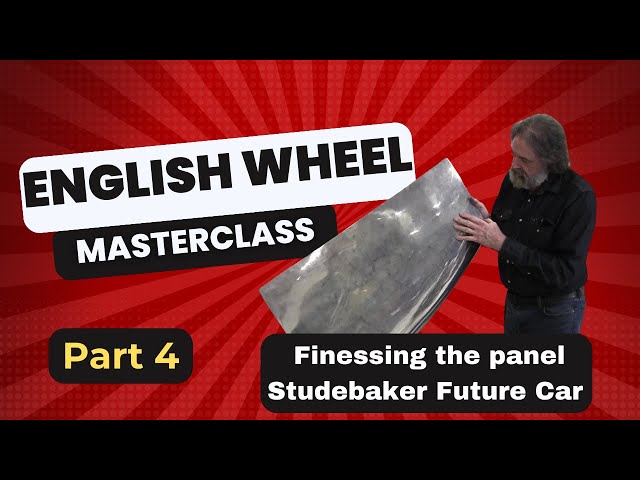
English Wheel Masterclass Finessing a panel
Join us for Part 4 of a masterclass in metal shaping as Wray takes you through the process of correcting overdeveloped panels on the iconic Studebaker Future Car, designed by the legendary Virgil Exner. After teaching students the fundamentals of panel-making, Wray demonstrates how to use the English wheel to address common mistakes, such as overdevelopment, and brings the panels back to perfection. Whether you're a seasoned metalworker or just starting out, this video is packed with valuable insights and hands-on techniques to help you master the art of car restoration.
Email: [email protected]
Website: https://www.proshaper.com
Facebook: https://www.facebook.com/ProShaper/
Instagram: https://www.instagram.com/proshaper/
Twitter: https://twitter.com/ProshaperM
Linkedin: https://www.linkedin.com/company/pros...
Show More Show Less View Video Transcript
0:00
when are we ever going to finish this
0:01
panel we're going to finish it today I'm
0:05
looking at it right here I got it uh
0:08
clamped onto the buck and you'll see the
0:11
the little twinkling of the panel the
0:13
light on the on the panel that's the
0:16
meat and potatoes right there that's
0:17
what you got to get sensitive to if you
0:19
want to learn how to PR finesse these
0:21
panels so there's still a little bit of
0:26
uh pounding I'll have to pound it out
0:28
right here got it marked we can see that
0:30
last wire now is touching totally here
0:34
but it's a little tight right there well
0:36
it's a little small Gap there and then
0:39
we've got a little bit of Gap right
0:41
there if we move that out that will move
0:44
this in so that's the the agenda right
0:47
now that's what we got to do here's what
0:50
a finished panel starts to sound like
0:52
even though this isn't finished it
0:53
sounds the way a finish panel should
1:23
all right one of the uh comments on the
1:25
YouTube channel uh somebody asked why
1:27
didn't I wheel this way here here in
1:30
order to wheel this way here you have to
1:32
use a pretty high Crown wheel and when
1:35
you have a high Crown wheel going in
1:37
here you will get tracking marks and um
1:42
it's not a pretty thing so those
1:44
tracking marks would be difficult to get
1:47
out uh because you would only be able to
1:49
get a high Crown wheel in there so
1:52
that's why when you have a panel with an
1:54
shape and in an arrangement or area
1:57
value an arrangement uh like this one
2:01
you would you would do it this way
2:05
here now when I was working the panel
2:08
out of arrangement I was going that way
2:10
but that was when the panel was in what
2:12
I call the curl
2:16
Arrangement that when it's in that
2:18
arrangement I can go any which way with
2:23
this wheel now one thing I have to make
2:25
it fit the buck but I also have to make
2:28
sure that that curve is beautiful I hold
2:32
it up to the light and when I do that I
2:35
see a little bit of of strong area right
2:39
here it's a little stronger here there
2:43
like a little Peak than say here or here
2:46
that tells me I have to do a little bit
2:48
of work in here and a little bit of work
2:50
in here to blend that
2:52
in and I just punch pump that out over
2:55
here I got to blend that in a little bit
2:57
more because I knocking it out with the
3:01
Mallet it mushroomed it a little bit so
3:03
I got to blend that into the surrounding
3:05
territory and I'm only going to be
3:07
taking baby steps here so I know I'm not
3:10
going to get too far astray if I
3:13
overdevelop it in some other area so I'm
3:16
going work only like a couple minutes
3:18
here and a couple minutes there and then
3:20
check
3:21
it problem is when you work 10 minutes
3:24
without checking it
3:32
and the panel in the process of the
3:33
working like this it's starting to
3:35
really polish up pretty nice too so I'm
3:38
getting that nice Chrome plate finished
3:40
we are going to buff this panel after
3:42
we're done with the
3:45
buffer the same little buffing wheel
3:47
that I'm using uh if you watch my other
3:50
video on cleaning up the wheel I've
3:52
adopted that method it's a really nice
3:56
userfriendly way of buffing if you you
3:59
get it to a high shine if there's any
4:02
faults in the panel they will scream at
4:07
you so one way or another you have to
4:11
spend the time to fix all the faults you
4:13
can fix them now when it's just the
4:15
metal or you can fix them later with
4:17
filler filler would be with
4:20
Bondo which uh nobody likes but
4:23
everybody has to use a lot of the the
4:26
world class Restorations the entire body
4:29
is Bondo surface and then sand it down
4:33
and I really don't think that's the
4:35
height of of uh panel work um why that
4:39
happens is beyond my understanding I
4:42
think the
4:44
panels uh should be as close to perfect
4:47
as possible I like I I've mentioned many
4:50
times before I go by designers in tent
4:53
and designers of these vehicles with the
4:56
the shapes that they they created they
4:59
want to see beautiful panels they don't
5:01
want to see panels that are uh all
5:04
filled with different types of fillers
5:06
to make them look beautiful they want
5:09
the metal to to to do what it's supposed
5:11
to
5:12
do so and then you know the argument of
5:16
well it's so much easier to put the
5:18
Bondo on well if you know how to work
5:21
the metal you just get the metal
5:24
straight and then you don't have to
5:25
spend all that time putting all the
5:27
Bondo on
5:35
so I've done a couple things here one
5:37
I've Blended in that spot that I popped
5:40
out and two I've I've Blended this curve
5:43
a little better it might I think it
5:45
still needs a little bit more but again
5:48
the last word is always the buck so
5:51
we'll put it on the buck and see what
5:52
that say so we got to clamp it all up
5:54
and we'll see it in a few minutes all
5:57
right I marked up the panel after we fit
5:59
it up we CL clamped it up really good
6:01
and I wheeled out those and then um also
6:06
in addition to the
6:08
buck letting the buck talk to you and
6:10
telling you what to do the other one is
6:13
that Horizon View which I've mentioned
6:14
probably a dozen times in this video
6:16
series so I'm sitting here and I'm
6:19
looking at this panel and I rotate it
6:21
like this and I just watch that curve
6:24
and up here the curve could look
6:27
beautiful as I turn it all of a sudden I
6:30
see deficiencies so right now I see a a
6:33
deficiency relative to this I've been
6:35
pounding this out because that's where
6:38
the wire is but it's a little low here
6:41
which means this is sort of like
6:42
mushroom so right in here is deficiency
6:45
so I'm going to pound that out a little
6:46
more and I've done that a little bit all
6:49
along
6:55
here and then you pound it for a second
6:58
and then you give it a good
7:00
observation um the panel still has a
7:03
little going like this which means it's
7:06
going to need a little more work right
7:07
in here I might be able to do that with
7:09
the
7:27
wheel all right so I'm Wheeling out all
7:29
those little Hammer marks every once in
7:33
a while I'll come down here and I'll
7:36
pull up on it because I don't want this
7:37
thing turning this way I want that nice
7:39
and straight so I had a I still had a
7:43
little concave in here so I kind of
7:46
addressed the whole region there was a
7:47
few little spots but also the whole
7:50
region still needed that little bit of
7:52
attention
7:54
so I'm I'm getting it better and better
7:57
and I'm hting sitting here thinking
7:59
I don't know if I've mentioned it but I
8:02
have Stuart Brown from uh Dorset England
8:06
Dorset County England it's in the uh
8:10
Southwestern Corner lowest section of
8:13
England he's coming over like the first
8:17
the end of the first week of uh of
8:20
November and he's bringing his
8:23
scanner he's got a unbelievable scanner
8:26
and he has the software that you need
8:28
with a scan like that and he scanned
8:31
cars all over the world with that
8:33
scanner and some of the most valuable
8:35
cars and he's coming over for some
8:37
lessons from me and uh he's offered to
8:41
scan anybody's car that's in the local
8:44
so if you're within 100 miles of my shop
8:47
and you want to bring your car down to
8:49
be scanned he's offering the scanning
8:51
surface service for a very reasonable
8:55
price that is in 50 bucks uh you know it
8:58
is in 5,000 it's uh very reasonable for
9:02
a super professional scanning service
9:05
and he'll turn it into files and you'll
9:07
have the files after it's scanned and
9:10
he's done the vid uh the the cad work on
9:14
the AI Al recreated uh the AI Alpha all
9:18
into a 3D CAD program and uh he sells
9:22
plans for bucks all over the world and
9:27
uh he's probably going to give a couple
9:29
good vid make a couple videos with me
9:31
and it's going to be very interesting
9:33
when he comes over so I like to do a lot
9:35
more of that collaborating with various
9:38
people with different skill sets or even
9:40
the same skill set um in the in the
9:44
comment section Ron Cavell always gives
9:47
me a pad on the back for my work and I
9:50
said R Ron we got to come and maybe uh
9:54
he could come here and we could do a
9:56
collaboration on something but he didn't
9:59
get back to me I'm hoping maybe he'll
10:00
see this and maybe he'll get back to me
10:03
I think it' be a lot of
10:05
fun so we're
10:07
just lightly Wheeling this again
10:10
blending everything together and then
10:12
we're going to offer it up to the buck
10:14
real soon here it's starting to flow
10:17
pretty nice as far as all the lumps are
10:19
gone
10:27
and again all of this work is
10:30
unnecessary that we did in this video
10:32
series if you take the step when you
10:36
build the panel all baby steps and don't
10:40
get too rambunctious you won't make this
10:43
mistake and you won't have to do all
10:44
these these uh fixes that I have had to
10:48
do but the video series that we've done
10:50
on this panel I think is invaluable for
10:53
a lot of people that um it's it's very
10:57
common to make all those
11:00
mistakes and then they they panic and
11:02
they want to start all over again and if
11:04
you start all over again without
11:06
understanding what you did you you could
11:08
just repeat the M the the series of
11:10
mistakes again and then have two bad
11:13
panels and that could be like two days
11:15
work and then you get so frustrated you
11:18
think oh boy I I can never do this but
11:21
um I'm convinced that anybody can do it
11:25
as long as they got pretty good hand eye
11:27
coordination they can do it right now
11:29
this panel is pretty sweet it's it's
11:31
flowing really nice I got a beautiful
11:33
curve here um there's like I said a few
11:37
spots maybe like 4,000 of an inch low
11:41
and maybe another spot that's 4,000 of
11:43
an inch
11:44
high if it's low you can develop it up
11:47
to the to where it's supposed to be the
11:49
perfect true surface if it's if it's
11:52
high you can shrink it back and you can
11:54
shrink it back I have a new shrinking
11:57
disc that I use on Strictly on aluminum
11:59
it doesn't scratch the aluminum or
12:01
anything and we'll be showing that in
12:03
use soon on one of these panels and uh
12:07
right now I've got it clamped on there
12:10
and Mack can can kind of maneuver around
12:13
and I'll explain the process of how I
12:16
got the panel to where it is right now
12:19
so Mark's just going to show it a little
12:21
bit we got uh a super volunteer Frank
12:25
who's no longer with us but we try to
12:26
keep him in all the videos still he's
12:29
helping us
12:31
out so Marx's maneuvering the camera
12:34
around showing that panel and flat
12:36
panels are one of the most difficult
12:38
panels to do and this panel based on the
12:42
wireform now remember the wire form was
12:45
done by I the wire formed these this has
12:48
a station here a station here a station
12:51
here and a station here so four stations
12:53
and these pretty much line up but then
12:55
it comes down here about a half an inch
12:59
maybe 5/8 of an inch tip in where it
13:02
ties in with this
13:03
tail and uh as I was working on the
13:07
panel I was trying to get all this
13:09
touching totally in the back and mocking
13:13
poke around in the back here that it's
13:15
away from the two two wires a little bit
13:19
up at the top here I I came to the
13:23
conclusion that it really needed a
13:25
little flow going like this because this
13:27
panel looks really good and it doesn't
13:30
have any any oil can or anything it's a
13:32
nice solid panel there's still a tiny
13:36
little bit of Live Edge on the bottom
13:38
but again uh when I weld that that's
13:40
going to shrink in and that won't be a
13:42
problem and this hasn't been buffed what
13:45
you're seeing exactly how it comes out
13:47
of the English wheel if you have your
13:50
English Wheels all polished up and and
13:52
and set up really nice with the buffer
13:55
we did a video on how to tune and buff
13:57
your English wheels go back on my
13:59
YouTube site and you can find that video
14:01
If you haven't watched it yet but it's
14:04
really easy to tune up your your anvils
14:06
and your top wheel and then polish them
14:08
to a high polish because what happens
14:10
when you wheel you're printing the
14:13
Polish that's on the top wheel onto the
14:16
panel and it Buffs it up like this and
14:19
this is why I like an English wheel
14:20
versus a power hammer so I I made an
14:23
anchoring system here I put a couple
14:25
Vice scripts on the wire
14:28
for so those are homes now usually I
14:32
just use a couple Mark magic marker
14:34
lines to home it but I've got these
14:36
Anchor Point so I can take the panel off
14:39
and put it right back at the exact same
14:42
Anchor Point every single time and when
14:45
you Wheeling this uh it's
14:48
really uh real low pressure and you've
14:52
got to find where your your defects are
14:55
so often times when I'm wheeling in the
14:58
when I have it in the wheel like this I
14:59
hold it like this and I let the panel
15:01
talk to me and I can still see a few
15:03
little spots there's a spot here and a
15:05
spot here that are a little deficient
15:07
but the you know primer will will fix
15:09
those a lot of guys will file that and
15:12
they'll file away the tops the highs
15:15
spot tops and and that makes a low spot
15:18
or a thin spot in the material um if any
15:23
car you're going to be building or
15:24
cleaning up or restoring or whatever
15:27
making panels you see a lot of these
15:29
very expensive cars that are restored
15:32
and then they Bondo skim the entire car
15:35
and then board file it well that takes a
15:37
lot of time to do and it makes a big
15:39
mess in the shop if you do the work on
15:42
the wheel and get everything smooth
15:44
first you don't you can skip that step
15:46
totally highb Build primer on this is
15:49
for all you would need that's it so as
15:52
I'm Wheeling I keep checking like you
15:55
have to put it in the light many many
15:57
different ways and then
15:59
look I look at it and it it it looks
16:02
like Flawless but then you bring it over
16:05
here I made this little stand like this
16:08
I just put it this is a couple milk
16:10
crates sitting on top of one another
16:12
with a blanket and you put it on there
16:15
and then you walk 20 ft away and you
16:18
look at the panel and the panel looks
16:20
like a bulldozer ran over it so it still
16:23
has some imperfections that I can see
16:26
when I walk 20 ft away so but those will
16:29
all go out with a block sand I could
16:31
spend another hour uh going crazy on it
16:35
with and the wheel I'm using too you
16:38
look at that Anvil this Anvil has like a
16:40
3/4 interface on it so it's a 3/4 inch
16:43
wide um contact area that's where all
16:47
the work happens I would like to I
16:50
probably should knock these off a little
16:53
bit more on the edges and that will give
16:54
you the ability to go through a panel
16:57
that has a little more crown and still
16:59
have the the advantage of of having that
17:02
wider contact area and uh again this is
17:05
an advantage of the big wide wheels you
17:08
have that real estate to play with to
17:10
make sure that you get a really nice
17:12
surface if you're working with a 2-in
17:14
wide wheel trying to do a surface like
17:17
that on a large panel that's very very
17:20
difficult to do so as you can see once
17:25
you get the panel done you get that
17:30
really solid feel about
17:32
it look I Just Dance the panel around
17:36
you can see it looks pretty good and
17:39
then when you bring it over and offer it
17:41
up to the
17:44
buck you know there's no T no tension in
17:48
the panel there it is it's on there so
17:52
that's about it that's the wrap up for
17:56
this finale for The Master class of
17:59
English wheel finessing a panel thanks
18:02
for watching it's raelene from Pro
18:04
shaper Workshop in Charlton
18:05
Massachusetts