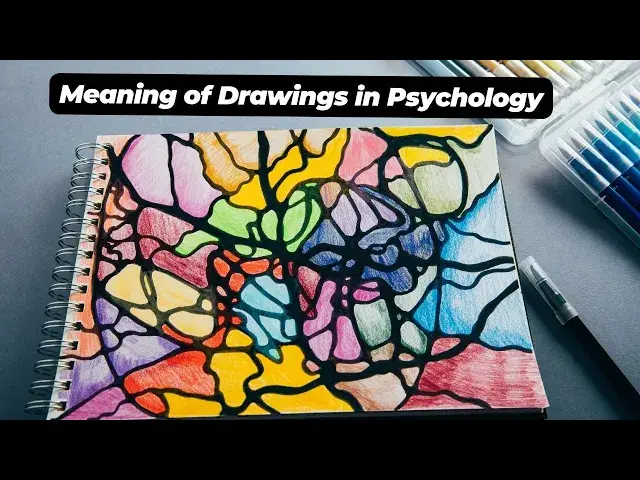

Understanding the Meaning of Drawings in Psychology
Aug 9, 2024

Understanding the Meaning of Drawings in Psychology
Drawings have long been a window into the human mind, revealing insights that words often cannot. In psychology, the analysis of drawings can provide a rich understanding of an individual’s inner world, reflecting their emotions, thoughts, and experiences. This approach, often used in clinical settings, helps psychologists to decode the subconscious mind through the seemingly simple act of drawing.
One of the foundational methods in this field is the use of projective drawing tests. These tests allow individuals to express their feelings and experiences through art, often revealing hidden aspects of their psyche. The House-Tree-Person (HTP) test is a widely used projective drawing technique. Participants are asked to draw a house, a tree, and a person. Each element of the drawing is analyzed for symbolic meaning. For instance, a house might represent the individual's view of their family life, a tree could symbolize their self-perception, and the person may reflect how they view their relationships with others.
Children's drawings are particularly telling. Given their limited verbal skills, children often use drawings to communicate complex feelings and situations they cannot articulate. For example, a child's use of color, the presence of certain figures, and the overall composition can provide clues about their emotional state. Drawings filled with dark colors or chaotic lines may indicate feelings of anxiety or distress, while more balanced and colorful drawings might suggest a sense of happiness and security.
The Draw-a-Person (DAP) test is another significant tool in psychological assessment. In this test, individuals are asked to draw a person, and the resulting image is analyzed for various psychological indicators. The details of the drawing, such as the size of the figures, their placement on the page, and specific features like the hands or eyes, can offer insights into the person's self-esteem, body image, and social relationships. For example, overly large hands might suggest feelings of aggression, while the omission of certain body parts might indicate feelings of inadequacy or anxiety about those parts.
In addition to these structured tests, spontaneous drawings created in therapy sessions can be equally revealing. These drawings are often more expressive, as they are not guided by specific instructions. Psychologists might look at themes that recur in a client's drawings, such as recurring images of water or animals, to understand ongoing concerns or recurring thoughts.
The interpretation of drawings in psychology is not just about identifying specific symbols but understanding the context in which they are created. Factors such as the individual's age, cultural background, and personal history are crucial in making accurate interpretations. A drawing that might seem alarming in one context could be perfectly normal in another.
Moreover, the therapeutic process itself can be enhanced through drawing. Art therapy, a field that combines art and psychology, uses drawing and other forms of visual art to help individuals express and process their emotions. This approach is particularly beneficial for those who find it difficult to talk about their feelings, such as trauma survivors or individuals with communication difficulties.
In conclusion, the meaning of drawings in psychology extends beyond simple interpretation. It involves a deep understanding of the individual’s context and experiences. Drawings provide a unique and powerful way to access the subconscious mind, offering invaluable insights that can guide therapeutic interventions. For those interested in exploring this fascinating intersection of art and psychology, numerous resources and videos are available to further your understanding. Watch more videos like this in the associated playlist or the recommended video in the description of the video you just watched.
Watch more:
Challengers: A Swinging Tennis Drama – Does It Hit an Ace or Double Fault?
https://youtu.be/kkFYhG7rOHk
Show More Show Less