Up next in 10


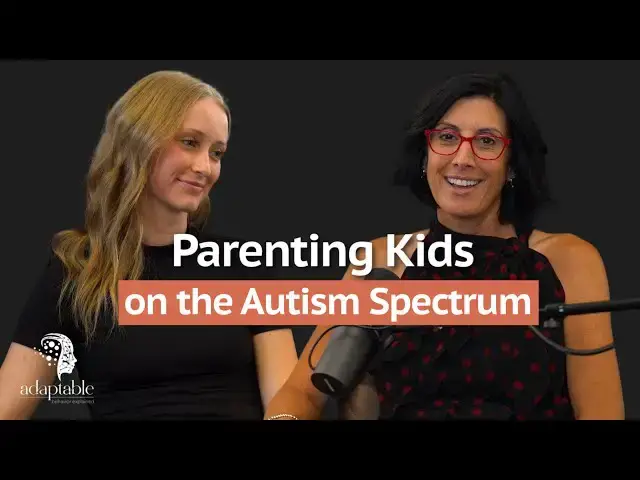
Welcome to Adaptable | Behavior Explained! In this conversation, Kelly O'Horo and Taylor O'Horo discuss Taylor's experience as a parent of a child with Autism Spectrum Disorder (ASD). She shares her journey, her son's initial diagnosis, the challenges and emotions that followed, and the support network she built. Taylor also talks about advocating for her child, finding the right resources, and the importance of trusting one's instincts.
I'm Kelly O'Horo, Attachment based EMDR Therapist, EMDRIA Consultant, and Advanced Trainer. I'm a mom of 5, Nonna of 5, wife, and a healer. I have the honor of spending my workdays walking along side people while they brave their healing journeys. I try to live with the generous assumption that we're all doing the best we can with what we know. Therapists are teachers for the "life stuff" and "emotional vocabulary" that may not have been learned due to gaps in our care givers capabilities. In the last 15 years I've learned that people are freaking amazing, resilient, and inspiring. Most importantly, we are hardwired for connection and for healing!
I hope to bring an authentic, compassionate, and unpolished approach while we explore a variety of topics such as parenting, marriage, relationships, dating, trauma, attachment, adoption, depression, addiction, anxiety, and love! There's a why for all behaviors and an explanation that makes perfect sense as emotion is at the root of it all.
-- Links --
https://kellyohoro.com/
https://linktr.ee/kellyohorolpc
https://youtu.be/rLnARKekvgo
https://www.emdria.org/find-an-emdr-therapist/
Sources to Help:
https://autismcenter.org/
https://cdtkids.com/
https://www.autismspeaks.org/
Show More Show Less View Video Transcript
0:06
hi everyone I'm Kelly ooro and this is
0:09
adaptable Behavior explained hi
0:12
everybody thank you for tuning in we're
0:14
going to talk today about parenting a
0:16
child with autism and all that goes
0:18
along with that or as much as we can
0:20
cover in our episode I am super grateful
0:23
to introduce to you Taylor ooro uh my
0:27
daughter-in-law and the mother of my son
0:30
who happens to have autism and she's
0:32
been brave and vulnerable enough to um
0:35
be here with us today so that we can
0:37
talk about this journey and what it's
0:39
been like and hopefully share with you
0:41
all a little bit so that you don't feel
0:43
so alone and shed some light for those
0:45
who are not privy to what it's like uh a
0:48
little bit more about this topic so
0:49
Taylor thank you so much for being here
0:51
I really appreciate it of course so we
0:53
can go ahead and dig right in um you
0:56
know when I was thinking about doing
0:57
this episode one of the things that
0:59
occurred to me was
1:00
when he was so little you know and as a
1:04
mental health professional I was
1:06
observant but not with an overly
1:09
critical eye but I recognized you know
1:11
something did seem a little bit off
1:13
compared to you know our oldest
1:15
granddaughter your your daughter and um
1:18
and other children I had seen at similar
1:20
ages and I was just wondering what made
1:23
you question if he was developmentally
1:25
appropriate or on track you know I think
1:27
the first indication for me was going
1:30
off my own gut instincts and just
1:32
feeling um from the very beginning like
1:35
something was just different and what I
1:38
remember was he never cried um he loved
1:42
to be held but he also was okay not
1:46
being held for like several hours at a
1:48
time um I remember at one point a doctor
1:52
said you know maybe they can track with
1:54
their eyes and I just watched and he
1:56
wasn't tracking with his eyes so I think
1:58
as early as like probably two months old
2:01
I was kind of starting to get an idea
2:03
that maybe there was a developmental
2:06
delay of some sort but I wasn't really
2:07
sure what that might be yeah you know I
2:10
remember personally you know and this
2:13
might be helpful for family members
2:15
too it's there was there was a moment
2:18
for me and I would say it was it was it
2:20
was probably around the N9 or 10 month
2:22
Mark where you know I I don't want to
2:24
over identify somebody I don't want to
2:26
you can't diagnose your own family but
2:28
we you know I am trained to be aware of
2:31
Developmental appropriate milestones and
2:32
I remember thinking as I watched him
2:35
like I'm not sure something's not quite
2:38
right I don't know what it is and I
2:39
don't I as as a mom didn't really know
2:42
how to approach the subject and I had
2:45
this internal conflict because I wanted
2:48
to be honest and transparent but I also
2:50
didn't want you guys to be upset with me
2:52
if I brought it up and you weren't
2:53
either a in agreement or ready to hear
2:56
it or wanting to explore it so I
2:58
remember for a few months having that
3:00
sense that something wasn't quite right
3:03
and not having said something um when we
3:06
started talking about it what was it
3:08
like for you honestly it was like the
3:12
moment where you kind of know right like
3:15
as a mom you you just have this like you
3:18
know and there's this other part where
3:21
you're kind of like are people getting
3:24
in my head like am I you know delving
3:27
too much into this um am I looking for
3:30
something to be wrong like is it a me
3:32
issue so there was definitely this
3:34
divide of like just who to trust and how
3:37
to trust and how to proceed and I just
3:40
had to follow you know the advice of the
3:44
people I trusted which were you um and a
3:47
few other family members and doctors
3:49
that were kind of starting to go okay I
3:51
may be seeing a little bit of something
3:53
let's just keep watching and and that's
3:55
one of the hardest things to be told is
3:57
just to keep watching when you don't
3:58
know what's going on so it was a little
4:00
bit for you it was a little bit
4:01
validating cuz you had a sense much
4:03
younger than I did yes that something
4:06
wasn't quite right but to have me point
4:08
something out was turned out to be
4:11
liberating good okay that's good you
4:13
know and and honestly we've never really
4:15
talked about it in this way before so
4:17
it's nice to hear that because I mean
4:19
you never came back at me as if I did
4:21
something inappropriate or out of bounds
4:23
but um but it it is nice to hear that it
4:25
was okay and and it was actually
4:27
appreciated because it made me feel like
4:29
oh okay I'm not the only one who sees
4:32
this because in the world right some
4:35
people just maybe don't see it because
4:37
they're not around the kid enough or so
4:40
it was good to have eyes from someone
4:41
who was around him so frequently that
4:44
could tell me like okay I'm seeing this
4:47
too so it was actually like all right
4:49
and then I also felt like in that moment
4:51
because you were so let's figure this
4:53
out together it was like I'm not alone
4:56
so that was really relieving in that
4:57
moment too just knowing like everybody's
5:00
uh is fortunate to have support that
5:03
either gets it or understands or can
5:05
yeah so and that you know is going to
5:07
accept your kid and love your kid oh for
5:08
sure for all their differences and yeah
5:10
I I appreciate that so when we you know
5:14
we were talking about it thinking about
5:15
it what tell us what your first steps
5:18
were in I guess verifying or figuring
5:22
out can you can you share with everybody
5:24
what what you did what you did
5:26
next so the first thing I did was took
5:29
Jensen to um his doctor his pediatrician
5:33
who I trust who obviously as you know
5:35
has seen all of our family who we adore
5:38
um and I said do you think something's
5:40
wrong and he said well let me refer you
5:42
to asip who is the state agency who
5:45
covers um birth to three before kiddos
5:48
can really even get evaluated right
5:50
through the state because that's usually
5:51
around two so I knew that I needed to
5:55
get him Services of some sort but I
5:58
didn't know how I didn't know where
5:59
where to start I didn't I just needed
6:01
help so asip came in and they were a
6:04
great resource for getting me in touch
6:05
and they'd come in and help and um they
6:09
coached me mostly and that's kind of
6:10
their model is coaching the parents
6:12
because we're with them most of the time
6:14
right and so as soon as he was about 18
6:17
months old um we got him into speech
6:20
therapy right and that was when I was
6:23
like okay he's still not talking he's
6:26
not even babbling so obviously let's get
6:29
him into speech get him started and then
6:33
from there his speech therapist was like
6:35
well let's just watch and so it's just a
6:37
bunch of people watching at this point
6:39
right we're all we're all just watching
6:41
but what are we going to do are we going
6:42
to do right and there's a part in me
6:44
that's a fixer so I'm like how do I fix
6:46
this like what do I do sure well and and
6:48
and as any attentive mom would want to
6:52
make sure you didn't you know kick the
6:54
ball down the road you want to be
6:55
proactive with these kinds of things so
6:58
tell me a little bit about what it was
7:00
like learning you know he he does meet
7:02
the criteria for autism and what was it
7:06
like for you when you first found that
7:08
out there was a name for it what went on
7:11
in in you what were the thoughts you
7:13
know conversation between you and your
7:15
husband can you share a little bit about
7:16
like the initial onset of having this
7:19
told to you like yep that's what's
7:21
happening I want to be very
7:23
compassionate as I say this because I
7:24
know everybody's experience is different
7:26
right my experience was it was like this
7:32
kind of like my world turned upside down
7:33
and not in a bad way by any stretch of
7:35
the imagination just I knew that it was
7:38
going to be different and I knew that I
7:39
was going to have to conform to
7:41
different and the initial was like you
7:44
know you have these expectations as a
7:45
parent of how your kid's going to be
7:48
which again is motivated inside and it's
7:52
not about us right it's about letting
7:53
them be their unique selves right so
7:56
initially it was like this expectation
7:57
versus reality my reality changed and I
8:01
went through the guilt of like did I do
8:04
this to him I mean you know you get this
8:06
fine list of all the things you can't do
8:07
when you're pregnant you can't eat you
8:09
know shellfish or you know you can't do
8:12
this massive list of things and I was
8:15
thinking did I eat something that
8:18
contributed to this or was I not in my
8:21
body enough that he felt that like I I
8:24
really had this massive guilt and so I
8:28
went into fix mode as I think we all do
8:32
and thankfully went to trauma therapy
8:34
too so that kind of helped settle you
8:36
know that part of it down but yeah there
8:38
was a it was definitely a very confusing
8:41
time in my life of like you know I don't
8:44
want the world to eat my kid alive
8:45
either right and and was there any sense
8:48
of you know was there any sense of
8:51
urgency like if we don't get this
8:53
figured out and he doesn't end up
8:56
functional or independent enough like
8:59
what what does that mean for me as a
9:00
person did any of that crash your mind
9:03
absolutely absolutely because you know
9:05
you have so many people in your ear
9:07
telling you how you're supposed to do
9:09
this or do this or this doesn't work or
9:11
this doesn't work and I just had to go
9:13
with my gut and I had to I mean I spent
9:16
so many hours researching like what am I
9:18
supposed to do what is the most like you
9:20
know and I didn't need and what I got to
9:22
was I don't need to fix him right cuz
9:24
he's not broken right I just have to
9:26
accept that it looks different and his
9:29
different is actually a gift from my
9:31
expectation to reality really and so
9:34
what I really wanted to delve into was
9:37
making sure that he had some social
9:39
skills right because I know that
9:42
rejection trauma is real and I know that
9:44
it hurts and I know that I can't always
9:47
protect him from that but I just really
9:49
wanted to make sure
9:50
that I I did jump into that that I
9:53
jumped into you know making sure I did
9:55
the right thing and especially because
9:57
they emphasize how important it is
9:59
from birth to three like the earlier you
10:02
catch it right you know the efficacy is
10:04
just it's just higher well their little
10:06
brains are developing at such
10:08
exponential rates when they're so little
10:10
and you know I have to really tip my hat
10:13
to you because I don't know what it's
10:16
like to be a young mother and find this
10:18
out about my child and know like
10:20
everything about the trajectory of my
10:23
daily experience is about to massively
10:27
change and and if I don't get on board
10:30
with that the outcome will essentially
10:32
be my fault right because we have access
10:35
to resources and understand something
10:37
and then if we choose not to do
10:38
something about that boy then the then
10:41
the outcome really is our responsibility
10:43
I should say responsibility more than
10:44
fault because some people when they find
10:46
out really overwhelming things they shut
10:47
down and it's not necessarily that
10:49
they're bad people they just don't know
10:50
how to move forward because they're
10:51
frozen and so I want to make sure not to
10:54
speak in shaming language about people's
10:56
adaptations however I really just just I
10:59
can't say enough to you about how many
11:02
conversations you know Dad and I have
11:03
had about just girl is getting it I mean
11:06
she doesn't they don't miss the
11:08
treatments he's going to all of the you
11:10
know the ABA the speech the OT and just
11:13
you you know getting him to all of his
11:15
Services has really been a part-time job
11:17
for you guys and the fact that you've
11:19
been so diligent and amazing is is it's
11:22
it's exceptional honestly and you really
11:25
should be so proud of yourself and it
11:28
kind of makes me choke
11:30
thinking about that um he's very
11:33
lucky love you love you he's such a
11:37
special special guy um and I love that
11:39
you said it was a gift because you know
11:42
without knowing this at this current
11:44
stage you wouldn't necessarily know that
11:46
anything was such a developmental delay
11:48
he's a little bit quirky a little bit
11:50
Accentra but he's just nothing but love
11:52
I mean he's just so so special and so I
11:55
know he's a gift to our family but I
11:57
think this is really important for
11:58
people to get to hear because you know
12:00
not everybody has the resources or
12:02
learns early um you know about what's
12:04
going on or or has you know knows what
12:07
to do or can have the wherewithal to
12:09
make sure that services are you know uh
12:12
participated in for the child so I mean
12:14
there's you know a whole array of ways
12:16
that people intervene when they find
12:17
these things out and so I just can't
12:20
commend you guys enough and um for
12:22
taking such such Reigns whether the
12:25
adaptation was over function and fix fix
12:27
fix you know it served you and that got
12:29
a lot of support really early and that's
12:31
awesome but that leads me to another
12:33
question that I have for you which is
12:35
you know we know from the adverse
12:37
childhood experience study if we have a
12:39
family member that has you know a
12:41
developmental delay or a mental illness
12:44
or or anything that requires like a lot
12:47
of time and attention because of of
12:49
something that's not their fault it does
12:51
have a pretty tremendous or significant
12:53
impact on the other family members so
12:56
we've got two other lovely granddaughter
12:58
daughters is part of your family system
13:01
uh one who is eight and one who is four
13:04
three she's close to three yeah she's
13:06
three soon she act she's yeah she acts
13:10
like she's
13:11
34 but um but anyways so what's it been
13:15
like for you you know both behaviorally
13:18
and then internally as you you know this
13:21
I mean you know a little fun fact she's
13:23
in she's in school to become a a
13:25
psychologist and hopefully join us in
13:27
the ranks and maybe even be a future
13:29
assessor to help other parents that run
13:32
into these issues so we'll see love that
13:34
we'll see how your career path takes you
13:36
but in the meantime she's uh got a lot
13:38
of Education already under her belt
13:40
about to graduate with her degree in
13:41
Psychology as well so knowing I have a
13:44
child with a special need and I have two
13:46
other children that that are equally
13:48
important what has that been like for
13:50
you to try to balance it all how's that
13:52
felt what do you do if I'm being honest
13:56
as a mom you never think you're getting
13:58
it right no matter how hard you try it's
14:00
like you know I come home and I'm like I
14:03
got three kids I got to give three
14:04
kisses I got to give three hugs three
14:06
kids got to eat and three kids have to
14:08
have that equality right in my home I
14:11
believe in that and so I did go through
14:14
a period of phase like we talked about
14:16
with the fixer part that's like you know
14:19
I got to figure out what's the best
14:20
treatment who's the best Doctor Who's
14:21
the best naturopath like you know I just
14:23
have to create this community of people
14:25
I trust that are going to help me
14:27
because at a time and I'm not very at
14:28
asking for help I needed help right I
14:31
knew it I knew this was bigger than me
14:33
and I was like I just need help and so I
14:35
think what ended up happening was I over
14:37
functioned so much because I wanted to
14:40
fill his love tank so full because also
14:43
to offset the guilt probably like if I
14:45
was any part of why this happened yes I
14:48
got to get busy trying to fix that Mak
14:51
sense and if the world eats him alive
14:54
he's going to be resilient enough to
14:55
tolerate it because he comes home to a
14:57
place where his mom's got his back and
14:59
loves him and is going to support him
15:01
and whatever that endeavor is I remember
15:03
one time you even said that it reminds
15:05
me of that time when you said I said you
15:07
know it'll be interesting to see who
15:08
they all start to bring home and he's
15:10
like he's not bringing anyone home it's
15:11
always going to be his mama and that's
15:13
all that's going to be there and I just
15:14
remember laughing thinking I have five
15:16
Sons yeah that's not what happened so
15:20
you better open up those
15:22
arms but you know and I and I hope one
15:25
day that's a reality for him you know
15:27
and oh it absolutely will he is such a
15:29
love such a love and you know and I do
15:32
want to say that you know we're told
15:35
frequently in society by many people and
15:38
I've been told by doctors you know he
15:40
may never speak and I've had one doctor
15:42
actually definitively say he'll never
15:43
speak or you know they don't know how to
15:45
show emotions and you're probably never
15:47
going to get the affection but I've
15:49
learned that's a lie he asks for a hug
15:51
and kiss every night before bed he plays
15:53
makeb believe he thinks he's a train
15:55
every day he's a choooo train all day
15:57
long um or a shark yes or shark I'll
16:00
glad when that pH is over with the baby
16:02
now Maddie's on to the baby shark oh my
16:04
gosh always about that shark always
16:05
about that shark but you know it's like
16:08
he really has shown me that like he's
16:10
adaptable right in his own way and as we
16:13
all are right like we all are just
16:15
trying to adapt to this environment and
16:17
he's adapting and he's adapting in his
16:19
own way and so as you know he's little
16:21
Mr MacGyver right and he can break into
16:24
anything and he can build anything and
16:26
he's he wants to help his papa bu cuz
16:29
he's loves his papa um but to bring to
16:32
go back to that question it was hard
16:34
because I wanted to make sure that my
16:36
eldest child right was getting the
16:38
attention she needed because there was a
16:40
little you know moment in time where she
16:41
was struggling with school or other
16:44
things of course and then my youngest
16:46
child too who I had just had CU her and
16:49
or I think Jensen and Madison are only
16:50
like 18 to two they're so close they're
16:53
so close that I was like I have this new
16:55
baby that I just I want her to have
16:56
secure attachment too so how do I do
16:58
this right and there was a period of my
17:01
time where it just it really did take up
17:04
so much um real estate right trying to
17:07
get the right providers and get them in
17:08
but now that it's all kind of said and
17:10
done we've been able to implement a
17:12
little bit more of like equality my
17:15
house yes yes and so it's where I
17:18
remember when that shifted I remember
17:20
when thank God for my own Dr therapy
17:23
right because loving those little babies
17:26
of yours as much as I love my own kids
17:28
and knowing like it's not my Lane it's
17:30
not my journey and and you guys have
17:32
been so wonderful and allowing us to be
17:34
part of your village and and we have
17:36
tried really a lot to um to be honoring
17:39
of what it is what is it that we need to
17:41
be doing how do you want us to show up
17:43
what is it that you know because you
17:44
guys are putting in all the work to
17:45
figure out all the guidance but um and
17:47
we want to we want to be you know a
17:49
United Village as opposed to you know
17:52
things are so different at each home and
17:54
we do spend a lot of time together and I
17:55
think it's good for them to know there's
17:57
uniformity and what they can expect from
17:59
not only the love but also what's going
18:01
to be okay and not okay in our homes and
18:03
things like that and that there's that
18:05
support which is so important and we are
18:07
really lucky to have that so I'm
18:08
grateful that you know a lot of people
18:10
don't have that with their
18:11
daughters-in-law and I feel like we're
18:13
so close and of course so thankful to
18:15
that but um I was going to say
18:16
thankfully with my own therapy I
18:19
remember it shifted for me when I
18:21
because I noticed that there was like a
18:23
lot zeroed in on him because of what was
18:26
going on and feeling some of my own
18:27
anxiet around like H now the oldest is
18:30
really kind of getting the short end of
18:32
the stick here and you know it's a
18:34
burden everything's a burden because
18:35
she's you know she's old enough to
18:38
handle things and we've got to go fix
18:39
this one and you know and the little one
18:41
comes and she just m squawky mcquaw and
18:44
you're just like she's not going to be
18:45
ignored and watching how of all all this
18:47
was unfolding and I remember like almost
18:50
a settling of your nervous system
18:52
because that shifted and it became so
18:54
much less dire for you to and that was
18:57
so Wonder wonderful not just because of
19:00
course it'll benefit you know all the
19:01
other kids but but because it was
19:03
beautiful to see that evolution in you
19:05
and that acceptance and settling down in
19:07
you which of course they all benefit
19:09
from you know they all benefit when Moms
19:11
come babies can regulate and and um the
19:15
fact that you really took so much
19:17
initiative to to work on that for
19:18
yourself is is is another majorly
19:21
commendable thing that you did so should
19:23
be really proud of yourself always being
19:25
a work in progress and continuing the
19:27
journey learning
19:28
what advice would you give um a parent
19:33
who who just finds this out what if you
19:35
had something you could share with a
19:37
parent that you wish someone would have
19:40
told you maybe what would you say you
19:42
know I would give it's kind of a little
19:44
bit of a long-winded piece of advice but
19:46
it would be a trust your gut your gut's
19:50
never going to steer you wrong right you
19:52
know inside you and also it doesn't hurt
19:56
to take you know the kiddo to the
19:58
pediatrician and just get a quick
20:00
checkup and maybe it's nothing maybe
20:03
it's something but at least it can ease
20:06
your mind either way right because the
20:08
reality is once you do kind of get that
20:11
paper that says you know your kids's ASD
20:13
level whatever cuz I don't love to sit
20:16
with the labels and the levels but when
20:19
they say that there's this moment of
20:20
like almost it's kind of like a weight
20:22
off your shoulder almost like now you
20:25
have confirmation and now you know how
20:27
to proceed and there's something that
20:28
you can do about it yes so so when you
20:30
think about this journey there has been
20:32
just a treasure treasure Trove of
20:34
information that you have you have
20:36
learned I mean you are you a tremendous
20:38
resource because of all the research and
20:40
everything that you've done but for
20:41
those of the people that are newer in
20:43
this journey uh of finding out about
20:45
their child what resources can you offer
20:49
that could make things a little bit
20:50
easier so that maybe they don't have to
20:52
work quite as hard as you did when they
20:54
figure this out about their own child so
20:57
the first thing I actually did was I
20:59
went and joined a bunch of Facebook
21:01
groups of autism moms okay and I just
21:04
started you know kind of engulfing
21:06
myself in that community and finding out
21:08
what I needed to find out like how do I
21:10
get an Autism evaluation where do I go
21:12
like what are the best places um it's a
21:15
little disheartening because most places
21:16
have about a year weit wow and so there
21:19
really is a need for more um
21:23
availability for that and there's a
21:24
bunch of kiddos that unless you can pay
21:26
cash price MH it's just a long wait so
21:29
my one of my biggest recommendations is
21:32
call around to all the places get on
21:34
every weight list you can get on until
21:37
the first person calls you back you know
21:39
and um that was the biggest thing I did
21:41
because once you have that evaluation
21:43
and you have that piece of paper the
21:45
psychologist or whoever evaluates
21:47
typically and it can be I think a
21:48
developmental pediatrician as well that
21:51
paper will show you where they kind of
21:53
strengths and not so much strengths are
21:56
basically you just go off that so we
21:58
knew Jensen wasn't speaking so I was
22:00
like okay I want to find a good speech
22:02
therapist so I reached out to a team of
22:05
people here at infinite because I knew
22:07
and trusted them and I said does anybody
22:09
know of any good clinics and they
22:11
pointed me to CDT kids which I they've
22:13
just been amazing right um and so really
22:16
finding good places too full of
22:18
providers who are you know tried and
22:22
true and people love have a heart for
22:24
this work and right for the re right
22:26
reasons right and there's not a lot of
22:27
turn
22:28
um you know with ABA therapy there is a
22:31
lot of turnover in rbts and it is hard
22:33
work and I really commend those people
22:35
for you know for the job they do I just
22:38
really do and so it's a hard job and
22:41
it's hard to find an ABA company that's
22:43
going to take you know a new kiddo as
22:45
well cuz that's again a weight list so
22:48
it's again calling around and it's
22:50
begging and pleading and um just finding
22:53
all the resources and you'll get a
22:54
support coordinator and ask all the
22:56
questions ask so many questions be an
22:59
advocate be persistent don't give up
23:02
continue learning ask for help y
23:04
continue learning and I would add have
23:06
Grace for yourself if it takes some time
23:08
or if you need to trade providers
23:10
because you know you you ended up
23:12
somewhere that isn't a the best fit for
23:14
your family or for your needs trust your
23:16
instinct on that for sure TR Your
23:17
Instinct good so we'll go ahead and put
23:20
the resources that we talked about today
23:22
and more uh in the comments below so
23:24
please feel free to utilize those I
23:27
really really thank thank you for coming
23:29
and being here with me today and sharing
23:31
in such a vulnerable courageous way
23:33
about what your journey has been like um
23:35
you are such a special gift he is such a
23:37
special gift to our family I just thank
23:40
you for sharing a little bit about your
23:41
story with with us so that um others
23:44
might not have it quite so challenging
23:46
so thank you so much thanks for having
23:48
me on so thanks everybody for tuning in
23:50
we hope this episode was helpful and uh
23:53
don't forget to lead with love it'll
23:55
never steer you
23:56
wrong
24:01
[Music]
24:14
you
#People & Society
#Family
#Other