0:00
Hey guys, welcome on my channel. My name is John Griffin and I'm a health coach and personal trainer
0:04
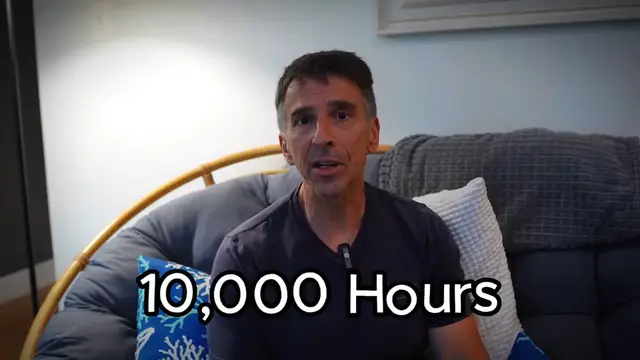
And I just realized that I have crossed that magic 10,000 hour threshold
0:09
So seven years ago, I started my new career in, I guess, 2017 as a health coach
0:15
And I began to really understand what this industry was all about
0:19
Now, when I got into it, I was really quite naive because my background had been in insurance and in finance
0:25
And I really didn't know what I was getting into. In fact, for the most part, I figured I was going to be counting calories for people
0:29
people and helping people lose weight. Well, that could not have been further from the truth
0:35
My experience over the last seven years and 10,000 plus hours has been remarkable. I've had the
0:41
opportunity to help people reverse diabetes, high blood pressure, high cholesterol. I work with people
0:47
who have been suffering from cancer, heart disease, Alzheimer's disease. So those 10,000 hours have
0:53
been invaluable because I think I can now advise you how you can avoid some of those pitfalls that
0:59
my clients experienced. So I learned 10 really valuable lessons and I want to share them with you and I hope
1:05
they'll be a benefit. So the first thing I learned was that doctors are unable or they don't cure
1:15
disease, at least not chronic disease. What they do is they give you pills to make you feel good
1:21
about the diseases that you have. So you don't experience the discomfort in the pain or whatever the
1:26
symptoms that would go along with that disease are. However, that disease will progress
1:32
Eventually, the pills and drugs that they are giving you will either have to be increased in
1:35
dosage or you'll reach a point where they're no longer effective. And I assume that at that point
1:41
the disease gets out of control and either drastic action is needed or that's just the end of
1:47
view. Something else I was really surprised at is that as a health coach and personal trainer
1:53
by changing people's diet and exercise program, I can actually help people reverse many of the same diseases
1:59
the doctors can't do anything about. Now, I only get paid a fraction of what a doctor gets paid
2:05
Doctors, I think, earn between $5,000 and $700,000 a year on average
2:09
and I don't make anywhere near that. But all the doctor can do for your diabetes is give you a pill
2:15
What I can do for your diabetes is I can reverse it completely. A doctor will give you statins for your cholesterol
2:21
I can help you get off the drugs and reverse your cholesterol problem altogether
2:25
Doctors can control your blood pressure. I can bring your blood pressure down quickly
2:30
Usually within 30 or 40 days, I can bring blood pressure down to something normal. Anyway, my point is lifestyle is really, really critical
2:38
And that kind of brings me to my second point. That is that food and exercise are medicine
2:48
So when you eating consider that every bite you putting in your mouth is having the same kind of impact as a drug And I mean that because it really does happen that way Now it may not be as powerful as a drug in that moment but over a long period of time
3:05
the effect of food on your body is very drug-like. Same thing goes for exercise
3:12
Exercise, although in an acute way, will not have drug-like effects, but it does have significant effects
3:18
but over a chronic, and over a long period of time, exercise can be a significant factor in your overall health and your immunity to lots of other illnesses
3:33
The third thing is that consequences are real. If you're young in your 20s and 30s, you probably have a hard time imagining what it's like to be 40, 50, 60, 70, 80, or 90
3:45
If you're lucky, you will have that opportunity. Unfortunately, what you're doing right now in your 20s and 30s
3:52
will influence the way your middle age and old age roll out
3:58
Take care of yourself every day and consider it an investment in your future
4:03
Every time you eat well, get a good night's sleep, exercise, you're buying time at the end of your life
4:10
and not just extra time, but extra healthy time. And that's really the critical factor
4:21
So clients ask me all the time, what's more important? Diet or exercise
4:26
And of course, I think they're both critically important. They're like a puzzle. You need all the pieces
4:31
And if you don't have all the pieces, you don't get the correct picture. But if push comes to shove and I had to pick one or the other, it would always be diet
4:39
And the reason is that you eat all the time every day
4:43
You're going to eat three, four, five times a day every day for the rest of your life
4:47
And you may exercise once or twice a day at most. So, yeah, diet is much more important
4:53
Your interaction with your environment is more intimate with diet than anything else that you come in contact with
5:01
Even if you're breathing in, say, cigarette smoke, say you live with a smoker, that will only increase your likelihood of developing lung cancer or cancer by about 15%
5:11
However, if you eat processed meat every day, it'll increase your likelihood of developing colon cancer by about 25 or 30%
5:19
So, yeah, eating is a much more significant impact on your health than even breathing in cigarette smoke
5:31
The fifth thing I want to bring up is common sense. So when you're considering diet and what kind of dietary choices you're going to make
5:38
and I know there are a lot of fad diets that come and go over time
5:43
Use common sense. Really what I talking about here are some of the diets that you see on social media And I talking about carnivore diet which is probably the worst example of a fad diet that for most people is a bad idea
5:58
And the ketogenic diet, which, again, for most people, is a bad idea
6:03
And I'm hedging there by saying most because inevitably there's going to be somebody with some rare condition
6:08
that makes it impossible for them to eat healthy food. And so they have to eat meat all the time
6:12
Or there's going to be somebody with some crazy neural. physiological disorder that has to eat saturated fat in order to make their brain work
6:20
But for the vast majority of people, you need to have a healthy diet
6:24
And that means eating fruits and vegetables and whole grains and beans and avoiding saturated fat
6:34
and processed meats as much as possible. Okay, so that's a good segue into number six
6:43
Your microbiome matters about. three quarters of the DNA in your body is bacterial. And it's very critical that we feed that
6:50
bacteria, the kinds of things that we want for it to be healthy. And that includes lots and
6:55
lots of fiber. If you're not getting 30 or 40 grams of fiber in your diet each day
7:00
you're making yourself vulnerable to a wide range of autoimmune disorders as well as inflammatory
7:06
disorders. And of course, inflammatory disorders lead to metabolic disorders. And those metabolic disorders
7:12
lead to diseases. So getting your microbiome right will play a significant role in your overall
7:18
immunity and your health. So eat lots of food with fiber. So number seven is sort of the opposite
7:28
of healthy bacteria, and that's oxidized cholesterol. Now you may be asking, what the hell are you
7:33
talking about oxidized cholesterol? I know about HDL, high density lipoproteins. I know about LDL, low density
7:39
lipoproteins. But what the hell is oxidized LDL? Well, oxidized LDL cholesterol is the
7:47
primary driver of inflammation in your body. And it leads to just about every kind of problem
7:53
you can imagine, beginning with cardiovascular disease. When oxidized cholesterol is in your
7:58
bloodstream, it attracts a lot of immune cells like macrophages and foam cells. And those are the
8:03
cells that get stuck underneath the endothelial layer of your arteries, which cause the blockages
8:08
which eventually lead to heart attacks and strokes. Oxidized cholesterol also drives Alzheimer's disease
8:14
It actually is a precursor to the protein that leads to amyloid
8:20
And amyloid is the plaque that builds up inside your brain that causes your neurons to die
8:24
and you lose your memories and it just gets worse from there. The oxidized LDL is the worst case scenario
8:31
And the only way to avoid oxidize the LDL is to avoid most animal proteins
8:36
The worst culprits are, of course, red meat and processed meat. But most people don realize this that chicken is very high in oxidized LDL So is tuna fish just fresh out of the can Whatever the processing they use there oxidized LDL very very high
8:56
Number eight, as long as we're on the topic of oxidized cholesterol
9:01
alcohol is a big driver of cholesterol oxidation in your bloodstream. So one of the reasons why alcohol has become very clearly a
9:10
villain in the metabolic health department where, say, 10 or 15 years ago, it was sort of a neutral
9:16
and maybe if you drank a little bit every once in a while, you just had red wine and the resveratrol and all
9:20
that bullshit. Well, it was all a lie for the most part. It was mostly sold by the alcohol industry and people who had a soft spot for alcohol
9:28
But the truth of the matter is alcohol causes a litany of problems inside your body
9:33
Lots of oxidation. It will increase the triglycerides in your bloodstream following a meal if you have
9:40
alcohol versus not having alcohol. So it drives a host of metabolic disorders. Avoiding alcohol as much as
9:47
you can is definitely something you should do. Number nine, walking is an extremely effective exercise
9:59
because it's something you can do for your whole life. Getting out for a walk, even for 20 or 30 minutes a
10:06
day will have miraculous benefits for your health and well-being well into the future
10:12
It's like I said, it's an investment in the future. In fact, I think I remember reading a study
10:16
that said every 20 minutes you spend walking, you get 60 minutes back at the end of your life
10:22
Now, they said that that wasn't linear. It didn't go on forever. Like you couldn't like walk for
10:26
six hours and expect to get 18 hours back. But for those first 20 or 30 minutes, it's a three to one
10:31
ratio. So definitely get out for a walk a couple times every day, at least 20 minutes
10:36
set a spell. And then the 10th thing is also exercise-related, and that has to do with resistance training
10:48
Resistance training is, in my opinion, and in the opinion of many people say at the American
10:53
College of Sports Medicine and other places, probably the single best form of exercise you can be
10:59
involved in. And the reason I say that is because not only are you building strength, which you actually
11:03
would expect, but you can set up your routine so that it, also helps your cardiovascular health. And it's the only form of exercise that I'm aware of that you
11:11
can progressively increase your strength and at the same time benefits your cardiovascular health
11:15
during the same workout. So that's what I got for you today. I hope you found it useful. That is 10,000
11:22
hours worth of experience all wrapped up into hopefully about a seven minute video. And thanks for watching
11:28
If you enjoyed this content and you want to hear more stuff like this, please subscribe
11:33
And please give me a like for the algorithm. And I'll see you in the next video. Thanks very much and have a good night