Up next in 10

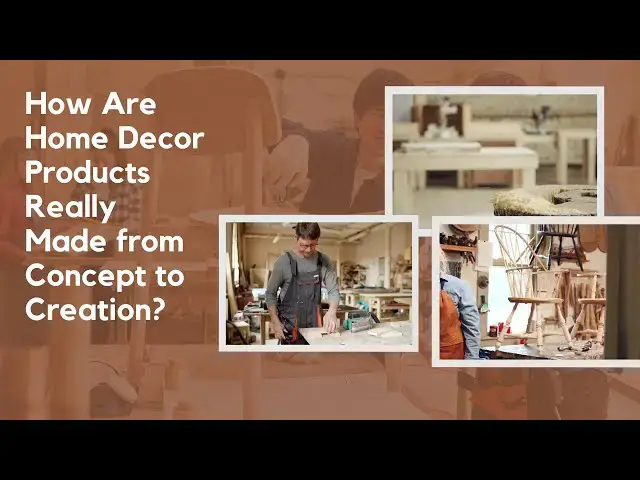
At Mondoro, we believe that every piece of home decor or furniture starts with a spark—an idea, a vision, a creative impulse. But turning that vision into a high-quality, finished product that fits the needs of your customers and meets industry standards is no small feat. It’s a process we walk through with our clients—step by step, from the first sketch to final production.
🎥 Watch to see how we create, develop, and manufacture home decor products with quality, transparency, and collaboration at the heart of it all.
Read more about The Home Decor Product Development Process: From Creating to Manufacturing 👉 https://mondoro.com/the-home-decor-product-development-process-from-creating-to-manufacturing/
#MondoroCompanyLimited #HomeDecorDesign #ProductDevelopment #InteriorDesign #FurnitureDesign #ManufacturingProcess #CreativeProcess #HomeStyle
To find out more great content about creating, developing and manufacturing home decor and home furniture products in Asia, check out our website at
https://mondoro.com/
Show More Show Less View Video Transcript
0:07
Hi, this is Anita from the Global Trade
0:09
Gal. Today I want to talk a little bit
0:11
about product development. And actually
0:14
being able to develop a product really
0:16
is a skill. It requires some very
0:19
specific skills to be able to get
0:21
something created or something produced
0:25
that can basically sell or something
0:27
that the client wants or the customer
0:29
wants. So today we're going to talk a
0:31
little bit about that. There's several
0:33
steps that we take to be able to do it.
0:35
In fact, we have, you know, five basic
0:37
steps. We're going to talk about
0:39
everything about those different steps.
0:41
The first step is what we call creating
0:44
concept and collaboration. You know,
0:46
basically creating is basically there's
0:48
an idea. Somebody has an idea. Maybe
0:51
it's a sketch, a mood board, a Pinterest
0:53
image, or you know, just a color
0:56
palette. Someone has this idea. They
0:58
say, "Here is what we're looking for.
1:00
Here is what we want to have produced."
1:03
You know, at Muro, we don't just accept
1:04
concepts, we collaborate on them. We
1:06
tend to work together a lot with our
1:08
customers because to be able to create
1:10
something especially over in Asia that
1:12
will work in manufacturing. We honestly
1:15
believe that it's very important to
1:17
start at the very beginning with the
1:19
design or with the concept and then to
1:22
be able to collaborate with that and to
1:25
work together with that and say this may
1:27
not work but this will work because
1:30
sometimes you know things that people
1:32
ask us to do they may look great on
1:35
paper but they may not work you know for
1:37
the cost or they may not work for the
1:39
actual production. So we'll look at
1:41
everything from the materials, the
1:43
shapes, the finish to the functionality.
1:45
You know, we don't just make
1:46
assumptions. We'll really, you know,
1:48
check it out. We'll talk to people and
1:49
say, "Look, can this be done? Can this
1:51
not be done? Or how could this be done?
1:54
Or how can we do this? How can we, you
1:56
know, provide, you know, this type of
1:58
product? And how can we essentially make
2:01
it work?" At this creating stage too, a
2:03
lot of times we like to provide things
2:05
like color chips, finishes,
2:08
swatches,
2:10
you know, other types of materials that
2:12
might be used because, you know, one of
2:14
the problems is is that what you might
2:16
think will be a color and what what we
2:18
might think might be different. So, we
2:20
want to make sure that we're all on the
2:22
same page when it comes to that. The
2:24
next step is the developing phase. So
2:26
now that you have the concept down,
2:28
everybody's on the same page, we've all
2:30
collaborated together would be
2:32
developing and let's make a sample,
2:33
let's do a prototype. Working together,
2:36
selecting the exact finishes, you know,
2:39
developing is about building a physical
2:41
version of the product itself because
2:44
there's lots of things that can happen
2:45
when you actually try to build the
2:47
physical version of the product. You
2:48
know, it could suddenly be that you
2:50
might decide, oh, we thought this looked
2:52
great on paper, but we might have to
2:54
change this, or we might have to do this
2:56
instead of this. You know, not
2:58
everything that you put on paper is
3:00
going to look great. Of course, the idea
3:01
is that you want to get as much down on
3:03
paper as you can so that you don't have
3:06
to end up having to throw away a sample
3:08
because the sample's not right. Because
3:10
the prototyping phrase can be quite
3:13
expensive, especially if molds are
3:14
required, you know, those can add up to
3:16
be quite expensive. the specific
3:18
materials and you need other things.
3:20
This of course can all you know cost
3:22
money and it can also take time too can
3:24
be time consuming to be able to get it
3:26
all done. You know we understand that
3:28
this stage can be expensive that you
3:30
know but if you start to cut corners and
3:32
start to say let's go right into
3:34
production there are going to be
3:35
problems here. So we highly recommend
3:37
that everybody get a sample, get a
3:39
prototype, get a confirmation sample,
3:42
pay for you to physically see that
3:44
sample and confirm that sample and then
3:47
do any type of changes you need on that
3:50
sample before production. The next step
3:52
is would be the sample review and
3:54
approval. So this is where you know you
3:56
will approve the sample. You'll look at
3:58
the sample. This is one of the most
4:00
critical and important steps in the
4:01
entire production process. This is where
4:04
we send the finished sample to you. You
4:06
review it. You have an opportunity to
4:08
inspect it. You can decide, is this
4:10
exactly what I want? Are there any
4:11
adjustments that need to be made here?
4:13
And if it's a significant adjustment,
4:16
you probably want to do a new sample to
4:18
make sure. In fact, if you're ch totally
4:20
changing a shape, totally changing a
4:22
color, starting over again, you may want
4:24
to make sure that you do a new sample on
4:26
this. If it's a minor one, you could
4:28
probably get away without having to do
4:30
new sample and go right into production.
4:33
The fourth step in all of this then
4:34
becomes once the sample's approved.
4:36
Everybody's on the same page. We all
4:38
have the same documentation becomes the
4:41
manufacturing process. This is where we
4:43
go into fullscale manufacturing that
4:45
this is where you know your vision
4:47
really comes to life. You know, this is
4:49
where you're actually going to see those
4:50
products come off of the production line
4:53
and to be able to be produced. And then
4:56
the last step in all of this becomes the
4:58
packaging and delivery. Because normally
5:00
a sample will not be packaged as it's
5:02
going to be packaged for the final
5:04
production. Why? Because a lot of times
5:07
the factory may not be able to purchase
5:09
just that one piece carton. They may not
5:12
have all the packing material needed
5:14
that they need. Instead they might need
5:16
to be able to buy some of the packing
5:18
material. There can be many different
5:20
reasons for this, but normally you know
5:22
the packaging will come out at the um
5:25
once the sample has been produced and
5:27
you know may maybe you know you did a
5:29
drop test on the sample and you found
5:31
that the packaging you originally
5:32
thought would work is not going to work.
5:34
So we have to improve the packing,
5:36
change the packing. So there can be lots
5:38
of things that can happen you know again
5:39
with this packaging phase that we have
5:41
here. You know you might ask well why
5:44
does this process work for product
5:45
development? And here's a couple reasons
5:48
why I feel like this process works. One
5:50
is we don't take shortcuts. You know, at
5:52
every phase, whether it's the create the
5:54
creative phase, we're trying to put as
5:56
much as we can down on paper, getting it
5:58
down on paper. Whether it's a sample
6:00
phase, we're saying like, let's get a
6:02
sample, you look at the sample, you
6:03
confirm the sample. We don't take
6:05
shortcuts on any one of the phases. We
6:08
make sure to have good communication.
6:10
Communication is the heart of this. It's
6:12
the heart of what we do. We want to make
6:15
sure that, you know, photos are taken,
6:17
things are documented, so there's
6:19
communication the entire way. We believe
6:21
in flexibility. If there's something
6:23
that needs to be customized or there's a
6:26
special feature, we will work to try to
6:27
make it happen. Like I said, something
6:30
that something which is on paper may not
6:32
look as good in person. And vice versa,
6:35
something that looks bad on paper may
6:36
look wonderful in person. That's why the
6:39
sample phase is so important. And
6:41
finally, I'd have to say at at Menuro,
6:43
we really believe in this whole process.
6:46
We believe in the the creating process.
6:48
We believe in the development process,
6:50
the manufacturing process in watching
6:52
things being created and to the shipping
6:55
until it reaches the hands of our
6:57
client. We really believe in this. So,
6:59
we hold ourselves to a high standard.
7:01
You know, quality isn't optional. We
7:03
understand that quality is very, very
7:07
important. that it doesn't matter
7:09
whether somebody gets a a great design,
7:11
if the quality is no good, then there is
7:14
a problem. So, we really believe that
7:17
quality is essentially and very
7:20
important to what we do. You know,
7:21
developing a home decor and home
7:23
furnishing product is a journey and it's
7:26
not always easy. It can take time and
7:28
not everyone can do it. Not every
7:30
factory wants to do it. Like there's a
7:32
lot of factories that just really don't
7:34
want to do it because they understand
7:36
how much time it takes, how difficult it
7:38
is. They understand that, you know, it's
7:41
expensive on both ends. I always say to
7:43
my customers, you know, we don't earn
7:45
money on development. We don't make
7:47
money on samples. You know, even if we
7:49
charge extra on samples, we do not make
7:51
money on samples. Nobody makes money on
7:54
samples. And even the first production
7:56
run, we make a little bit but not much
7:59
money. We really we really make our
8:01
money in previous production runs. Why?
8:04
Because
8:05
this and watching over this takes a lot
8:07
of time and there's something called
8:10
economies of scale which the more you
8:12
produce something the easier it becomes
8:15
and you don't reach those economy of
8:17
scale until you really have produced
8:19
something for quite a while. So you know
8:21
just developing samples and just
8:23
developing prototypes nobody makes money
8:26
on that. In fact we all lose money on
8:28
that. That's why it's very important
8:30
that anyone that's looking to do this
8:32
understands this process that you know
8:34
it's going to cost money to do a
8:36
prototype, you know, but at the same
8:38
time you have to do it right. You have
8:39
to put things down on paper. It has to
8:41
be documented. You can't just do samples
8:44
out of anything. You have to really make
8:46
sure that the sample is right. And once
8:49
the first sample's right, then you can
8:50
move to the other samples and get the
8:53
rest of them right if they're all
8:54
similar. If you'd like to be able to
8:56
read more about this, the home decor
8:58
product development process from
9:00
creating to manufacturing, we have a
9:02
blog post we've written on this. We will
9:04
put a link in our description for the
9:07
blog post. We hope that you will check
9:09
it out. If you've enjoyed this uh
9:11
podcast video, please give us a thumbs
9:13
up, subscribe. We'd love to have you be
9:15
part of our community. Thank you so
9:17
much.
Manufacturing
Home & Interior Decor
Home Furnishings