0:00
Imagine you're walking through the Scottish Highlands in early spring. The snow has finally
0:04
melted, the air smells like wet moss, and you're enjoying the first day in months when your fingers
0:09
aren't numb. And then you see it. An adder, coiled on a sun-warmed rock. Today, you'd probably back
0:15
away and let it live its little snake life. But a few centuries ago, people believed the first
0:19
adder of spring carried all of the leftover misfortune winter hadn't finished delivering
0:24
If you killed it, you'd secure good luck for the year. If you didn't, well, I hope you weren't
0:29
planning anything important. And that's just one of the many spring superstitions people took seriously
0:41
Hi, I'm Cara, and today we're diving into the wonderfully weird world
0:45
of spring superstitions. The rituals, omens, and seasonal traditions people used to rely on
0:52
long before allergy meds, weather apps, or the annual tradition of realizing you packed away your
0:57
winter coat too early. Spring was a test. If the crops failed, if your animals didn't return
1:03
your entire community could be in trouble. So people invented rituals to predict the future
1:08
protect themselves, and make sense of the world waking up again. Let's jump back in
1:13
We already met our unlucky snake friend, but here's the deeper story. In Celtic tradition
1:17
snakes were tied to liminal moments, the in-between spaces where the natural world shifts
1:23
Adders disappear underground during winter and re-emerge when the soil warms, making them one of the earliest signs of spring. But the superstition wasn't just symbolic
1:33
In rural Scotland, an adder bite could be dangerous, especially far from medical help
1:37
Killing the first one was partly a ritualized death of winter and partly a way to reduce risk
1:43
Medieval medical theory added another layer. Spring was the season when the body thawed
1:48
releasing excess humors. Snakes, which shed their skin, became metaphors for bodily renewal
1:54
or imbalance. So the first adder was a sign that the world, and the body, were shifting
1:59
And people wanted that shift to go well. Seeing lots of spiderwebs in spring meant good fortune
2:04
in autumn, and this belief appears across many countries. Part of this comes from a medieval
2:09
folktale A spider spun a web over the cave where a frightened Mary Joseph and baby Jesus hid from soldiers The web disguised the entrance saving them That story turned spiders into tiny eight protectors
2:23
But there was also observational science at work. Spiders often spin more webs in warm, stable weather
2:29
So more webs in spring often did correlate with a good growing season
2:34
And in pre-industrial homes, spiders were the ultimate original pest control. More spiders meant fewer insects eating your stored grain
2:42
So when people saw spiderwebs glistening in the spring sunlight, they were admiring nature
2:47
but they were also predicting the future. And despite the fact that spiders are one of the most common fears, they have long been
2:53
associated with good luck, prosperity, and creation. Pouring porridge into the sea sounds like a quirky seaside tradition, but it was tied
3:01
to real economic needs. Scottish coastal communities relied on seaweed for livestock feed, fertilizer, and even glassmaking
3:10
A good seaweed harvest could make or break a community. So people cooked a pot of porridge, a staple food, and offered it to the ocean as a sign
3:19
of respect. The idea was that it would draw an abundant seaweed harvest
3:23
This event typically happened in late spring and was often called Shore Thursday or Maundy Thursday
3:29
In a world where the ocean could give or take away, maintaining a good relationship with
3:33
the sea wasn't optional. A bowl of porridge was a small price to pay for abundance
3:39
In Scotland, hearing a cuckoo early in the morning was considered unlucky
3:43
To counter it, in some traditions, people hid bread under their pillows and ate it first
3:47
thing in the morning. The cuckoo's call was one of the earliest signs of spring, but the bird itself had a
3:53
complicated reputation. Cuckoos are brood parasites. They lay their eggs in other birds' nests
3:59
Medieval Europeans saw this as deceitful and maybe even immoral. So the cuckoo became a symbol of trickery and unpredictable change
4:07
Bread, on the other hand, was grounding, literally and spiritually. So if the cuckoo brought chaos, breakfast brought balance
4:16
Every spring in Zurich, a giant snowman called the Bug is stuffed with explosives and set
4:21
on fire. The faster his head explodes, the warmer summer will be. Allegedly
4:26
This tradition dates back to the 16th century when guilds held spring festivals marking the end of winter work restrictions Burning the Boog symbolized the destruction of winter a dramatic fiery farewell
4:38
to cold weather and shorter days. Over time, people started timing the explosion and looking
4:43
for patterns. A quick boom meant a warm summer, a slow one meant a chilly season. It wasn't
4:49
scientific, but it was communal, a shared moment of catharsis after months of cold
4:55
Marzana, the Slavic goddess of winter, death, and disease, was represented by a straw effigy
5:01
In Poland, villagers paraded her through the streets, then burned or drowned her, or both
5:07
And afterward, they were careful not to look back. Turning around was believed to bring her
5:12
misfortune home again. This ritual is ancient, older than Christianity in the region. Marzana
5:18
embodied everything dangerous about winter—famine, illness, and the threat of death—destroying her
5:24
symbolically cleared the way for spring's renewal. When Christianity spread, the ritual didn't
5:29
disappear. It simply shifted, surviving as a cultural memory of a world where winter was
5:35
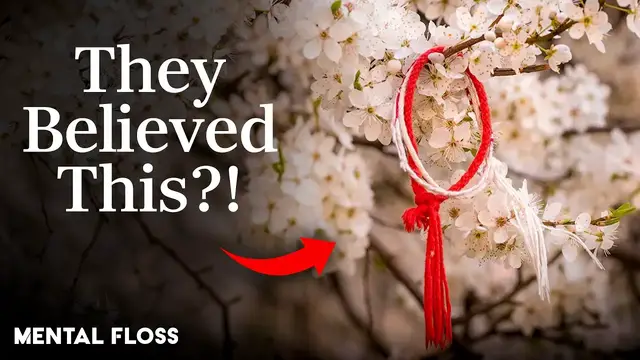
something to be defeated. On March 1st, Romanians celebrate Martisor, a holiday where people wear
5:41
red and white charms symbolizing life and rebirth. Later, they tie the charms to blossoming trees to
5:47
bring good luck. The tradition blends Roman spring festivals, ancient Dacian protective amulets
5:53
and Slavic seasonal rituals. Red symbolizes vitality, white symbolizes purity. Together, they represent the balance of winter and spring. Tying the charm to a tree was believed to transfer
6:04
good fortune to the land, a symbolic way of helping the Earth wake up. Spring holidays like
6:10
May Day or Belton were believed to thin the boundary between worlds, making fairies especially
6:16
active. But these weren't the tiny, winged creatures of Victorian art. Celtic fairies were
6:21
powerful, unpredictable creatures who could wreak havoc on humans' lives when displeased
6:27
People protected themselves by leaving primroses on their doorsteps, believed to attract fairies
6:32
who would bless the home. The catch, though, was that you couldn't let the flowers die. If you did
6:37
you would provoke the fairy's ire. Hawthorn trees were believed to be portals to the fairy realm
6:42
and you could ask them for blessings But you did need to avoid them after dark Unless you you wanted to encounter a fairy playing dreamy music and waiting to lure you to the other world Should I do that This
6:53
perhaps goes without saying, but you also weren't supposed to destroy a fairy ring. Traditions
6:58
surrounding fairies were prevalent year-round, but became more significant in the spring
7:03
because that's when fairies were more likely to enter the human world
7:07
Daffodils were seen as omens of spring, but with mixed meanings. They could symbolize both luck
7:13
and misfortune. Which makes sense when you consider that daffodils are toxic to eat
7:18
but they are also one of the first flowers to emerge after winter, leading to their association
7:23
with rebirth and hope. In some European traditions, finding the year's first daffodil
7:28
meant that your year would be filled with good luck. But if you gave someone a single daffodil
7:33
it was considered unlucky. A Chinese legend says that eggs can balance upright on the spring
7:38
equinox because of cosmic harmony. The equinox represents a balance between yin and yang. And
7:44
eggs, symbols of life, were used in seasonal rituals. The superstition spread globally in
7:49
the 20th century, thanks to newspapers and TV segments that turned it into a science challenge
7:55
In reality, eggs can balance any day of the year. But the symbolism stuck. It's a rare
7:59
superstition that grew because of modern media and not ancient folklore. Before meteorologists
8:05
people watched animals. Frogs croaked louder before rain. Birds flew lower when air pressure
8:11
dropped. Groundhogs, or their European equivalents, emerged from their burrows to mark seasonal change
8:17
Interestingly, frogs do sometimes croak louder when it's about to rain. They lay their eggs in
8:21
bodies of water, and male frogs start, loudly, looking for a mate just before a downpour
8:27
Some observations of animals and the weather were surprisingly accurate. Others were more
8:32
symbolic than scientific. But all of them reflect a world where nature was the primary source of
8:37
information. And where paying attention could mean the difference between a good harvest
8:42
and a bad one. Spring has always been a season of hope. And also uncertainty. And when you're
8:47
living in a world without forecasts, calendars, or antihistamines, superstitions became a way to
8:53
feel like you had a little control over the chaos. Comment below which superstition surprised you the
8:58
most? And which would you actually try? Thanks for watching Mental Floss, and we'll see