Up next in 10



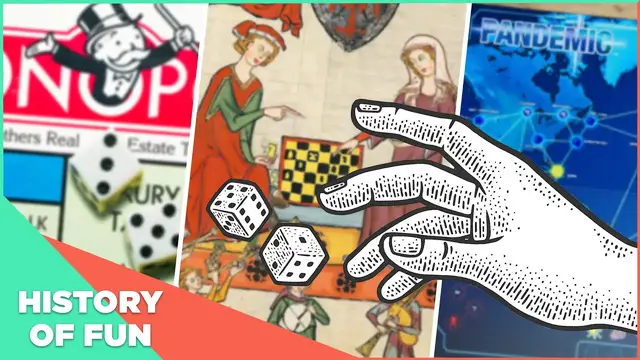
The history of board games covers thousands of years of history and speaks to some big questions: What happens in our brains when we play board games? What is fun? And (slightly less profound, but potentially of interest to intellectual property lawyers) who's really responsible for Monopoly? Board game game history touches on culture and technology, psychology and politics. Why are cooperative games like Pandemic, Gloomhaven, Arkham Horror, and Hanabi so popular? Is it fun for everyone to lose? Welcome to the History of Fun, a new series about the history and science of humans' favorite ways to have a good time. In this episode of The History of Fun, Justin (@juddtoday) explores the interesting history of board games, specifically cooperative games, with board game designer Matt Leacock, who is responsible for the Pandemic game series, Forbidden Island, and so much more. Make sure to subscribe to stay up to date on new episodes of this show. And leave a comment letting us know what topics you'd like to see covered next! Special thanks to Matt Leacock! If you'd like to check out his work (including his new game Daybreak), check out his website here: https://www.leacock.com/ Music in this episode by: Kevin Macleod Drawings by: Nick Cox Don't miss a video! Subscribe NOW: https://www.youtube.com/@MentalFloss?sub_confirmation=1 About Mental Floss: Mental Floss is where curious people come for trivia-tastic information. Mental Floss produces lists of fun facts, debunks common misconceptions, and tells untold stories from history, science, culture and more. Website: http://www.mentalfloss.com Twitter: http://www.twitter.com/mental_floss Facebook: https://facebook.com/mentalflossmagazine Copyright Notice: This video and YouTube channel contain dialog, music, and images that are property of Mental Floss. You are authorized to share the video link and channel, and embed this video in your website or others as long as a link back to this YouTube Channel is provided. 2025 Mental Floss History of Fun: Cooperative Board Games | Mental Floss https://www.youtube.com/@MentalFloss
Show More Show Less View Video Transcript
0:00
In 1903, a woman named Elizabeth Maggie filed a patent for what she called the Landlord's Game
0:06
Featured a square board full of properties that players could purchase. If you were unfortunate enough to land on someone else's property, you'd have to pay them a hefty rent
0:14
Oh, and there were also taxes to be paid and some railroads throughout the board. Sound familiar
0:19
Maggie's creation is usually framed in relation to a similar board game that had shelves a few decades later
0:25
but that's a discussion for another time. Why The Landlord's Game stands out, at least to me, is that it featured a pretty groundbreaking feature
0:32
If players didn't want to compete for capitalist wealth, they had the option to play with the
0:36
single tax rules, later known as prosperity. In this game mode, players would work together to make sure even the player with the lowest
0:43
wealth still was able to prosper. The Landlord's Game was, in many historians' opinion, the first commercial cooperative
0:50
board game. There were no individual winners or losers. Players worked together, as a team
0:56
120 years later, the world of board games has changed dramatically, moving far beyond the
1:00
thrill of inhabiting the rich inner world of a thimble. It's developing a prosperous
1:05
island nation, strategically mapping out railways at the turn of the century. It's… whatever
1:10
the hell's going on in Twilight Imperium. In this brave new world of gaming, cooperative board games have become staples of the tabletop
1:17
community. From Arkham Horror to Gloomhaven to Pandemic, game designers have taken the
1:22
idea of working together to the next level. It's easy to understand the appeal of a group of friends
1:27
triumphing together, but some of my favorite memories of cooperative gaming involve failing
1:33
spectacularly. What is it about losing together that's still fun? What does that tell us about
1:39
game design, community, and our own weird little brains? Hi, I'm Justin Dodd and this is the
1:46
History of Fun, an exploration of the origins of humans having a pretty good time. Today
1:51
we're looking at board games, specifically cooperative games. Games where players either
1:57
all win or all lose. The only opponent is the game itself. I'll be trying to figure out
2:02
with a little help from my buddy Matt Leacock, creator of the Pandemic Game series
2:07
exactly why it is that losing together can be just as fun as winning alone. Let's get started
2:13
Let's talk a bit about board games. Now, just so you know, I'm a big board game nerd
2:23
My closet is full of dozens of games. I have multiple dedicated board game nights a month
2:28
I even taught board game rules professionally for a while. And yeah, that is a real job, Mom
2:35
Suffice it to say, I have a deep fascination with humans sitting around a table playing
2:40
I've also dealt with depression my entire adult life, and I know two things are true
2:45
One, something as trivial as a standing game night isn't a substitute for therapy
2:50
And two, those game nights don't feel trivial to me. In fact, those nights spent with people I love laughing and doing something that objectively does not matter
2:59
sometimes feel like the things that matter the most. Maybe asking why the things we love are worth loving is looking a gift horse in the mouth
3:07
which, by the way, is a weird phrase I just learned and now I want to be using it daily
3:11
But I wonder if there isn't something to gain from taking fun seriously
3:15
treating it not just like a distraction, but a meaningful part of being a human on this weird planet
3:21
And fun, especially fun involving a tabletop game, has been a part of human history since, well, seemingly the beginning
3:29
To recap as briefly as possible, dice have been discovered all over the world dating back at least 5,000 years
3:34
Wow! Some dice found from ancient Greece were made from sheep or goat knuckle bones. Neat
3:39
And gross. Ancient Egypt got in on the fun with a game called Senet. It's a game that was even
3:43
referred to in the Book of the Dead. Spooky! The royal game of Ur goes back to release 2650 BCE
3:48
and is thought to be the oldest still-played board game in existence. In the 90s, anthropologists
3:52
found that a small number of people from India recalled playing a very similar game. That's
3:56
basically one idea that led to thousands of years of fun. Backgammon's ancestors have been
3:59
entertaining grandparents since at least 2000 BCE. A version called Ludus Duodefum Scriptorum
4:04
was played during the time of the Roman Empire. The game stayed popular basically forever and had
4:08
a resurgence in the 1960s thanks in part to a dude named Prince Alexis Obolensky, who was known
4:12
as the father of modern backgammon. Thanks, Dat! A viking game called Toffel traveled across the
4:16
world along with the sea travelers, who did not wear horned helmets, by the way. You might notice
4:20
this Toffel board kind of looks like a funky version of chess, and they are kind of related. But by about the year 1000, chess had spread throughout Europe and has been regarded as the
4:26
the best game of all time by pretentious intellectuals and AI programs ever since. I do not like chess, but I do respect it. Please don't get mad at me
4:33
A few centuries later, Parker Brothers was founded. They've released over 1,800 games, including Clue, Sorry, Risk, Trivial Pursuit, and, of course, Monopoly
4:40
Sorry, Elizabeth Maggie. The Spiel des Jahres, which is basically the Oscars of board games, began in 1979
4:46
The games that have won Game of the Year have all gone on to gain massive commercial success. Hooray
4:50
Now, board games are a multi-billion-dollar industry with thousands of titles to choose from, and everyone lived happily ever after
4:55
But where do co-op games fall into this timeline? Obviously, we have hints of it back at the
5:01
turn of the century with The Landlord's Game, but after that, it took a while for the idea
5:05
to really catch on. In the 1970s a few family games were released that had a unique collaborative element to them like a game called Choices pretty on the nose there which is described as a values moral dilemma game of discussion and evaluation
5:20
Fun. In the 80s and 90s, though, we finally saw some games that look and feel like modern
5:25
cooperative board games. Arkham Horror, a game set in the Lovecraftian universe, was released in 1987
5:32
Players took on unique characters and worked together to protect the world from interdimensional
5:36
beings. It's so good. In 2000, the Lord of the Rings board game was released, which many future
5:43
game designers would directly cite as their influence. After that, the genre really blew up
5:49
with entries ranging from fantasy to sci-fi mystery to action-adventure. I know to some of you
5:54
many modern board games are overwhelming and, well, downright intimidating. Rule manuals that
6:00
are longer than some calculus textbooks, hundreds of tiny game pieces to keep track of, and elaborate
6:05
stories that are hard to understand, let alone take part in. And this is a fair concern. I have
6:12
learned to, and this is a phrase I just made up, read the room when I'm having a game night. If
6:17
people are not looking to spend four hours battling Cthulhu, I probably won't suggest my personal
6:22
favorite game, Eldritch Horror, and maybe I'll throw out a more casual game of collaboration
6:27
instead. Let's use Hanabi as an example. In this card game, players are trying to collectively
6:32
play a game of solitaire, essentially. The only problem is you can't look at your own cards
6:37
so you have to discreetly clue your teammates into what cards they have and when they should play them
6:43
It's fun, it's simple, yet still falls under the cooperative game category
6:47
simply by giving every player the same goal. That's what makes a game collaborative
6:52
and that's the real fun of it. I mean, at least in theory. You know what? Maybe we should ask someone who's actually made one
6:59
I'm Matt Leacock. I'm a board game designer, and I'm best known for the Pandemic board game
7:04
Matt is being humble. He's designed several of the most popular and influential games of the last 20 years
7:10
Pandemic, including its sequels and expansions, and not even to mention the Pandemic Legacy series
7:16
which is highly regarded amongst the tabletop community, is probably his most well-known work
7:21
but he also designed Forbidden Island and Forbidden Desert, two very popular cooperative games
7:27
And he's working on a new cooperative game right now called Daybreak, which is about the collective effort to fight climate change. This guy
7:34
he's the real deal. How long have you been designing games? Recreationally, I've been
7:39
designing games since I was a little kid. I've got early sketches from when I was, I don't know
7:44
eight years old or something like that. But then I started as a hobby in high school, and I like
7:51
self-published my first game in 2000. And then the first one that I actually got published was
7:55
pandemic and that was in 2008. You are probably you know most well known for making cooperative
8:00
games. What is the process of making a cooperative game versus making like a competitive game? I find
8:07
it easier than competitive games because I can basically I'm trying to come up with a cardboard
8:13
opponent you know something that the players all have to fight against and I can be the proxy for
8:18
the player pretty easily where if you think of like trying to play test a competitive game like
8:22
chess you have to like take on the role of opponent a and opponent b whereas in a cooperative
8:27
game i just have to kind of like i guess the challenge there is trying to figure out how to
8:31
generate an interesting opponent using only a deck of cards but that's that's the part i really enjoy
8:37
what do you think makes somebody enjoy a cooperative game maybe more than you know
8:41
one where there's only one winner well first of all i think there's a lot in common between the two
8:45
i mean you're you're trying to work out um a solution against an adversary whether it's
8:50
another person or, like I said, a carpet opponent. They have that in common
8:55
I think with co-op games, you get a little bit more camaraderie. You all get to kind of work together to overcome something
9:01
And that may unlock a lot more different kinds of fun, where you get a lot of collaborative problem-solving
9:08
creativity happening, social bonding. You get to exercise lots of communication skills
9:14
Things that you wouldn't necessarily get if you're... Like, I'll use the chess example again
9:18
where you're just staring at the board, and you're absolutely silent. And then you make a move
9:22
And then it's another person's turn. You know, it has a very different feel and I think unlocks different pleasure centers
9:29
in other people's brains. Matt brings up an interesting function of cooperative games
9:37
They force you to practice some pretty important human skills. And this type of social collaboration has many benefits
9:44
One study involving subjects playing Pictionary together showed statistically significant similarities in brain activity and collaborating
9:52
and that that similar brain activity often correlates with increased effectiveness at a task
9:59
You're simply better when you're working together. An article by Larry Chow, managing director of an international leadership consulting firm
10:05
discussed the role that oxytocin plays in collaboration. Though oxytocin is often referred to as the love hormone
10:13
that is a bit of an oversimplification. Its exact role is still being debated among scientists but it often thought to facilitate human interactions Chow offered eight leadership behaviors that can increase oxytocin and therefore better cohesion in a team And let me tell you all
10:30
eight of them map perfectly onto a cooperative board game, defining roles, sharing information
10:36
building relationships. I mean, come on! We're describing Spirit Island right now
10:41
The idea of gameplay honing our communication skills and educating us goes back to some of the
10:47
first commercial cooperative games, which were often explicitly designed as learning tools for children
10:52
The Landlord's Game was designed by Elizabeth Maggi to teach players about Georgism, aka
10:57
the economic ideology that land should be taxed. Community from the early 70s is advertised as a means to provoke discussion of important
11:05
questions such as, are we our brother and sister's keeper? Community gets a little preachy for me, but it is considered one of the very first cooperative
11:13
games of the modern era. Heck, the company who designed community family pastimes even claims the trademark for the phrase cooperative game
11:21
This practice of treating co-op games as educational tools is still prevalent today
11:27
In Pandemic, you work as part of a team to combat four dangerous diseases
11:30
Each person fills a different role as you try to cure the diseases before time runs out
11:35
Matt told me about a case in which Pandemic is being used for something other than a Saturday game night
11:40
There's a medical school in the UK that was using it to teach doctors and surgical teams how to actually work together more effectively
11:46
They actually had people at the clipboard rating how they work together
11:50
They play the game and then they would give feedback and they play again with that feedback to see if they can improve
11:56
So it can be interesting for that as well. OK, so co-op games are effective ways to practice important social skills
12:03
Great. But that doesn't necessarily sound like the most fun. So why are they so popular? What is fun about playing a game with your friends
12:12
especially one where everyone might lose? A 2006 study by game scholars Jose P. Zagal
12:18
Yoak and Rick, and Idris Shee sought to identify just that. Collaborative Games' lessons learned
12:24
from board games, published in the journal Simulation and Gaming, looked at a number of
12:28
collaborative games, primarily the Lord of the Rings board game I mentioned earlier. One of the
12:32
key features of effective collaborative game design the authors identified is the tension
12:37
between what they called perceived individual utility and team utility. Basically, players
12:42
should be unsure on some level of whether to act selfishly or for the greater good of the team
12:48
Some games do this by giving individuals unique and secret personal goals. That tension isn't
12:54
worked into every single collaborative game, but given Tolkien's book, it certainly made sense for
12:58
Lord of the Rings games. The authors also honed in on the importance of the game's difficulty
13:03
quoting Lord of the Rings designer Ryan Ernizia, And unlike competitive games, difficulty and variability aren't provided by an ever-changing
13:19
slate of opponents. Since you're always playing against the game itself, it's incumbent on
13:24
creators to work mutability into the game design. At the start of a game of Pandemic, for example
13:29
players can simply add more or less of a certain class of card to make things novel
13:34
and ratchet the difficulty up or down. Matt has some pretty well-defined thoughts on the subject
13:39
of game difficulty. Well, I think it all comes down to the challenge. I really don't like it when
13:44
the players win the first time because then the implication is like, oh, okay, we solved that
13:50
we can put it on the shelf. If the players do lose, I want them to feel like, oh, okay, I see
13:55
what we could do better next time, and a win is within reach. And if only we had done that
14:01
clearly next time we'll try that. And it's sort of like being able to reach for that next rung
14:08
on the ladder for the players to pull themselves closer to victory. Challenge, variation, decision
14:13
making, individualism. Okay, sounds like that study's takeaways are legit. Thanks, Matt
14:18
It was my pleasure. There's that word again, pleasure. When I get together with my friends, we might very well be climbing rungs of a collaborative
14:26
ladder, but why is that actually enjoyable? What is fun at its most basic level
14:33
Do you know what your earliest memory of fun was? Plumbing the depths of my childhood then
14:40
I mean, I have big flashbulb memories of like running around when I was maybe four
14:48
finding little candies in piles of wood chips. I feel like I'm in a psychoyst's office
14:59
I'm sure a therapist would have a field day trying to... The Butterscotch is represented
15:04
I guess also another question is just like, what does fun look like to you
15:08
For me, a lot of it is like an aha or the formulation of a clever plan
15:12
or seeing the way through a difficult problem. So that's why I'm attracted, I think
15:17
a lot to these cooperative games because they generate these problems that you can solve
15:22
But I also really enjoy coming up with creative solutions and experimentation
15:28
I think that also why I enjoy designing games because I design the game and I put it in front of players and see does this work So I tend to like games that also model that sort of creativity experimentation feedback loop
15:45
And that aha kind of fun Matt describes is not unique to him. Research has shown that
15:50
solving puzzles and figuring out patterns is a pretty satisfying experience for our
15:55
brains. I mean, they'd literally get dopamine rushes from having that metaphorical lightbulb
16:01
go off. One study from the Maduni Vienna Center for Medical Physics and Biomedical Engineering
16:06
put it like this. Apart from activation of areas of alertness, language, processing, and memory, our research
16:13
results showed sudden and significantly greater activation of the nucleus accumbens when the
16:18
solving of a puzzle is accompanied by an aha moment, and hence a moment of intense joy
16:24
and relief. I mean, that's just science, baby. Oh, and a dinosaur, for some reason
16:33
And luckily, we have so many cool options to achieve this kind of fun, to unlock those
16:38
aha moments. Many have said that we're living through the modern golden age of board games thanks
16:43
to the absolute boom in the multi-billion dollar board game industry. Even resources like Kickstarter have allowed independent creators to distribute their games
16:51
lowering the barriers to entry for aspiring designers. I mean, Cards Against Humanity was a Kickstarter game, and it is, unfortunately, one of the
17:00
most popular party games of all time. As was Gloomhaven, a cooperative game that is currently
17:05
ranked number one game on BoardGameGeek.com, which is essentially the IMDB of board games
17:11
That's right, the current best game of all time is a cooperative game. Players now have hundreds
17:17
even thousands of choices of games to play, and it's becoming easier than ever to find a game that
17:21
everyone will love and can engage in. Games that can tickle the satisfying neurons in your brain
17:26
and help you achieve that perfect flow state. But when I think about what makes cooperative play so special
17:32
my mind is drawn to a pandemic that Matt Leacock did not design
17:37
In 2020, the fun, easy world of board gaming with your friends got a lot harder
17:42
Suddenly, we couldn't spend time with people in our community, especially not just to sit around a table and throw dice and flip some cards
17:49
Many people, like Matt and myself, suddenly weren't able to meet up with our friends to play a game
17:54
like we've done basically every week for decades. It is hardly the biggest tragedy of the last few years
18:01
but this alienation and time away from one of our favorite hobbies really made me think about the parts of playing board games
18:07
that matter the most to me. Is it winning? Is it mastering a challenging skill
18:13
Is it collaboration? Boy, when we got back together in person, it was just such a nice thing
18:18
It's amazing. And it also kind of showcases that these board games
18:22
are really excuses to get across the table of people in many cases. You can't just necessarily swap in a video game for it. It's not a direct
18:29
replacement because the board game kind of sets the context for all these nice in-person social
18:34
interactions. On some level, board games are really just the reason to sit around a table with your
18:39
friends. But even if the activity is just the bonus, we're not choosing that activity arbitrarily
18:45
We choose to play a game that makes us feel something, even if that results in losing together
18:50
In fact, losing is fun. A group of researchers published a study in 2014 called Enjoying the Possibility of Defeat
18:58
which showed that people actually prefer really close games to easily won ones
19:02
To be excited about the challenge and to test your own limits is exciting, even if you lose
19:08
It's a lot more exciting than easily winning a game of 101 basketball against a six-year-old
19:13
and to test your own limits along with your friends is even better. But losing can also be hard
19:19
It can affect your feeling of status, which is apparently a very important thing to human beings
19:24
as David Rock talks about in his newest book, Your Brain at Work. If our status is elevated from something like a promotion, increased social popularity, or a competitive win
19:34
our brains show higher levels of dopamine and serotonin and lower levels of cortisol, the stress hormone
19:40
But losing can dramatically affect this. Heck, it's even been shown that winners—Novell Prize winners, Academy Award winners, etc.—live longer than their losing counterparts
19:49
But when you're playing on a team, and there really is no opponent besides some pieces of cardboard on the other end of the table, the negative stakes kind of dissipate
19:58
It's no longer about proving your worth or your status. It's simply about trying to solve a problem collaboratively with your friends
20:05
It seems in some ways that cooperative games create a kind of perfect middle ground for fun
20:09
Players can really strive for something, push their limits, all while sitting on the edge
20:13
of their seats, but in a venue that is perhaps less caught up in status and more focused
20:18
on enjoying the journey. Win or lose. Thanks for watching this first episode of History of Fun
20:24
We're really excited to explore all the different ways humans have entertained themselves since
20:28
the dawn of time. If you have any topics you'd like for us to check out in a future episode, leave them
20:33
below in the comments. And I'd love to hear about your favorite game to lose
20:37
whether it's an impossible Final Fantasy boss or a board game that I personally really need to check out
20:43
Until next time, don't forget to roll for initiative and watch out for Cthulhu lurking in the water
20:48
See you soon
education