Up next in 10



Agentic AI is changing how tomorrow’s devices are built.
Show More Show Less View Video Transcript
0:00
Ladies and gentlemen, Chris Ben and CEO of Pocom, Cristiano Armand
0:08
So about two years ago, we talked about how AI will change the human computer interface
0:16
and as a consequence will change the architecture of all of our personal computing devices
0:23
And that is starting to become a reality in 2026. I'm going to give you some examples, I think, what you see today on the screen
0:31
At home, you're going to have agents that are going to basically update everyone on your activity and your schedule
0:38
All of the things that you need to do at work will be with you and think about what are the projects that you need to do
0:46
what are the tasks that you need to do. It flags the decision, and it's going to be working with you
0:51
And in your personal life, we'll give you information that is relevant to you, all of the updates that you need, work with you on a schedule
1:01
Everything's going to be prioritized, and it's going to be a little different. It's going to feel more autonomous
1:06
It's going to feel more personal. And it's going to feel like really a companion
1:11
The phone is at the center of a digital life, and therefore, everything is around the phone
1:16
It's how we interact with the phone, with the OS and the applications
1:20
even the other wearable devices, they are around this phone ecosystem. But now this is different
1:30
Those agents become the center of your digital experience. So including the phone and the other devices
1:39
they now are around the agent. It's not about an extension of the phone
1:43
And the digital ecosystem is no longer at the phone itself and the OSs and the applications
1:50
And what happened, those devices become endpoints for agents. And that's a very important change
1:58
Once you understand that change, you understand how the whole mobile industry
2:03
is going to change. The things that we take for granted today
2:09
are going to be different tomorrow. I'm gonna remind you of what are the scale of those devices
2:15
There are about six billion phones today, 2 billion personal AI devices
2:20
which is the evolution of wearables. And that is actually a small number
2:25
When you think about those things as an end point of agents
2:29
2 billion PCs, half a billion connected cars. And people will experience and interact
2:37
with those agents on these devices. So once you understand the scale
2:43
One important message that I want to deliver to you is that today's device
2:49
were not designed for those experiences Here not It will require a different kind of device when agentic AI becomes the number one AI function
3:03
in our daily lives, especially for personal computing as we interact with those devices
3:10
You need to be able to tight integrate across all the compute domains
3:16
you have strict power and latency constraint. I cannot emphasize enough the importance of power
3:24
Think about your phone. If it is challenging to make your phone last all day
3:30
with you operating it, what happens when you and the agent is operating it
3:35
That's an incredible engineering challenge from power and latency. You need to have sensor data
3:42
Context is super important. Without context, you cannot have the agent to be useful
3:49
and for you to be useful and be proactive. All of those things are gonna be necessary
3:57
as we think the next generation of devices for the agent AI and an upgrade is truly coming
4:04
So you have to come up with solutions that allow you to get all the computing power
4:09
that you need with the available energy because the battery has to last a day
4:15
and is limited in its size. And that in itself is the Qualcomm advantage
4:23
Because we have been working with all of those devices at the edge, all of it
4:31
And especially the new Qualcomm that has incredibly diversified. We now have ability to build systems
4:39
There's sub to milliwatts from an earbud with micropower Wi-Fi that connect to an agent
4:47
for personal AI audio device, all the way to kilowatts, what's gonna happen in the data center
4:55
And I think that is the incredible opportunity that we see for us and for our partners
5:02
when all of those devices are going to change for this future of a genetic AI
5:09
And for that, you need dedicated computing solution that scale all the way down to a sub milliwatt device
5:20
to a 2,000 kilowatt. So I want to start with the devices that really power by Snapdragon platforms
5:26
You will see agents now being deployed and starting to get scale across phones, PC
5:33
and this new category of personal AI devices. the agent isn't tied to the device
5:39
It actually moves with the user and is there with the user regardless of the device that you have So that is one way for you to start to understand this change when the center of the ecosystem especially mobile is no longer the smartphone
5:55
It's about the agent and the agent's going to be across all those devices
6:00
But it's not just unique to personal computing. The physical world is one of the most exciting
6:06
areas in our industry right now. When you think about the car, there will be two layers of
6:11
intelligence so in the cockpit AI will personalize your experience and that is
6:18
the same thing that we just talked about it the the agent is your agent
6:23
regardless of the device it doesn't matter if you're gonna be on the car on
6:27
a personal AI device on a phone on your PC because the agent is at the center
6:31
all the devices around it including the car but also the car has other tasks
6:37
besides interacting with you, is interacting with you within the context of the car
6:43
And on the road, you also have physical AI that is perceiving, it is planning
6:49
it is acting using cameras, radar, sensors, and maps for your navigation
6:55
The entire robotics industry right now has been transformed. And robotics is very interesting
7:01
because it pushes the limit of computing technology and incorporate aspects of what I show you to you
7:08
Incorporate many aspects in technology of what we see in personal computing
7:14
for sensing, perception, high integration of sensors. The robot, like your glasses, will see what you see
7:23
read what you read, understand the context. At the same time, you have all of those elements
7:29
of technology that comes from the automotive industry. You need precision, you need industrial grade
7:37
you need safety, you need redundancy. And to succeed in robotics, you need to understand how to design this
7:46
as a hierarchical compute system. What we're building is a comprehensive platform
7:51
across different form factors, from AMR, industrial arms, four-legged robots, humanoids, drones, and I actually think
7:58
industrial opportunity is happening right now. You have to build hardware, You have to build software, you have to build an AI operations, ability to do fleet and data management, and everything that our partners will need to go from prototype to production
8:14
When you think about, for example, the computer vision, you can see, I think, the role of AI and agentic AI changing everything
8:24
Computer vision can run locally on devices. They can run on the cloud
8:28
They dynamically can access more powerful models on-prem or on the cloud when needed
8:35
They be able to see understand decide take action turning perception into real intelligence now you have seen agentic ai transforming personal and computing and those new classes of personal devices you see
8:55
cars robots industrial but there's another layer coming to all of this that will change the
9:03
equation and I'm personally very excited about this is the next generation of
9:09
wireless and I am going to explain to you today why this is actually very
9:14
relevant to the conversation we just had. A Mobile Congress would describe 6G as
9:20
the first generation of wireless designed for the age of AI and 6G has
9:25
three pillars. Its connectivity, its distributed computing, and its sensing. So this is an exciting future for everything that is happening on the edge, because AI is the new form of computing, and it's going to be how computers are going to run everywhere
9:46
So now I'm going to get to the last part of my presentation. It's estimated that the global token demand within 10 seconds is about 31.7 billion tokens
9:57
so the projection uh for 2030 for the same 10 seconds is 1.27 trillion tokens it's a 40x
10:10
increase and that's because agents are going to generate a lot of tokens so if you think about
10:18
the latest estimate and i'm sure that's going to change but the latest estimate for total token
10:25
demand globally in 2030 is in the quintillions. I don't even know how to say the number
10:30
I'll say it's a four gazillion tokens, the token demand for 2030
10:37
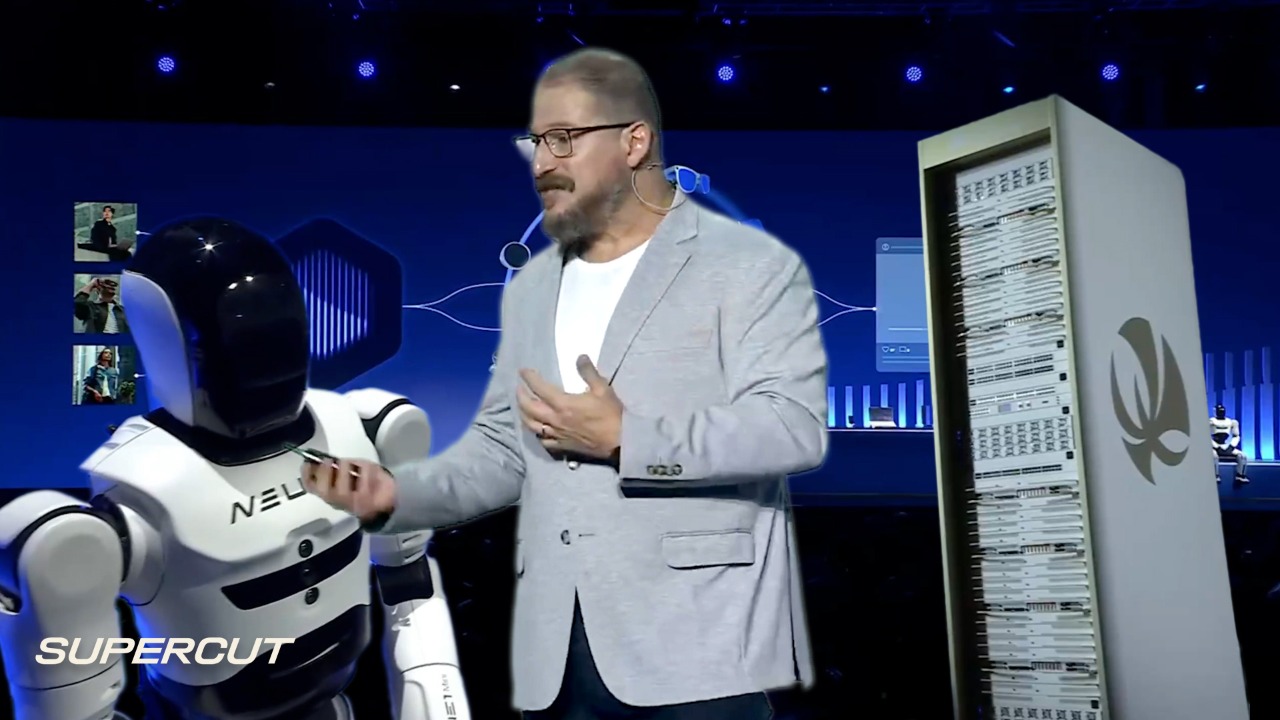
So today at Computex, we're announcing the new product brand for Qualcomm data center products
10:46
We're already working with hyperscalers and global partners on real world deployments
10:50
We're incredibly excited with this new chapter of the Qualcomm diversification. And now with Dragonfly, our portfolio spans every single tier
11:02
of the compute continuum. We're incredibly excited about the future of technology
11:09
Across every single device, this is gonna get transformed. We show the agents are not coming into the future
11:19
They are already here. It's changing a lot of the compute. is gonna generate a lot of demand
11:25
for new classes of devices and computing, and this upgrade cycle can be one of the largest
11:32
that the industry has sent. And together we're building the products and the technology that will define this new era
Celebrities & Entertainment News