Up next in 10

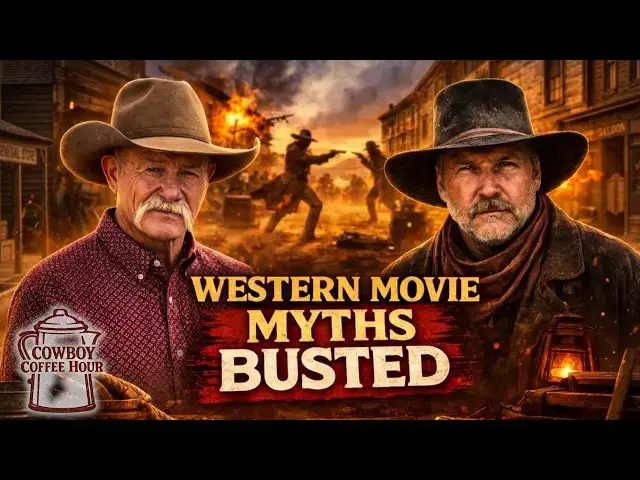
The Real Old West Was Nothing Like the Movies (ft @ArizonaGhostriders) - Cowboy Coffee Hour Podcast
Mar 15, 2026

Cowboy Coffee Hour Podcast!
Were cowboys REALLY like what Hollywood showed us? We're debunking the biggest myths and historical inaccuracies in classic Western movies — and we brought in a real expert to set the record straight! Our special guest, Santee from Arizona Ghost Riders, is a living historian and authentic cowboy culture expert. We're separating Wild West fact from Hollywood fiction. From gunfights to cowboy food, cattle drives to saloon life — you'll never watch a Western the same way again!
Where to listen to our PODCAST: https://pionairepodcasting.com/cowboycoffeehour/
Check out our BEST SELLING cookbooks. Get your copy here: https://www.kentrollins.com/shop
Also available at bookstores nationwide, and Amazon www.amazon.com/shop/cowboykentrollins
---------------------------------
Connect with us!
https://facebook.com/cowboykentrollins
https://instagram.com/cowboykentrollins
https://twitter.com/Kent_Rollins
---------------------------------
Kent Rollins
Cowboy Cooking, Cast Iron, Outdoor Cooking, Grilling, Dutch Oven Cooking
Note: Some of the above links are affiliate links, meaning at no additional cost to you, we may receive a commission for your click through and purchase.
Show More Show Less View Video Transcript
0:00
Let's get into it. Hollywood myth versus
0:02
actual reality in the Old West. If
0:05
Western movies were honest, what would
0:08
shock people the most?
0:10
>> Ooh.
0:11
Boy, I tell you.
0:15
>> [music]
0:17
>> Howdy. My name is Kent Rollins. I've
0:19
been a cowboy and a chuck wagon cook for
0:21
over 30 years. Cooking for ranches all
0:24
across America. You might have seen me
0:26
on the Food Network or alongside my
0:28
beautiful wife Shannon on our YouTube
0:30
show where we share cowboy cooking from
0:32
the trail. But now we're going to take
0:34
you behind the scenes [music] to real
0:36
campfire conversations. Join us as we
0:38
share humor, cowboy wisdom, and stories
0:41
full of history, heart, faith, and of
0:44
course, a little fire. So grab you a cup
0:46
of coffee, pull up a chair, and welcome
0:49
to the podcast.
0:50
>> [music]
0:55
>> I thank y'all so much for joining us and
0:56
boy we have got something special for
0:58
y'all today. This episode is one I've
1:00
been wanting to do for a long, long
1:02
time. It deals with the cowboys, the Old
1:04
West, the facts, the fiction, history.
1:07
>> we're really debunking some Old West
1:09
myths which I think is absolutely
1:11
fascinating.
1:12
>> Yes, it is.
1:12
>> And we are doing that with an expert
1:15
historian in the Old West field, Santee.
1:19
Um we I am a huge fan. He is the creator
1:23
and on-camera talent of the Arizona
1:26
Ghost Writers YouTube channel. We have
1:28
collabed with him before
1:30
>> because the content is just so amazing.
1:34
If you are even a little bit of an Old
1:37
West historian buff, if you haven't
1:40
checked out his channel, you have to do
1:42
that because it's just so creative, so
1:45
entertaining, and we had to bring him on
1:48
to for this episode because he is going
1:50
to give us the dirt, the nitty-gritty
1:53
dirt on Hollywood's facts, fictions, and
1:56
myths.
1:57
>> Yep.
1:57
>> So without further ado, let's bring on
2:00
the expert, Santy. Santy, thank you so
2:03
much. We're so excited that you decided
2:06
to join us today. I know you have a lot
2:08
of great information to share with us. I
2:10
don't know if you know this, but you are
2:11
our first official guest on our new
2:14
podcast. So, we don't know what we're
2:15
doing yet.
2:17
>> That makes two of us. We're good to go,
2:18
yeah. That's good. Thank you. I'm very
2:20
excited to be here, too.
2:23
>> So, you are the mastermind and creator
2:26
behind one of my favorite YouTube
2:28
channels, Arizona Ghostwriters. And I
2:31
want to tell people I'm almost tempted
2:33
for people to stop this and I want them
2:35
to go watch your channel because it's
2:37
phenomenal. But, please stick with us
2:39
while we talk to this expert historian.
2:42
Um because your channel is so much fun
2:44
and what I like about it, it's just like
2:46
bite-size pieces of Western history. Um
2:50
average watch time, I think, is about 6
2:52
minutes. So, this is what I think makes
2:55
you one of our
2:58
experts in this field. I would call you
3:01
an expert historian
3:03
it particularly
3:05
in the Hollywood field because as I'm
3:08
looking at these videos, you're pulling
3:11
out the most insane and clever clips
3:15
from Old West movies, new Westerns. So,
3:18
your knowledge is unreal. Like, how do
3:22
you know Do you just have this all in
3:25
your brain and like, oh, I watched that
3:27
movie 10 years ago and this would be the
3:29
perfect line to put in. Is that how that
3:31
works?
3:32
>> Not not exactly. It sort of works that
3:34
way. I mean, I have a lot of training.
3:36
It goes all the way back to sitting next
3:38
to dad watching Westerns when I was a
3:40
little kid. And I can't stand it. So,
3:42
he's got that probably that experience,
3:44
too. And it was a bonding moment with my
3:46
father and we just really liked
3:48
Westerns. And Um,
3:51
a good example would be, I don't know
3:52
how many times I've seen the movie Rio
3:54
Bravo,
3:55
but I probably could quote that movie
3:57
pretty easily, you know, just from the
3:59
the many times I've watched it over the
4:01
years. And I think that you build up
4:04
you build up
4:05
like a database in your head after a
4:07
while.
4:08
Now, there are times when I'll sit there
4:09
and say, well, I need a funny clip to
4:11
put here that has to do with hitting
4:13
somebody with a frying pan, and I know
4:15
that's been done in a movie, but I just
4:17
cannot remember which movie, and then
4:18
I'll have to look on the internet and
4:19
try to see if I can't
4:21
remember what movie that is, and then I
4:23
can go and find the clip. So, I do need
4:26
help from time to time.
4:27
>> Let's get into it. Hollywood myth versus
4:30
actual reality in the Old West.
4:33
>> So, Santi, so many of them old westerns
4:36
that Hollywood
4:37
got to let us see
4:39
was one lone gunman that come into town
4:41
all by himself, just that one guy.
4:44
Now,
4:45
sure, there was a lot of tough people
4:46
back then, but really, Santi, just one
4:49
guy?
4:50
>> So, I I think we all know that that's
4:52
First of all,
4:54
Hollywood created this this whole myth
4:57
um,
4:58
because they wanted to have that one
5:00
hero, that one guy that was so far
5:02
superior than everybody else, that
5:04
nobody could ever beat him, right? I
5:06
mean, that was the whole idea, and for
5:07
some reason, every child in America,
5:09
including me and you, we liked that guy
5:11
a lot. We wanted to be that guy, right?
5:14
Um, it stems probably from some real
5:17
gunfights that happened in the Old West
5:20
era. Uh, there was a very famous one
5:22
between Wild Bill Hickok and Davis Tutt
5:25
uh,
5:26
in in the in the early 1860s, where they
5:30
didn't face off in the street. They did
5:32
face off in the street, but they didn't
5:33
sit there and wait to the count of 12
5:35
and see who was faster.
5:36
Literally, they just both drew their
5:38
guns, and uh, Wild Bill Hickok was more
5:41
accurate. That's that's really what it
5:43
comes down to. And and we see other
5:45
events like that, but most of those
5:47
types of gun fights in the Old West
5:50
were really uh between two
5:53
mostly intoxicated people who had a beef
5:56
with each other to begin with, and
5:58
basically they just
6:00
They just If they went out in the
6:02
street, it's because one guy was waiting
6:03
for the other one to to come out of the
6:05
saloon so he could gun him down.
6:07
Right? That's That's kind of how that
6:09
went.
6:09
>> Yeah.
6:09
>> Um
6:11
>> Yep.
6:11
>> And yeah, there was a fast gun, the guy
6:13
that that whipped it out quicker and and
6:15
shot the other guy right through the
6:16
heart. That was the faster one, and he
6:18
was the one that won the day. But that
6:20
wasn't happening like it is in
6:23
Hollywood. It's not some guy roaming
6:25
from town to town looking for a
6:26
competition, you
6:28
>> Were there actual like Do you think
6:30
there was like a ranking system of the
6:32
fastest draw?
6:33
>> No, I
6:34
>> Or do you think that is more Hollywood?
6:36
>> that's Hollywood. I don't think there
6:37
was any kind of ranking system. I think
6:39
that it's all based on witness accounts,
6:42
you know? It could be that we could go
6:45
back and watch that same gunfight, and
6:47
we could read all these witness accounts
6:49
saying, "I've never seen anything so
6:50
fast as when he pulled his gun out of
6:52
his holster and shot that guy, right?"
6:55
Uh we could go back and find out that
6:56
that guy took, you know, eight seconds
6:59
to get that gun out of the holster and
7:00
shoot him. But to that fellow, that wit-
7:02
witness, it was probably the fastest
7:04
thing he'd ever seen.
7:05
>> I feel like we should also say a little
7:08
disclaimer that we're probably going to
7:10
like
7:11
kill a lot of dreams for people
7:13
listening right now.
7:15
>> Yeah, we we might.
7:16
>> Have all these
7:17
grand ideas of Hollywood that like
7:19
Santi's about to kill it.
7:21
>> Yeah, sorry about that. Yeah.
7:22
>> there was a There was a lot of them that
7:24
I seen them gun fights,
7:26
uh and they were pretty long distance
7:27
away. Accuracy
7:30
was not that great, I don't think, back
7:32
then, you know, to be a "Hey, I'll
7:34
almost shoot you from 75 yards out here
7:36
with a Colt pistol, you know." I think a
7:38
lot of these things were a lot closer
7:40
than people might have realized. Is that
7:41
right?
7:41
>> That's absolutely right. Yeah, so so
7:43
some of the the famous gunfights that
7:45
you see literally happened kind of like
7:47
today within
7:49
within a 10 to 20-ft radius, right? I
7:52
mean that whole idea of of the two guys
7:54
facing off down the street at 75 yd or
7:57
75 ft. Unlike Davis Tutt and Wild Bill
8:00
Hickok, you just don't see that very
8:02
often.
8:04
You don't hear about it. I mean, if it
8:05
was me, I would want to be closer.
8:08
>> I'll ask you this, Santi. If we had to
8:10
go on a Western movie that you think had
8:13
the most credibility as how it happened,
8:16
whether it be a movie, a doc a
8:19
docu-series, anything. I mean, what do
8:21
you think
8:22
>> Mhm.
8:23
>> really depicted that picture and how it
8:26
is and how it was?
8:27
>> I don't know. I have a problem with
8:28
documentaries and docu-series cuz
8:31
I always pick those apart too much.
8:34
And sometimes they it it hurts me when
8:37
they go so far off the history when And
8:40
I think they do it cuz they have a
8:41
little flair for the Hollywood.
8:42
>> Yeah.
8:43
>> I don't know why they do that. And not
8:44
everyone does it. Don't don't get me
8:46
wrong. There was a series called
8:48
Lonesome Dove. And there is still a
8:50
series called Lonesome Dove, which I
8:52
actually really love. Now, the
8:53
clothing's not exactly right in that
8:55
movie, but the feel is right. And I
8:57
think they did a great job with the
8:59
struggles and the feel.
9:02
And that's one of those movies that I
9:03
would I would probably put up there.
9:05
>> You know, Lonesome Dove,
9:07
when I watched it the first time, I'd
9:09
read part of the book. I found out the
9:11
movie was quicker than me reading the
9:12
book. So, I watched the whole deal, you
9:14
know? But it it sort of depicted the era
9:17
and the time of what was happening, you
9:19
know? They were driving you actually
9:21
seen some longhorn cattle in there. It
9:23
wasn't a bunch of I'm going to have some
9:25
Herefords in there, maybe three goats, a
9:27
chicken, and a sheep, and then two milk
9:28
cows, you know? And it was a typical
9:31
crew size, you know? There was you know,
9:34
12 to 15, sometimes 20 cowboys in there.
9:37
And it didn't paint a picture of it all
9:38
being glorious and we're going to go
9:40
into town and we're going to get drunk.
9:41
We're going to shoot four or five
9:42
people. You know, it was about a long
9:44
hard journey that took place.
9:46
And I think they did a little research
9:48
and a little history on it.
9:50
Um
9:51
and I would say the other one that sort
9:52
of I'm thinking I could see this
9:54
happening would would be Open Range.
9:56
Just in the way that was sort of brought
9:58
about at the tail end of the cattle
9:59
drive. Everything's fading out.
10:02
Two two people really wanting to keep
10:04
this lifestyle live and trying to
10:06
struggle to get along with it. Uh did I
10:08
agree with everything that went on in
10:09
it? No, but it was close.
10:12
>> Would you say Kent that you had a little
10:13
trouble with the fact that Kevin
10:14
Costner's six-gun held
10:17
uh 58 rounds in it? I mean
10:19
>> Yes. That was one of the things. I've
10:22
had revolvers then and I could never put
10:24
no more than six in them at a time.
10:25
>> Let's move on to the famous
10:30
wanted poster.
10:31
>> Ooh.
10:32
>> I mean this was a pivotal point in any
10:35
kind of Hollywood movie. You always saw
10:37
the poster up.
10:38
>> Oh, yes. It was and they'd be hundreds
10:39
of them on a wall.
10:40
>> Right. I mean and I always wondered like
10:42
well how did they get their picture in
10:44
the first place?
10:45
>> Xerox printer back then.
10:46
>> Yeah.
10:46
>> And I feel like Sandy's about to tell us
10:49
the real story.
10:50
>> So, yeah, exactly. The Xerox printer.
10:52
No, they So there's a thing and I don't
10:54
think that everybody realizes this but
10:57
back in the 1800s the time of new
10:59
newsprint
11:01
you see a lot of illustrations because
11:02
and you don't see any photos. They they
11:04
there was no way to actually get a photo
11:06
into a newspaper like that and
11:09
and copy it um in those early days. So
11:11
that's why you saw sketches and
11:13
illustrations and and even
11:14
advertisements had just drawings of
11:17
carriages or wagons and stuff like that.
11:18
So
11:19
wanted posters back then were really
11:21
just little sheets of paper that had a
11:23
bunch of words on them.
11:25
Uh and you'd be hard pressed to find
11:27
them today cuz they're every one of them
11:29
has has picture on them. You know, and
11:32
uh
11:32
no, they weren't posted all over town.
11:35
It's It's kind of like today Well, I'm
11:37
going to say today, but I don't know how
11:38
long it I haven't been to a post office
11:40
in a while, not since my picture was up
11:42
on the wall. They used to have pictures
11:44
up on the wall. But no, you didn't have
11:46
them The sheriff or the marshal The city
11:49
marshal probably had them all on his
11:50
desk, and he didn't have them posted up
11:52
on a billboard, either. It was just one
11:54
of those things, and and if you wanted
11:56
to find out if somebody was wanted,
11:58
you go you go talk to him.
12:00
>> Towns were so small, too, you had
12:02
mentioned. Like, you kind of knew if
12:04
somebody didn't belong or if they
12:07
weren't from there, right? And so, I'm
12:08
sure that was kind of a red flag.
12:11
>> Absolutely. Yeah, I mean, you're talking
12:13
about towns with a couple hundred
12:15
people, maybe a couple thousand at most,
12:17
and a lot of them were families or they
12:20
were from the same community or the same
12:21
culture, right? You could have had a
12:23
whole bunch of people from one town in
12:27
uh Eastern Poland that had moved there.
12:30
So, now you have a whole community of
12:31
people that all know each other. So, a
12:33
new person in town, especially one that
12:35
looks a little shifty,
12:37
they're they're going to be on alert,
12:38
right? They're going to want to know
12:39
what's going on with that fella.
12:41
>> So, when did were the pictures taken?
12:44
You know, and I'm just thinking when
12:46
you're talking about this, the first one
12:47
that comes to my head is Billy the Kid's
12:49
infamous infamous shot.
12:52
So, when would people have gotten a
12:55
picture taken or where would you get
12:57
that done?
12:58
>> Uh there were photographic studios in
13:00
bigger towns.
13:02
And that was kind of a big deal. I mean,
13:04
if you guys can remember back to the day
13:05
when you would go to the with your
13:06
family to go get a Sears portrait for
13:08
Christmas or something.
13:09
>> Olan Mills photography, every every year
13:11
you had to have one from the church.
13:13
>> Right. There you go, yeah. Same idea.
13:15
And uh back in those days, it was a big
13:17
deal. It did cost a little bit of money.
13:19
I'm I'm going to say maybe it cost a
13:21
quarter, but if you're making a buck a
13:22
day as a cowboy, it's a lot of money.
13:25
So, it was a big deal to get a picture
13:27
taken. In Billy the Kid's situation,
13:30
he's here he isn't I think it happened
13:31
in Fort Sumner. He's got a traveling
13:33
photographer, which was a smart move on
13:35
that guy's part. He's going around
13:37
taking pictures, charging whatever a
13:39
quarter. And I think there were
13:40
supposedly three actual tintypes taken.
13:43
Three no, four four. I think it was a
13:44
four up. They put four in one lens. And
13:48
so, who knows where the other three are,
13:50
but uh
13:51
we've got one surviving tintype. And
13:53
those things were small. I think that
13:54
original tintype's like that big. I
13:57
don't think it's very big.
13:58
>> One thing I want to touch upon that I
14:00
think is super interesting is that the
14:03
concept that medicine was barbaric back
14:07
in the frontier days. And I would love
14:10
to get your take on that because
14:13
obviously in so you guys have talked
14:14
about this in in so many movies there's
14:17
these huge gunfights. I mean I'm
14:19
thinking how are people going to even
14:21
survive like a snake bite let alone a
14:25
gunshot because it just seems like the
14:28
doctors are running on barbed wire and
14:31
baling wire and that's kind of how
14:33
they're fixing everything.
14:34
>> Yeah, that's a big problem and and I
14:36
think that's one of those Old West
14:37
myths. Now, there were some doctors that
14:40
I guess we can call them horse doctors,
14:42
right?
14:43
Veterinarians and such in smaller towns
14:46
that probably had
14:48
the best they did was the Civil War and
14:51
and all they were doing was amputating
14:52
people's legs and stuff. And and those
14:54
people if you didn't keep up on it back
14:56
in those days, you didn't know what all
14:58
the new advancements were being made.
14:59
You didn't you didn't know what they
15:01
were. You weren't you were just going
15:02
off old school stuff, right?
15:05
Uh
15:06
However, people understood antiseptics,
15:08
people understood things. And you know,
15:10
it's an interesting
15:12
problem because a lot of people say, "Oh
15:13
well, they all died of infection from a
15:15
bullet wound." Well, no, they didn't.
15:17
There was a doctor in Tombstone by the
15:20
name of George Goodfellow. and George
15:22
Goodfellow was known as the
15:25
the surgeon to take bullets out and you
15:27
had a high rate of survival with this
15:29
guy because he understood antiseptics.
15:32
He understood how to take care of
15:35
lasting infection, stopping bleeding,
15:37
and all that. So, there were people out
15:39
there that knew how to do it. The
15:40
problem was you got a bunch of older
15:43
doctors wandering around who don't like
15:45
these younger doctors and they don't
15:47
like their ideals. And they think
15:49
antiseptics aren't that worth it because
15:52
you have to focus on the blood loss. You
15:53
got to stop the blood from from coming
15:55
out. Don't worry about the antiseptics.
15:57
Just stop the blood.
15:58
Uh then that's exactly uh
16:01
the situation that sort of happened with
16:02
President Garfield. He got shot. His
16:05
wound was not necessarily fatal. And if
16:09
Dr. Goodfellow was there, he could have
16:11
gotten it out. But the problem was
16:12
sterilization. They got all their dirty
16:14
fingers in the wound and all that.
16:16
Spoiler alert. Sorry. He didn't make it.
16:18
Anyway,
16:20
uh Yeah. And Dr. Goodfellow basically
16:23
they didn't they didn't like the kind of
16:24
things that he had to say about
16:26
sterilization. And then here here lies
16:29
Garfield and now they're looking at it
16:30
going
16:31
well, maybe he was right.
16:33
>> There were so many of them old Western
16:35
movies that you'd watch and I've seen it
16:36
so many times, you know, somebody get a
16:38
arrow shot through them or somebody get
16:40
shot. First thing you do, you give them
16:42
a drink of whiskey and then pour half a
16:43
bottle on it and dig it out with a
16:44
stick, you know. And uh uh there was
16:48
there was so many times that I'm
16:50
thinking this guy ain't going to make it
16:52
in real life, but in the movie, he'll be
16:54
back in 15 minutes and he'll be good to
16:56
go.
16:57
>> Whiskey, like you said, is the cure-all.
16:59
>> Yeah.
17:00
>> Was it really a cure-all back then? I
17:01
mean, I guess it was for for
17:03
sterilization a little bit, but I mean,
17:05
doesn't it thins the blood? So, you
17:07
shouldn't be like drinking it as you're
17:09
you've got a gunshot wound, right?
17:11
>> So, so many times they wanted you to
17:12
like they showed you they were using it
17:14
as an anesthetic.
17:15
>> Okay.
17:16
>> You know.
17:16
>> Yeah, well, I I would it probably is a
17:18
pretty good anesthetic. I mean, if you
17:20
get schnuckered enough, you're probably
17:22
not going to feel a bullet being removed
17:23
from you.
17:24
Um
17:25
but yeah, you could pour that on a
17:26
wound. That was definitely something
17:28
that that would that would cleanse a
17:30
wound. Uh carbolic acid is not, you
17:33
know, it's not like they could go down
17:35
to the dime store and just buy a bunch
17:36
of carbolic acid. Well, maybe they
17:37
could.
17:38
I don't know. Maybe they could. But
17:40
regardless, um whiskey was a good
17:42
substitute. Alcohol of any sort is going
17:44
to help get rid of that infection.
17:47
I always like the one in Liberty Valance
17:49
where they call for a doctor, the doctor
17:51
says,
17:53
"Bring me whiskey."
17:54
And they give him whiskey and he starts
17:55
to drink the whiskey.
17:57
He doesn't actually pour it on the guy's
17:58
wound.
17:59
>> Now, were these doctors like Eastern
18:03
trained and then came out West? Were
18:05
they old Civil War doctors?
18:08
>> Yeah.
18:08
>> And then once you get out West, are you
18:10
just kind of like winging it?
18:12
>> Yes to both. I mean, a lot of them were
18:14
probably Civil War doctors or surgeons
18:16
that moved out West. Uh some of them
18:19
were doctors coming from out East
18:20
because there was opportunity out West,
18:22
right? There was there was the need for
18:24
doctors.
18:25
Uh towns didn't just have one doctor
18:27
like Little House on the Prairie
18:29
uh
18:30
or Gunsmoke for that matter. They they
18:32
typically had many doctors.
18:34
Um
18:35
and that would probably
18:38
urge one doctor to try to make sure he
18:40
was up on his game because he had
18:42
competition, right? So, yeah, they were
18:44
they were trained. They had to keep up,
18:46
like I said, they had to keep up on some
18:48
of that the medical advances being made.
18:51
And we don't see that much in Westerns,
18:53
a little bit.
18:54
For instance, the doctor in Gunsmoke, he
18:56
was terrific. I mean, he actually
18:59
admitted to not knowing certain things,
19:01
but he tried to learn new things a lot
19:03
of along the the along the way.
19:06
>> Yeah, I don't think Hollywood gave
19:07
enough credit to the doctors of the the
19:10
1800s and what they were doing and what
19:12
they knew. I think it makes a better
19:14
story where you're just kind of like
19:16
pulling it together and hoping for the
19:18
best and everything's real
19:20
archaic.
19:21
And that probably makes a little bit
19:23
more of drama is why maybe that
19:25
>> Makes a good movie.
19:26
>> So there's there's and we still we still
19:28
fight that today. So if I don't know if
19:30
you saw the remake of 3:10 to Yuma with
19:31
Russell Crowe and Christian Bale, Keith
19:33
Carradine gets shot in the abdomen.
19:37
Uh which you know, back then was if it
19:40
wasn't fatal that you were at least laid
19:42
up for about 6 months.
19:43
Uh but he goes in and this veterinarian
19:46
who's played by Alan Tudyk goes in
19:47
removes the bullet, they put a bandage
19:49
on him and he gets back on a horse rides
19:51
rides
19:53
uh I I I thought oh come on now, aren't
19:55
we better than that at this point? Don't
19:57
we know a little bit better? These guys
19:59
are tough.
20:00
But they ain't that tough.
20:02
>> Recovery time was always quicker in a
20:04
Western movie, you know, than it was
20:06
anywhere else.
20:07
>> Right. Right.
20:08
>> I've seen a lot of thing a lot of things
20:10
on the wagon cooking for cowboys and
20:11
stuff where people got hurt. And uh the
20:14
recovery rate was not near as fast or I
20:16
wouldn't have good of doctors than
20:17
Western movies had in them.
20:19
>> So Santi, talking about kind of more
20:22
modern-day Westerns and those have kind
20:25
of had a little bit of resurgence. We've
20:26
got Yellowstone, we've got all those
20:29
different spin-offs from Yellowstone.
20:31
What are your take on those and the
20:32
accuracy?
20:33
>> Well, I
20:34
I did a whole video on 1883 and a lot of
20:37
people got really upset about it from a
20:38
historical perspective, but when you
20:40
look at what Taylor Sheridan's trying to
20:42
achieve, he wasn't really trying to
20:44
achieve the historical accuracy so much
20:46
I don't think because the time the time
20:48
frame is wrong. First of all, by 1883,
20:51
you didn't have to get a wagon train to
20:53
Oregon. You could hop you could hop on a
20:55
physical train and it would be about the
20:57
same amount of money, maybe cheaper. And
20:59
you didn't have to leave all your your
21:01
furniture in the desert. And you didn't
21:03
have to have your kids get bit by a
21:05
rattlesnake, right? You could ride on a
21:07
train to Oregon. Um so, they did a lot
21:09
of weird things with that. And then,
21:11
Yellowstone itself, uh I thought
21:14
it I think that that was a really good
21:16
show.
21:18
Uh I think it really told a terrific
21:20
story, and some of the actors were just
21:22
magnificent in that in that show. So, I
21:25
really enjoyed it. It could have been
21:26
any time frame. That's what I talked to
21:28
my other friends about is is it didn't
21:30
have to be a Western. It could have been
21:32
anywhere.
21:33
It could have been like a Peaky Blinders
21:34
thing, cuz it was really about these
21:36
people struggling to keep their land and
21:38
other people trying to take it away from
21:40
them. It could have been anywhere.
21:41
But, I'm glad they did that that TV
21:43
series.
21:44
>> You know, nearly every Western movie
21:46
that I've seen Santi, and a lot of them
21:47
started out this way. You see the
21:49
swinging doors on the saloon come open,
21:51
and it might be 7:00 in the morning, and
21:54
everybody's already drunk, and they're
21:56
just and they're serving beer and
21:58
whiskey anytime of day, don't make no
21:59
difference, stays open forever, you
22:01
know? But, saloons, I know, were a great
22:04
focal point. We did a video on saloons
22:06
on our YouTube channel and the bar food
22:08
and stuff like that. They were a meeting
22:10
place, place where people congregated,
22:12
but
22:13
>> Was was everybody drunk and drinking
22:15
whiskey?
22:15
>> in some of them movies, I think they
22:17
consume like 6 or 700 gallons of whiskey
22:19
in 2 hours.
22:21
>> Yeah. Yeah. So, so first of all, to
22:24
touch on the 7:00 in the morning thing,
22:25
when I first moved out here, I went down
22:27
to Tombstone, and and and I was having
22:29
some severe jet lag, and I was walking
22:31
around thinking, "Nothing's open at 7:00
22:32
in the morning." Sure enough, the bars
22:34
were open.
22:36
And there were people in there drinking.
22:38
I think they were the guys doing the
22:39
gunfight shows in another 2 hours. But,
22:41
regardless,
22:42
um I think that you have to understand
22:44
that back then, um
22:46
there wasn't a lot in the way of
22:48
entertainment compared to today, right?
22:51
I mean, we're talking about a time where
22:52
people got excited about a train coming
22:54
in, so they would go and put their
22:55
chairs out at the train station just to
22:57
watch the train coming in.
22:59
Uh there's a a book out there that
23:01
actually takes place in Tucson. It's
23:02
called
23:03
whiskey uh red light ladies
23:06
written by a fellow named George Hand
23:07
who was a saloon owner here in Tucson in
23:10
the 1800s. And it's a pretty boring
23:12
book. His journal is just day-to-day
23:13
like got up, didn't feel too good, had
23:17
two eggs, the mail didn't come in, went
23:19
to bed early. And that goes on for days.
23:22
So you think, wow,
23:23
if there's not that much going on, what
23:25
did they do to entertain themselves? And
23:27
I think alcohol was a big a big
23:31
instigator in that department.
23:33
>> I mean, and there were so many so many
23:35
fight scenes that took place always in
23:37
the saloon. They knocked out every
23:39
window in town, you know, out of the
23:40
saloon every time you ever watched a
23:41
western movie. I'd see people get hit
23:44
with chairs that you know would knock
23:45
them out and didn't phase them. The
23:47
saloon was they painted the picture as
23:49
much as to me as it was a really violent
23:52
place to go into cuz if you're in there
23:53
very long, you're going to you're going
23:55
to get shot, stabbed, or somebody going
23:56
to beat you to death.
23:57
>> Yeah, now I'm sure there were some,
23:59
especially in the in the gold rush. You
24:01
get all these cowboys coming in. They're
24:03
all they've been on the trail for over a
24:04
month. They got a bunch of scratch in
24:06
their pocket and they're really itching
24:08
to have a good time.
24:10
And sure they're firing their guns in
24:11
the air and they're getting into fights
24:13
and they're doing all that good stuff.
24:14
So I assume that there were times
24:17
that it was pretty tough being a saloon
24:18
owner. And if if you knew that was
24:20
happening and you didn't want to be a
24:22
part of it, then you just probably left,
24:23
right?
24:25
Um but not in the westerns.
24:27
>> Yeah.
24:27
>> In the westerns you stayed and you
24:28
watched the whole thing.
24:30
>> Santy, for me being on a woman on the
24:33
wagon,
24:35
um I go out, you know, Kent and I both
24:36
cook on the wagon and traditional
24:38
working ranches. That wasn't necessarily
24:41
done
24:43
back in the day. Of course, the cattle
24:44
drive situation was a little different.
24:47
Um but I would love to get kind of your
24:50
commentary on women in the old west.
24:54
What were they wearing? What were they
24:56
doing? Because we have this
24:58
this idea that women were quiet, they
25:01
didn't have jobs, they just stayed at
25:03
home. Is that true?
25:04
>> Sadly, the the women's role in Victorian
25:07
society
25:08
was um would probably frighten most
25:11
people today, right? I mean
25:13
um they weren't they weren't really
25:15
looked on as equals like like they are
25:17
today, right? Uh and so there was a lot
25:19
of that going on. It was tough for women
25:21
to get jobs. So, if you did move out
25:22
west with a family and sadly cholera
25:26
tuberculosis or something took your your
25:27
your husband
25:29
you were in a pickle, right? I mean you
25:31
either had to start a business or you
25:32
had to work somewhere
25:34
especially if you had kids. So, that was
25:35
tough. There were a lot of women
25:38
in that time period that
25:40
that uh really pushed the envelope
25:43
and became became powerful and uh
25:46
changed the course of things and and
25:48
started a lot of women's rights
25:49
movements and stuff. So, it was a huge
25:51
time for for women to step out of that
25:54
hole
25:55
in a barefoot and pregnant thing in the
25:57
kitchen and and say, "Hey, we are we are
26:00
uh
26:01
a capable and we we have power." And
26:03
this is another one that Hollywood
26:05
throws at us a lot. They they show these
26:07
women stepping off these stagecoaches
26:08
with bustles, which is that, you know,
26:10
pillowy thing in the back of their
26:12
uh and and and corsets and looking all
26:15
uncomfortable. And they did have that
26:17
clothing back then, you know, but that
26:18
was more of the fancier clothing, but
26:20
people understood how to be comfortable,
26:21
too.
26:22
That's why I I like to mention Little
26:25
House on the Prairie because if you
26:26
remember that show
26:28
the only one I think you ever saw
26:29
wearing a corset and a bustle was Mrs.
26:31
Olson, the lady that ran the mercantile.
26:34
And nobody liked her anyway. But uh
26:36
>> Uh-huh.
26:37
>> But the kids, everybody wore those like
26:38
little prairie dresses with an apron on.
26:41
Right? They probably only had two two
26:43
pieces of clothing anyway. They probably
26:44
had the prairie dress and they probably
26:46
had something good to go to church on
26:47
Sunday.
26:48
Right? A lot of the women that were
26:50
hard-working um
26:51
settlers back then had that kind of and
26:53
that was acceptable dress. You could
26:55
wear that in town.
26:57
They also had day dresses, which day
26:59
dresses were dresses that weren't as
27:00
fancy as those other ones, but still had
27:05
I guess they were more formal than than
27:07
the prairie dresses. So, you had those
27:09
two. So, there were different types of
27:11
clothing, but women
27:12
they had it rough regardless. I mean,
27:14
you know,
27:16
they had to they had at least two or
27:18
three layers underneath all what they
27:20
were wearing. And and during 108°
27:22
weather summers out here, that must have
27:23
been brutal.
27:24
>> It's still tough.
27:25
>> It's still tough.
27:26
>> Santi, it's still tough to be a woman.
27:27
>> [laughter]
27:28
>> You know, but there were there were a
27:30
lot of women in the West that went went
27:32
on and became something very good. There
27:34
were ranch owners,
27:36
you know, we talking about Billy the Kid
27:38
up there in Lincoln County, the McSween
27:40
family, you know, there. She went on to
27:42
own a very big ranch. Was called the
27:43
cattle queen of New Mexico. I mean,
27:46
they got it done. There was they were
27:48
they were hard working people just like
27:49
the rest of them.
27:50
>> Now, I'm not as learned as the two of
27:52
you.
27:52
>> What was that word?
27:53
>> Learned.
27:54
>> Learned.
27:54
>> In the old Western scene, my only
27:57
knowledge is Miss Kitty and she owned
28:00
the saloon, right? And Dodge City, yeah.
28:02
Right. Were there other I don't think
28:05
you know, women weren't portrayed as
28:07
business owners.
28:09
Um but but if if they were, what what
28:11
kind of businesses were they running?
28:14
>> In Westerns, it's usually some sort of a
28:16
mercantile and and and it's funny, too,
28:18
just like Little House on the Prairie,
28:19
you see it all the time. It's it's a
28:21
husband-wife team running it, but the
28:23
wife is really running it, right? She's
28:25
the one with all the power. Just like in
28:26
Little House on the Prairie, you always
28:27
see that. And that adds a bit of comedy.
28:29
But that probably was true. Um you had
28:32
women who were
28:33
uh were were dressmakers, right? You had
28:36
a lot of that going on.
28:37
Um
28:38
you had women who were ran restaurants.
28:40
You didn't have a lot of mayors and
28:41
doctors. There were some women that did
28:44
do medical, but by and large, not so
28:47
much.
28:48
>> Was it as common for women to have to go
28:50
to the soiled dove route?
28:53
Or is that as prominent as we think it
28:56
is?
28:57
>> There were so many more women than men
28:59
uh in the early westward expansion era
29:03
that some women there just weren't any
29:05
jobs. And so some of them did have to go
29:07
the soiled dove route, right? It was
29:09
either that or complete poverty.
29:11
Um and the trouble with that is that
29:15
if you didn't end up becoming a madam,
29:16
then you know, you you really didn't
29:18
have a very long career or a lifespan
29:20
for that matter.
29:21
>> You know, Santi, uh
29:23
I've cooked for a long time and I see it
29:25
in them western movies. There'd be
29:27
someone cook or something, you know,
29:28
he'll be bent over a bean pot and all
29:30
you ever seen them eat was we're going
29:32
to have some black coffee, we're going
29:33
to have some beans and we going to have
29:35
some biscuits. We ain't going to have
29:36
nothing else,
29:38
and I really think
29:40
and I really want to hope this, I think
29:41
it's true,
29:42
they eat a little better than that at
29:44
times.
29:44
>> If only they could have watched your
29:46
channel back then.
29:48
I got to be careful here cuz this is
29:49
your territory, Ken, so um
29:51
but yeah, they had plenty of other
29:53
things. Uh
29:55
they had
29:56
first of all, if you're going to go on
29:57
that trail drive, you're probably going
29:58
to stock up on some of the good canned
30:00
goods that are out there, right?
30:02
Tomatoes and uh green beans or whatnot.
30:05
Um
30:06
you know, I I think that I remember one
30:08
western where the guy was out there
30:10
pulling stuff out of the ground and
30:12
throwing it in a pot. And I thought,
30:13
what the heck? I'm sure that did happen,
30:15
you know, wild onions and such, but um
30:18
>> Yeah.
30:18
>> Um but yeah, I think they eat better
30:20
than that. One of the things I learned
30:22
when we did that collaboration on chuck
30:24
wagons was that
30:26
just because they were they were moving
30:28
cows doesn't mean that when they wanted
30:30
steaks that night, they went and
30:31
slaughtered a cow. Because like you
30:33
said, that was their bread and butter.
30:35
So they weren't going to go and kill a
30:36
cow. Now, if a cow did fall and it it
30:38
wasn't going to make it, then they could
30:40
have they could have cooked that one up.
30:42
But would they I guess my question in
30:44
turn to you is would they have already
30:46
just brought beef with them? Would it
30:48
Was it little like Lonesome Dove where
30:49
they had pigs trailing behind the
30:52
behind the wagon?
30:53
>> Well, I think I think a lot of it was
30:56
was dried meat. You know, there's
30:58
there's going to be some jerky along
31:00
there. There's going to be a lot of salt
31:02
pork uh that they're going to keep
31:03
because it would keep forever.
31:05
Um
31:06
But it's like you said, you
31:08
they were paid to push beef down the
31:10
trail to get it to market. They weren't
31:11
paid to think, "Oh, we're going to go
31:13
out here tonight and rope this and then
31:14
we're going to have three T-bones and uh
31:16
everything's going to be good." Sure, if
31:17
one fell in a hole, broke his leg, hey,
31:20
you know, we're going to make the most
31:21
of it. But I think though cook was
31:23
pretty gifted to it times because
31:24
there's old old papers that I've read. I
31:26
mean,
31:28
there was a lot of rattlesnake. Uh
31:29
rattlesnake is is pretty good eating if
31:31
you know how to cook it. They'd make a
31:32
rattlesnake chili, something like that.
31:34
But there was wild game out there. If
31:36
old cook got lucky and he could surprise
31:37
an old turkey or something that was out
31:39
there, sure, he going to do it because
31:41
he You had to look at it from his point
31:43
of view, too. He He's not wanting to
31:45
just cook the same thing every day. He
31:48
would like for it to change up, too, you
31:50
know? And if if they're not I won't say
31:52
running out of stock from what he'd
31:53
restock, but they're lacking a little
31:55
bit getting to the next place to where
31:57
they can restock that wagon, I'm
31:59
thinking he become a little more
32:00
creative on what Mother Nature had out
32:02
there.
32:02
>> Well, you knew had a lot of immigrant
32:05
influence too, right?
32:07
>> Yeah. There was There was so many
32:08
immigrants that were out there not only
32:11
as cooks, but also that went as cowboys.
32:15
Uh I did a lot of research many years
32:17
ago on young kids that went on cattle
32:20
drives, you know? And a lot of them were
32:23
from Scotch-Irish descent that had moved
32:25
over. They didn't want to be farmers.
32:27
They seen these cowboys pushing cattle
32:28
down the trail and they thinking,
32:30
"That's the life I want to live. I want
32:31
to be like that." And you know, and
32:33
they'd go. And they sort of depicted it
32:35
bit of that in Lonesome Dove with some
32:37
immigrant kids that would come along,
32:39
but uh
32:40
it was a rough lifestyle, you know, it
32:43
wasn't the the glamour that Hollywood
32:45
makes it out sometimes to be, but I'm
32:48
thinking though cook was a little more
32:49
creative at times than people actually
32:51
just baking and we're really not baking,
32:54
just biscuits and beans and coffee.
32:56
>> I just I just know that it's the tin
32:58
plate and the like
32:59
>> Yeah.
32:59
>> some sort of substance that kind of
33:02
looks like beans, but you're not really
33:04
sure.
33:05
>> I know that the cookie also had to be
33:07
real conscious of
33:08
cuz I'm sure that he would probably set
33:10
up camp close to a water source if he
33:12
could, so he could have fresh water, but
33:14
he had to be careful, too, because I
33:15
read one book and I can't remember it's
33:18
a journal of a cowboy and the cook went
33:20
down to the
33:22
uh
33:23
to the creek to get water for the coffee
33:25
and the water didn't smell good because
33:27
there was a dead animal uh about 100 ft
33:29
upstream. So, he had to move the whole
33:31
chuck wagon.
33:32
Um but he he
33:34
he didn't want to do that cuz he was
33:35
tired, so he thought maybe they won't
33:37
notice.
33:38
But then he then he changed his mind.
33:40
But anyway, I'm not saying that happened
33:42
very often, but uh
33:43
>> Yeah.
33:43
>> uh
33:44
but
33:45
it was a I I think that being a chuck
33:47
wagon cook uh had a lot of challenges.
33:50
You know, you cuz you did have to find
33:52
that Well, maybe you didn't find the
33:53
water source. Maybe the the cowboys
33:55
found that for you. I don't know. Is
33:56
that Did they find that for you?
33:58
>> Well, at times they did and a lot of
34:00
them will a lot of the people that were
34:02
pushing cattle down them trails like the
34:03
Chisholm or something, they knew where
34:06
water was,
34:08
you know, from from past experience or
34:10
what other people had wrote down and
34:11
we're going to make it this far today
34:13
because there's water there. We're going
34:14
to cross the Pease River. We're going to
34:16
cross the Canadian. We're going to cross
34:18
the Arkansas. You know, they knew where
34:20
these water holes were or where little
34:22
streams were, so I think they sort of
34:24
planned accordingly to hey, we can get
34:27
this far with that water barrel, but I'm
34:29
going to need to restock when we get
34:30
there.
34:30
>> You know, it's uh it's interesting. I
34:33
We're talking about Liberty Valance, The
34:34
Man Who Shot Liberty Valance, and
34:35
there's a a scene in there where
34:38
uh Andy Devine, the big sheriff, goes in
34:40
and he orders a steak,
34:42
and it's the biggest steak I've ever
34:44
seen
34:45
uh in my life. It It was the size
34:47
>> Yeah.
34:48
>> of a paella skillet, you know? And uh
34:51
and he eats one, and then he says, "Hey,
34:53
Miss Ellie, would it be okay if I could
34:54
have just another sna- steak? No no need
34:57
for the potatoes."
34:59
And I thought, my god, that would have
35:00
been 100 and like 20 oz of steak or
35:03
something. I don't know. But I think
35:04
that when they were on the trail, they
35:05
were probably not eating those big
35:07
amounts. I know I mean, you know those
35:08
guys were hungry, but do you think they
35:10
were eating those big amounts back then?
35:12
>> No, it was I won't say it was ration,
35:15
but cowboys and old-timers had been on
35:17
the crew for so long and done them. And
35:20
the cook wouldn't serve them. They're
35:21
serving theirself when they come by. It
35:23
was just like it is today. There's so
35:25
much etiquette involved with the chuck
35:26
wagon is you're never going to take more
35:28
than you think you need, and you're
35:30
never going to get the last of anything.
35:32
You know, I've seen cowboys walk by a
35:33
last biscuit all day long and never pick
35:35
it up.
35:36
>> Well, and if there there is also a
35:37
difference of eating on the trail versus
35:40
eating in Old West town, as well. And
35:43
so, tell us like the food that was in an
35:45
Old West town, I'm I'm guessing was that
35:48
being brought in? How did that work? And
35:50
was that as extensive as restaurants
35:52
today?
35:53
>> It was
35:54
In some cases, it was it was as
35:56
extensive as restaurants today,
35:57
depending. I mean, you can see that
35:58
there's menus online of when they would
36:00
have these Christmas or Thanksgiving
36:01
dinners,
36:02
and they're elaborate. Um
36:05
however, a lot of the stuff was
36:07
obviously locally sourced, right?
36:08
Because it helped the community. If you
36:10
had a If you lived in a farming
36:12
community, then then
36:14
you did well to actually,
36:16
you know, buy Mrs. Smith's corn, cuz she
36:18
was so good at it, or or maybe you're
36:21
going to get the the eggs, or the cackle
36:22
berries, as you say, from from Mrs.
36:25
Gordon down the street, right? Uh so,
36:27
yeah, they would probably use locally
36:29
sourced stuff almost all the time. They
36:31
could get stuff at the transcontinental
36:33
railroad, but there was you didn't have
36:35
to. You could get Well, the big things
36:37
were back then were oysters, canned
36:38
oysters. It was huge.
36:40
People loved them. They thought they
36:41
were eating caviar or something. Um
36:45
In the Empire Ranch down here, they were
36:47
doing some excavations in the 1870s and
36:49
they found a bunch of tin cans from
36:51
sard- not sardines, from from oysters
36:53
that cuz apparently they had a big
36:55
party.
36:56
And then they all dumped the cans in a
36:57
hole and buried it.
36:58
>> I have some just kind of rapid-fire
37:02
questions a little bit um
37:04
pulling on your expertise again. So,
37:07
with your indulgence here, what myth do
37:10
you think does the most damage today
37:13
from the old Hollywood videos?
37:15
>> that people who lived in the Old West
37:16
were a bunch of knuckle-dragging
37:19
uh
37:20
uh Neanderthals who couldn't read or
37:22
write.
37:23
Makes me crazy when I see that in a
37:25
western. I mean, almost certainly
37:27
they're outlaws, but it drives me crazy.
37:29
Education was huge back then and um
37:32
Hollywood just destroys it whenever they
37:34
get a chance. Uh they make it seem like
37:37
everybody was just not real smart. If
37:39
they weren't real smart,
37:41
then how did they settle the West,
37:42
right? How do we have In-N-Out Burger if
37:44
they weren't that smart?
37:45
>> Yeah.
37:46
Let's put things into perspective here.
37:48
>> [laughter]
37:50
>> If western movies were honest, what
37:52
would shock people the most?
37:54
>> I would say, especially in the
37:55
gunfighter arena, you would see the
37:58
gunfights being
38:00
very quick, uh very brutal.
38:02
Um you know,
38:04
to a certain extent, we're seeing it
38:05
today. I don't know if you're aware, but
38:07
when you watch some of these westerns
38:08
that they've been making nowadays,
38:09
they're trying to add so much realism to
38:11
it. Um movies like Appaloosa with Ed
38:13
Harris, where he shoots those two guys
38:16
in a saloon and and it takes 3 seconds
38:18
and and it's just it's terrible. That
38:20
kind of thing. Or people battling
38:22
depression like in the movie The
38:24
Homesman with um Tommy Lee Jones, which
38:26
by the way, you better go out and have
38:28
ice cream afterwards cuz it's pretty
38:29
depressing that movie. However, it it
38:32
pointed out something which is
38:34
people struggled to get through some of
38:36
this stuff, especially
38:37
in the winter of What was it? '87 to '88
38:41
and that big blizzard they had up north?
38:43
Um and people were stuck inside these
38:45
cabins and they were going crazy from
38:48
from snow blindness and and being
38:51
lonely. I think that there's a lot of
38:53
that that we don't see, but I think it
38:54
would shock people if we saw a lot of
38:56
that, a lot of that depression that that
38:58
did go along with being alone on the
39:00
West at some sometimes or or being
39:03
hungry.
39:03
>> What's one thing you think Hollywood
39:05
actually got right?
39:06
>> I think they got the the feel of it
39:08
right, right? They get the feel of
39:10
community.
39:11
Uh especially when you watch some of the
39:13
older ones and uh in Open Range at the
39:15
end of the movie,
39:16
um
39:17
these two guys who don't even live in
39:19
this town, they show up, they basically
39:21
get into a gunfight with the with the
39:23
head honcho who's basically got his
39:25
thumb over everybody, right? And the
39:27
town gathers together and they go and
39:30
chase down the rest of his men and they
39:32
come together as a community. And that
39:34
tells you right there when they get it
39:35
right is I think these were all big
39:37
communities.
39:39
They were all communities and people
39:41
worked very hard at keeping them
39:43
communities and and building that that
39:46
territory into what it was going to
39:47
become eventually. So, I think
39:50
um when they show the human aspect of
39:52
people gathering together, that's what
39:54
really they get right in those movies.
39:56
>> Why do people still want the Hollywood
39:58
version?
39:58
>> We want the best of America. The best of
40:00
America
40:01
is
40:02
the person that came from
40:05
um poverty or or some terrible situation
40:09
like their their whole farm was burned
40:11
down in the Civil War and they had to
40:12
start fresh. And they go out and they
40:14
have this the tenacity to actually
40:18
settle a piece of land depending on
40:20
what's going on around him regardless of
40:23
the gunfights and the and the Native
40:25
Americans that might be attacking or the
40:27
government trying to take their land.
40:28
Whatever's going on, they're out there
40:30
and they're doing it and they survived
40:32
it and they settled it and they thrived
40:34
and now they have
40:36
uh
40:37
you know, a whole family of people and a
40:40
community. I think that's that's kind of
40:42
what does it. It just sort of attracts
40:43
people. Also, let's face it. Uh going
40:47
back to the beginning of the video, that
40:49
guy wandering around like Clint Eastwood
40:51
saving the day and um
40:54
I think think we all kind of
40:56
would like to be that fella, right?
40:59
You know, he saves the day but then he
41:00
leaves after. He goes somewhere else,
41:02
does it again. I think that there's some
41:04
of that that still happens. And you
41:06
know, we're not the only country that
41:07
loves this Old West stuff. There's a
41:09
place in Sweden twice the size of this
41:11
called the High Chaparral. They even
41:13
have American bison there.
41:15
I don't know how they got them. I'm
41:16
working on that. But um
41:18
France, Germany, Spain, Japan,
41:21
uh the UK has three separate towns where
41:24
they reenact our Old West. So, there's
41:26
something that doesn't just touch
41:28
Americans, it touches everybody.
41:30
>> My friend, it has been a pleasure to
41:32
have you on here. It has. Um
41:35
we need to get together more often than
41:37
not because I think me and you are sort
41:38
of from the same cloth. Uh
41:41
we know uh what the West really was
41:44
and what it really means to people, I
41:46
think. Very iconic
41:48
um the figures that it produced and that
41:50
is the American cowboy and how it was
41:52
settled in the West and it really
41:54
helped. But
41:55
to have someone to preserve history is
41:58
one thing, but to have someone that can
42:00
preserve it and share it is another and
42:03
that's what you are, my friend. He is a
42:04
historian.
42:05
>> And absolutely everybody after this,
42:08
please go over to his channel Arizona
42:10
Ghost Riders on YouTube. It's
42:12
phenomenal. It's you'll get a little
42:14
bite of history once a week. It's
42:16
clever. It's funny. And it's keeping as
42:20
you said the traditions alive in a very
42:22
relevant way. So we applaud you for
42:24
that.
42:24
>> Yes sir Santi. We thank you so much my
42:26
friend.
42:26
>> I want to thank you guys for having me
42:28
on too cuz it's I've I've enjoyed
42:31
this collaboration that we've had over
42:32
the years and it's been a lot of fun and
42:34
I really appreciate you both for keeping
42:36
the old West alive and the tasting crew
42:39
that you have on four legs has been it's
42:41
always a smile for everybody. So thank
42:43
you good keep you guys keep doing it all
42:45
right.
42:46
>> All right brother. You getting to bind
42:47
you let me know and if somebody makes a
42:49
bad mistake on on Gunsmoke you you send
42:52
me an email so I can get you.
42:53
>> Okay, we'll do. Thank you. Appreciate
42:55
it.
42:56
>> I honestly like he had so much
42:58
information. We could have sat here for
43:01
five hours and I would just love to
43:02
listen to his stories.
43:03
>> Uh I would have loved to had him as my
43:05
history teacher I'd have made a better
43:07
grade cuz it
43:08
was something I enjoyed. Something I
43:10
wanted to hear you know and
43:12
to have someone with his knowledge and
43:14
his ability to to share that with us and
43:17
y'all be sure you leave us a comment you
43:19
know, did it
43:21
did you watch some of those old movies
43:23
that me and Santi were talking about?
43:24
Did you see these things?
43:26
Uh
43:27
what do you think the Western lifestyle
43:29
is today?
43:29
>> I would like a comment like what was the
43:31
one thing that you were most surprised
43:32
about hearing in this podcast.
43:34
>> Well Shana had a good time. Really did.
43:37
It was a great day and
43:39
we thank all y'all for tuning in. We
43:40
never take it for granted. You know, we
43:42
talked about myths and and fiction and
43:45
heroes [music] get remembered
43:47
but legends never die.
43:49
You know, that's something of it and and
43:51
we may not all be a hero. May not all be
43:53
a legend and they don't all wear [music]
43:54
capes and they don't all have signs that
43:56
say it but we all can make a difference
43:58
in someone's life and that's what it's
43:59
about. As my old buddy Will Rogers said
44:02
never get a second chance at making a
44:04
first impression.
44:06
So show people [music] what you are and
44:08
what you're made of and do something to
44:10
help them out cuz that's what it's
44:12
[music] all about. But, it is with great
44:14
pride that I tip my hat to all the
44:15
servicemen and women and all the
44:17
veterans that have kept [music] that old
44:18
flag flying. We commend you all, we do.
44:21
Shan, thank you so much for being here.
44:24
We hope y'all enjoyed. God bless you
44:26
each and every one. We'll see you down
44:28
the trail next week.
44:31
>> [music]
44:38
>> Pioneer.
People & Society