live_tv
Livestream Starting Soon
00
Hours
:
00
Minutes
:
00
Seconds
Up next in 10


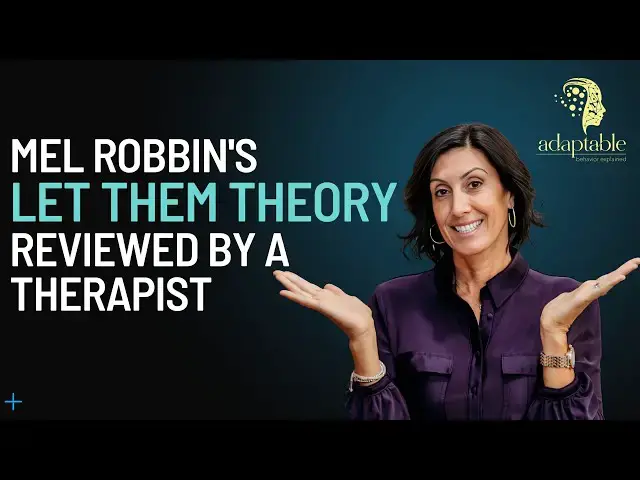
Welcome to Adaptable | Behavior Explained! This episode goes over Mel Robbins’ Let Them Theory from a therapist’s perspective. We explore the psychological insights behind this mindset shift and how it can improve relationships, reduce stress, and foster emotional resilience. Learn how embracing the Let Them approach can help you set healthier boundaries and focus on personal growth.
I'm Kelly O'Horo, Attachment based EMDR Therapist, EMDRIA Consultant, and Advanced Trainer. I'm a mom of 5, Nonna of 5, wife, and a healer. I have the honor of spending my workdays walking along side people while they brave their healing journeys. I try to live with the generous assumption that we're all doing the best we can with what we know. Therapists are teachers for the "life stuff" and "emotional vocabulary" that may not have been learned due to gaps in our care givers capabilities. In the last 15 years I've learned that people are freaking amazing, resilient, and inspiring. Most importantly, we are hardwired for connection and for healing!
I hope to bring an authentic, compassionate, and unpolished approach while we explore a variety of topics such as parenting, marriage, relationships, dating, trauma, attachment, adoption, depression, addiction, anxiety, and love! There's a why for all behaviors and an explanation that makes perfect sense as emotion is at the root of it all.
-- Links --
https://linktr.ee/kellyohorolpc
https://youtu.be/rLnARKekvgo
https://www.emdria.org/find-an-emdr-therapist/
Show More Show Less View Video Transcript
0:06
hi everyone I'm Kelly O'Horo and this is
0:09
Adaptable Behavior Explained hi everyone
0:13
I'm Kelly O'Horo and welcome to
0:14
Adaptable Behavior Explained today we're
0:17
going to dive into Mel Robbins latest
0:20
book The Let Them theory and we're going
0:22
to explore her concepts and how they can
0:24
be applied in real life i loved this
0:27
book i have been waiting for a book like
0:29
this that's great for the lay person and
0:32
I've been listening to Mel for a really
0:33
long time and I just love her delivery
0:35
her natural cander and she's just so
0:37
cool to listen to and I love how she's
0:39
brought mental health concepts into
0:41
light so that we have other resources
0:44
and so I want to get as many of you to
0:45
read this book as possible because it
0:47
was just so so good my husband and I
0:49
listened to it in audio form and on the
0:51
way to and from as we were traveling
0:53
recently and I love that on the audible
0:57
form I can check out each chapter and
1:00
then I can also share with clients like
1:02
you need to go listen or read chapter 10
1:04
or chapter 13 as an additional support
1:07
for their therapy so I think that this
1:09
is really good um if you're a therapist
1:11
this is a great resource but if you're
1:13
not this is a good resource to have as
1:15
far as something to help improve your
1:18
growth and your work so the let them
1:20
theory is awesome and we're going to
1:22
give you some examples of how to improve
1:24
issues related to the concepts that are
1:26
found in the book some real life u
1:28
connections and so I got to say that I
1:32
think after this show today you're going
1:33
to really find the eight transformative
1:36
areas that she talks about are things
1:38
that you can adopt and you're going to
1:40
get a whole lot of benefit out of this
1:42
i'm also going to make some comparisons
1:44
to a couple of courses that I teach
1:46
because there's a lot of overlap in the
1:48
concepts related to codependency and
1:50
boundaries and really the lack of
1:52
boundary setting and our overfunctioning
1:56
and potential behaviors that suggest I
1:59
can't be okay if you're not okay are
2:00
what are predisposing us to behave in
2:03
ways that we do that she talks about in
2:05
this book i'm going to go through the
2:06
eight concepts that she discusses in
2:08
brief and again you're going to dig into
2:10
the book and you're going to get this
2:11
book and you're gonna understand it even
2:13
deeper so the first concept that the let
2:16
them theory talks about is acceptance
2:18
mel emphasizes the importance of
2:20
accepting others as they are without
2:22
trying to change them and this is so
2:24
hard because we see the way someone is
2:27
acting and we know that something could
2:28
be better for them right we have an idea
2:30
about how someone could change their
2:32
choices and their behavior and improve
2:34
the way their life looks and sometimes
2:37
we invite our opinions when we haven't
2:39
been asked so you know you have those
2:41
friends maybe that are workaholics and
2:43
are always busy when you're with them
2:45
and you might be frustrated by their
2:47
constant work interruptions or
2:49
distractions with their phones and so
2:51
one of the things we're going to think
2:53
about is you know let them let them do
2:55
what they're doing and then let you
2:58
decide if you need to speak up if you
2:59
need to set a boundary but ultimately we
3:02
want to practice empathy and understand
3:03
that everybody has their own journey and
3:05
we want to respect people's autonomy and
3:08
offer support without judgment now
3:10
that's not to say that you don't need to
3:12
speak up if something feels boundaryless
3:14
for you so for example I have a friend
3:16
that tends to work all the time and I
3:19
can let him if he's got to work and he
3:21
can't join us to be present that's okay
3:24
i can also say "I don't want to do that
3:26
tonight if you're not going to be able
3:27
to disconnect from work for a little bit
3:29
and hang out with us and be present."
3:31
And I feel comfortable saying that but
3:32
it took me a long time to get there
3:34
because I was busy going "This is what
3:36
he does." And and it's hard to be around
3:38
someone who can't be in the moment and
3:41
so we want to respect someone's autonomy
3:43
we want to not have judgment about them
3:45
we all have different working styles and
3:47
habits that sometimes clash with what we
3:50
would do maybe someone that you know and
3:52
so we want to accept that people have a
3:54
unique approach and then maybe we want
3:56
to focus on collaboration rather than
3:58
trying to change them so again let them
4:00
do things their way let them work all
4:02
night if that's how they choose to work
4:04
and then come up with some compromises
4:06
that work so that you can be in
4:07
relationship with them the second
4:10
concept that's pretty prevalent in the
4:11
book is about boundaries boundaries are
4:13
really hard to set when we are so
4:15
concerned about being in disconnection
4:17
with people but it's really crucial for
4:19
maintaining mental health and people
4:22
misuse the word boundaries all the time
4:24
i can't tell you how annoying it is to
4:26
me when people say you know I'm setting
4:28
boundaries i'm never talking to them
4:30
again and then my next question is well
4:32
have you discussed with them how you
4:33
felt about it when they said this or
4:35
when they said that and then they go no
4:37
I'm not going to do that and then I say
4:38
okay well that's a wall that's not a
4:40
boundary and so a boundary is a pathway
4:43
to intimacy and connection a boundary
4:45
says "Hey I love you and I care about
4:47
you that the way you spoke with me
4:49
during our last conflict that's not okay
4:51
for me and I don't want to be around you
4:52
or be in relationship with you if that's
4:54
how you're going to treat me." So a
4:56
boundary offers a pathway to connection
4:58
and intimacy and so setting healthy
5:00
boundaries like I said is crucial i'll
5:02
give you an example about my husband a
5:04
struggle of boundaries and growth with
5:06
boundaries and then ultimately where
5:07
resentment ends up happening so he's so
5:10
wants to be a good guy he wants to be a
5:12
good dad he wants to be a good husband a
5:14
good papa you know and a good employee
5:17
and oftentimes people will need him and
5:19
want him to help with things because
5:21
he's really good at things and he's
5:23
really smart and resourceful and capable
5:26
and so people ask him a lot of different
5:27
things and he you know and I I have to
5:30
say I'm probably the most guilty because
5:33
he's right there in proximity and I know
5:34
he does everything awesome but he feels
5:36
overwhelmed often and he doesn't look at
5:39
his own personal limits he's not great
5:41
at saying no and he wants to please the
5:43
people that he loves he doesn't want to
5:44
be a disappointment like I said
5:46
especially with me and so an area that
5:49
he has to look at is this okay does this
5:51
take away my bandwidth do I have
5:53
capacity for it and we want to look at
5:55
what we need to do so an improvement
5:57
that I'd love to see him have is that he
6:00
would define his own boundaries and then
6:01
if he can't do something he'd say you
6:03
know I can't do that right now but I can
6:05
help you another time and that he would
6:07
practice saying no a little bit more so
6:09
that he could protect his space but this
6:11
is an area that we all need to work on
6:13
protecting our emotional space and
6:15
looking at what do we need and what do
6:17
we want and how can we better engage
6:19
with people and express what we need you
6:21
know I've got another example of a
6:23
family member that will regularly ask
6:25
for favors or interaction or he'll want
6:28
to know what we think or want to share
6:29
about something and it's like in the
6:31
middle of something else and it can be a
6:32
little bit disruptive and I notice in me
6:35
I want to hear about these things
6:37
especially because I care about you know
6:38
his experience but sometimes it's not
6:41
the best time so I'm getting better at
6:43
you know politely but firmly saying "Hey
6:45
I really want to hear this story can we
6:47
catch up tomorrow i've had a really long
6:49
day." Or something like that and so
6:51
that's really an example about improving
6:53
that boundary um because ultimately it's
6:55
no one else's job to protect your time
6:58
it's entirely your responsibility to
7:00
protect your time and your own bandwidth
7:02
which leads me to the next concept
7:03
that's discussed which is self-
7:04
responsibility we've got to focus on our
7:07
own actions and responses rather than
7:09
trying to control others so I'll give
7:11
you an example and this is a hard one
7:12
for me my mom ended up with diabetes
7:15
when she you know a few years back and I
7:19
was really anxious about her getting
7:21
sick and her eating choices and
7:24
concerned about what that was going to
7:25
do to her in the long run if she didn't
7:28
change her habits and because of my
7:31
control and fear and anxiety about what
7:34
was going to happen to her if she didn't
7:35
improve her habits that she was going to
7:37
get sicker and she was going to suffer
7:39
and I didn't want to see that but
7:41
ultimately you know I'm the only child
7:42
and so that behavior is going to have
7:45
some collateral damage and it's going to
7:46
end up falling on my shoulders and you
7:49
know if I really think through the let
7:51
them theory I would have to let her eat
7:54
how she wants to eat or control her
7:56
diabetes or not and get sicker or not
7:59
and then what does that mean about me
8:01
well I'd have to let me set boundaries
8:02
around how much I would help or not help
8:04
or be there when things were going wrong
8:07
and that's really hard right we don't
8:08
want to tell people we love that we're
8:10
not going to be there for them when they
8:12
have made choices that ultimately have
8:14
consequences and so that can feel really
8:16
inconsiderate or it can feel like we're
8:18
not loving and caring and so I really
8:20
had to dig in and do a lot of work in my
8:22
own healing journey around what was
8:23
going to be okay or not okay for me but
8:26
ultimately that I couldn't be obsessing
8:28
about her behavior and her choices
8:29
because it was making me mean it was
8:31
making me controlling and it was making
8:33
her not want to be around me and that's
8:35
not the kind of relationship that I want
8:36
to have and so I had to dig in and I had
8:38
to go let them let her do what she's
8:40
going to do she's going to suffer the
8:42
consequences more than me and she
8:44
doesn't want that so ultimately that's
8:47
kind of how you have to look at this
8:48
type of stuff so you have to focus on
8:50
your own well-being you have to trust
8:52
the people to make their own choices and
8:54
you have to practice your own
8:55
mindfulness and your own self-care so
8:57
that you reduce your own urges to
8:59
control things and so this is just a
9:02
good example about self-control the next
9:05
thing that we're going to talk about is
9:07
the concept of letting go and this is an
9:08
area that everybody struggles with
9:10
because the last thing anybody wants to
9:12
feel is powerless and when we feel
9:14
powerless or we feel overwhelmed by the
9:16
behavior of others we sometimes have
9:19
this internal desire or need to control
9:21
people and letting go the whole thing is
9:25
about recognizing my own growth my own
9:27
capabilities my own capacities and
9:30
letting other people have their own
9:31
journey let them fall down let them have
9:34
their mistakes let them build their own
9:36
resilience let them grow from their
9:38
mistakes we cannot curtail everybody's
9:41
journeys so I'm going to share an
9:43
example about a client who really has
9:45
struggled with this letting go concept
9:47
and you know ultimately it's rooted in
9:49
her history because she didn't have
9:50
grown-ups that were there supporting her
9:52
the way we need and so she often times
9:56
ends up neglecting her needs when I
9:58
started seeing her I should say she
9:59
didn't have the best self-care she was
10:02
incredibly overfunctioning with her
10:03
children she was constantly trying to
10:06
see what her husband needed even when he
10:08
never asked her about things what would
10:10
she do to take care of him she wants to
10:12
be a good wife she wants to be a good
10:14
mom and she's really nervous and anxious
10:16
about missing something and she starts
10:18
to get pretty sick and ends up having
10:20
seatic issues and gastro issues and the
10:24
root of this is she can't let go if
10:26
something bad might happen and so one of
10:29
the things that we had her working on
10:31
was regular self-care activities letting
10:34
go activities like you know her child
10:36
forgets their homework at home and you
10:38
know she lets go and lets her child have
10:41
the consequence it's not her job to take
10:44
the homework even though she doesn't
10:46
want her child to feel you know
10:47
neglected or abandoned ultimately the
10:49
child doesn't learn to pack the backpack
10:51
the night before if mom rescues the
10:53
child and this is really hard when we
10:56
don't want our kids to suffer
10:57
consequences for whatever they have to
10:59
experience and so when we adopt regular
11:02
self-care activities relaxation exercise
11:06
mindfulness you know it can be even
11:07
things like taking care of getting
11:09
manicures or pedicures things like that
11:11
or massages once in a while so that you
11:13
can prioritize your health these types
11:15
of things help us to look at our own
11:17
growth and let go of the need to control
11:20
other people's experiences and it's
11:23
really hard especially if you're a
11:24
parent it's really really hard to let go
11:26
of the outcomes that your children
11:29
ultimately need to face in order to grow
11:32
from life's experiences the next topic
11:35
that Mel talks about in this book is
11:37
resilience and we do not build
11:39
resilience by doing the hard things for
11:42
others letting people have actions and
11:46
let their actions have consequences
11:48
ultimately are necessary for growth and
11:51
so in the the gifts of imperfection uh
11:54
one of my favorite books by Bnee Brown
11:56
she talks about a few things that are
11:58
important on this concept which is in
12:00
order to develop hope about things we've
12:02
got to set realistic goals and plan ways
12:05
to achieve them in order to stay
12:07
motivated despite the obstacles and
12:09
believe that things can improve and we
12:12
need to use critical awareness which is
12:14
recognizing and challenging societal
12:16
norms that contribute to our feelings of
12:18
inadequacy and shame so going back to
12:20
that client example you know Martha's
12:22
mom would bring her her homework and we
12:24
have to realize like I have to do what's
12:26
right for me so that my child learns in
12:29
the ways of developing resilience in the
12:31
way that I want them to and so we've got
12:33
to allow for those comparative suffering
12:35
type things that we do or societal norms
12:38
we need to not allow those to contribute
12:40
to our own feelings of inadequacy we
12:42
need to refuse to numb the negative
12:44
emotions people think that protective
12:46
emotions are bad and that we should be
12:49
really focused on feeling only good
12:51
things but I've got bad news that's not
12:53
how we're wired we are wired with shame
12:56
and pain and embarrassment and guilt and
13:00
regret and anger and all these other
13:02
protective emotions and fear that are
13:04
not necessarily connecting emotions but
13:07
the whole gamut of emotions are really
13:09
the beauty of being a human and we want
13:11
to allow for all of the emotions to be
13:14
able to be part of our human experience
13:17
because that's how we can have genuine
13:18
connection and ultimately joy because we
13:20
can't just numb the protective emotions
13:23
when we numb emotions we numb them all
13:24
and so if we want to have a full color
13:27
rainbow of life and emotional
13:29
experiences we've got to stop numbing
13:31
our negative emotions here's another
13:33
area that a lot of therapists are
13:35
reluctant to discuss and that's
13:36
spirituality we have to recognize that
13:39
there's an interconnectedness of all
13:41
life and you don't have to necessarily
13:43
believe in God but hopefully you believe
13:45
that there are things that are bigger
13:47
than us even if we're just looking at
13:49
storms and waves in the ocean and
13:52
recognizing that we are just part of a
13:54
system so if we can recognize the
13:57
richness of the interconnection of life
14:00
we can find purpose and belonging and
14:02
that helps us to navigate difficult
14:04
times with more meaning about you know
14:06
how we all tick and connect together so
14:10
ultimately if we avoid these feelings of
14:12
connection and things like that we end
14:14
up lonely and resentful and so we want
14:17
to recognize that if we don't practice
14:21
bird of communication express our needs
14:23
and preferences um we end up in
14:26
disconnection and that is not helpful
14:28
for dealing with resilience and we
14:32
develop resilience by focusing on areas
14:34
of improvement relationships and
14:36
constructive feedback which contribute
14:38
to maintaining our self-worth so the
14:41
next thing that we're going to talk
14:42
about is authenticity and I love this
14:44
word it's becoming more popular but I
14:47
think that for me it's really important
14:49
because I struggled with a lot of
14:50
perfectionism a lot of worrying about
14:52
what other people think a lot of what if
14:55
I do this what will they say and I know
14:57
that it comes from my family system
14:59
everything was you don't let people know
15:01
our dirty laundry and we need to make
15:03
sure that you look a certain way and
15:05
chewing gum is uncou and all these sorts
15:08
of messages that were given to me when I
15:10
was a kid and so I became pretty anxious
15:12
about the judgment or the opinions of
15:14
others and so in doing some of my own
15:17
personal work the daring way workshop
15:19
that I am trained in and um Bnee Brown's
15:22
work from Daring Greatly authenticity
15:24
ended up being one of my primary values
15:27
that I want to keep at the forefront of
15:28
how I make decisions and basically this
15:31
just means being true to yourself and
15:33
letting others do the same my way is not
15:35
the right way it's just a way and
15:37
letting other people have ways to do
15:39
their life really helps to give you
15:41
freedom in how we manage and how we can
15:44
let go of our way of doing things and
15:46
it's more authentic to be able to go
15:49
yeah I might do it this way but you do
15:51
it that way and it's not for me and so
15:53
let people be authentic to who they are
15:55
and let them have the consequences they
15:57
have for doing it differently than you
15:59
and also let you learn things from
16:01
people who do something different which
16:03
is another twist on it and so I think
16:05
that it's important to just step back
16:07
and let other people handle their own
16:09
lives and focus on your own growth and
16:11
allow others to learn from their
16:12
experiences i can remember Taylor my
16:15
daughter-in-law she and I are very close
16:17
and when she was a young mom you
16:19
remember when you were a young mom and I
16:21
would have like feedback for you about
16:22
things that I thought you should do as a
16:24
mother with Emry and you pushed back on
16:27
me pretty hard you set some pretty good
16:29
boundaries you remember that i for no
16:31
reason you're like I I pushed back
16:33
because I pushed back but truthfully I
16:35
was out of my lane because unless you
16:37
asked me what you should do it really
16:39
was none of my business and so when I
16:42
think about our early dynamics and the
16:44
evolution of that feedback you know
16:46
ironically I was too intrusive before
16:48
and I believe I've backed off a lot more
16:51
but I think by number for sure would you
16:53
say yeah but like for number two you're
16:55
like "Hey what was those things you said
16:57
I needed to do with number one?" Because
16:59
I definitely want to do that for number
17:01
two by number three I was like "Do
17:02
whatever you want do whatever you want i
17:04
can't anymore with all of the the
17:06
wildness like what to do yeah you're
17:08
super outnumbered but I think that you
17:10
and our relationship because has taught
17:13
me a lot because when I think about it's
17:16
hard to let them you know let your kids
17:19
maybe not have warm clothes in winter or
17:21
whatever but like it's also good for
17:24
them to go "Hey mom I'm cold i need a
17:27
coat." You know and let them have the
17:29
outcomes and learning experiences and so
17:32
I think that we have to stay in our lane
17:34
we have to realize that people are going
17:36
to do things the way they're going to do
17:37
them and they can grow and learn and
17:40
evolve and that we can come together and
17:42
talk about things when it's invited
17:45
yeah for sure so another thing that she
17:47
talks about in this book that seems like
17:50
a no-brainer but it's really hard to
17:52
have empathy when we're mad at somebody
17:54
or when we don't like how someone did
17:56
something and then they have a negative
17:58
consequence and so I want to share Bnee
18:01
Brown talks about empathy as this
18:03
ability to understand and share feelings
18:05
of another person by connecting with
18:08
something in ourselves that knows that
18:10
same feeling so I don't have to have had
18:12
someone die in my life to know what loss
18:15
feels like to know what grief feels like
18:17
i can tap into that feeling in me so
18:19
that I can better relate with someone
18:22
and true empathy done well really fuels
18:24
disconnection whereas sympathy which is
18:27
uh kind of a disconnected way to relate
18:29
with someone drives disconnection and so
18:32
some attributes of empathy that are
18:34
really important to consider are
18:36
perspective taking you want the ability
18:38
to take a perspective another of another
18:40
person and recognize their perspectives
18:42
as their truth the next thing we have to
18:44
look at with empathy is staying out of
18:46
judgment we want to avoid judging
18:48
another person's situation we want to
18:51
recognize that they have their own lens
18:54
of life and their own previous
18:56
experiences and that's what drives their
18:59
choices and their adaptations and it's
19:01
not for us to determine if it's right or
19:03
if it's wrong unless we're invited or
19:05
asked the next thing about empathy is
19:07
recognizing emotion you want to identify
19:10
the emotion in others and then
19:11
communicate the understanding so back to
19:13
the example of loss it's like if someone
19:16
I know has lost someone I can say "I I'm
19:19
so so sorry that you've lost someone and
19:21
I really understand and I'm here for you
19:24
you know please let me know what that
19:25
might look like." And that's an
19:27
empathetic response ultimately with
19:29
empathy we're feeling with people we're
19:32
connecting with them by feeling with
19:33
them rather than trying to fix the
19:36
problem uh that's not supportive that's
19:38
not empathetic to try to just fix
19:40
someone's problem and it's more
19:41
vulnerable to show up with empathy
19:44
because it just requires you to be
19:45
simply present and acknowledge someone's
19:47
pain without trying to offer solutions
19:50
and understand and respect their
19:52
perspectives and so it can be a really
19:54
vulnerable choice and if we practice
19:57
empathy and realize that everyone has
19:59
their own journey it helps us to better
20:01
let them have the experience they're
20:03
going to have it helps us to respect
20:05
autonomy and offer more support without
20:07
judgment something I commonly hear about
20:11
with my clients is related to some
20:13
things with family dynamics regarding
20:15
political differences especially today
20:18
and it can be really impassioned about
20:20
where we stand with policies and
20:22
politics today because we're seeing a
20:24
bit of an upside down response in our
20:27
government right now and it can feel
20:29
personally powerless and so it's hard to
20:32
remain respectful but we want to look at
20:34
the person and seek to understand why
20:38
they think the way they think we want to
20:40
try to have a non-judgmental perspective
20:43
about it so that we can make sense and
20:45
stay in connection with people even if
20:47
they have different perspectives than we
20:49
have and it's really really hard but I
20:51
challenge you if you have someone in
20:53
your life that you work on this because
20:55
there's so much sadness and
20:57
disconnection and we just don't need
20:58
more of that it's hard to hate up close
21:00
so we need to move in and better
21:02
understand what motivates people to feel
21:03
the way that they feel which leads me to
21:06
the last concept of the book that we're
21:07
going to discuss which is personal
21:08
growth when we're so busy externally
21:11
focused we are not looking inside at
21:13
what we need to do for our own goals our
21:15
own dreams our own healing journey and
21:18
so when we can let people be them and
21:21
have their journey we can let ourselves
21:23
focus on our own desires and goals and
21:26
work towards the outcomes that we want
21:28
in our own lives so you know going back
21:30
to that client I talked where she put
21:32
her husband's needs before hers and her
21:35
children's needs before hers as she's
21:37
evolved through her counseling
21:39
experience she's noticed her husband is
21:41
a lot more helpful her husband chimes in
21:43
and supports parenting duties more than
21:46
he used to her children are a lot more
21:48
resilient they show examples of pride
21:50
when they come through problem solving
21:51
skills and she's able to set back a
21:54
little bit more regularly and recognize
21:56
that her lack of overfunctioning and
21:59
overinvolvement is creating family
22:01
dynamics that are improving in her life
22:04
and she's liking what she sees so it is
22:07
hard it is an adjustment but we really
22:09
want to try to embrace some of these
22:12
habits so that we can let go of outcomes
22:15
that happen because of other people's
22:17
choices this book is awesome i barely
22:20
grazed the surface of it the let them
22:22
theory gives you so many valuable
22:24
insights that can enhance your
22:26
understanding of codependency of
22:28
boundaries because by letting other
22:30
people be themselves setting healthy
22:32
boundaries prioritizing your own
22:34
self-care you're going to have a much
22:36
more fulfilling and balanced life and
22:38
relationships so I really encourage you
22:41
get this book The Let Them Theory it's
22:43
awesome on my bookshelf and I want to
22:47
hear what you think about it it's it's a
22:49
really good resource so thank you so
22:51
much for tuning in i hope you enjoyed
22:53
this episode i hope you grab Mel Robbins
22:55
book The Let Them theory and start
22:57
changing your own mindset about your
22:59
interactions and responsibility in the
23:01
lives of others so until we meet again
23:04
remember to lead with love it'll never
23:06
steer you wrong
23:08
[Music]
#Mental Health
#Family & Relationships
#Self-Help & Motivational