Up next in 10



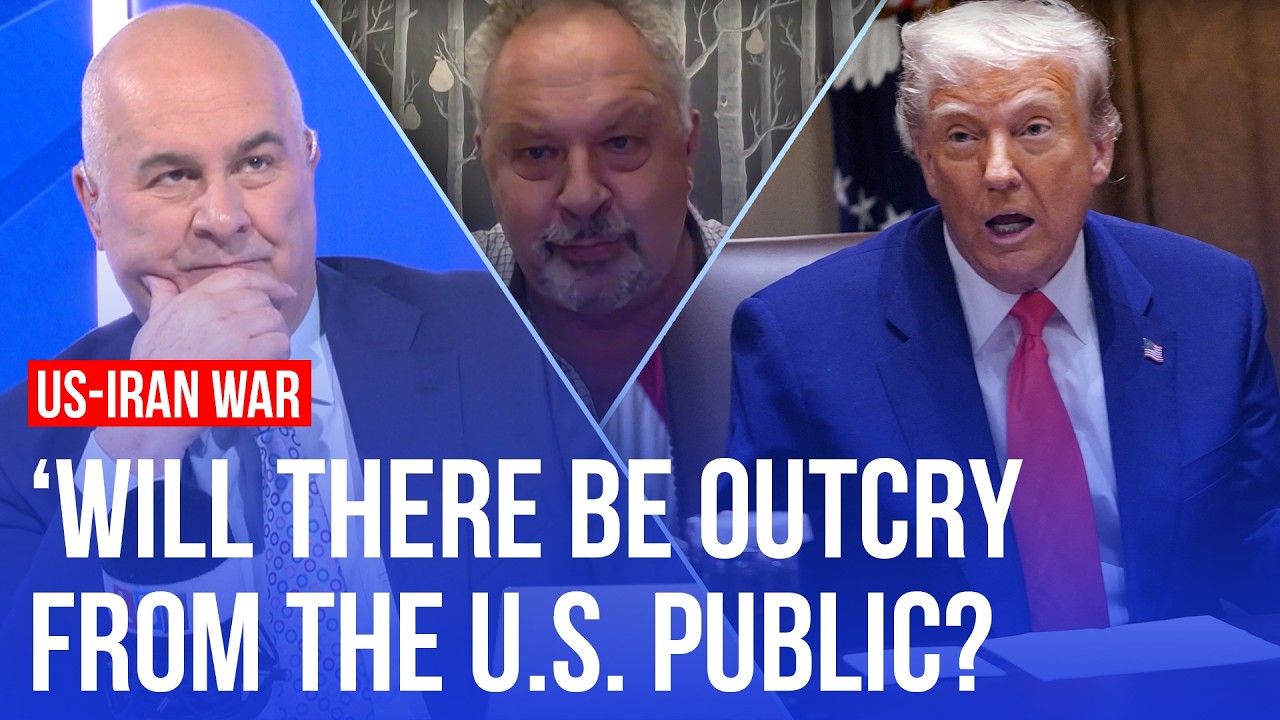
The US has lost or damaged 42 aircraft during the Iran War as the defence costs of the Iran War rose to £25 billion, according to a congressional report. To discuss the topic in depth, Iain Dale is joined by Colonel Simon Diggins, Former British Army officer - who is now a defence and security analyst and also a contributing editor of the Defence on the Brink campaign group. The report comes just days after Jules W. Hurst III, Acting Pentagon Comptroller, confirmed that the defence costs of the operations in Iran had risen to $29 billion. Three of the fighter jets downed by friendly fire over Kuwait were reported to have incurred costs of around $300 million in damage alone. This comes as concerns grow about the spiralling costs of the conflict in the gulf - despite the US claiming to have ceased all combat operations - and the cost on the average household continues to rise due to the conflict's impact on energy and oil. Listen to the full show on the all-new LBC App: https://app.af.lbc.co.uk/btnc/thenewlbcapp #IainDale #Trump #War #USA #USNews #WorldNews #News #Politics #USIranWar #Ukraine #LBC LBC is the home of live debate around news and current affairs in the UK. Join in the conversation and listen at https://www.lbc.co.uk/ Sign up to LBC’s weekly newsletter here: https://l-bc.co/signup
Show More Show Less View Video Transcript
0:00
The new report from the United States Congress has revealed the war in Iran has cost the US military $29 billion so far
0:08
This includes $300 million on fighter jets, which were downed by friendly fire
0:13
A phrase I absolutely loathe and detest, but I can't think of a better one
0:18
Colonel Simon Diggins joins me, former British Army officer, now a defence and security yst and also contributing editor of the Defence on the Brink campaign group
0:26
Simon, $29 billion. Look, war is expensive. We know that. But that is a hell of a lot of money, isn't it
0:34
Ian, good evening too. Yes, it is. But put it in perspective, the total US defence budget per annum is $1 trillion
0:41
So that's actually, that's my maths completely wrong. That's between 2% and 3%
0:44
I think the real issue, real challenge is actually that a lot of people say the true costs are not contained within that $29 billion
0:52
And it's not just things that haven't been included in terms of the war. So, for example, the costs of repairing damage to U.S. bases and facilities across the Gulf
1:00
But there's also the kind of knock on the indirect consequential effects of the war in terms of the cost of living, particularly in America as well
1:06
And so I think one of the things that's going on in Congress, and they're very angry about this, is partly because Donald Trump has done this out with the Equipment of the War Powers Act
1:14
So there's a democratic control over there. They don't feel the true costs are being counted
1:18
and the Pentagon and the P-Hexter is giving little bits of information at a time
1:23
and coming back some incrementally with more money being required, more money being required, and not giving them the full picture
1:29
If that had been in this country, I'm sure that people would have been crying
1:34
yes, but that's £29 billion that could have been spent on the NHS or public services
1:39
I wonder how much outcry there will be from the American public on this
1:43
I think it's an interesting point, but so much of the things that we regard as a central government business has done
1:49
if it's done at all, is done through their states in America itself
1:53
And so this of course is Congress the federal organization and looking at the kind of federal budget from there So the opportunity costs argument which is as you rightly put is often in this case where you spend money on defence
2:06
you could otherwise be spending on the NHS welfare or whatever, I think has less salience in America
2:12
simply because their structure and their system is slightly different. Now, 42 American aircraft have been lost or damaged over the last, well, what is it now, two and a half months
2:25
That seems to be quite a lot. Now, they say, well, they've destroyed the entire Navy, Iranian Navy and Iranian Air Force
2:33
How long does it take to replenish supplies of planes? Because it must take quite a long time
2:41
I think it depends on what the objects are. Some aircraft types, they've got significant amounts of reserves
2:46
I mean, we've all seen the photographs of the kind of reserves in the desert, which they can use
2:51
What is taking time to replace is some of the really expensive anti-missile missiles, for example, the Patriot battery, which they used up at a massive rate
3:02
They fired off in the first four days of the war all the equipment of all the Patriot missiles that have given to Ukraine over the previous four years
3:11
And these missiles, each missile, cost millions of dollars. And they have often been fired against a drone that cost tens of thousands of dollars
3:19
So they will take time to replace. And I think he's an area of concern to them
3:24
It's having a knock on effect already in terms of supply, because European countries, you might have patriot themselves
3:30
The Ukrainians have got patriot. I say, can we have missiles? And the Americans say, no, we need to we need to replenish them ourselves
3:37
So it is having an effect on how the wars and defense more generally is being is being is being developed
3:43
But this is this is the United States of America. I mean, you know, they have they have things in abundance that we simply don't have
3:49
Drone warfare has been used here predominantly by the Iranians. What lessons as a military man yourself what lessons can we learn from this conflict about the conduct of future wars I think the importance of drones and drone warfare the idea of autonomous warfare I think is there
4:07
And we've got the same lesson pretty well from Ukraine itself. What we haven't seen yet is the means of conducting defensive operations in a kind of drone warfare
4:15
And here, the ogy, and it's not an exact ogy, but the ogy is a bit with the First World War
4:20
where the combination of the first year of war of quick-firing artillery, machine guns and barbed wire
4:26
pretty well produced a kind of static trench front for nearly three years
4:29
until there was an innovation, in this case the tank and a change in tactics, which allowed a breakthrough
4:36
What we've seen with the wars in Ukraine and the wars in the Gulf is the importance of drones
4:41
in terms of defensive and the ability at relatively low cost to keep a numerically superior
4:47
or even technically superior opponent at bay. What we haven't seen yet is the means to conduct offensive operations and to break through
4:55
So, yes, it's important, but we haven't yet found the right balance in order to achieve that
5:01
And I think we'll be the next stage. Where are we in Britain with our supply of drones
5:07
Because I think we sent a lot to Ukraine. Again, it presumably takes quite a long time to manufacture new ones
5:14
Where are we on that? Well, I think we're just starting to turn the corner very slightly
5:18
I mean, I don't know a bit more about the army than perhaps the other two services
5:27
But the current chief of general staff has got what he calls his 20, 40, 40 of the armed forces
5:32
will be what you might call legacy equipment, but still important, tanks, armored vehicles and so forth
5:37
40% will be sort of directed missiles and everything. And then 40% will be kind of throw away, fire and forget missiles that goes on from there
5:46
So we've got a concept, at least we're starting to think about the problem, and we're starting to develop the numbers
5:51
And I think the experience there is that of the Ukrainians. Ukrainians at the beginning of their war were producing drones in the thousands and tens of thousands They were very impressed They now literally after four years producing them by the million And they exporting that technology not only just the technology of the drones themselves
6:06
but also the technology of how to produce them at mass as well
6:10
I mean, the Danes, for example, and one of the Baltic countries opened a drone factory producing numbers on exactly the same scale as the Ukrainians
6:17
So we can do it. And I've seen some indications that we're starting to grasp that
6:21
It's not the traditional defence, though. And that's, I think, the problem would be that some of our so-called defence primes, who have been used to a kind of very rather gentle parlay between themselves and Ministry of Defence over 15 years with all the usual cock-ups as a result, are not well placed and not very good at responding quickly to the kind of demands that this new warfare, this new type of warfare are starting to produce
6:46
I've got this bee in my bonnet about resilience at the moment in all sorts of areas, and I'm thinking of doing a book on it
6:54
But in terms of our UK resilience, it seems to me that one of our weakest areas in our defence capability is air defence
7:03
Now, I don't know how much drones can be deployed on that front, but is that – I mean, I'd be interested to hear your view on that as to how that can be improved
7:15
country that fought and won the battle of Britain. And we simply couldn't do anything like it
7:22
We don't have anything like the capabilities that the Ukrainians have got or anything like the capabilities that the Israelis have got
7:28
I mean, our most effective air defence weapon is a Type 45 frigate
7:33
And currently, of the six we've got, two are currently operational. Four are in kit form in Portsmouth Harbour
7:40
And we have a few other sort of missiles. House. We have an argument which says that we rely on NATO to do that. But I think it's one of those
7:47
sovereign capabilities you've really got to have for yourself. You can't defend your home base
7:52
You can't defend your homeland yourself. Then you are really in trouble. And I think that's where we
7:56
are. Couldn't agree more. Thank you very much indeed. That's Colonel Simon Diggins there
news