Up next in 10



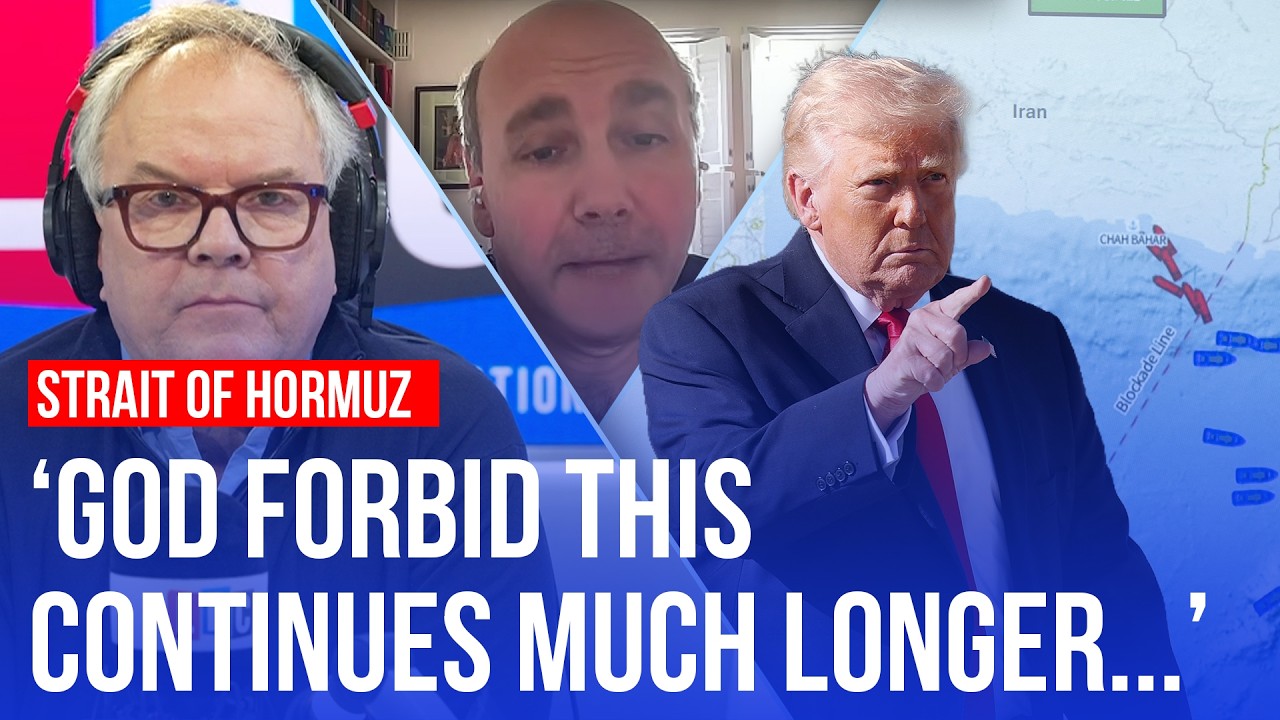
Matt Frei speaks to Professor of Iranian History Ali Ansari and former Lebanon Health Minister, Dr Firass Abiad, about the latest closure of the Strait of Hormuz. Iran has claimed that the Strait of Hormuz is closed again, just hours after a convoy of tankers passed through the major shipping route. Blaming the closure on US's blockade on the waterway, Iran said 'the status of the Strait of Hormuz will remain tightly controlled' until Trump relinquishes control. Ali Ansari tells Matt Frei the situation is 'messier' than ever, as the closure comes just 24 hours after Trump said the Strait would be "completely open" for the "remaining period of ceasefire". Listen to the full show on the all-new LBC App: https://app.af.lbc.co.uk/btnc/thenewlbcapp #mattfrei #iran #iranwar #trump #straitofhormuz #LBC LBC is the home of live debate around news and current affairs in the UK. Join in the conversation and listen at https://www.lbc.co.uk/ Sign up to LBC’s weekly newsletter here: https://l-bc.co/signup
Show More Show Less View Video Transcript
0:00
It's very difficult to decipher what's coming out of Tehran
0:02
but it seems to be that they are much more clear than Donald Trump in all this, and they've put a halt to the strait being open
0:08
Is that the way you see it? Not entirely. I mean, I think, as I said, the fog of war has been replaced
0:15
by a thick mist of covering negotiation at the moment, and it seems that Arachie had initially basically agreed
0:23
to the fact that the straits were open, albeit under a certain amount of qualification, as he added
0:29
But then he was then contradicted by the Revolutionary Guard a few hours later, who basically said he'd overstepped the mark
0:36
So both Khalifa and the Revolutionary Guard had then contradicted Araqqa. And Araqqa is now being threatened, believe it or not, with impeachment
0:43
So it's all a bit, it's much messier than we think. And I think messier on all grounds
0:49
So the messiness is not just in Donald Trump's head. It's also in the Iranian regime between rival factions
0:56
Yes. Which is not really surprising. Dr. Firas Abiyad, I mean, Lebanon has been, you know, involved in its own war between Hezbollah
1:04
and Israel. The Israelis carried on even after the ceasefire was announced and the Iranians thought
1:09
that Lebanon would be part of it. The Israelis then engaged in the most devastating bombing of
1:14
the war so far, in which more than 350 people were killed overnight. That was last week
1:19
And now they've stopped. They've signed up to the ceasefire for 10 days because essentially
1:25
Donald Trump has told them to do so. Is that true? And does that encourage you that this 10-day
1:32
ceasefire might last a bit longer? Well, people in Lebanon are desperate for a ceasefire. And of
1:39
course, you could see that there was a lot of hope. A lot of people have started going back
1:44
to their villages in the south. But unfortunately, you know, the news that is coming from the south
1:51
is that Israel has continued with it. We've seen several detonations of houses
1:59
that are still under the occupation of Israel. Israel has not withdrawn at all
2:04
There has also been reports of targeting of a motorcycle somebody on a motorcycle And really if we want to look at how Israel managed the ceasefire of last year in 24
2:21
they have a very wide sort of range for what they can do and they cannot do
2:27
in their understanding of a ceasefire. And all of that, you know, makes you sort of very sceptical whether really the Israelis, without the necessary pressure coming from the U.S. and the international community, will abide by that
2:42
And Dr. Abiyad, how much anger is there in Lebanon that Hezbollah decided to fire missiles at Israel on day one of the war, giving Israel the excuse that they had been waiting for to basically squash Hezbollah, try and squash Hezbollah inside Lebanon and occupy, you know, 25 percent of your country
3:03
Well, there is no doubt that the majority of the Lebanese are with the government's actions to disarm Hezbollah
3:13
That's why the government felt very supported when it disarmed Hezbollah and the southern of Litani
3:19
and the plans to move to northern of Litani and the rest of the steps that it has been taken
3:25
But, you know, the Lebanese also realized that, for example, the ceasefire of last year
3:31
Israel didn't respect that ceasefire, despite the fact that there was no rockets fired from Lebanon
3:36
Israel continued with its raids sometimes on a daily basis. Also, I think the way Israel has managed itself in the sense that indiscriminate attacks on civilians
3:50
we've seen there's more than 100 medical personnel and first responders who have been attacked
3:56
There has been very well documented reports on triple tap attacks on civilians as well
4:05
The indiscriminate attacks of last Wednesday, when 350 civilians were killed without any warning
4:12
I think has started changing a bit the way the Lebanese are looking
4:16
You know I was in the emergency room when we were receiving all of those casualties And instead of despair you could start feeling a feeling of indignation And I think that you know when we see that all what the Lebanese government has done
4:30
there has been no reciprocation from Israel who pursues a maximalist agenda
4:35
I think that, you know, that is starting to give some legitimacy to what Hezbollah is saying about resistance and so on
4:43
And, of course, what Hezbollah does and says, you know, also has resonance in Tehran or maybe the other way around
4:49
You know, there's still very strong contacts between the Iranian regime and what Hezbollah does
4:55
Ali Ansari, what I can't understand, and maybe you can help me with this, is whether Iran thinks it has scored a victory and now wants to carry on pressing on America's open wound
5:06
by keeping the strait closed or using that as continued leverage, Or is it using this moment of victory, in inverted commas, to regroup and, you know, start afresh and carry on, you know, with more peaceful relations with the United States and possibly Israel and essentially reinvent itself, you know, to reboot the regime
5:27
so i mean it is a it's a it's a it's a difficult question of course i mean i think those
5:33
in the elite and certainly the hardliners in the regime uh think they've scored a major strategic
5:38
victory and they want to keep pressing um but then there are clear tensions from within the
5:43
system as we've seen with those saying that the economic damage sustained by the country has been
5:47
so severe that they do need to regroup and do exactly as you've said and actually realign
5:52
themselves and and maybe get to a settlement but those tensions are far from resolved and of course
5:56
at the moment, you can see among hardliners this view that they need to press on
6:03
But people like the president, Pezhish Giong, who's largely marginal at the moment
6:07
has to be said in the whole political equation, among others, are sort of saying that actually
6:14
we do need a breather and we do need to think about what in hell we're doing. And it's very clear, even from the Islamabad talks, that one of the pressing concerns of
6:22
the Iranians is to get access to money. I mean they desperately need money in order to start paying their you know their shock troops also the wider sort of military forces but also you know to try and ameliorate some of the pain that the wider country has suffered over the last six weeks
6:38
But there are others who feel there is no need for that and that we should just be pressing on
6:43
So, you know, God forbid for the rest of us that that view
6:48
as long as some more hawkish views in Washington, should prevail. So, you know, is it eight weeks since the
6:53
or seven weeks since the beginning of the war, a war that was started by America and Israel in order to affect regime change
7:00
get rid of their nuclear enrichment program, reduce their missile capability, and, as they kept saying at the time, although no one's really mentioned it since
7:08
encourage the Iranian people to rise up against the Ayatollahs. After all these weeks of war and all the money that's been spent
7:15
what has America achieved? uh it's clearly on military terms achieved uh quite a significant degradation of what iran's
7:26
military can can provide obviously not as systematic or as complete as it as it would
7:31
have liked i think in political terms because the political ambitions have been so varied vague and
7:37
disputed so you say and the iranians are basically have been able to run rings around the americans
7:42
on this front that on the political terms of course that's been left it's it's an open question
7:46
I mean, I think on the issue of whether people would rise up or protest or whatever, this is something that would not happen, certainly while the bombs were dropping
7:54
You have to wait and see over the months that happened, given the economic damage that's been done for the country
8:00
But it's clearly a difficult one. And you're quite right to say that I think at the end of the day, what the Americans have achieved has been at best partial
8:09
Okay. And Dr. Firas Abiyad, just quickly to you, Israel is in this war in order to destroy Hezbollah once and for all
8:17
Has it achieved that? No way. And I think that they've actually acknowledged that there is no easy military solution to the question of Hezbollah
8:27
Therefore, an internal solution based on what the Lebanese government is doing has to have the support of the international community
8:36
the right pressure on Israel to be able to allow this government to produce what it is aiming to do
news