Up next in 10

Inside Ukraine’s failed counteroffensive: Mstyslav Chernov discusses eye-opening documentary | LBC
Jul 28, 2025


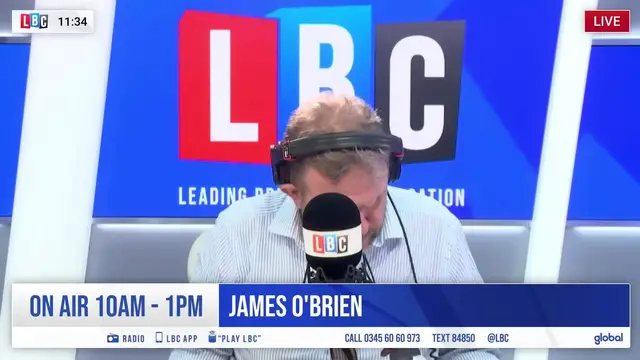
James O'Brien is joined by Ukrainian director Mstyslav Chernov, who has won a Pulitzer Prize and an Oscar.
Chernov's latest film documents Ukraine's failed counteroffensive of 2023.
'Ukrainians are not just fighting for this land, they’re deciding whether they’re going to live tomorrow or not'.
2,000 Meters to Andriivka is out in the UK on August 1.
Listen to the full show on the all-new LBC App: https://app.af.lbc.co.uk/btnc/thenewlbcapp
#jamesobrien #ukraine #russia #russiaukrainewar #documentary #putin #zelensky #oscars #LBC
LBC is the home of live debate around news and current affairs in the UK.
Join in the conversation and listen at https://www.lbc.co.uk/
Sign up to LBC’s weekly newsletter here: https://l-bc.co/signup
Show More Show Less View Video Transcript
0:00
It's not every day you get an Oscar winner and a Pulitzer Prize winner sitting opposite you in the studio
0:05
but that is a mark of the success of the work of my guest for the next few minutes
0:13
Mstislav Chernov made the film 20 Days in Mariupol, and it is his new film that concerns us today
0:21
2,000 metres to Andrivka. That is correct. Did I say that right
0:26
That is correct. um it's hard to describe it mr slavis it's um it feels almost too visceral for for the for the
0:39
audience but that of course was your intention which like me to describe it yes yeah it's on
0:44
the surface is a very simple story it's a story about the platoon in summer 2023 counter-offensive
0:50
as the Ukrainian army was progressing to liberate some of the Ukrainian territories from Russian occupation
0:57
So it's a story of the platoon who has to move through 2,000 meters of forest
1:05
a little forest between two minefields to reach the village of Andriyevka
1:11
hence the name, 2,000 meters to Andriyevka. So on the surface is a very simple story with a very simple task of raising the flag in the end of it
1:20
But as we progress through those 2,000 meters, we realize that what is a walking distance for, say, a Londoner or a couple minutes drive for those guys is three months bloody fight for their survival
1:39
And it's a symbol of the Ukrainian liberation. and of course there are echoes as you clearly intend of um of the first world war when we
1:50
with trench warfare when we sort of as a school boy i read about meters you know thousands of
1:56
deaths for the sake of a few meters yeah i i we do we did discover that that comparison especially
2:04
you know i was shooting this film while i was campaigning and screening with 20 days in
2:10
Mariupol. So there would be screenings of 20 days in Los Angeles and in London and New York and Paris
2:17
And from there, I would fly to Poland and take a car and drive to Kiev, take a train and take
2:22
another car and get in the trench. And this short journey would be a journey 100 years back
2:30
because when you are in those trenches, you feel like it's or it's 100 years before our time
2:37
or it's maybe even a different planet. So, you know, I was thinking about paintings of Paul Nash
2:42
and writing of Remarque and Hemingway. All those references came to me
2:49
Talking of feelings, you will literally be receiving news of deaths on the front line in the platoon
2:57
while you're on red carpets at film ceremonies. I mean, I know that you won't want to talk about you
3:06
We're here to talk about the film, but I just wonder how you cope with that, how you deal with that dichotomy
3:14
Again, I would insist that, you know, my feelings in this case are less relevant than the feelings of men or women I'm telling the stories of
3:22
But I do remember clearly the moment when we were receiving BAFTA here in London
3:27
and the news came of one of the soldiers who were following one of our protagonists
3:33
had been killed in operation in a fight for another forest and another village
3:39
That was devastating. And I remember I came on a stage and I said
3:42
please, let's keep fighting. Let's just keep... That was sadness but also there is a certain kind of understanding of reality that you have to fight for your freedom you have to fight for your land
3:58
And just watching these soldiers, me as a journalist and a filmmaker, being able to watch their process, their resolve, their courage made me a stronger person
4:10
And, I mean, most or certainly many of the men that you filmed and that were filmed and that also wore body cams to provide you with the footage, they died
4:22
That's, yes, they did. And some of this is recorded on cameras
4:28
It is devastating. But also, I think this is what makes this film and the entire documentary genre right now is moving forward
4:38
and it makes us very unique because we are as an audience
4:43
me as a director, we are as an audience, can finally experience what these men are going through
4:51
while they are on the front line of Europe. It's not just stories that are spoken with words or paintings
4:59
These are just experiences we all get to live through with them
5:03
because of these cameras. um they have a relationship with the filmmaking process as well these men um
5:11
they talk about their wife but they also talk i'm thinking of shaver when he says that he doesn't
5:17
want you to film him because he hasn't done anything heroic yet he hasn't done anything
5:21
yet the the the it's hard to articulate what the film would have meant to them but it clearly meant
5:26
something i know it meant to their families his his wife came to us after the screening of the
5:34
of this film in Ukraine and she came and she said now his grandson will be able to see who his
5:42
his grandfather was and that was the last last of him recorded ever and that will stay with the
5:52
family that's a heartwarming moment when he talks about his wife and his grandson and that's
5:59
everything for his family. Did you learn anything yourself or are you just chronicling
6:05
I'm chronicling. I am asking questions. But I have to say this. In the past six months
6:13
but also probably in the past two years, I learned something very important
6:18
The political situation in the world was so volatile. You know, I went to some of the
6:24
talks I went to, I witnessed some of the crises among the politicians, and I keep watching
6:34
And I can see that when I go back to those trenches, I can see how that's all very, very far
6:41
from real people that are on the front line. The real people that are right now on the front line
6:47
and fighting for these meters, the real civilians that are protected by Ukrainian soldiers
6:56
and their cities from occupation, they don't really care about what the U.S. has to say
7:02
what the U.K. has to say, what Europe has to say. They learned and I learned that when you are there on the front line
7:11
the only person you can rely on is right next to you
7:15
and those cities are still not occupied because of men like in in this platoon that i was filming
7:24
it's uh that's another element that is hard to process because there's there's a there's a
7:32
bleakness to the to the to the message of meters to the metric of meters as a you know and of course
7:37
it speaks to a futility of war in general but what they fighting for is not mere meters they fighting for freedom so so there two things going on at the same time there the there the epic and then there is the micro almost yeah and you see war is such a complex and paradoxical matter
7:55
it's the worst thing that humanity you've ever done and of course that has to be reflected in
8:00
a film about war but at this at the same time at the same time you know we this film is being about
8:09
meters and about the futility but at the same time is about survival it's not i remember yesterday
8:16
during the during the screening of this film i had a question well does it seem futile to you
8:22
fighting for these meters back and forth and i realized that it's not it's sort of a wrong
8:28
question because for ukrainians and for me too this is not fight for just meters this is fight
8:35
for survival well someone came into your house someone broke into your house shot your relatives
8:39
shot your friends and is trying to take your house and you trying to fight back is not fight
8:45
for the rooms of your house this is fight for just you to survive so ukrainians are not actually just
8:51
fighting for this land they're fighting they're deciding whether they're gonna live tomorrow or not
8:57
that's what's important to remember. There are two audiences, I suppose. There is the domestic audience
9:05
the Ukrainians will watch this, and then there is the rest of us. There's the international audience
9:10
Will they take different things away from it? I'd love to think about this film as more universal
9:17
Of course. And appealing to everyone. And besides, I would love to think
9:22
that Ukrainians and Europeans are not, you know, British people are not different
9:30
We are all part of the same system of values that our Ukrainians are currently fighting for
9:37
on those front lines. And that fight you see in 2000 meters to Andreevka
9:43
So... But there's a difference between knowing that it could be you
9:48
or it could be your son, it could be your father. This film is all about distances, you know
9:53
No, it's 2,000 meters, but it's not 2,000 meters. It's about Russians saying it's going to take them only 24 hours for their tanks to reach Bundestag in Germany
10:03
It's Russians saying on their TV to their people that it's going to take only 20 minutes for their nuclear bombs to reach London every day
10:13
They say that to their own people, and that's their reality. So it is about the bringing closer European audience and Ukrainian audience to the soldiers who are actually right now on the front line of Europe
10:26
Because the isolation of the soldiers is a recurring theme in the film as well
10:30
Isolation from everything, really. Yeah, that is a theme that probably deserves its own film
10:37
the isolation of people who spend years in trenches and them feeling distant from people who choose not to see this war
10:49
and I hope this film also I remember a reaction from the soldiers who watched this film
10:55
you know they walked out of it we had like a secret screening for them
10:59
they walked out of a cinema and they collided with the audience that came out of
11:04
other great films like Little Little Stitch and How to Train the Dragon or Formula One
11:12
And then they told me, Mr. Slav, we really, really want people
11:16
to go and see our film, to see our experience. We want that distance between us
11:21
and people who live peaceful lives to be shorter. Gosh. The moments of death
11:30
you cut to black in the film I think I read somewhere there was some debate about how you would handle those moments The debate was it not about how we handle those moments
11:44
The debate is, how do we portray the, in a most realistic way
11:50
the experience of the soldier on the front line? And there are two answers to that
11:56
First answer, in order to do that ethically right, I have to be there
12:00
I have to go through that experience too. And two, when you edit, you also speak to soldiers
12:07
you also talk about their experience and how they remember. So in a way, parts of the film that are portrayed from the body cam footage
12:17
they reflect the way the soldiers remember those moments. One of the scenes is partially even edited by one of the soldiers
12:26
the way he remembered it. So of course, when the camera goes to black, It's not just an ethical decision
12:31
It's also a decision of how do you portray that experience. When a bomb goes off next to you, you close your eyes
12:39
When your friend gets shot, you blink in horror, and then you run towards him
12:48
And that's what we try to communicate with the cinematic language. You mentioned the necessity of being there
12:55
Yeah. You know you're not staying there when you're there. It's true
13:00
That takes a toll, I imagine. Yeah, you always... The guilt... Yeah, you go there
13:09
and then your risk is always much less than the risk of those who bring you there
13:14
and who's there every day. So, of course, it's never the same
13:22
But you do have to take risks. You do have to make those decisions
13:26
But when you get out from there and you know that they are staying. And you also keep thinking all the time
13:33
was this enough? Did I speak enough to these men? Did I get close enough to them
13:41
And, you know, the most tragic thought that you could possibly have
13:46
when you go to their funerals months later or days later, when you go to their funerals
13:52
and you realize that you heard their real names for the first time at their funeral
13:58
Because you keep addressing each other with a call sign. And that's so normal on the front line
14:04
But the real name comes only in the times of mourning. But this is film about memory and names
14:11
And it opens with Hemingway's quote about names too. And about universality
14:16
Possibly the trickiest thing to convey to people listening to this is it's a film that reminds us that it could be us
14:24
and it's not only about right now it's about tomorrow but it's also about a hundred years
14:32
ago and about a thousand years ago and yeah i think i think a lot of people will see
14:38
british soldiers same experience that the british soldiers were going through in europe
14:44
a hundred years ago uh in this film too so that that is that goes the song goes far beyond
14:50
the experience of Ukrainian military. I don't know that people will have ever seen anything quite like it
14:56
and I urge anybody to go and watch it. It's got a cinema release
15:04
Is it going to be streaming? Do we know yet? It gets a cinema release on the 1st of August here
15:09
and then it will be eventually released on streamings, of course, a bit later, after the festivals and theatrical releases
15:17
Mr. Slav Chernov, thank you. 2,000 metres to Andriyvko, as you heard
15:22
behind your cinemas on the 1st of August, and I will be reminding you of that when the moment comes
#Movies
#news
#Documentary Films
#War & Conflict