Up next in 10

WATCH: Monarchy ‘closer to God’ and ‘better for society’ than democracy, says author
Jan 29, 2026


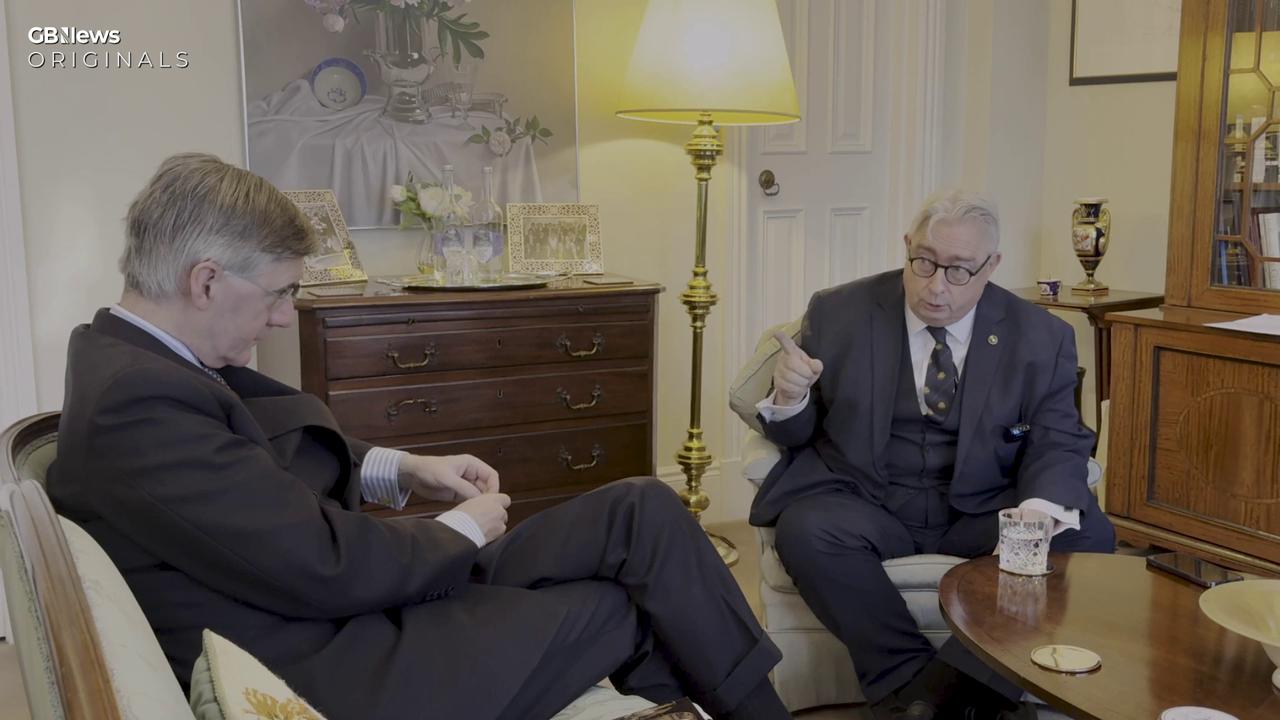
In the latest edition of Jacob Rees-Mogg's book club, author Charles Cullum tells GB News that modern democracy fails to protect freedoms, unlike a properly guided monarchy.He argues an executive king could provide stability and safeguard the rights of the people.Mr Cullum points to history, saying kings who worked within faith and law were the best defenders of society.He warns that today’s political chaos shows the dangers of abandoning tradition and divine guidance.You can watch the GB News Original video above
Show More Show Less View Video Transcript
0:00
Well, welcome back to the book club. I'm very pleased to be here today with Charles Coulomb
0:06
who has written The Complete Monarchist and Complete, spelt in the traditional way, L-E-A-T
0:13
indicating, I think, a certain love of tradition. Charles, thank you very much for joining me
0:20
Your basic argument in this book is that monarchy is closest to God
0:27
and that if we wish to create an effective society, we should model the world on how God created the heavens
0:34
That's fair to say. The great revolt of the modern world for a couple of centuries
0:43
has been against the notion of divine providence and against the idea that we should try to subject ourselves to anything higher
0:53
You know, I had kind of a revelation when Tucker Carlson was speaking with Putin in his interview
1:02
He asked Putin if he thought he saw the hand of God in the affairs of men
1:07
And Putin said no. And that hit me very strongly because I said, well, here he is
1:13
You know, he's no different from our politicians. Yes. He. But what really interests me about this is that this is exactly what Thomas Quintus says
1:23
and that if we were to have had these discussions at any time up until, say, 1700
1:32
this would have been a perfectly normal and rational basis for saying how government should be localised
1:39
Nowadays, it sounds extraordinarily radical to be proposing it, to say that you should not just have a monarch like King Charles III in England
1:49
but an executive monarch who has real power. Well, it seems very radical
1:54
And of course, today, when you say monarchy, when you say king, people immediately think dictatorship
2:00
That's the way they've been trained from childhood, from school, earlier if you're an American
2:06
The thing is, however, we're already used to governance that is far more absolute than
2:13
has ever existed before. At least, you know, you'd have to, I don't know, go back to Hammurabi
2:19
If you just think back a few years to COVID, this was insane
2:27
I mean, the amount of power that the modern government has is overwhelming, which is why
2:35
political fights and levers of power are so bitter. Because if I'm in power, I can destroy my enemies
2:43
Well, what do you have? You've got a leadership class that's reduced to the primitive
2:47
uh and this this is we're just before the anniversary of charles the first execution
2:55
yes this is what charles the first says on the scaffold he says that i am the better protector
3:01
of your liberties than these parliamentarians than cromwell who actually want all power whereas i
3:08
am bound within the norms and the history of the operation of kingly power precisely and he
3:15
I mean, there were three things that he went to the scaffold for. One was that he refused the abolition of the Episcopal in the Church of England
3:24
Two was negotiations with Rome for a union. But three, it was his opposition to the enclosures
3:30
And that wanted to go into a huge lecture on the enclosures
3:37
What it basically meant was the driving of tons of common people off the lands or agricultural
3:43
lands of England, and they're being forced to come to the cities where in time their children
3:48
and grandchildren will become the urban proletariat and work in the factories. The king stood as the defender of the rights of the people against an oligarchy
3:57
And there, since you mentioned St. Thomas, I think we probably should get a few terms defined
4:07
St. Thomas, like Aristotle, said that there were three kinds of good government and three kinds of
4:11
So he has a good government, being monarchy, ruled by one man for the benefit of everyone
4:17
Two was aristocracy, ruled by a group for the benefit of all
4:21
And then third was what he called a polity, which was the majority of the stakeholders
4:28
property owners, veterans, guildsmen, whatever, basically the people that make that society go
4:37
And then against them, what they were in common was that they tried to rule for the common good
4:42
And he believes everybody should have some role in how they're governed. Exactly
4:47
Some sake in it. Right. Yeah. Then the opposite of each of them, the evil opposite, the evil twin, if you will, tyranny, oligarchy, and lastly but not leastly, what they call democracy, which is ruled by the dem of Spain
5:04
But ruled by the mob rather than by a structure. I mean, when they're talking about democracy, they're basically talking about hordes running
5:11
down the street and bashing you out if you don't join them. The summer of 2020. Yeah. OK
5:17
The Floyd riots and all the way that. Yeah. So the hot summer of burning love
5:23
But the thing is that those three, however, he said further, a combination, a mixed government
5:33
of the three is best, and that's a government that employs monarch aristocracy and the stakeholders
5:43
the polity, which in the Middle Ages, they felt was expressed to the king and the estates
5:49
which in this country, of course, ended up king and commons and lords, each on their own organic
5:58
basis. So even the commons, you know, you had the knights of the shire from representing the
6:03
country folk and the burgesses for the towns. Yes, but one of the things that always interests
6:08
me about the burgesses from the towns is that they come in in 1265, not because it's thought
6:14
useful to be in the burgesses from towns, but because Simon de Montfort has more support in
6:18
the towns than he does in the countryside. The English Constitution is fascinating because
6:25
almost everything in it has happened in response to an immediate crisis. Yes. Rather than being
6:32
thought through as a single unity, unlike, of course, the American Constitution, which is
6:38
intended to be a perfect document. This is absolutely true. And of course, what was true
6:43
of Britain was true of all of Europe, which is why it was so incredibly diverse. You can see
6:49
they're expressing the same ideas, addressing the same sorts of problems. But of course
6:55
they did it differently, because every people are different, every region is different, every town is different. And even within England, the multiplicity, the diversity
7:05
of arrangements for governance on the local level was just mind-boggling. Yes
7:11
The only example you really have left of it today is the city, with the Lord Mayor and
7:16
the Alderman and all that. But you multiply that by every town of consequence throughout
7:23
the country It astonishing Every time your phone connects to public Wi anyone nearby could snoop on what you doing Hackers can steal your information passwords photos
7:36
and bank details in just seconds. ExpressVPN encrypts your connection, making it virtually impossible for hackers to access your personal information
7:46
ExpressVPN is so easy to use. With just one click of a button, you're protected
7:52
Streaming, banking, or shopping, you can switch between high-speed servers worldwide in seconds and your connection
7:59
never slows down. Click the link in the description or scan the QR code to get up to 75
8:05
off, plus four extra months free, all backed by a 30-day money-back guarantee
8:11
Protect your online life today. and I think what you're arguing is that monarchy finds it very difficult to change these structures
8:27
so that government becomes an organic structure whereas democracy because it has in its own mind
8:35
a higher legitimacy thinks it can impose anything on everybody and can change structures at will
8:42
which is very disruptive to the body politic. And this is what makes it an absolutist
8:49
You see, to take an absolute monarch whom I don't particularly care for, Henry VIII
8:54
notice how he was different from modern governance. He couldn't redefine marriage
9:00
He couldn't suddenly declare polygamy. He couldn't, I mean, he had to come up with some sort of legal justification
9:06
within the existing law for everything he did. I think this is very interesting
9:12
that Henry VIII does all that he does through Parliament, and he doesn't try and do it by decree until the very end of his reign
9:21
when he passes an act that gives him the power to rule by decree, which proves utterly ineffective and is repealed in the reign of Edward VI
9:30
And again, he did have his limits. And I mean, one could go on and on
9:37
I've noticed that it's interesting how in history every civil conflict feeds into the next
9:45
bleeds into the next, if you will. So the way the English Reformation worked out
9:50
does have certain connections to the War of the Roses, so that the Catholic side
9:57
I mean, it's not a complete equivalent. It's not the Yorkists were the Catholic side
10:00
like Cassius were the Protestant. No, it's not that simple. But it is interesting how much of
10:07
Catholic side were the battered remnants of the Yorkists and how much of the most fervent of the
10:13
Protestants. But then Henry VI was the most pious king we probably ever had. Precisely. Precisely
10:21
And just to confuse things a little bit further, Richard III was possibly even complicit in his
10:30
death. Which you mentioned in your book that Richard III then moves him to Windsor and apparently
10:35
believe in the sanctity. Yes. Now that, that by itself is an astonishing thing. Well, they had a
10:43
very strong belief in the sanctity of monarchy. And you saw it in the bit of the coronation of
10:51
King Charles III that really mattered, that it is a sacramental kingship. No. And the King of England
10:58
is the last remaining sacramental monarch other than the Pope. That's true. And interestingly
11:05
enough, this particular coronation was the first time since 1685 that the king has been
11:12
anointed with chrism that we Catholics have considered about it. Ah, as it happens, I have some of the chrism used at the coronation of Queen Victoria
11:23
but I've got it in Somerset around here, so I can't show you. Why was that not valid chrism
11:29
Well, because of the whole issue of Anglican orders. Okay, yes. I mean, yes, I know that
11:34
Apostolicae curi, yes. Apostolicae curi. Percent, yeah. Precisely right. So for the Catholic part of view, it wasn't valid in the sense of being a sacramental
11:45
I mean, it was what it was. Yeah, yeah. But King Charles III insisted on having an Orthodox prelate co-consecrate the chrism
11:57
Yes. Which, by our standards, is valid because Orthodox orders are valid orders
12:03
Exactly. So the first time since 1685. And the other thing, you know better than I would
12:13
but I couldn't help but speculate, both in print and otherwise, when Charles III took the name Charles III
12:23
I had heard continually prior to his mother's dad that he was going to be George VII
12:29
I heard this from a new resources. because Charles III would be too Stuart
12:34
and would be too Catholic and would be too associated with activist monarchs
12:42
And they took the name Charles III. Yes, those rumors existed. There's always a lot of gossip about kings
12:51
I never knew how true those were likely to be. It wasn't like Edward VII
12:57
No. Who definitely wasn't going to be Albert. Yeah. And as soon as his mother was saying
13:03
was never going to be called Albert again. I think that's rather different from that type of feeling
13:12
But in your book, actually, you don't think much of constitutional monarchy
13:16
You think that it's essentially a Potemkin monarchy that doesn't provide the protections
13:22
except, and you mentioned a case in Canada and a case in Australia, except for the most extreme circumstances
13:27
I would say that's true. Because at the end of the day, in a very subcontracted country, you have a couple of things at play
13:38
The development of constitutional monarchy has always meant the triumph of Parliament, whether it be Sweden or Denmark or Norway or the Netherlands
13:48
But if you examine, in each case, the circumstances under which Parliament became supreme, if there's anything like objective reality in the world, there may be
14:00
It's a question from on I'm thinking this, but maybe. You'd have to say that in the particular case, the king was right
14:08
He lost, but he was right. Where would you put that in English history
14:16
1688, without a question. OK, I was going to come on to that later, as you mentioned it
14:21
Let's come on to it now, because I wanted to show you this, which is a handkerchief dipped in the blood of Charles I
14:29
by General Ben Ruddock, whose picture I've got up there. And I got this a few years ago
14:38
and the linen is identical to linen handkerchiefs of Charles I in the British Museum
14:43
So it's almost certainly true. I've also got, this again is in Somerset
14:49
a miniature of Charles I braided in his own hair. So I have some unusual relics of Charles I who romantically I entirely on the side of as with his son James II But the problem with them both is that they were idiots And what was it that Lorde said of Charles
15:11
I as he sees Thomas Wentworth, my wife's ancestor, as it happens, going to the scaffold, he said of
15:17
Charles I, he had not the means of greatness nor being made great by others. And James II is even
15:24
worse. And we talk about democracy changing structures willy-nilly. That's what James II
15:34
was doing with the quo rento approach to borough rights and so on. Instead of being somebody
15:42
working within the constitutional system he'd inherited, he trampled on everything. Whereas
15:49
his brother, who I think is one of the most underrated kings of England, I think Charles
15:54
absolute genius managed to make the system work and therefore it's James's
15:59
fault. Well I'd have to dislead it on that. We could have some disagreement I can't just sit here
16:05
praising you for half. Sure you can, I wouldn't mind. It's a rare experience I'll just sit here and enjoy it
16:13
Certainly that's the notion of the weak stool of history you know but being
16:21
in America, I know all about education as propaganda. Yes. We invented it
16:26
Well, not quite, but we did the best job. And, of course, I refer you to Cobbett, William Cobbett, who kind of shreds the glorious revolution
16:37
so-called, rather well, in his history of the Reformation, England and Ireland, and
16:41
shows, moreover, its connection with the American Revolution. The truth is that if Jefferson had been writing the Declaration of Independence in an academic sphere
16:52
he'd have been a shout for plagiarism from Locke. Yes. Locke being the propagandist of the glory of the illusion. Indeed
16:59
And the truth of the matter is that James II was faced with an issue that his brother had successfully pushed off
17:08
The problem was this. the oligarchy that killed Charles I did not vanish with the Resurrection
17:17
It was still there. It was a clear and present danger. And it was created by Henry VIII ultimately
17:23
It's not a coincidence that Oliver Cuomo was the great nephew of Thomas Cuomo
17:30
That class that Henry VIII unwittingly created to secure his settlement assured the downfall of the British monarchy
17:40
because it created an oligarchy that was interested only in itself and nothing else
17:47
That was the famous Wiggo oligarchy, which George III would later contend with
17:52
Yes. Much to his undoing. But I digress. The thing is, with James, his memory has been blackened considerably
18:03
The problem was, however, he was faced with a difficulty. The difficulty was the oligarchy had not gone away
18:10
It was not going to go away. And there were no regular constitutional means to get rid of it
18:15
What do you do? You do what his brother did. You worked patiently
18:22
His brother kicked the cam. But the cam can carry on being kicked
18:27
You can't kick it forever. Not forever, but James forces problems that could be delayed
18:36
He forces issues that maximize the hostility. And on a religious point, he does the one thing that politicians, including kings, can never do
18:49
and that is go against the grain of the nation, that you always have to work with the grain of the nation
18:55
And sometimes the grain of the nation doesn't change for a very long time
18:59
I can tell you that, of course, Henry, as we get from the stripping of the altars
19:04
Henry had no probability against the grain. Oh, yes, he did. He had the revolt of the North
19:11
He used brutal methods. He did. But when it came to being brutal, James II ran away
19:17
James II was not a brutal man. No, but he wasn't ultimately a leader
19:22
He was weak. He was a classic steward, unfortunately. He was a weak man who periodically stamped his foot
19:31
And his stamping of the foot was always at the wrong point. And his father was the same
19:37
I'll tell you this. Whatever he was saying against them, they were succeeding them as worse
19:44
And that's an unfailing historical rule. You know, there are minorities. I'd certainly accept that what succeeds Charles I is much worse
19:52
The Elevnias 4960 is the worst period of rule in this country
20:00
It is the most totalitarian. Parliament is brought to an end. Troops are sent into Parliament
20:07
Cromwell is an utterly illegitimate dictator and a murderous one. The best thing that happened to this country was Richard Cromwell
20:17
Oh, Tom O'Donnell Dick. Yeah. Yes. But again, you see, this brings us back to Oliver's son
20:25
This brings us back the concept of monarchy, because I'm pro-monarchy. I meet at least some of your tests as a monarchist
20:35
And I think that a balanced constitution is the perfect constitution, which we agree on
20:42
the drawback to monarchy and an executive monarchy is that you get people who just aren't up to it
20:49
now i revere the memory of henry the sixth who we've touched on but you cannot have a king who
20:54
is cast tonic for nine months 11 months it does get a little bit difficult it does get a little
21:00
difficult and although tumble down dick had no legitimacy you get people like tumble down dick
21:06
who just can't rule. What do you do in those circumstances? Well, I mean, this is always an issue in our system, of course
21:16
You're stuck with it. But with the question of James II, had he not had the opposition he had
21:27
had he not had the oligarchy, things would have been rather different
21:32
But remember what's going on in the meantime. During Cromwell's reign, the enclosures were spreading
21:38
The urban mobs formed in the cities, especially in London. There would be more of the same
21:48
There would be a lot more misery. And again, this is where it gets left out
21:53
Remember what he was seeing around him. You know, one of the funny things about A Tale of Two Cities is Charles Dickens' description
22:03
of Paris was not actually Paris in 1789. It was London in his time
22:08
Oh, OK. Well, I didn't know that. Now, it was a bit better before
22:17
But that was the direction that Weary was taking the country. Yes
22:23
Now in the end I mean part of the problem we always have is coulda shoulda woulda You know every historian myself included will tell you it a pointless game And we always try to
22:35
We always do. And it's a fascinating game. So I want to come back to the need for monarchy
22:42
to be based on faith. You start with the altar and then the throne
22:49
And this was the key problem, really, was not James II. The problem was the Protestant revolt, the instability that it created in the country
23:02
I mean, the country survived the war of the roses. Yes. Now that, if you want a failure of the monarchical system, forget James
23:14
The civil, I mean, part of the problem of the medieval system, and we both have a certain
23:21
reverence for it, but like every other human system, it has issues. It was not what our
23:26
post-Reformation system is tend to, which is tyranny. It was the opposite. It was anarchy
23:33
Because you see, again, the definition of terms, authority versus power. Authority is the right to say what ought to happen. Legitimacy is the proper use of authority
23:45
is the right to have it. And then power is the ability to make things happen
23:48
so your doctor has the authority to prescribe this and such. You have the power to do it or not
23:57
and the medical degree on this wall gives him the legitimacy. Yes. So in the medieval system
24:05
we mentioned earlier the great diversity, power was very diffuse in societies
24:10
from Poland to Portugal. It was very, very diffuse. Authority was concentrated
24:17
Power was done, but there was no secret police. There was no central administration in the sense that we used to
24:25
So if the king had a problem with the Duke of Dorset
24:31
all he could really do was declare him an outlaw. And that meant his neighbors could go after him and take his stuff
24:39
Yeah. Which, a good key was like an orchestra leader on the bad setup
24:44
A bad king, you wouldn't really have tyranny. You could make life unpleasant for people around him
24:50
You had anarchy. And the Wars of the Roses are a very good example of this
24:58
Having said all of that, there was enough inherent stability in the society that the thing came to an end
25:06
and they survived it. Yes. Now, there were cracks. And then those cracks, the reform came
25:16
But compared to, I mean, any subsequent civil war, that ferocity, even the wars of the Three Kingdoms
25:28
well, Ireland is another story, but even the wars of the Three Kingdoms in England were not as horrific
25:36
No, I mean, you're thinking of Toten and things like that, of the level of massacre, the brutality of it
25:42
It was the numbers involved which... Precisely. Yes. So then England recovered. Yes
25:49
But England never really recovered its balance after the Protestant Revolt. It just, yeah, the system became more and more unhinged
25:59
And if you look at France, past 1789, it still hasn't recovered
26:03
Well, France, and here again, you have... This is one of the funny paradoxes of history
26:10
The Catholic mind is not one of compromise. The Catholic mind that loses the faith hates the faith
26:17
Yes. As the Protestant mind, well, my grandfather used to say that you can get nothing done in Catholic countries because no one will compromise
26:26
You can get nothing done in Protestant countries because everyone will compromise. Because the unspoken thing there was you really can't get anything done
26:34
But never mind. Yes, indeed. The thing is that this is why in Scandinavia and in Britain, you have the desiccated remains
26:44
of a Catholic system. You do the prayer of the House of Lords every day
26:50
It epitomizes the whole of Catholic social teaching in one prayer. Okay
26:55
And it doesn't mean anything. You could not get away with saying that prayer in Austria or France because there it would
27:03
mean something. Okay, and people would understand what they were trying to do. Yes
27:09
Okay. So with France, here too you have an interesting thing. Wars of religion were as bad in France as the War of the Roses in England
27:21
the War of the Three Henrys and all that. So Henry IV and Louis XIII put the country back together
27:28
They put Humpty Dumpty together in a way that, again, if you don't study it, you don't realize
27:33
is remarkable. And Richler is a very remarkable figure. He was. I mean, internally, anyway
27:38
And the same with Mazarin. Their foreign policies, I could have done without
27:42
but their internal policies were extraordinary. So they put Humpty Dumpty back together again
27:50
The French Revolution comes. That breaks it. And the break is religious
27:57
The anti-Catholic side win. and the country has never been right since
28:07
And again, you can say, well, you know, there was oppression, etc. As opposed to what
28:13
As opposed to sending half your young men to die in Russia. Well, absolutely
28:18
Where you start with the terror and then you get Napoleon's wars. Enormous destruction of life
28:25
So what do you have in every country? starting with the Protestant revolt and going on the forces of the revolution that emerged
28:36
from France and Smith throughout Europe. When the faith was the glue that held the medieval thing together
28:49
well, that was destroyed. All right. It didn't work. Now, I have a great admiration for the medieval faith
28:59
But I think the medieval faith is of a different order of magnitude than modern faith
29:06
I think they believe in such a fundamental way in which even believing Catholics today don't get close to it
29:16
It's a much more profound. It runs through everything they do and everything they think
29:20
and I just wonder whether even Holy Mother Church believes in that way anymore
29:29
Certainly not, but it was for hierarchy. Well, that's the problem. So if you go to Pastor Ninth
29:35
who I imagine is somebody you're broadly in favor of, he says that the apostate state is the worst state of all
29:44
the state that was Christian and has abandoned Christianity. It is unimaginable the hierarchy of the church would say that
29:50
about secular states now. They think they're perfectly fine and would not encourage a state to be religious
29:58
It's true, but you know, This kind of delusion is self-delusion. And the problem is, at the end of the day, we all die
30:09
The modern world is an attempt to escape from that reality. It is an attempt to pretend it's not going to happen
30:18
One of the things that the medievals did not shy away from was the fact that we all die
30:23
And that you go to the Kaiserhof to Vienna, and you're constantly reminded, even empress die. Yes
30:35
And that wonderful symbol, the wonderful thing of the Vienna Habsburg funeral ceremony
30:40
Well, absolutely. I actually interviewed for one of these programs, Edward Habsburg, the Archduke, who
30:49
includes that in his wonderful book about the Habsburg family. how it managed to rule
30:55
And it's an important thing to remember, but we don't because we're encouraged not to
31:00
Don't think about it. Don't think about it. Don't think about it. Don't think about it. Yeah, well, sooner or later we have to
31:07
because it will happen to each of us. And the problem, there was the glories of our blood and state
31:13
was one of your great English poems. The glories of our blood and state
31:20
are shadows, not substantial things. death lays his icy hand like on peasants and on kings
31:28
We don't say that about presidents and prime ministers. No, indeed. And so therefore, you can't get back to the perfect monarchy
31:40
in a relationship with the church because the church doesn't believe it
31:45
and the monarchs don't believe it either. You see this in this country, in the hereditaries at the House of Lords
31:54
Now, they're finally going. One of the reasons it was inevitable that they would go
31:59
is that the hereditaries themselves did not believe they had any right to be there
32:03
And if you don't believe you've got a right to be there, you can't be there in the end. No
32:08
And I don't think the king believes he has a right to rule rather than to reign
32:13
And that, you have to respect that. That's the way he was trained
32:18
Certainly, back in 2011, I debated the question of the monarchy at the Oxford Union
32:28
And it was an interesting experience. On my team were Count Nikolai Tolstoy, Viscount Moncton, a comedian named Zahir Shah, who at the time was an undergrad from Cambridge
32:43
on their side, the Republican side, was Graham Smith, a lady, she's a columnist for The Guardian
32:54
and her civil rights lawyer, her name was something Christian, Christian something. And then there was a Canadian Republican
33:01
who was by far the work system, I'm sorry to say. And then the MP who was going to be on their side
33:09
at the last minute pulled out. So he was replaced by a student who was the best they had
33:15
OK, yes. And he was a monarchist. It's just it was a very good debater
33:19
Right, yeah, yeah. He knew what he was talking about. And we made the point, of course, that even a monarchy such as you have now is better than a Republic of Britain would be
33:32
Yes. As President Blair would soon teach him. Indeed. He'd be the sort of retired politician you'd have sitting in Buckingham Palace
33:39
But one understands all this. But it's a system that will not stay
33:47
It's not going to stay this way. It's going to keep going in the direction it's going. Unless someone says stop
33:54
But there's no reason for anyone to say stop. There's no reason for anyone with the power to say stop
34:00
What, in a certain sense, society today is like a drunk. Drunk at his own immortality
34:09
Except because he's not immortal. No. And what happens with drunks usually
34:16
Before they can pick themselves up, they have to hit bottom. Okay so that where your you think political life goes There one thing on monarchy If you look at the beginning of Asser life of Alfred
34:35
it begins with his lineage, which goes back to Adam and Eve
34:40
every party, even White Anne is that. Monarchs always try to create for themselves legitimacy
34:49
but actually they all at some point are descended from somebody who has seized power there's no
34:59
there is no link back to adam and eve um in in terms of monarchical except in terms of dna
35:06
except for perhaps all of us in terms of dna but but there isn't any line and
35:12
I always know more about the English monarchy than others, but the medieval throne was not a straight hereditary throne
35:22
It was a power grab throne. Well, yes and no. Oh, I mean, Henry VII had absolutely no right to the throne
35:32
nor really did Henry IV. I'll give you that. So it passes down the red tree line in the default of anything else, but incompetence and..
35:47
Usually it was during that of its own war. Yeah. So the reason I'm gone through this on preamble is if you want monarchy, do you have to start with somebody who actually you would think is most unsuitable at the moment
36:04
Say, if America were to have a monarch, which you would like, and an executive monarch, it's not going to be King Charles III
36:13
You're not going to bring back the rightful king of the United States after 250 years
36:20
Probably not. Probably not. Could you cope with King Donald I? No
36:28
And perhaps more likely in Russia, Tsar Vladimir. Again, the problem of both, how do I put it
36:42
Even Napoleon had a belief in God and a sense that he was somehow trying to do his will
36:51
I can't speak for the Trumpster, but I don't know him. We've never met
36:57
I first got to know him through the pages of the Spy magazine back in the 80s
37:01
Right, right. which did not help me prepare for him. But Vladimir in his very statement
37:10
that he didn't believe that God, I mean. But Trump does. He believed that bullet didn't kill him by an act of God
37:19
Well, that is true. He does believe that. But again, it's difficult for me to see it
37:26
And again, the... But in all likelihood, if we do ever get a monarchy in America
37:35
it will come because the current system collapses. I wrote a book, Star-Spangled Crown, which has some fun
37:42
Nothing remotely like what I depict there do I expect to ever happen
37:48
But it is precipitated by a collapse in the governmental system where the President of the United States, basically, she goes crazy
37:56
And she shoots the entire succession. Okay. And then demands the nuclear football
38:05
Well, the Secret Service agent comes, I don't think so. And he runs out the door
38:12
But in all likelihood, you will get a Napoleon figure. I think in my country, to be a monarch per se, there's no basis for it
38:24
We'd get a Cromwell. Franco if we were lucky. Right. But I think we're likely to get a Cromwell
38:33
And I don't think Mr. Trump is it. OK. I'd like to finish in Ecuador, because I very much doubt my viewers think about Ecuador
38:43
regularly or the politics of Ecuador or the history of Ecuador, a matter of which I was
38:46
in complete ignorance. But you write about a very interesting figure Gabriel Garcia Moreno who was a Catholic
38:59
president of Ecuador, who tried to make the country both prosperous and Christian
39:07
and was very successful in it. So the Republican Catholic ruler is possible
39:14
but he was then assassinated. Just tell me a little bit about him, because I think he's an
39:18
interesting and almost entirely unknown figure, I would have thought, to a British audience
39:23
He is. Well, Latin America in general is an unknown country, and it's a pity because
39:28
starting with their the royalist opposition to their wars of independence and their various
39:35
versions of conservatism in each of their different countries, fascinating characters and writers. We just never hear about them. Because C. Moreno was one of the aristocratic
39:49
criollo class in Ecuador, who, as they say, spend more time in Paris than they do in Quito
39:57
So he spent a lot of time in France, watching the changes in government and so forth
40:05
And when he came back to Ecuador, he also, remember that this is the period of the great Catholic revival in the 19th century in continental Europe
40:18
He comes back very much a monarchist, thinking that the wars of independence ended the wrong way
40:27
But again, what do you do? You've got what you've got. So he becomes president of Ecuador
40:35
And as you say, he does his best on the one hand to modernize the country, but on the other hand to re-Catholicize it
40:42
I say re-Catholicize because the church, the church's social and educational things and so forth, in the wake of independence, are just atrophied
40:52
So he spends a long time, he brings in religious orders, he consecrates the country to the sacred heart, all that
40:58
the liberal side of the oligarchy. And again, in Latin America, generally speaking
41:06
and I'm wildly oversimplifying, but generally speaking, you'd have the liberal and the conservative parties
41:13
The liberal parties would be very pro-Americans in the United States. If there was a civil war or anything
41:20
they'd be financed by the Americans. The conservatives, and they'd be very, well
41:26
anti-Catholic, anti-clerical. the conservatives would be very pro-Catholic, very pro-Spanish, pro-European, and would get armed and equipped by nobody
41:40
They'd have to do it all their own. So basically, García Moreno's death
41:46
was planned in the American embassy. So it was America's hostility to church and state working together
41:56
Yeah, and very particularly to the ambassador at the time. Things might have been a little bit different if we'd had someone else
42:05
but could have, should have, would have. Indeed. And the ambassadors, we tended to send in Latin America
42:13
were very interventionist. You know the poinsettia plant that we have at Christmas
42:19
Yes, yes, indeed. It was the name of Joel Poinsettia, who was our first ambassador to Mexico
42:25
He introduced Freemasonry. And from his time to this, one of the words they have for the intervention of the United States in Mexican internal affairs is poinsettismo
42:38
OK. So interventionist, not slightly grand party donors as would now get the Posts today, but real political figures who wanted to change things. Yes
42:51
and took perhaps the First Amendment too seriously? Well, I mean, they wanted to apply it
43:00
and this has always been Latin America's problem. They've been trying to apply institutions
43:05
to a culture that those institutions were not made from. And this is, I think, the great thing about your book
43:12
being really learned from it, is that institutions go with the population not the other way around and the post constitutions try to impose perfect institutions but fail
43:26
whereas monarchies are human and work with the people that they seek to rule
43:31
And again, we were discussing the story. As you'll know, I make no claim to utopia in my book at all
43:41
Any monarchy you want to point at, you'll find all sorts of flaws
43:46
But what I've noticed over and over again, and somehow it never seems to register, they're never replaced by anything better
43:54
I think you're basically updating Churchill's line that democracy is a dreadful system, but better than anything else that we've come up with
44:02
And you're saying that actually monarchy or Aquinas' polity is the best
44:09
And we've known this for the best part of a thousand years. Yeah. And somehow, having departed from that particular path, we end up with the most incredible despotism known to man
44:22
Well, I'm not saying that's a bad thing. I don't judge. The king, the king, I know it's a slight arrogance, isn't it, to say the king, but I don't really count any others, is going to be a visiting America for the 250th anniversary
44:36
It's a perfect time for America to say, we're frightfully sorry we got it rolled
44:41
On the 4th of July, 1776, would you like to take over
44:46
And I think that Donald Trump could arrange the bigliest coronation you've ever seen
44:52
Well, doubtless you have the money for it. But I have to say, and this is an important point too in the book, I think, and in general
45:00
very often people say and believe me not wanting to bag on the country or I'm a guest at the moment
45:11
too strongly but suffice to say that your current political cast at Downing Street
45:19
this Majesty's first Lord of the Treasury is not the most popular creature in the States nor in
45:27
England. Well, it looks very much like Dr. Strangelove. I'm not saying it's a bad thing
45:33
I actually put him up on my Facebook. I said the Honorable Sir Kirstama, KCB, KC, MP
45:44
provincial party had airstrip won. But anyway. But anyway, Charles. I'll just say the American Revolution, and this is a whole other issue to do some of the time
45:57
Yes. What I point out to people is that in reality, it did as much damage to British governments as it did to American
46:06
That would be a fascinating second discussion. Charles, thank you very much. I recommend your book to all viewers of GB News
46:14
I don't know if it is available from all good bookshops, but I'm sure Mr. Amazon will deliver it
46:19
Mr. Amazon will have it. It's Osteusti Press. I don't know. Can I do a plug for any of the other things I'm doing
46:27
Yeah, why not? Either way. All right. Well, let me see. In order, I've just taken a new spot with Telekin Plus, which is a Catholic media platform in the States
46:42
You can read my endless stream of articles in Crisis, 1 Peter 5, Catholicism.org
46:54
and I am working with the International Theological Institute in Tromau. I have to shout out to all of my friends in Austria
47:03
Which is by John Paul, St. John Paul II. Yes, it was founded by John Paul II and Caldwell-Schonborn
47:09
by St. John Paul II for the purpose of teaching initially marriage and family
47:16
There had only been one institute in the Catholic world that was doing it. The Netherlands, they shut down
47:20
So he founds a new one. And now, in addition to that, it's got a straight dogmatic theological formation
47:27
About 150 students, they give the BA, the STB as they call it now, which is the MA in
47:37
theology, the licentiate, the doctorate. Very reasonable tuition, may I say. Excellent. Brilliant
47:46
There we are. Thank you very much. Thank you
#Law & Government
#news
#Politics
#Royalty